
The front yard often sets the standard for a home’s curb appeal, making thoughtful landscaping essential for a welcoming first impression. Modern design favors clean lines, structured layouts, and a harmonious blend of greenery with contemporary materials such as stone, metal, and concrete. Low-maintenance plants, layered textures, and purposeful lighting can transform even the smallest spaces into striking focal points. For homeowners wanting both style and function, modern front yard landscaping ideas provide solutions that balance beauty with practicality. This guide offers inspiration and actionable tips to help create outdoor spaces that look polished, inviting, and effortlessly well-maintained.
Sculptural Boxwood Repetition

Symmetry and rhythm come alive when boxwoods are arranged in carefully sculpted repetition across the front yard. Rows of clipped spheres, cubes, or layered hedges establish a clean architectural language that complements contemporary facades. This approach relies on disciplined pruning and uniform spacing to create visual order. Whether flanking a walkway or forming parallel borders along a driveway, repeated shapes draw the eye forward and highlight structural lines. Boxwoods are evergreen, ensuring year-round appeal, and their dense growth habit makes them ideal for precise shaping. Repetition also amplifies scale—small spaces gain perceived depth while larger landscapes achieve balance through continuity. For modern settings, geometric arrangements in grids or mirrored lines enhance the architectural sharpness of concrete, steel, and glass. Seasonal interest can be introduced by pairing boxwoods with ornamental grasses or flowering perennials planted between the sculptural forms, softening the edges while preserving order. Lighting adds another layer, with uplights casting dramatic shadows that emphasize each shape at night. Sculptural boxwood repetition is low-maintenance once established, requiring only seasonal trimming to preserve uniformity. This design principle works best when aligned with the home’s architectural rhythm, making the yard read as an intentional extension of the building rather than an afterthought.
Linear Paver Ribbon Paths
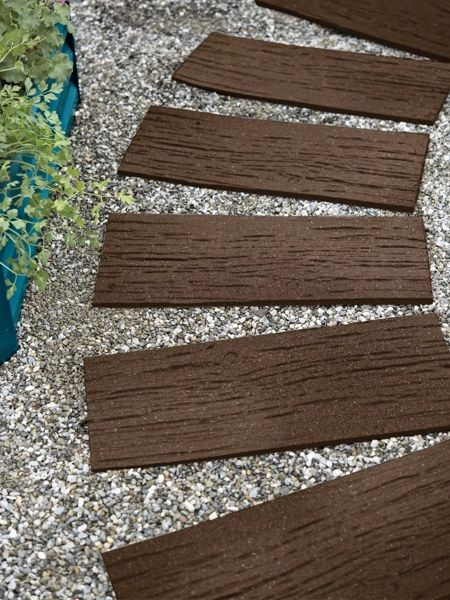
Straightforward geometry defines the elegance of ribbon paths constructed with linear pavers. These designs typically alternate slender strips of stone or concrete with turf or gravel, producing a striking striped pattern. The visual rhythm guides movement while maintaining a sleek, contemporary appearance. This style of pathway works particularly well in front yards with long approaches, amplifying perspective lines and creating a sense of arrival. Concrete pavers with smooth finishes emphasize minimalism, while dark basalt or limestone inserts bring contrast against green infill. Grass ribbons soften the hardscape, though drought-tolerant groundcovers such as thyme or sedum can substitute for regions requiring less water. Functionality remains high since ribbon paths allow stormwater to permeate through gaps, reducing runoff and supporting eco-friendly landscaping practices. Lighting strips installed along each edge heighten drama after sunset, reinforcing the geometry while improving safety. The alternating pattern also creates visual breaks, preventing the pathway from feeling too heavy or dominating the design. Linear ribbon paths can frame entryways, align with driveway extensions, or lead toward a courtyard focal point, always reinforcing directionality. Their uncluttered style ensures they remain adaptable for a variety of architectural expressions, from mid-century to contemporary builds, while subtly showcasing thoughtful, modern design principles.
Minimalist Monochrome Palette
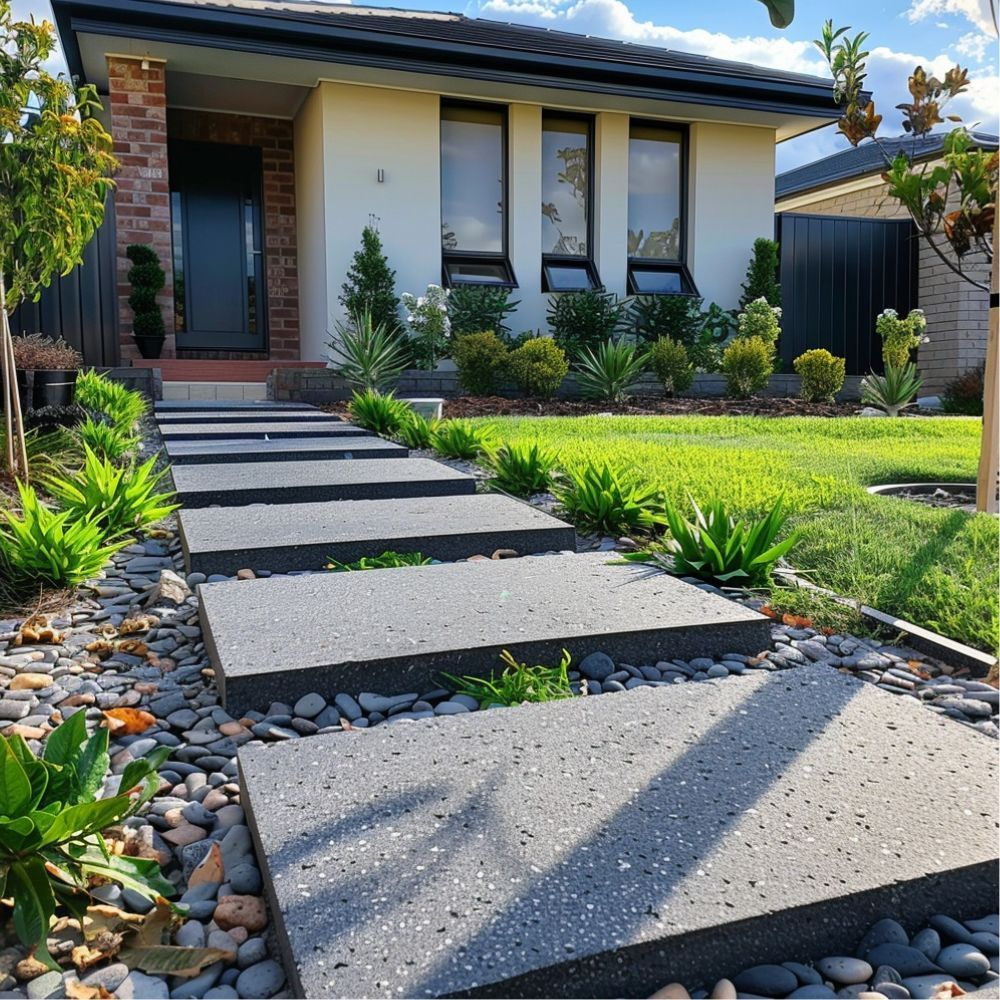
Restraint in color selection can yield one of the most powerful effects in modern front yard landscaping. A monochrome palette—whether anchored in shades of gray, deep green, or crisp white—establishes a cohesive and serene mood. By limiting distractions, the simplicity draws attention to textures, lines, and architectural forms. Dark stone pavers paired with black planters and deep-green foliage evoke a bold, moody presence, while white gravel beds alongside pale concrete and silvery plants like lamb’s ear or dusty miller achieve a fresh, airy character. This palette allows the home itself to take center stage, supporting but never overwhelming its façade. The absence of competing tones ensures that geometry, proportion, and spatial flow remain emphasized. Minimalist palettes also adapt well to lighting, as shadows and highlights read more dramatically against uniform backgrounds. Maintenance becomes simpler since plantings focus on form and foliage rather than continuous flowering cycles. This approach can be softened with subtle texture variations—matte versus polished stone, glossy versus velvety leaves—offering richness without straying from restraint. A monochrome landscape is particularly suited for homeowners who appreciate quiet sophistication and want their outdoor space to act as a calming extension of modern interiors. It’s landscaping as visual clarity, intentional and timeless.
Geometric Concrete Planters
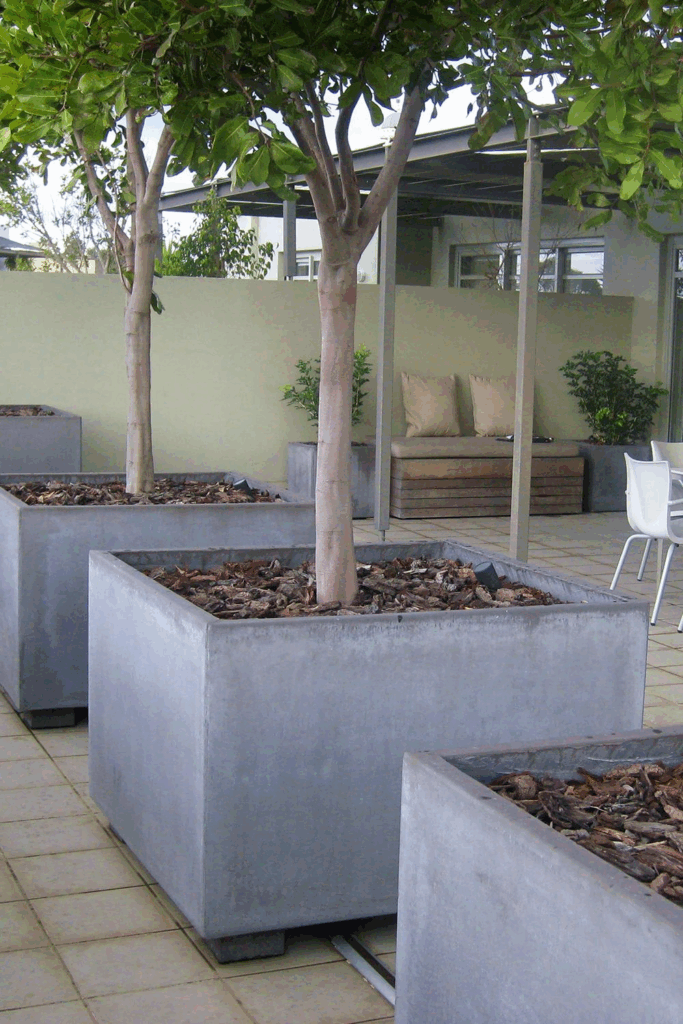
Concrete planters shaped into crisp geometric forms provide instant modern structure to a front yard. Cubes, cylinders, pyramids, and angular troughs stand as sculptural elements while housing carefully chosen greenery. Their raw texture contrasts beautifully with polished architectural finishes like glass and steel, grounding the space in earthy materiality. The versatility of concrete means finishes can range from smooth cast to exposed aggregate, accommodating either refined or industrial aesthetics. Arranging multiple planters in staggered heights creates layered interest at entries, along steps, or beside driveways. To reinforce modern minimalism, plantings should highlight strong silhouettes—agaves, ornamental grasses, or dwarf conifers thrive in these containers while emphasizing form over blooms. Their scale also makes them suitable for anchoring sightlines, with oversized planters flanking doors or gateways for dramatic effect. Concrete’s durability ensures it withstands weather extremes, maintaining its presence season after season with minimal care. For visual cohesion, repeating identical planter shapes along a pathway or across a facade ties the design together. Contrasting foliage colors, like silvery olive trees or deep-green boxwoods, pop against the neutral gray of concrete. Geometric concrete planters are not merely containers but functional sculptures that define rhythm, proportion, and modern personality in front yard landscapes.
Eco-Brutalist Green Walls
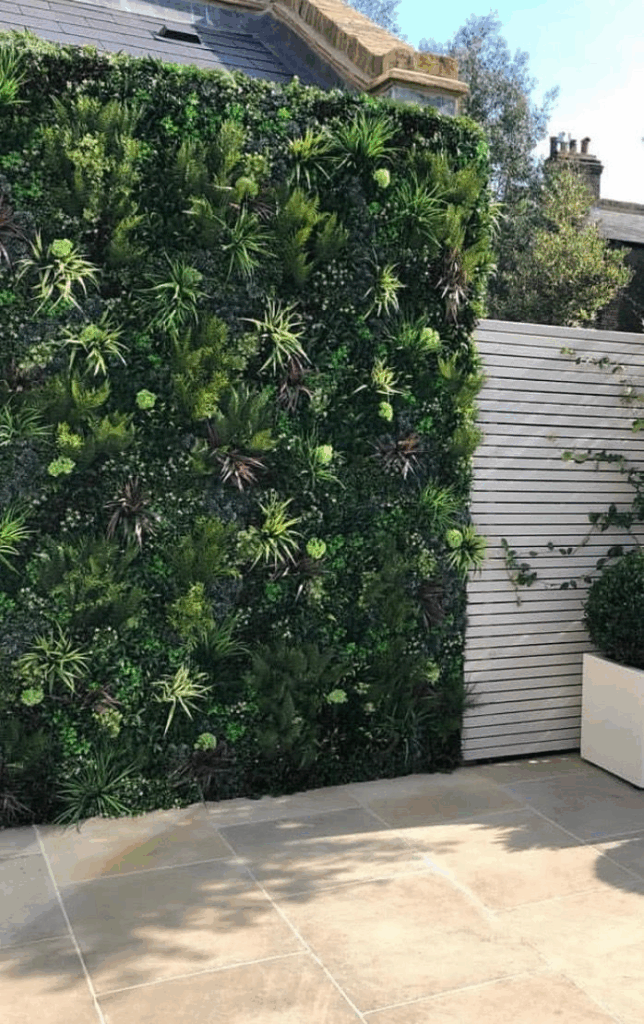
Raw concrete surfaces softened with living greenery create striking eco-brutalist facades in front yard landscapes. Vertical walls clad in climbing vines or modular planting panels introduce a balance between industrial hardness and natural softness. Exposed aggregate or board-formed concrete retains its rugged aesthetic while greenery like ivy, star jasmine, or Boston fern fills crevices, cascading downward with vibrant texture. This layered contrast works especially well when paired with linear pavers and minimalist planting beds, reinforcing contemporary architecture while reducing visual starkness. Beyond beauty, green walls provide functional benefits: they regulate temperature by cooling surrounding areas, improve air quality, and support biodiversity with pollinator-friendly species. Modular systems allow homeowners to install irrigation directly into the structure, simplifying maintenance and ensuring consistent growth. Lighting can be embedded at the base of the wall to create dramatic evening silhouettes, emphasizing both texture and greenery. Whether used as a property boundary, a backdrop to a courtyard, or a screen for privacy, eco-brutalist walls merge environmental responsibility with modern design principles. Their raw-meets-organic aesthetic speaks to sustainability while making a bold architectural statement, transforming a plain frontage into a living, breathing feature that evolves with the seasons while remaining undeniably contemporary.
Architectural Succulent Clusters
Sculptural plantings thrive when succulents are arranged into purposeful clusters that highlight architectural form. Low-maintenance and resilient, succulents deliver bold shapes and textures suited for modern design. Groupings of agaves, echeverias, aloes, and senecios arranged in geometric beds or raised planters echo the sharp lines of contemporary facades. Their varied leaf structures—from rosettes to spikes—add visual drama without relying on excessive color. Using gravel, crushed granite, or smooth river pebbles as a ground layer enhances contrast and keeps maintenance minimal. Succulent clusters are particularly effective in arid climates where drought-tolerant landscaping is not only practical but also visually compelling. Repetition of similar species in staggered heights reinforces rhythm and directs the eye across the yard, while statement plants like century agave can anchor focal points. Seasonal flowering, such as aloe blooms or red hot poker accents, introduces temporary bursts of vibrancy without disturbing the overall minimalist palette. Evening lighting directed upward intensifies the sculptural effect, casting shadows that amplify their form. Beyond aesthetics, succulents require little irrigation, aligning with sustainable landscaping practices. Architectural succulent clusters embody modern restraint—precise, water-wise, and structured—making them one of the most impactful choices for front yard designs that prioritize form and function equally.
Native-Grass Buffer Strips
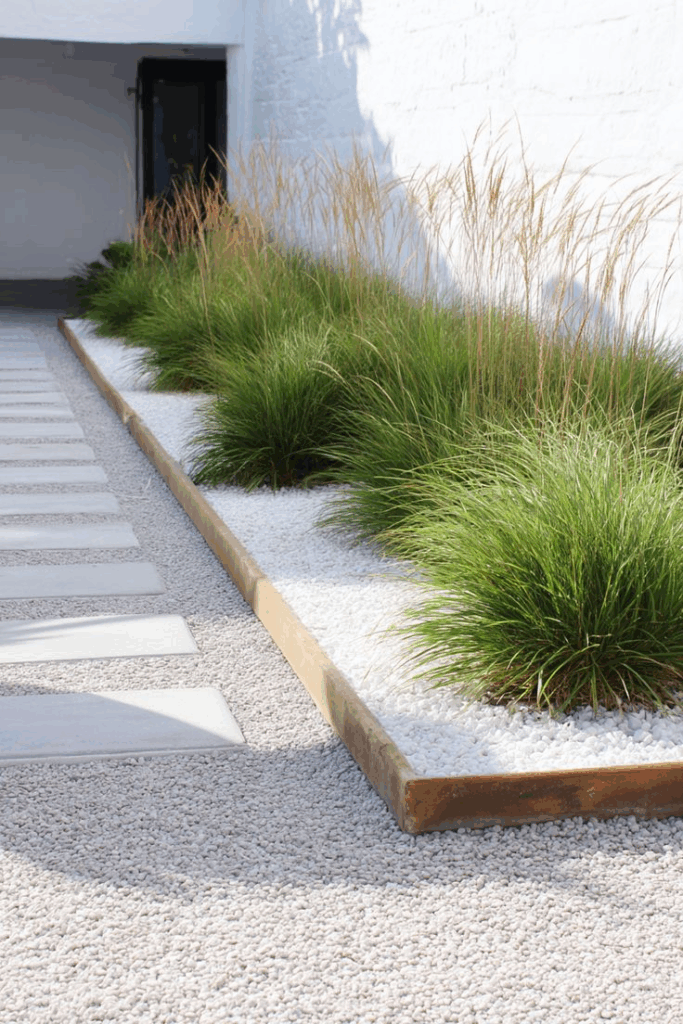
Uninterrupted bands of native grasses add both ecological value and strong design character to modern front yards. Planted as buffer strips along driveways, walkways, or property edges, they act as soft linear dividers that replace traditional hedges. Varieties such as switchgrass, little bluestem, and feather reed grass deliver height variation, texture, and seasonal color shifts. Their natural sway in the wind introduces movement that contrasts beautifully with rigid modern architecture and geometric hardscaping. In addition to visual appeal, native grasses support pollinators and provide habitat for birds, contributing to a healthier local ecosystem. Their deep root systems reduce soil erosion, absorb runoff, and adapt easily to regional climates, lowering maintenance needs compared to imported species. Buffer strips also enhance privacy without the heaviness of walls or fences, particularly when planted densely. By alternating grasses with gravel or stone bands, the design achieves rhythm while preventing monotony. During fall and winter, their golden seed heads create warm contrast against cool concrete and steel, ensuring year-round interest. Native-grass buffer strips are highly adaptable, scaling from narrow side-yard borders to wide frontage plantings. They represent a thoughtful blend of design and ecology, marrying sleek aesthetics with genuine environmental responsibility.
Hidden Curved Seating Nooks
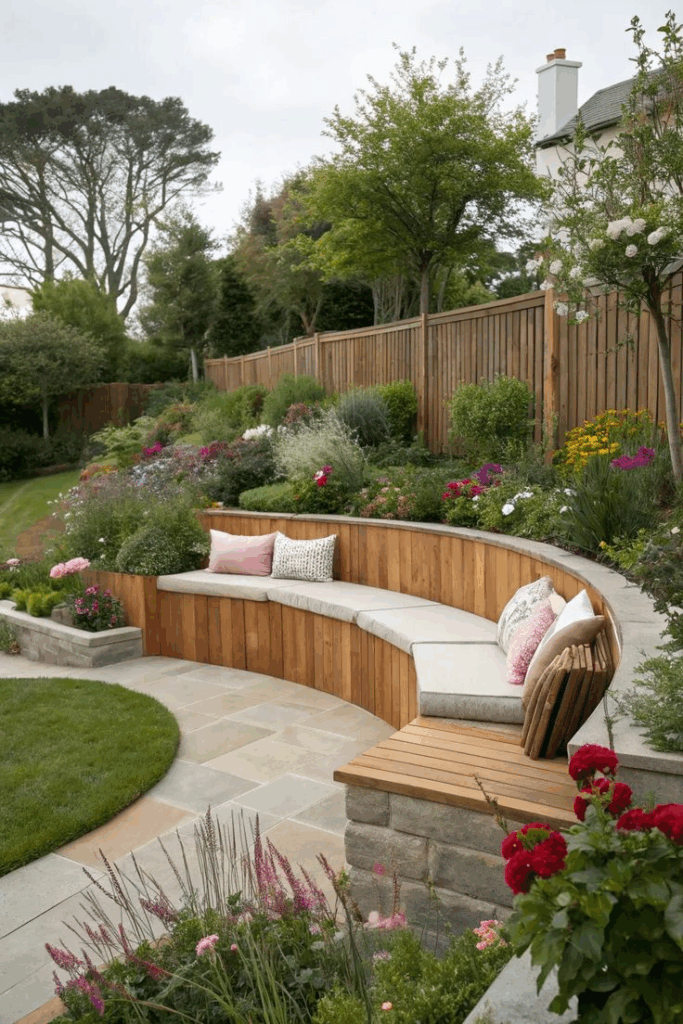
Inviting moments of pause can be designed into front yards through discreetly placed curved seating nooks. These spaces break from linear geometry by introducing soft arcs that contrast modern architectural lines without undermining them. Low retaining walls or built-in benches formed from smooth concrete or corten steel can curve around planting beds, small fire features, or water elements. Strategically tucked behind tall ornamental grasses, boxwoods, or green walls, these nooks feel sheltered while remaining visually accessible. The curvature provides ergonomic comfort and creates intimate scale, encouraging homeowners and guests to linger outdoors. Materials like polished stone or wood inlays can soften the hardness of concrete, ensuring balance between comfort and durability. Night lighting embedded in the base of the seating amplifies its sculptural presence and improves usability after dark. Plantings around the nook should be chosen for sensory appeal—lavender for fragrance, ornamental grasses for movement, or succulents for textural contrast. These nooks not only function as private retreats but also as sculptural garden elements visible from inside the home. Hidden curved seating areas transform a front yard into more than transitional space—they turn it into a welcoming extension of modern living, encouraging interaction within a visually cohesive landscape.
Low-Lit Stone Pathway Glow
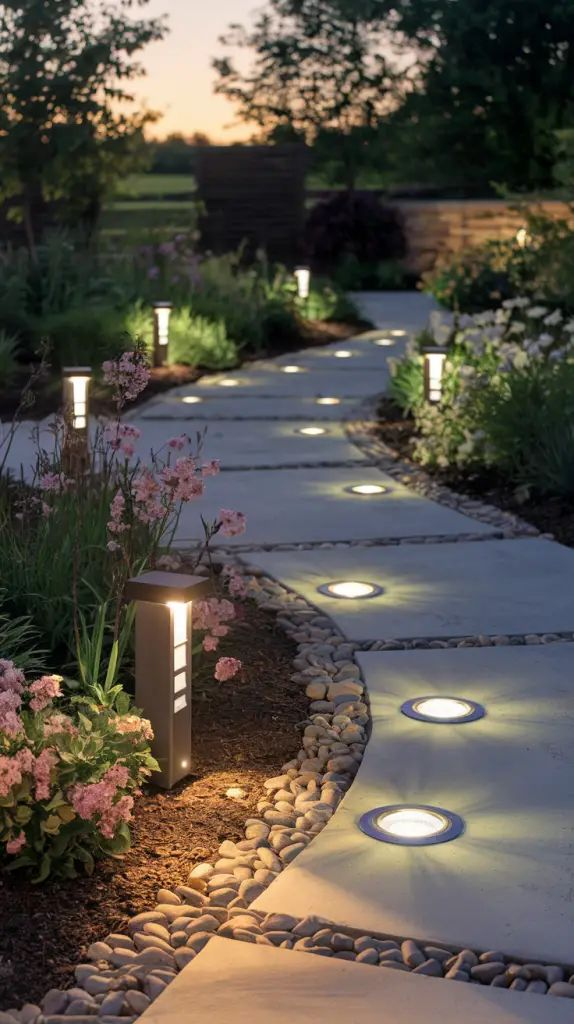
Illumination plays a transformative role when integrated subtly into stone pathways. Low-level lighting embedded between pavers or recessed along edges casts a gentle glow, guiding steps while emphasizing design geometry. Unlike overhead fixtures, this approach avoids glare and instead creates a floating effect, as if the stones hover above the ground. The result is both functional and atmospheric, particularly effective in highlighting linear ribbon paths or irregular stone inlays. Warm LED lights complement natural stone hues, while cooler tones pair well with sleek concrete or granite finishes. In practical terms, low-lit pathways improve safety, ensuring visibility during evening arrivals or nighttime entertaining. The lighting also extends the usability of the yard, shifting it into an evening destination rather than merely a daytime passage. To maximize design impact, fixtures should remain discreet, hidden beneath stone lips or integrated into gravel seams, preserving the minimalist aesthetic. Paired with strategic uplighting of nearby trees or architectural features, the pathway glow establishes layered ambiance. This subtle approach to illumination underscores the modern principle that less is more—functionality delivered through restraint. Low-lit stone pathway designs merge utility, style, and atmosphere, making them indispensable in contemporary front yard landscapes that prioritize both safety and sophistication.
Modern Water Feature Entry Accent
Front entries gain drama when anchored by streamlined water features that prioritize geometry over ornamentation. Whether expressed as a narrow reflecting pool, a sleek sheet waterfall, or a minimalist fountain bowl, water introduces movement and sound that softens architectural rigidity. Positioned adjacent to entryways, these features immediately draw attention, offering a focal point that conveys calm and modern elegance. Materials such as black slate, polished concrete, or corten steel reinforce the contemporary aesthetic while ensuring durability. Lighting from within or beneath the water surface adds a luminous effect after dusk, heightening visual intrigue. Low-maintenance recirculating systems keep water clean and reduce upkeep, ensuring practicality alongside beauty. Planting around the feature should remain restrained, using sculptural grasses, succulents, or clipped shrubs to frame without overpowering the design. When aligned with sightlines from the interior, these features extend the home’s modern character outward, creating continuity between indoor and outdoor spaces. Beyond aesthetics, the gentle sound of trickling water masks nearby street noise, making the front yard feel more private. A modern water feature entry accent embodies the essence of contemporary landscaping—functional, serene, and strikingly simple—transforming first impressions into memorable statements.
Drought-Lush Pollinator Beds
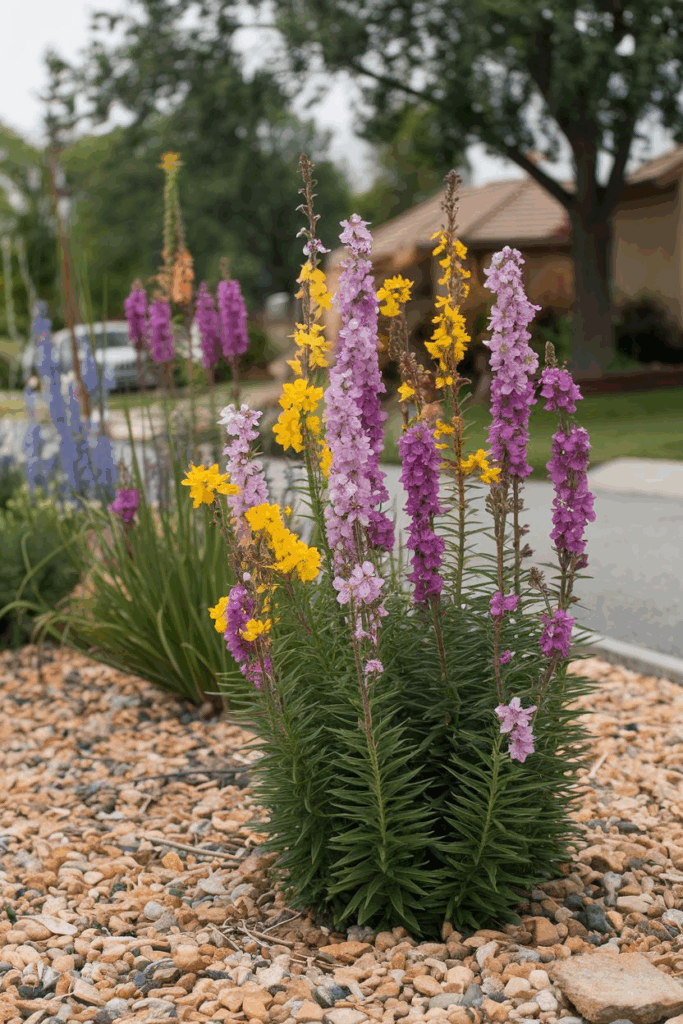
Sustainability merges with aesthetics when front yards integrate drought-tolerant planting beds designed for pollinators. These beds rely on hardy species such as lavender, salvia, echinacea, yarrow, and ornamental alliums, which thrive in dry conditions while providing nectar for bees, butterflies, and hummingbirds. Gravel mulch, decomposed granite, or stone chips replace traditional bark, conserving moisture and reinforcing a modern, minimal aesthetic. Beds arranged in crisp linear or geometric layouts maintain structure while allowing plants to display natural variety. Seasonal waves of color keep the yard dynamic without requiring heavy irrigation. Pollinator-friendly beds also reduce dependence on chemical fertilizers and pesticides, supporting ecological balance. Placing them near entryways or pathways ensures homeowners enjoy fragrance, texture, and wildlife activity up close. To maintain cohesion with contemporary design, repetition of plant species in blocks or ribbons avoids clutter and strengthens visual rhythm. Lighting directed across the bed at low angles highlights texture at night while keeping the focus on foliage and flowers. Drought-lush pollinator beds embody forward-thinking landscaping: practical for water conservation, beneficial for ecosystems, and striking in their pared-back beauty. They offer modern homeowners a way to merge environmental responsibility with front yard sophistication.
Clover Lawn Infill Sky Swap
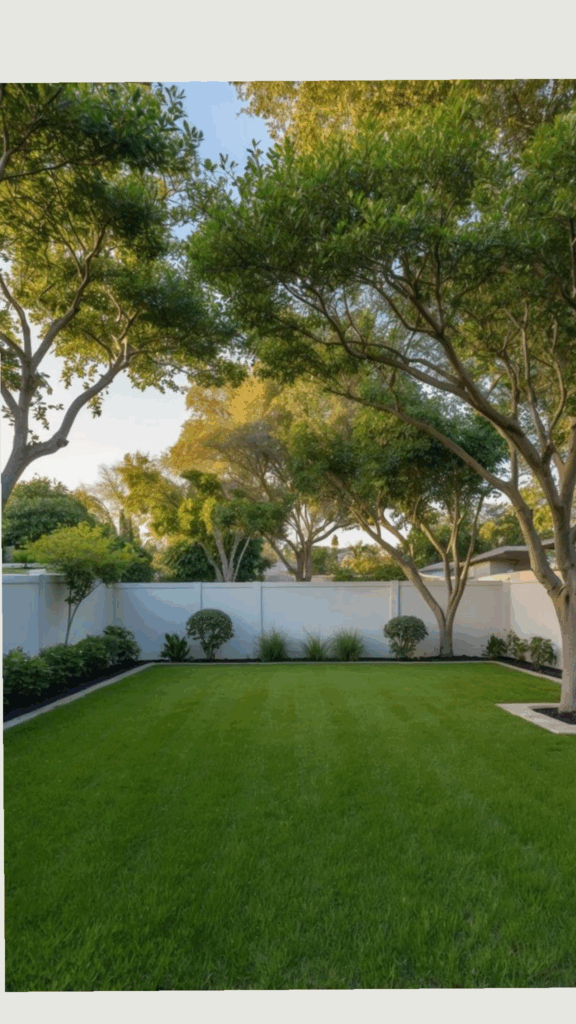
Traditional lawns consume water and require heavy maintenance, but clover-based infill presents a fresh alternative with ecological and aesthetic advantages. Clover varieties such as microclover provide a dense, soft carpet that stays green longer with minimal irrigation. Their natural nitrogen-fixing ability enriches the soil, reducing the need for fertilizers, while their low growth habit limits mowing requirements. In front yards, clover can replace entire lawns or be used as infill between pavers, ribbon paths, or stepping stones, creating a lush yet sustainable ground plane. White blossoms in spring and summer attract pollinators, adding ecological value. Unlike turf grass, clover tolerates drought, compaction, and varying soil conditions, making it versatile for modern landscapes. The fresh green tone pairs beautifully with neutral hardscapes like concrete, stone, and gravel, reinforcing a natural yet contemporary aesthetic. Clover lawns also resist weeds more effectively, lowering maintenance efforts. Homeowners seeking modern curb appeal benefit from the smooth, cohesive surface that reads as intentional rather than overgrown. Lighting enhances its velvety texture at night, while its softness underfoot provides a tactile experience absent in standard lawns. Clover lawn infill represents a smart, forward-looking alternative, delivering resilience, sustainability, and beauty in a single living surface.