
The entrance to any property sets the tone for what lies beyond, and a well-planned driveway plays a central role in that first impression. Beyond functionality, the right landscaping design can turn a plain path into an inviting feature that complements the home’s architecture and surrounding yard. From greenery-lined borders to decorative pavers and lighting accents, driveway landscaping blends beauty with practicality. Homeowners looking to boost curb appeal and property value will benefit from thoughtful design ideas that balance durability and style. This guide offers inspiration and solutions to help make every arrival feel more welcoming and visually striking.
Circular Garden Centerpiece
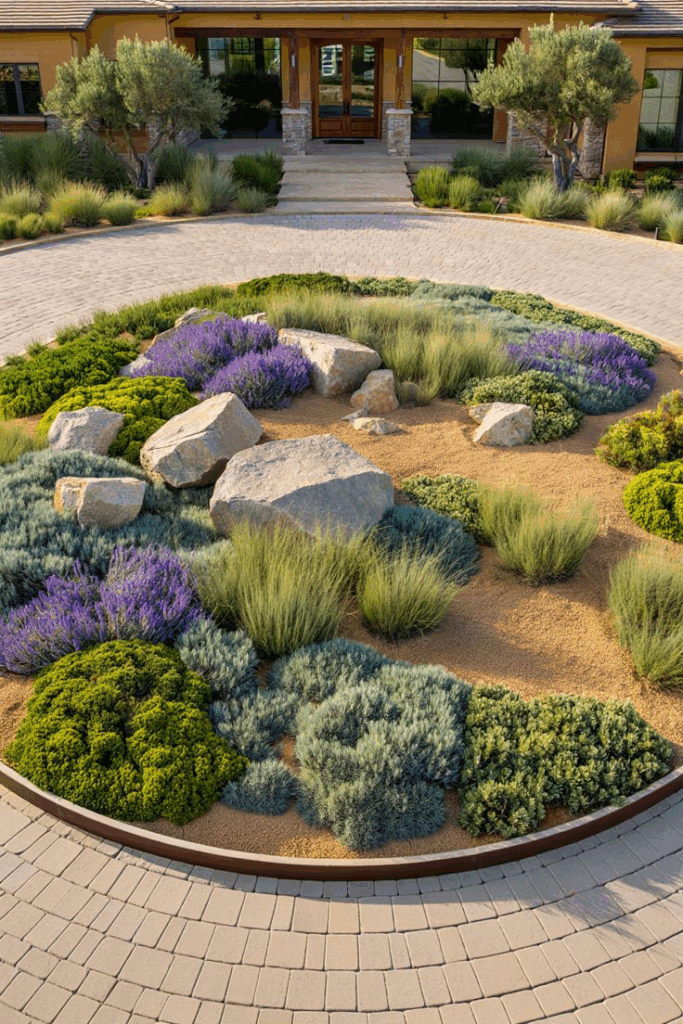
Designing the middle of a driveway layout around a circular garden centerpiece creates both symmetry and visual charm. This approach works particularly well in properties with roundabout entries, allowing vehicles to maneuver while the landscape becomes a focal attraction. A circular design can hold layered plantings such as low-maintenance shrubs, ornamental grasses, or seasonal blooms arranged concentrically for a polished effect. Adding a small water feature, birdbath, or a dwarf ornamental tree at the center brings scale and height without overwhelming the space. Stone edging around the circle strengthens definition, while gravel or mulch minimizes maintenance. To ensure functionality, the diameter should remain wide enough for smooth vehicular turns, yet proportionate to the driveway’s width. Lighting positioned around the perimeter or subtly placed uplights directed at central plantings highlight textures during evening hours. This centerpiece does not only improve curb appeal but also helps organize driveway traffic flow. Homeowners with compact driveways can opt for scaled-down versions featuring planters instead of planted beds. Whether lushly filled with colorful perennials or styled with evergreens for year-round structure, a circular centerpiece delivers balance and aesthetic order to otherwise plain asphalt or concrete stretches. It acts as an outdoor statement piece.
Gravel + Stone Ribbon Edges
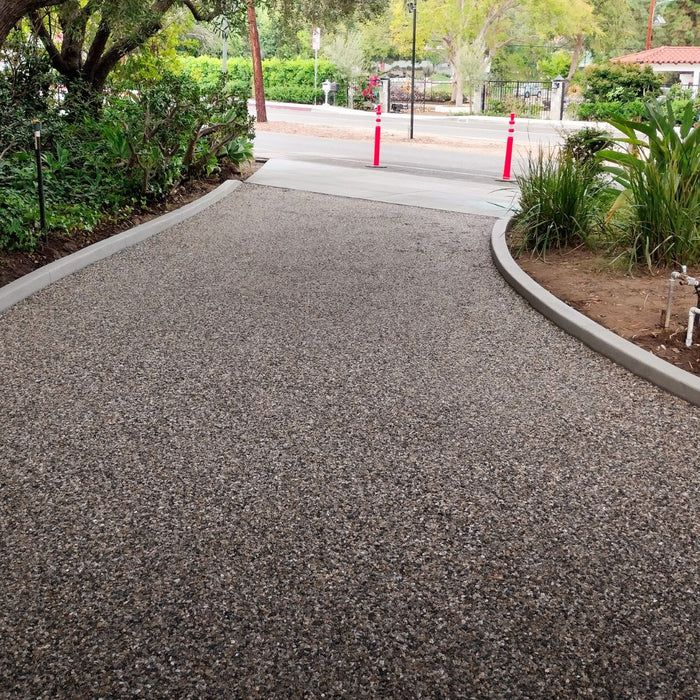
Integrating gravel and stone ribbon edges along driveways introduces texture contrast while offering practical drainage benefits. The narrow strips often run parallel to the main drive, breaking up large spans of paving material. A combination of crushed gravel in varied shades with flat river stones or tumbled granite pavers provides a rustic yet organized appearance. This edge detail prevents soil erosion while allowing rainwater to filter naturally rather than pooling. For homeowners desiring low-maintenance curb appeal, ribbon edges demand minimal upkeep compared to lush planting borders. They also adapt easily to both modern and traditional architecture, depending on the choice of stone color and size. Installing the gravel within steel or concrete channels prevents displacement over time and keeps the edges neat. When paired with drought-tolerant plants tucked intermittently along the stone line, the design feels connected to its surroundings. Ribbon borders also help define walking paths beside driveways, guiding visitors toward entry points without requiring additional paving. Evening lighting recessed near the stone strips can highlight their textural variety and give the driveway a layered effect. Beyond being decorative, these edges promote eco-friendly drainage while subtly framing the driveway for a structured, cohesive, and functional look.
Integrated Soft Lighting
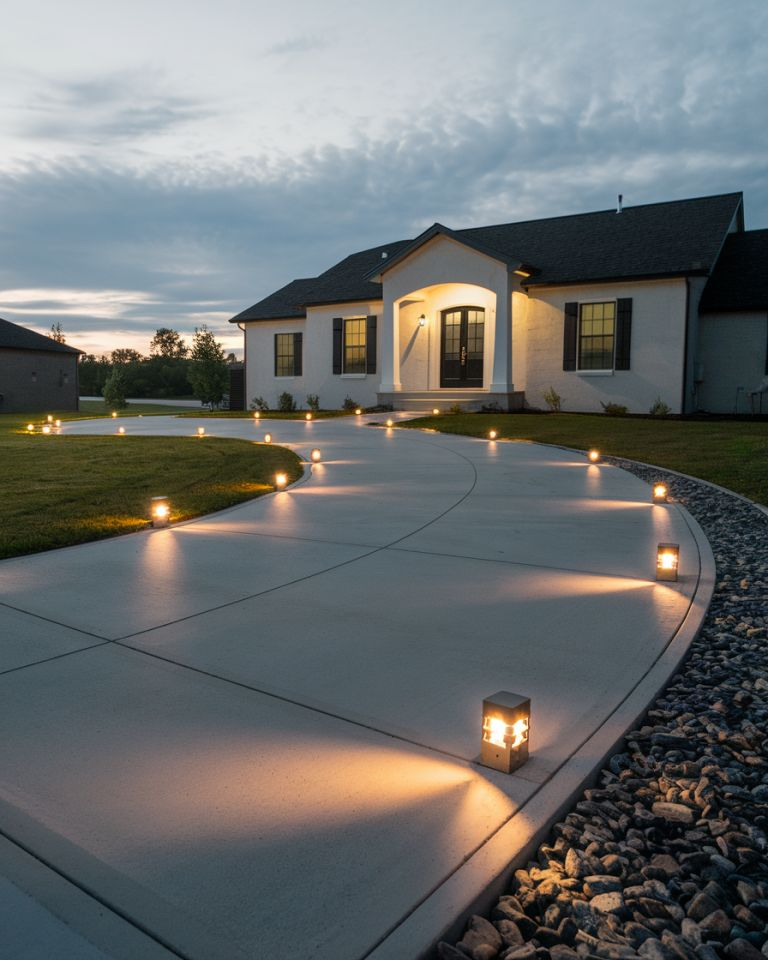
Subtle lighting integrated into driveway landscaping helps merge safety with visual appeal. Instead of glaring floodlights, embedded fixtures create a welcoming glow that marks the path. Recessed ground lights positioned along driveway borders or within paver seams allow smooth navigation after dusk without interrupting the design’s harmony. Low-voltage LED fixtures consume minimal energy while producing warm illumination that feels natural. When paired with motion sensors, lighting automatically adjusts to activity, conserving energy during quieter hours. Highlighting trees, shrubs, or stonework flanking the driveway through uplighting expands depth and dimension, particularly in the evening. For a refined effect, designers often place bollard lights in staggered patterns or hide strip lights beneath edges to wash surfaces gently. The goal is not overpowering brightness but a calm rhythm that guides vehicles and pedestrians. Outdoor-rated fixtures should always be weather-resistant and installed with proper drainage consideration to ensure longevity. Thoughtful lighting placement also discourages tripping hazards and improves security while avoiding light pollution that can impact neighbors. A balanced lighting system transforms a driveway into an inviting entrance sequence, complementing both hardscape and landscape choices. When designed carefully, it ensures utility and aesthetic performance simultaneously, giving the space night-time character.
Geometric Paver Inlays

Driveways accented with geometric paver inlays stand out by combining visual order with structural function. Instead of laying a uniform surface, designers insert shapes such as diamonds, hexagons, chevrons, or herringbone panels into sections of concrete or asphalt. The contrast of textures and colors helps break up large, monotonous expanses while signaling modern design sensibilities. Interlocking pavers distribute weight effectively, reducing cracking compared to poured slabs. Inlays can mark turning points, highlight entry paths, or form decorative ribbons across the driveway length. Selecting neutral grays or tans keeps the look subtle, while bolder colors like charcoal or terracotta emphasize patterns. For durability, base preparation is crucial—compacted gravel layers paired with sand leveling ensure longevity and prevent sinking. Sealing the pavers protects against stains from vehicles and weather wear. Homeowners can extend the motif by repeating patterns on adjacent walkways or patios, tying outdoor spaces together cohesively. With geometric precision, the surface reads as intentional design rather than purely utilitarian pavement. Evening lighting directed across angled edges highlights shadow lines, enhancing the three-dimensional effect. These inlays elevate curb appeal, offering long-lasting style while maintaining resilience under heavy use. Function and artistry combine in a balanced, low-maintenance driveway solution.
Resilient Plant Border Bands
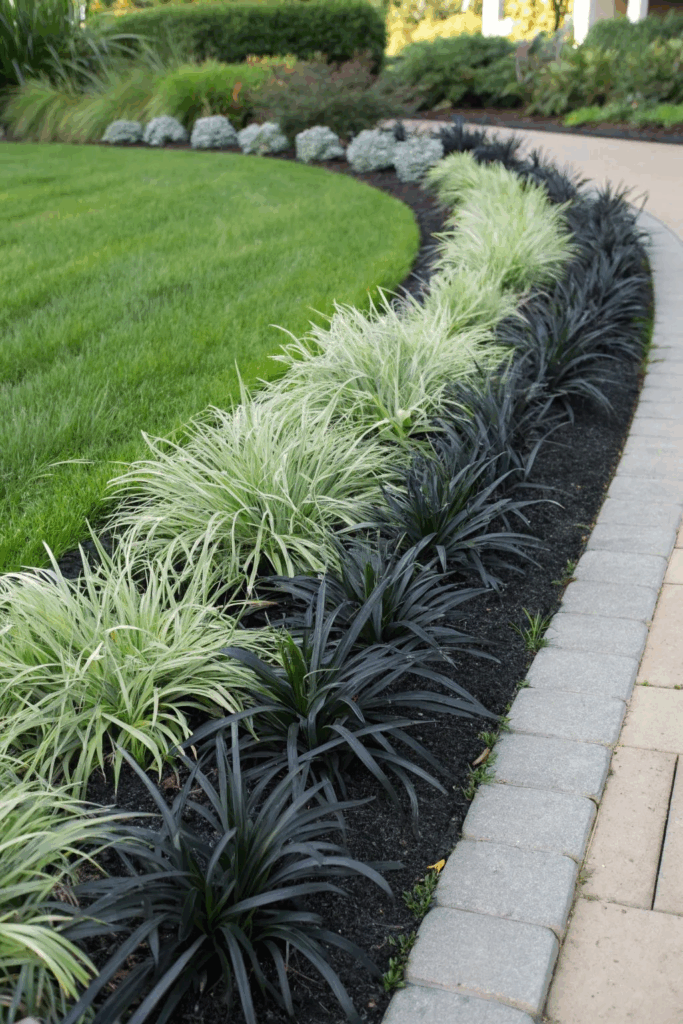
Framing driveways with resilient plant border bands introduces greenery without compromising durability. Unlike fragile ornamentals, these edges rely on hardy species capable of withstanding heat, dust, and occasional tire contact. Common selections include liriope, mondo grass, sedges, creeping thyme, or low boxwood hedges. These plants retain neat lines when trimmed regularly and offer seasonal texture shifts, from blooms to evergreen foliage. Planting in narrow bands creates a structured edge that softens the transition from hard paving to lawn or beds. Drought-tolerant choices reduce irrigation needs, making them suitable for eco-conscious households. Mulch applied beneath suppresses weeds and preserves soil moisture. Designers often integrate drip irrigation systems beneath the surface for efficiency, keeping foliage fresh without overspray. Repetition along the driveway lends rhythm, drawing the eye toward the entry point. In climates with harsh winters, evergreens maintain year-round appeal, while in warmer zones, perennial blooms add color bursts. The border bands also buffer run-off, filtering water before it reaches lawn areas. Maintenance remains manageable compared to elaborate garden beds yet delivers impactful curb presence. These living edges combine ecological benefit with structural clarity, ensuring the driveway appears intentionally framed rather than abruptly ending against surrounding surfaces.
Driveway as Flower Gallery
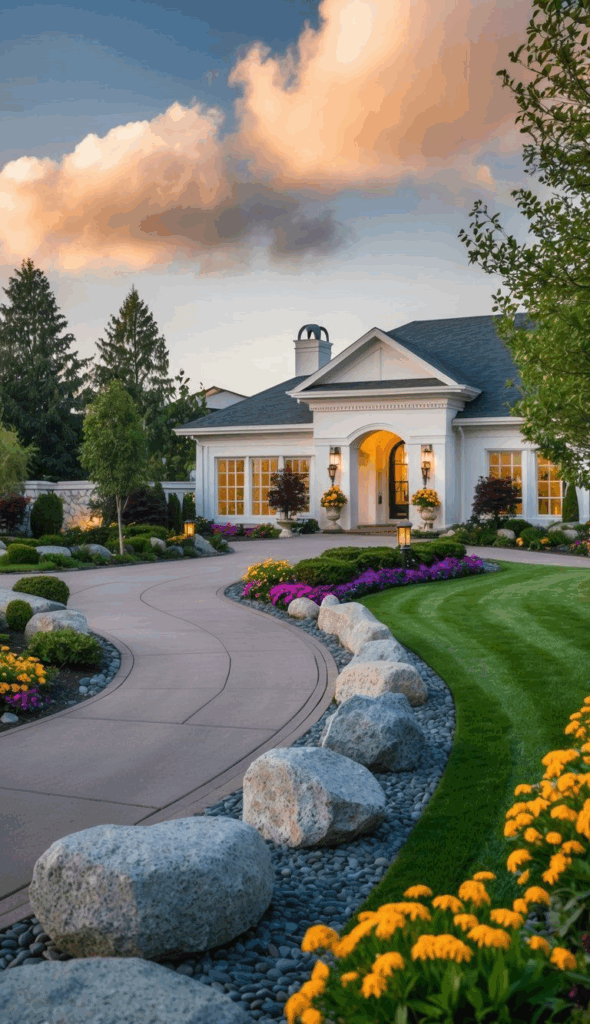
Treating the driveway edges as a flower gallery transforms a functional surface into a living showcase. By arranging plantings in linear beds alongside the paving, the route toward the home becomes an evolving display that shifts with seasons. Spring bulbs deliver bursts of color, summer annuals extend vibrancy, and autumn perennials ground the space with warm tones. Winter structure is preserved through ornamental grasses and evergreens, ensuring year-round visual interest. Beds can be raised slightly with stone or brick edging to prevent soil runoff onto the driveway, keeping surfaces clean. Choosing pollinator-friendly blooms introduces ecological value, supporting bees and butterflies while enriching curb appeal. For properties with wider driveways, alternating plant heights in layers adds depth without overwhelming sightlines. Incorporating repeating plant colors creates harmony, while focal points like tall delphiniums or hydrangea clusters punctuate the line with drama. Low-voltage lighting tucked into planting beds makes the floral gallery visible even after sunset. This approach not only beautifies but also guides visitors naturally toward the home’s entrance. Regular pruning and mulching maintain neatness while preventing overgrowth into the drive. By curating plant selections as though arranging an art exhibition, the driveway evolves into a rotating canvas of seasonal floral beauty.
Potted Planter Anchors
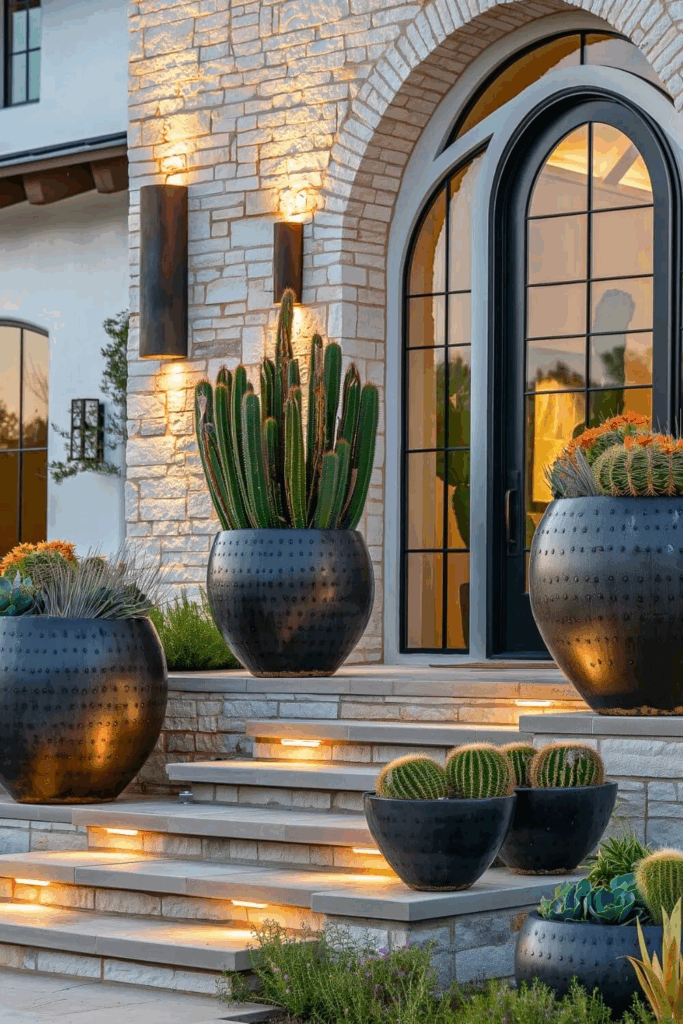
Strategically placing large potted planters along a driveway introduces sculptural anchors that balance form and flexibility. Oversized ceramic, concrete, or metal containers can house small ornamental trees, sculpted topiaries, or cascading flowers, turning otherwise plain stretches into curated outdoor galleries. Unlike permanent beds, planters allow seasonal rotation of plants—summer blooms, autumn foliage, or winter evergreens—offering year-round adaptability without replanting entire borders. Spacing them evenly or at key turning points emphasizes symmetry and organizes visual rhythm. Containers also act as subtle barriers that guide pedestrian flow without requiring fencing or edging. Textures and finishes of the planters should complement the home’s architectural style: matte stone for rustic settings, glazed ceramic for colorful accents, or sleek metal for modern facades. To ensure longevity, planters require proper drainage holes and weather-resistant materials. Drip irrigation or self-watering inserts minimize upkeep while keeping plants vibrant. Adding under-lighting at the base of tall containers highlights form and texture during nighttime hours. For narrow driveways, pairs of planters at entry points create a welcoming gesture without occupying excessive space. This approach adds design flexibility, allowing homeowners to refresh their driveway’s look seasonally, making it one of the easiest yet most impactful landscaping solutions.
Permeable Surface Strips
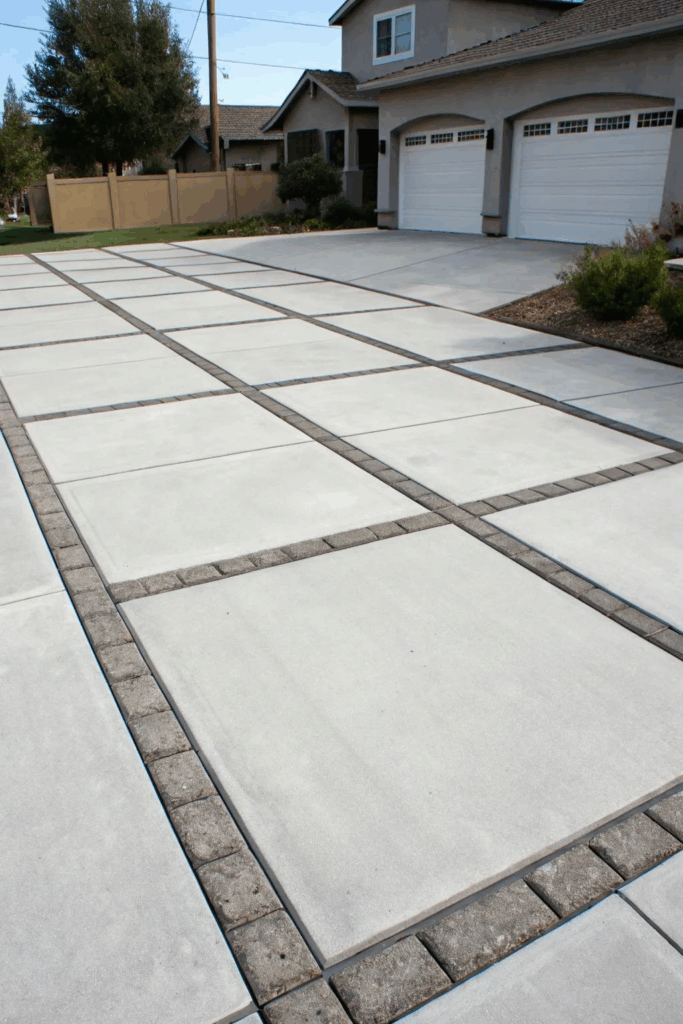
Driveways featuring permeable surface strips combine ecological performance with modern design sensibility. Instead of continuous impermeable paving, strips of porous material such as permeable pavers, gravel, or grass blocks are integrated between solid bands. These strips allow rainwater to infiltrate the ground, reducing stormwater runoff and minimizing erosion. The design particularly benefits urban or suburban properties where municipal codes increasingly encourage sustainable drainage practices. Functionality meets style as alternating materials—concrete flanked by grass pavers, or asphalt lined with gravel bands—create linear contrast and visual rhythm. Maintenance involves occasional weeding or gravel replenishment, but the long-term payoff is reduced flooding and improved soil hydration. Permeable strips can also be filled with drought-tolerant groundcovers like creeping thyme or sedum, softening the driveway while resisting foot traffic. Their modular layout makes them adaptable to both new installations and retrofits of existing driveways. For larger properties, surface strips double as visual guides, directing vehicles along specific paths while breaking up expanses of hard material. When paired with landscape lighting or subtle edging, the strips achieve both ecological benefits and curb appeal. This solution balances sustainability and design, proving that eco-friendly practices can be seamlessly integrated into everyday driveway landscapes.
Stone or Brick Marquetry
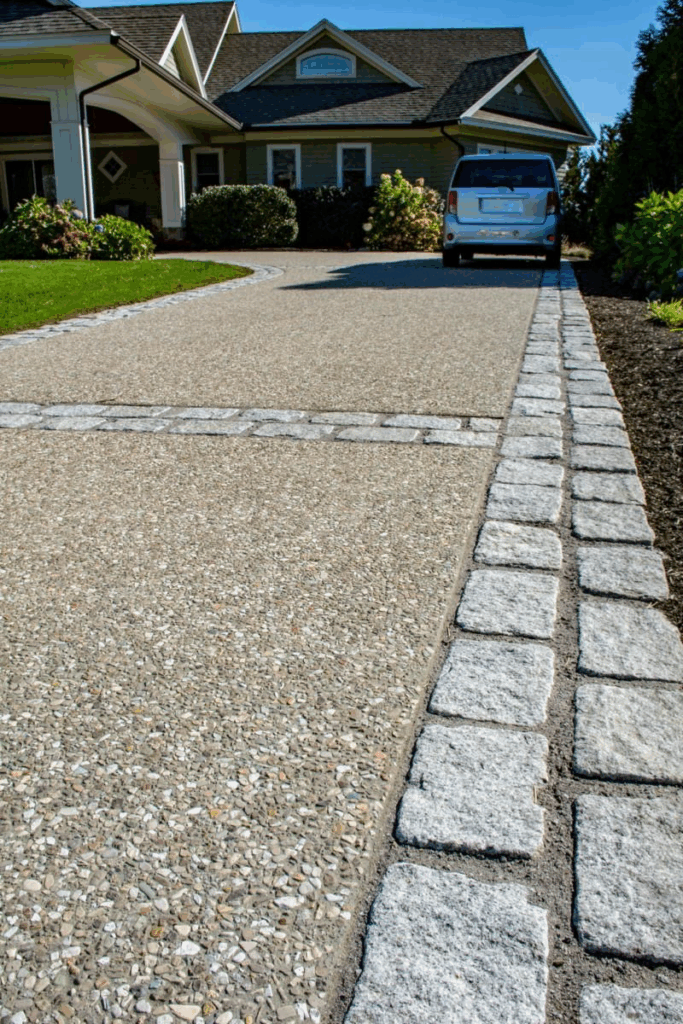
Employing stone or brick marquetry within a driveway elevates the surface into a detailed work of craftsmanship. Borrowed from flooring and woodworking traditions, marquetry involves arranging contrasting materials in intricate patterns. Driveway adaptations might include interwoven brick motifs, radial stone medallions, or mosaic-style inserts framed by neutral paving. These patterns serve as both decorative highlights and functional orientation points, subtly guiding vehicles or marking central roundabouts. Color contrasts, such as deep red brick against pale limestone or slate with sandstone, enhance the artistry. The structural base must remain strong—layers of compacted gravel, sand bedding, and joint sealants prevent shifting under heavy loads. While installation requires skilled labor, the outcome delivers unmatched character and long-term durability. Marquetry also allows homeowners to echo architectural details—geometric lines from a façade or motifs from a garden wall—into the driveway design, achieving cohesive outdoor storytelling. Maintenance typically involves sealing every few years and replacing occasional worn units, making upkeep manageable compared to its visual reward. With lighting angled across the surface, intricate patterns cast striking shadows that emphasize craftsmanship. This approach makes the driveway not merely an access route but a genuine feature that reflects artistry, history, and personal expression.
Driveway Tunnel with Arbors
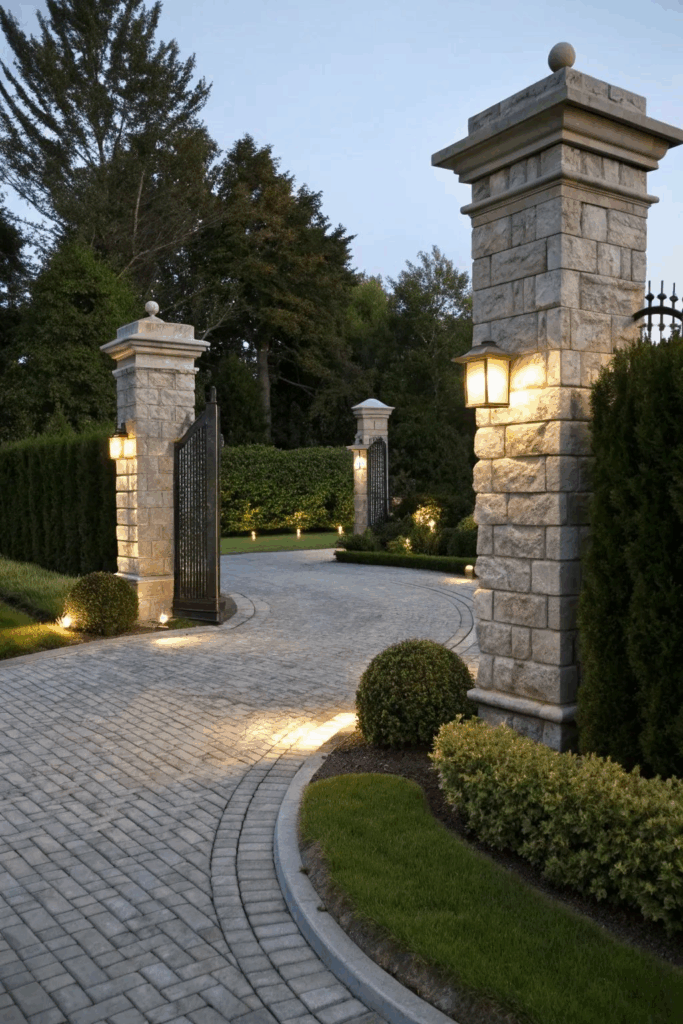
Envisioning the driveway as a tunnel framed by arbors introduces a romantic, immersive entry experience. Wooden, metal, or vinyl arbors positioned at intervals along the drive form a repeating framework that guides sightlines while providing structure for climbing plants. Vines such as wisteria, jasmine, or climbing roses weave overhead, softening the architecture and filling the air with seasonal fragrance. This green canopy moderates temperature by casting dappled shade during hot months, while in colder seasons the bare framework still adds sculptural rhythm. For durability, arbors should be anchored into concrete footings, especially where vehicle clearance requires wide spans. Lighting concealed within the framework highlights vines at night, turning the tunnel into a glowing passageway. The sequence works especially well for long, straight driveways, breaking monotony and creating a journey-like feel toward the home. Maintenance includes periodic pruning to prevent overgrowth onto vehicles and structural checks to ensure stability. When planned carefully, driveway arbors can connect visually to garden trellises or pergolas, extending the landscape’s architectural language. This approach transforms simple arrival into a sensory event, where greenery, fragrance, and light converge. It merges practicality with romance, making every entrance onto the property a distinct, memorable experience.
Bold Minimalist Monochrome
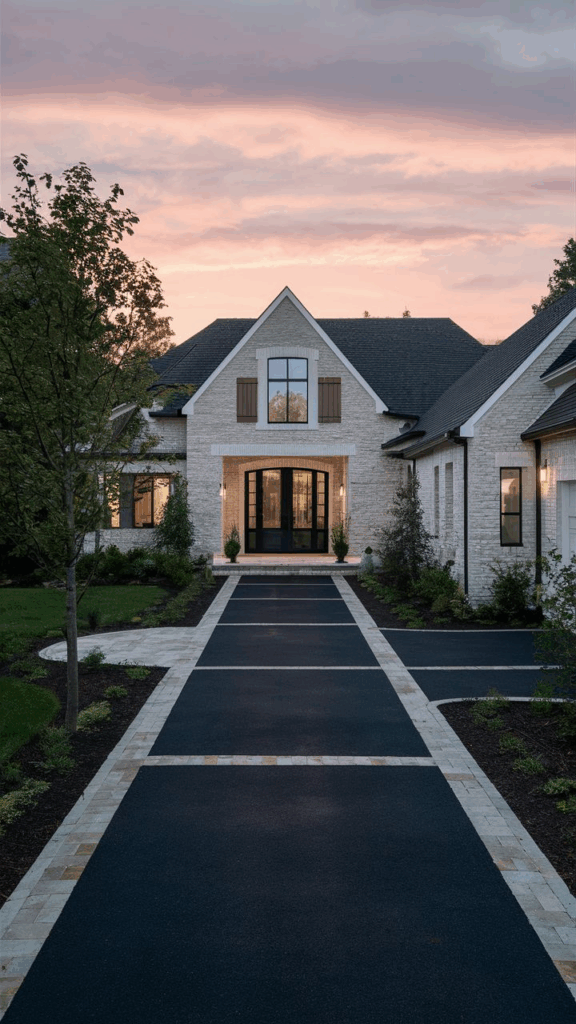
Stripping the driveway design down to a minimalist monochrome palette delivers striking clarity. This approach uses a single dominant tone—often charcoal, gray, or white—applied through concrete, pavers, or gravel to create a unified field. The lack of color variation emphasizes clean lines, geometric boundaries, and architectural form. Monochrome does not equal boring; texture differences provide depth, whether through brushed concrete, matte pavers, or fine aggregate finishes. The stark palette works particularly well with contemporary homes, aligning with sleek façades and uncluttered landscapes. Border treatments may feature subtle grooves or recessed channels rather than ornate edging, keeping the look precise. Lighting integrated into seams or linear strips reinforces the minimalist rhythm at night. Plantings nearby should follow the same restraint—grasses, sculpted evergreens, or single-species beds maintain focus without breaking the scheme. For functional durability, sealed concrete or high-quality pavers resist stains, ensuring the sharp aesthetic remains intact over years of use. Monochrome driveways also act as a canvas against which vehicles, architectural details, and seasonal décor stand out vividly. By embracing simplicity, the design achieves timeless appeal while requiring minimal upkeep. This disciplined aesthetic underscores confidence, proving that restraint can be as impactful as elaborate patterns.
Organic Stone-Weird Paving Patterns

Breaking away from strict geometry, organic stone paving in irregular patterns celebrates natural randomness. Stones of varied shapes and sizes are set into the driveway, forming fluid mosaics that read more like natural terrain than manufactured surface. Materials such as flagstone, slate, or limestone provide unique tones and textures, ensuring no two sections look identical. Spaces between stones can be filled with gravel, sand, or even creeping groundcovers, softening transitions and aiding drainage. This method suits properties aiming for rustic or garden-like character, blending driveway with surrounding landscape seamlessly. Unlike uniform grids, the irregularity hides wear and stains better, making it practical for heavily used areas. Installation requires patience—each stone must be fitted carefully to avoid uneven surfaces while preserving the organic flow. The result feels handcrafted, echoing historical courtyards or countryside estates. Lighting directed at angled stone faces accentuates shadows and highlights irregular contours, adding drama at dusk. The driveway becomes less a linear route and more a sculpted landscape path. Maintenance mainly involves keeping joints replenished and weeds managed. For homeowners seeking individuality, organic stonework transforms a utilitarian surface into an artistic statement, turning everyday arrivals into tactile, visually rich experiences grounded in nature.