
Colorful blooms, buzzing bees, and weekend satisfaction all start with simple hands-on ideas that anyone can try—no fancy landscaping required. Turning outdoor spaces into vibrant flower gardens doesn’t have to cost a fortune or demand professional help. With a little planning, creativity, and reuse of everyday items, it’s possible to build something beautiful that reflects your style and fits your space. Whether it’s a repurposed planter, a pallet wall of petunias, or a path lined with marigolds, each project adds charm and life to your yard. This guide delivers easy DIY flower garden ideas that bring results—and genuine gardening joy.
Vertical Pallet Wall Planter
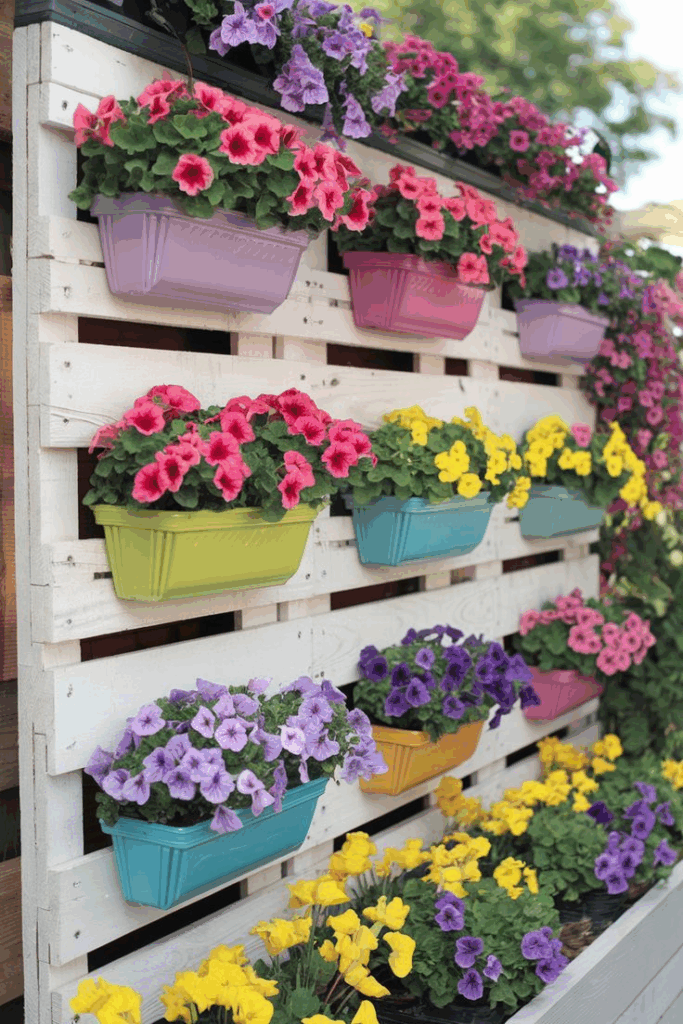
Repurposed pallet wood transforms into a vertical oasis when mounted against fences or blank exterior walls. Slats act as natural pockets, ideal for supporting small pots or planting liners filled with soil. When arranged in alternating layers, the spacing encourages good airflow and sunlight distribution, keeping herbs, succulents, or compact flowers thriving. Line the pallet interior with landscape fabric or coconut coir to prevent soil leakage and overwatering. This design fits perfectly in tight patios or balconies, making the most of limited ground space. Opt for colorful trailing blooms like petunias or nasturtiums for visual flow or stick with compact kitchen herbs for functionality. The rustic wood also blends beautifully into farmhouse, boho, or cottage garden aesthetics. Anchor it securely to a vertical surface to prevent tipping, especially once fully planted and watered. This solution delivers form and function, merging floral charm with vertical efficiency. Maintenance is low, as the wall format discourages weed growth and minimizes bending or kneeling during upkeep. With a few tools, salvaged materials, and a free afternoon, anyone can build one. Whether the goal is to brighten up a drab wall or grow herbs near a kitchen window, this vertical planter brings practical beauty to even the smallest garden zones.
Galvanized Bucket Stack Flower Tower
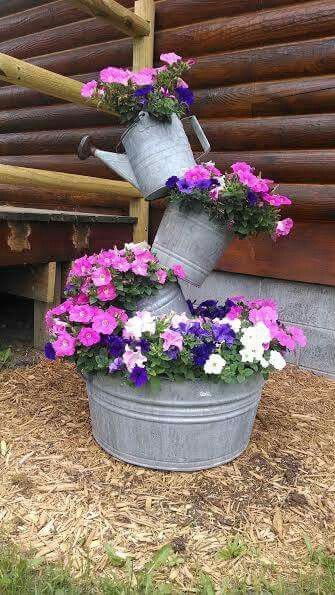
Leaning towers of galvanized buckets offer an eye-catching way to introduce height and layering into your flower bed. By inserting a sturdy rebar rod through progressively smaller buckets at staggered angles, you can create a cascading floral sculpture that’s both functional and artistic. Each container should have pre-drilled drainage holes, and a mixture of potting soil and compost helps ensure healthy root development. Annuals like calibrachoa, lobelia, or alyssum spill gently over the sides, softening the metallic frame with texture and color. To maintain visual balance, place larger, bushier plants at the base and lighter, trailing varieties toward the top tiers. These towers work especially well as standalone garden accents or flanking porch steps for symmetrical flair. Rust-resistant galvanized steel handles weather beautifully and pairs well with cottagecore, farmhouse, or industrial styles. For added whimsy, paint the buckets in gradient shades or stencil floral motifs around the rim. Regular watering from the top allows moisture to trickle down, reducing waste. This vertical garden trick makes efficient use of space while offering an elevated floral showcase. Whether you’re working with gravel courtyards or concrete patios, the tiered form instantly adds vibrancy and dimension to otherwise static areas.
Canvas Shoe-Organizer Pocket Planter
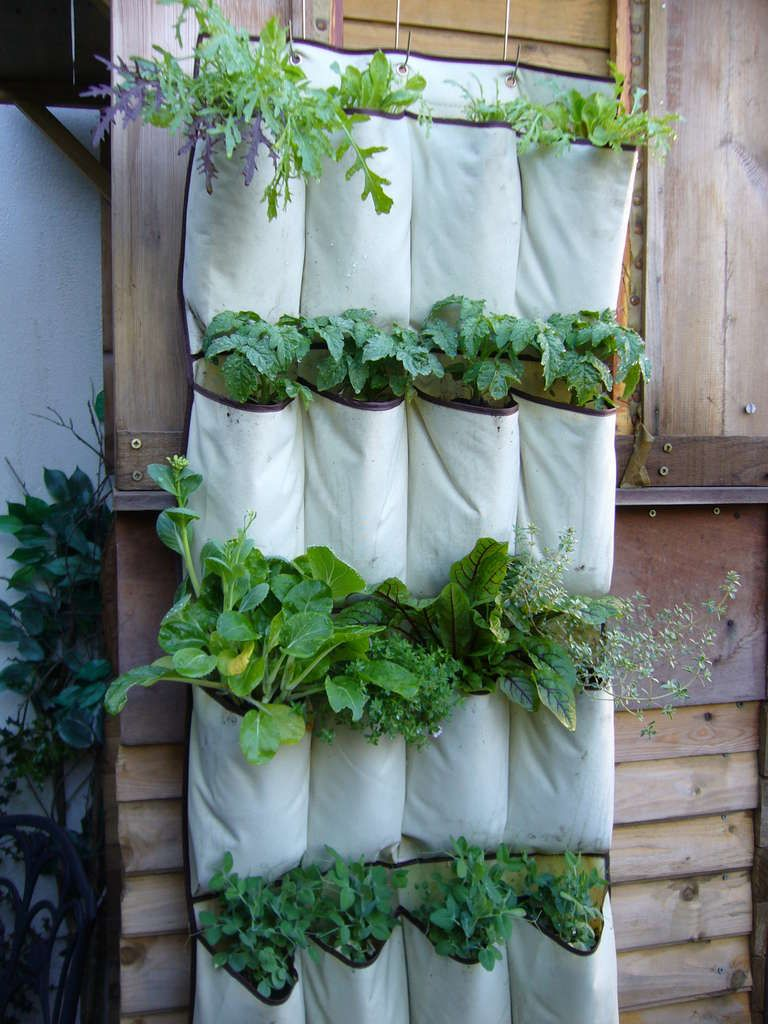
Back-of-door canvas shoe holders can double as clever vertical gardens when hung on fences or balcony railings. Each pocket is the perfect size for compact blooms, herbs, or trailing plants, especially when lined with breathable fabric to support root health. Secure the organizer to a wooden frame or trellis with durable hooks or zip ties for stability. Once filled with potting soil, these fabric pockets retain moisture well and resist temperature fluctuations. Choose fast-growing annuals like pansies, marigolds, or nasturtiums to bring instant color, or plant basil, thyme, and parsley for a functional herb wall. Ensure drainage by piercing small holes at the bottom of each pocket or adding gravel as a base layer. The upright design keeps critters out and reduces back strain during watering and harvesting. This budget-friendly option works brilliantly for renters or those short on garden space. Place it where it receives partial sunlight to prevent overheating or drying. Aesthetically, the canvas blends well into rustic or eclectic garden setups, but you can also paint or dye it to suit modern decor. Quick to install and surprisingly effective, this DIY vertical planter gives forgotten corners a floral facelift with minimal effort and cost.
Wood-Box Mesh Living Wall
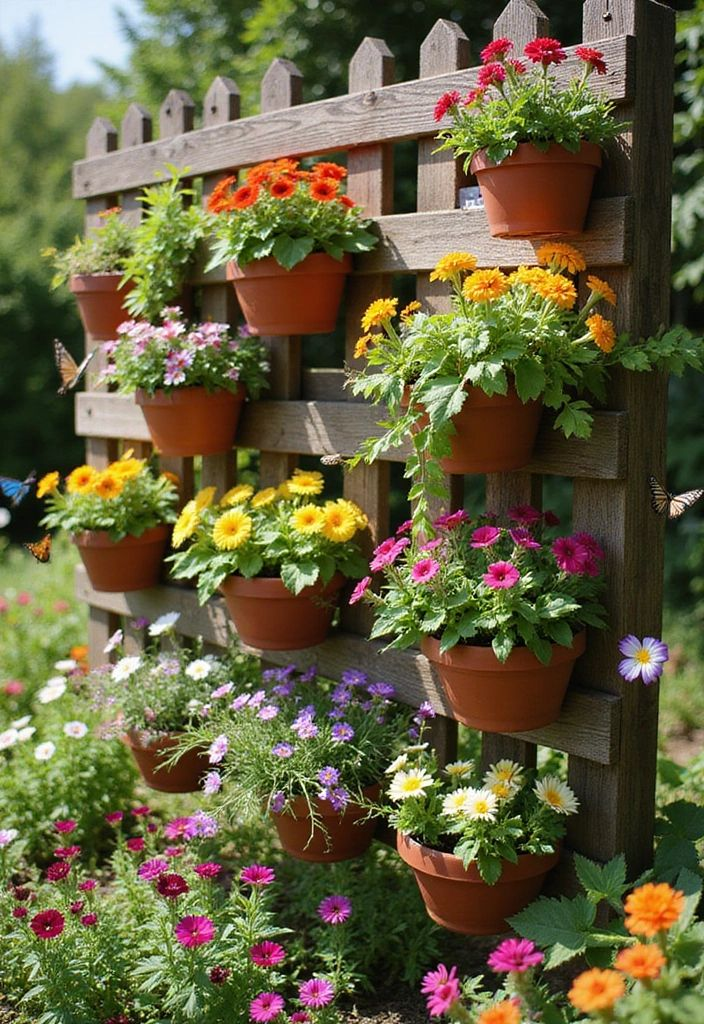
Wooden box frames fitted with wire mesh backs open up endless possibilities for layered floral displays. Attached to sturdy posts or exterior siding, these boxes serve as mini planting chambers that allow roots to spread horizontally while the mesh provides support for trailing stems. Fill each section with a blend of potting mix and compost, then tuck in shallow-rooted blooms like pansies, snapdragons, or alyssum. For added contrast, mix in cascading vines like ivy or sweet potato vine. The mesh back ensures airflow, reducing mold and root rot risks, while allowing decorative backdrops like painted walls or fences to peek through. Gardeners can stagger multiple boxes to create a full-height living wall or simply line a few at eye level for an artful effect. Wood can be stained to match outdoor furniture or left unfinished for rustic charm. Depending on the plant choice, this setup works for both partial shade and sunny exposures. Integrated drip irrigation or manual misting keeps the garden low-maintenance and thriving. These wood-box mesh structures strike the perfect balance between utility and beauty, offering structure to small garden spaces while encouraging layered color and greenery across vertical surfaces.
Terraced Stair-Riser Tiered Beds
Front porch steps, side hills, or unused risers become mini garden zones when converted into tiered planting beds. By building terraced frames from timber, bricks, or stone along stair risers, gardeners can introduce vertical flower displays that guide the eye upward and maximize tight areas. Each level can hold its own variety of annuals, perennials, or edible herbs, allowing for curated color gradients or pollinator-friendly mixes. Lining each bed with landscape fabric helps control weeds and retain soil. Drainage is crucial—ensure runoff can escape without pooling near stair edges. Ideal flowers include dianthus, violas, and dwarf zinnias for low-tier color, while taller salvia or snapdragons fit upper levels. This stair-step approach doubles as an artistic statement, particularly when mixed with potted arrangements or decorative stone edging. Consider adding solar lights along the borders for added nighttime charm. Because these beds are narrow, they’re easy to maintain and replant seasonally without hassle. Beyond aesthetics, this method improves soil control and prevents erosion on sloped properties. It’s a visually stunning way to bring blooms closer to everyday paths, making even routine entries feel lush and inviting.
Foodscaping: Mix Edible Flowers + Herbs
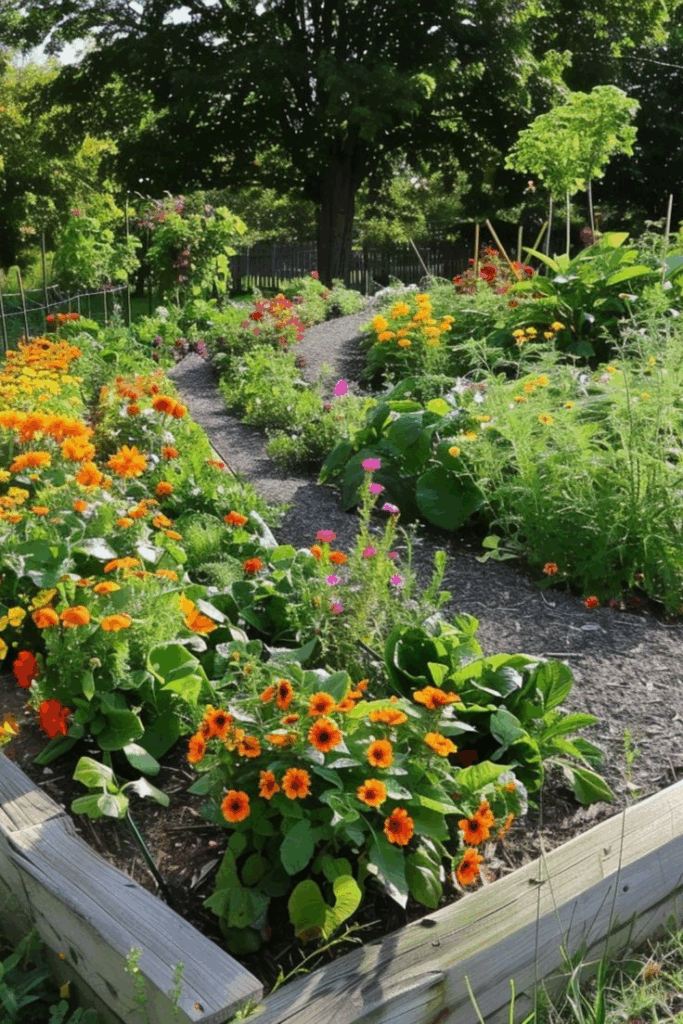
Practical meets pretty when edible flowers and culinary herbs share the same garden bed. This technique, often referred to as foodscaping, lets gardeners enjoy a harvest that’s both functional and visually stunning. Calendula, nasturtium, borage, and violas offer cheerful blooms that are safe to eat and attractive to pollinators. Pair them with basil, thyme, oregano, and chives to create a fragrant, diverse patch that serves both the kitchen and the ecosystem. Interplanting also deters pests naturally—nasturtiums act as aphid traps, while marigolds suppress nematodes. Raised beds or clustered containers work well for this mix, making harvesting easy and soil control manageable. For best results, choose varieties with similar sun and water needs, and stagger plant heights for layered aesthetics. Use bright blooms to edge borders while keeping sprawling herbs toward the center or back. This style of planting suits any size yard—from balcony pots to full garden beds—and reduces the need for artificial decor. It also encourages daily harvesting, keeping plants productive and fresh. Foodscaping brings color, scent, and utility into a single growing space, transforming traditional flower gardens into living, edible art while boosting sustainability in a stylish, low-maintenance way.
Cottagecore Pollinator Border Planting
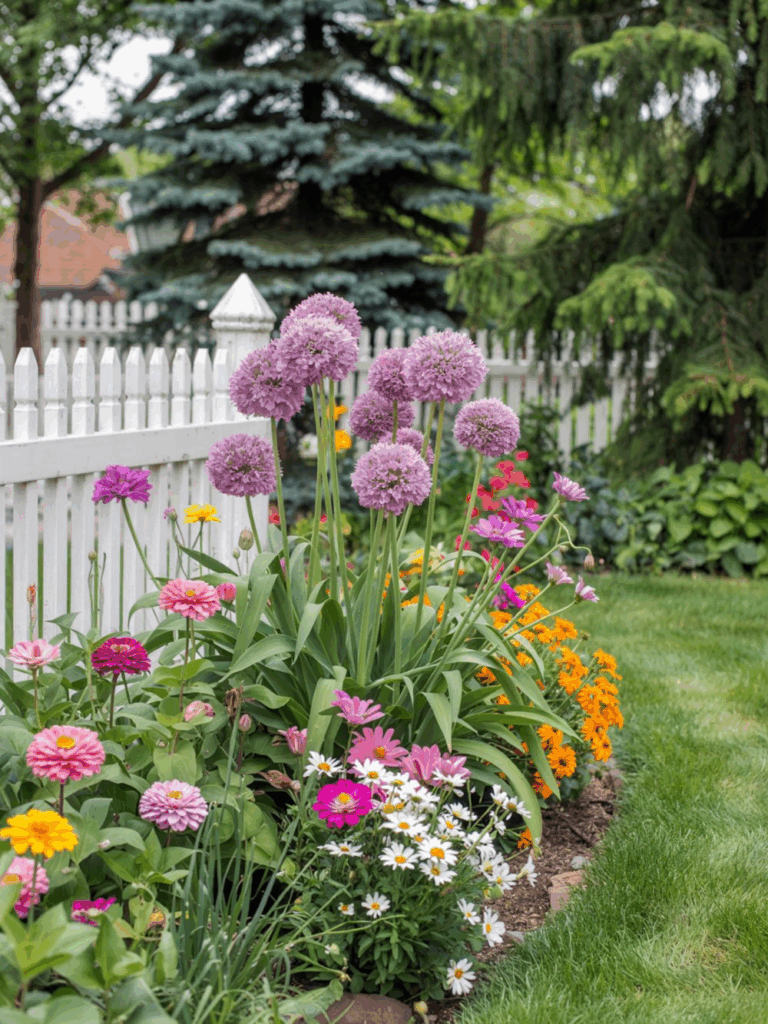
Romantic wildflower-style borders teeming with bee and butterfly activity define this nature-forward garden idea. Planting with pollinators in mind doesn’t mean sacrificing charm—just the opposite. Think soft layers of coneflowers, black-eyed Susans, yarrow, bee balm, and cosmos, arranged in relaxed, drifting groupings along fence lines, paths, or lawn edges. Mix self-seeding annuals with resilient perennials to ensure seasonal blooms with minimal replanting. Adding lavender, catmint, and echinacea enhances the sensory appeal while serving as nectar magnets for native bees and butterflies. Avoid double-flowered hybrids, which offer little pollen or nectar, and focus on native varieties to support local ecosystems. Tall stems and airy foliage encourage natural movement, giving borders a whimsical, lived-in quality that defines cottagecore aesthetics. Allowing some plants to go to seed also feeds birds in late summer and fall. To maintain order, anchor the edges with stone or brick, or tuck in vintage-style garden markers. Water deeply but infrequently, and let nature handle much of the pollination and pest control. These borders reward patience and neglect with bursts of color, sound, and motion—perfect for gardeners who value both function and nostalgic beauty. The result is a soft, overflowing edge that feels timeless yet ecologically smart.
Moon-Garden White & Silver Night Blooms
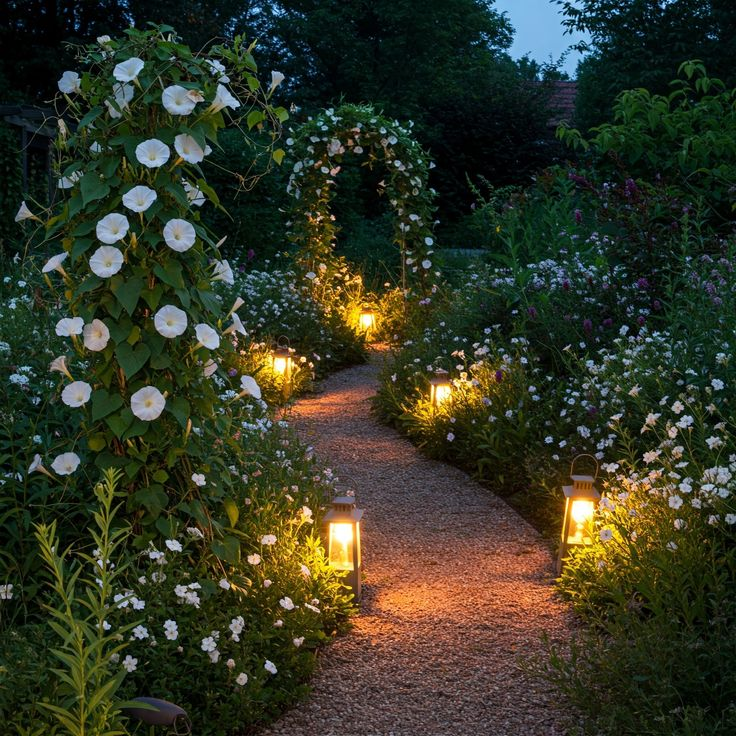
Soft light and reflective blooms turn nighttime gardens into enchanting escapes. By curating white and silver-toned plants, a moon garden shines under starlight and glows in low evening light. Blooms like moonflower, white nicotiana, alyssum, evening primrose, and night-blooming jasmine open after dusk, releasing a heady scent and drawing in nocturnal pollinators like moths. Silvery foliage from plants such as dusty miller, artemisia, and lamb’s ear reflect moonlight, enhancing visual texture even in shadow. Design your layout near patios, walkways, or bedroom windows where it’s easy to admire after sunset. Cluster plants in masses rather than isolated patches to boost visual impact at night. Incorporate light gravel paths, white-painted trellises, or reflective garden decor to further amplify the glow. Though many night bloomers prefer full sun during the day, their true magic appears as the light fades. Keep the garden lightly pruned for airflow and deadhead to prolong flowering. Mulching helps retain moisture, especially during warmer months. These gardens offer a serene alternative to high-color beds, creating a calming, sensory-rich experience for evening strolls or outdoor dining. With fragrance, soft color, and quiet ambiance, a moon garden transforms overlooked corners into dreamy, low-light sanctuaries.
Rustic Branch Trellis & Garden Markers
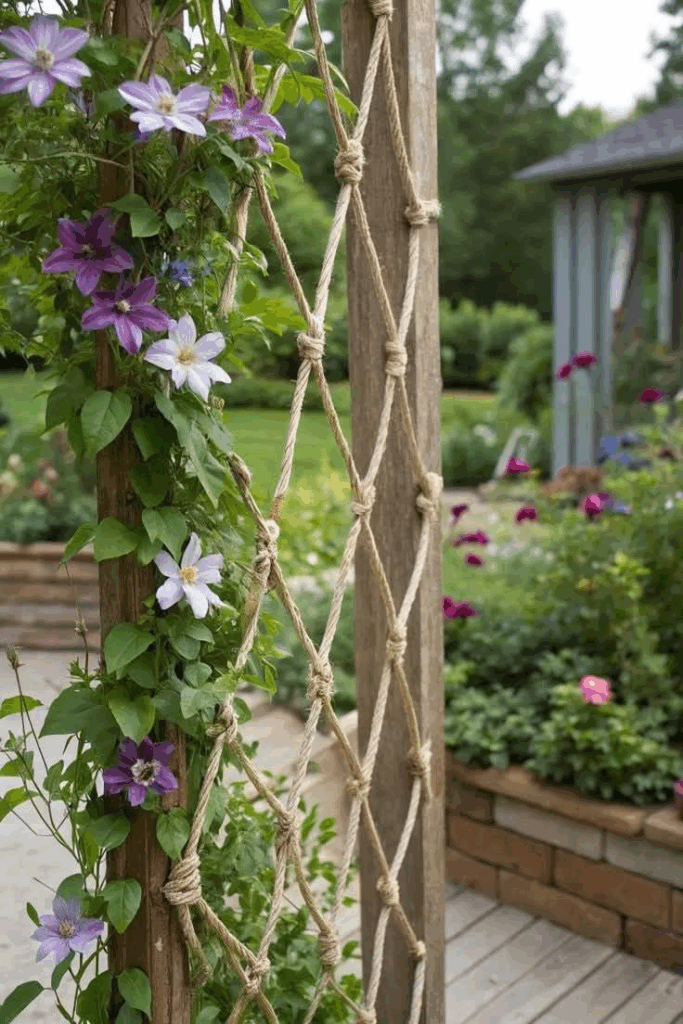
Gathered twigs and pruned branches offer more than firewood—they can be crafted into charming trellises and plant markers with minimal tools and zero plastic. Willow, dogwood, and saplings with bendable stems work best for arched or fan-style trellises that support climbing flowers like morning glories, sweet peas, or black-eyed Susan vines. Use twine or jute to lash branches together securely, creating organic, sculptural forms that naturally blend into wild or cottage gardens. For plant markers, slice small branches into flat rounds, write names using a woodburning tool or waterproof marker, and stake them directly into the soil beside each plant. These rustic additions age beautifully, weathering to soft grays and browns while remaining functional. They reduce the need for store-bought plastic, making them an eco-conscious solution. Placement near raised beds, containers, or fence lines helps contain growth and gives vertical lift to low gardens. Regularly inspect for rot or instability, especially in damp conditions, and replace branches seasonally if needed. These DIY features don’t just guide growth—they bring texture, personality, and a hand-built feel to any garden corner. Ideal for flower beds or herb plots, they make the garden look tended without ever feeling overdesigned.
Raised-Bed with Built-in Seating
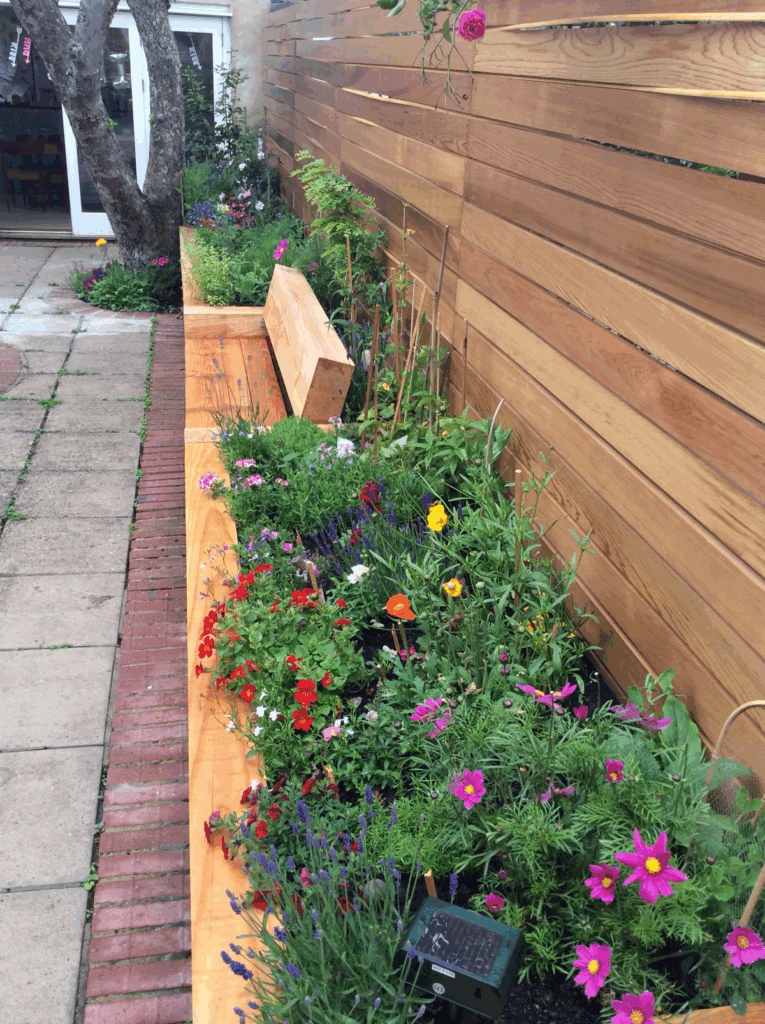
Integrating seating into a raised flower bed structure enhances both function and flow in compact outdoor spaces. By extending one or more bed edges into a flat, sturdy bench, you gain a spot to sit, observe, or garden up close without strain. Cedar, redwood, or treated pine makes a durable frame that resists rot, while corner brackets add support for weight-bearing use. Fill the bed with layered soil and compost, ideal for growing thirsty flowers like petunias, dahlias, or salvias. Position the seat edge facing a focal point—be it a birdbath, sculpture, or scenic view—to maximize the garden’s relaxing potential. This layout also encourages interaction, especially in communal or family gardens, where children can engage with the plants from a seated height. For narrow patios or side yards, these hybrids solve two problems at once—seating and planting. Add cushions for comfort or paint the bench in cheerful weatherproof hues. Drainage remains crucial, so include gravel layers or install a liner beneath the soil. Thoughtfully placed raised beds with seating turn flower zones into social spaces, offering both visual beauty and everyday functionality while reducing the strain of traditional ground-level gardening.
Wildflower Edge Border for Biodiversity
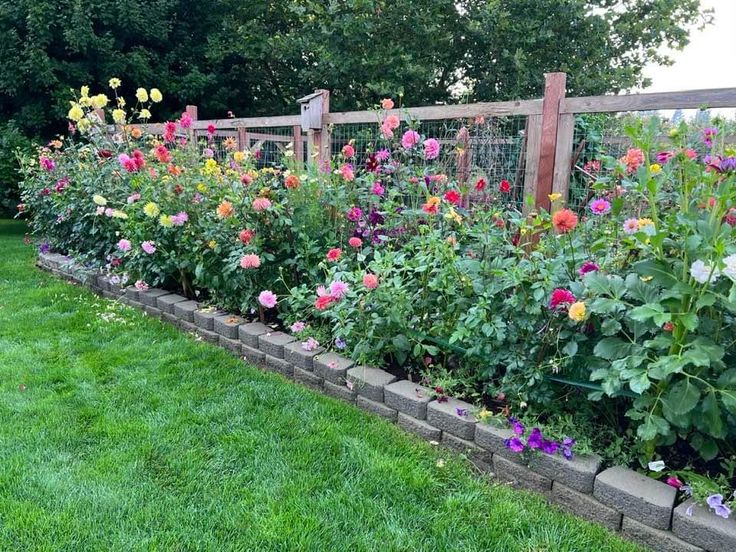
Planting a wildflower edge along property lines or between garden zones introduces seasonal beauty while supporting a thriving mini-ecosystem. Native wildflowers like black-eyed Susans, coreopsis, yarrow, and milkweed attract bees, butterflies, and beneficial insects critical to pollination and pest control. Mixing annuals and perennials ensures blooms from early spring through fall, keeping visual interest alive across months. Scatter seeds into cleared, well-drained soil in early spring or fall, and press gently to maintain good soil contact. Avoid over-fertilizing, as wildflowers thrive in lean soil and excess nutrients often lead to weeds. Mulching between clusters suppresses invasives and retains moisture during hot spells. These borders require minimal maintenance once established—just occasional thinning and deadheading. Visually, the effect is soft, natural, and slightly unkempt in the best way, fitting perfectly with organic and low-maintenance garden designs. Interspersing grasses like little bluestem or prairie dropseed adds movement and height variation. Over time, the area becomes a living habitat, welcoming birds, pollinators, and even small mammals, turning an unused margin into a thriving nature strip. For gardeners seeking sustainability and visual softness, this border is more than a design feature—it’s a quiet but powerful way to give back to the land.
Hanging Tin Pot Pallet Garden Sculpture
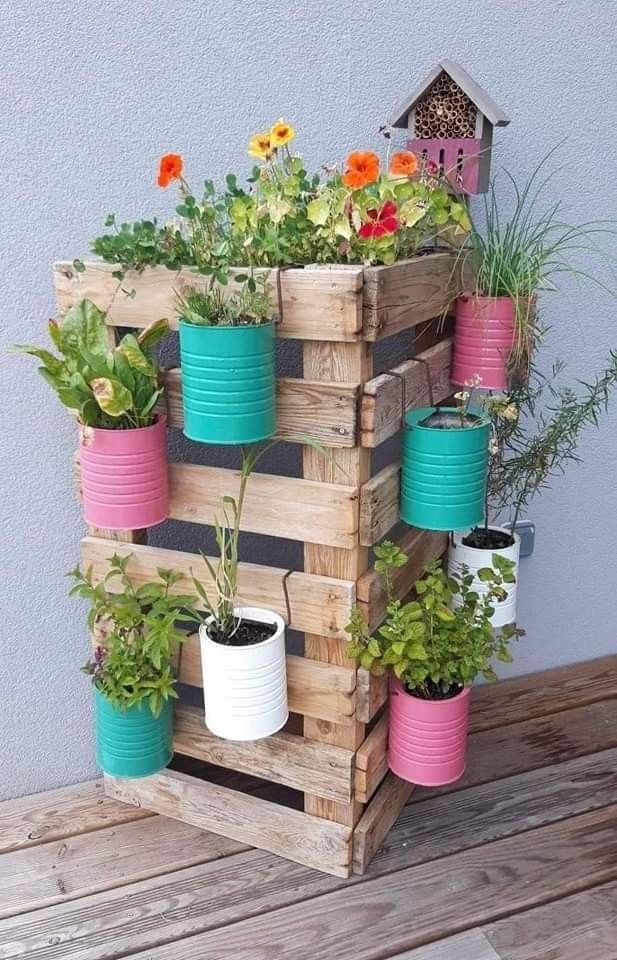
Weathered pallets and vintage tin pots come together in a sculptural flower display that doubles as wall art. By securing tin containers of varying sizes to a vertical pallet frame using pipe clamps or heavy-duty hooks, each pot becomes a small canvas for colorful blooms like calibrachoa, pansies, or trailing verbena. Staggered placement creates a waterfall effect, while the metal’s patina adds rustic character that improves with time. Drill drainage holes into the base of each pot and fill with lightweight, well-draining soil to prevent compaction. The vertical format suits narrow courtyards, balconies, or blank garden walls, turning unused space into a flowering focal point. Opt for hardy, shallow-rooted plants to minimize soil weight and watering needs. For added flair, paint the pallet in chalky whites or soft sage greens to match seasonal tones. If mounted near outdoor seating areas, fragrant flowers like lavender or sweet alyssum boost the sensory appeal. This DIY sculpture stands out for its charm, adaptability, and space-saving form. Beyond aesthetics, the modular nature allows for easy plant swaps as seasons change. It’s a functional, beautiful, and affordable way to turn salvaged materials into a blooming vertical centerpiece.