
First impressions often begin at the front porch—and nothing complements a white house like the perfect floral palette. Whether you’re aiming for curb appeal, seasonal charm, or a welcoming vibe, the right flowers can instantly enhance your entryway. White exteriors offer a clean backdrop that lets color pop, giving you endless freedom to style with contrast, texture, and vibrancy. From cascading containers to tidy border blooms, strategic planting around a white facade adds personality without overwhelming the space. This guide shares impactful flower ideas that not only suit different climates and porch sizes but also deliver beauty with lasting curbside appeal.
Blush Pink Petunias in White Urns
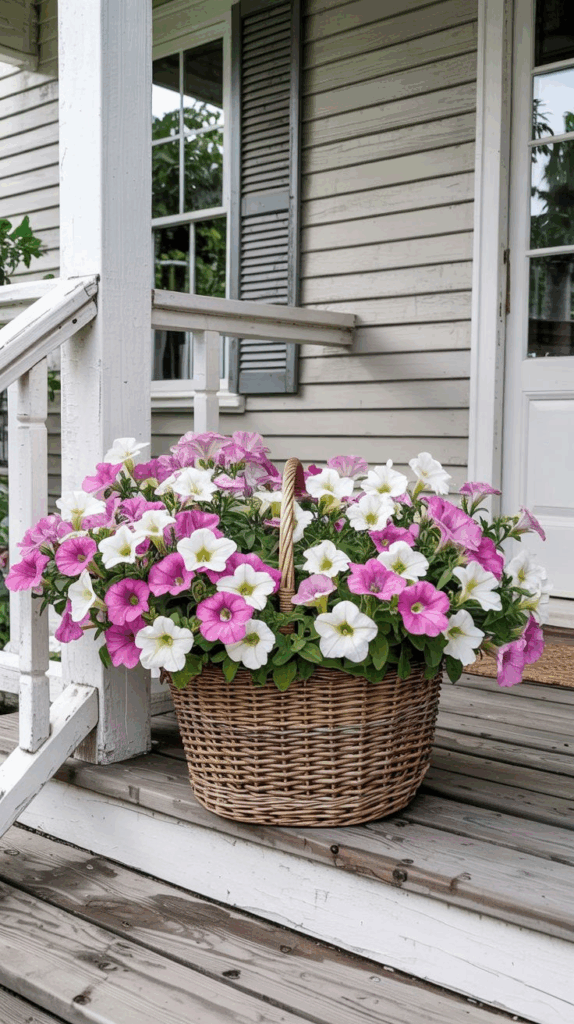
Whispers of color against a crisp white facade can transform any front porch into a charming welcome. Blush pink petunias, when placed in elegant white urns, deliver that gentle contrast effortlessly. Their cascading habit softens architectural lines, while their constant blooms throughout the warmer months ensure visual appeal from spring to early fall. These flowers thrive in full sun and require well-drained soil, making them perfect for urn-style containers with good airflow. Regular deadheading encourages continuous flowering and maintains a tidy look. White urns amplify the house’s neutral palette, allowing the subtle hue of the petunias to become the focal point. This setup not only looks polished but also complements classical and modern farmhouse-style exteriors. For added dimension, consider pairing with trailing white alyssum or silvery licorice plant to create gentle movement around the urn’s edges. The combination delivers balance, elegance, and visual rhythm without overpowering the simplicity of a white house. Whether flanking your entry steps or framing a sitting area, this pairing is low-maintenance and seasonally long-lasting. Ideal for those looking to introduce beauty without complexity, this flower choice remains one of the most dependable options for immediate front porch charm that feels cohesive with a white backdrop.
Lavender & Daisy Mix in Rustic Baskets
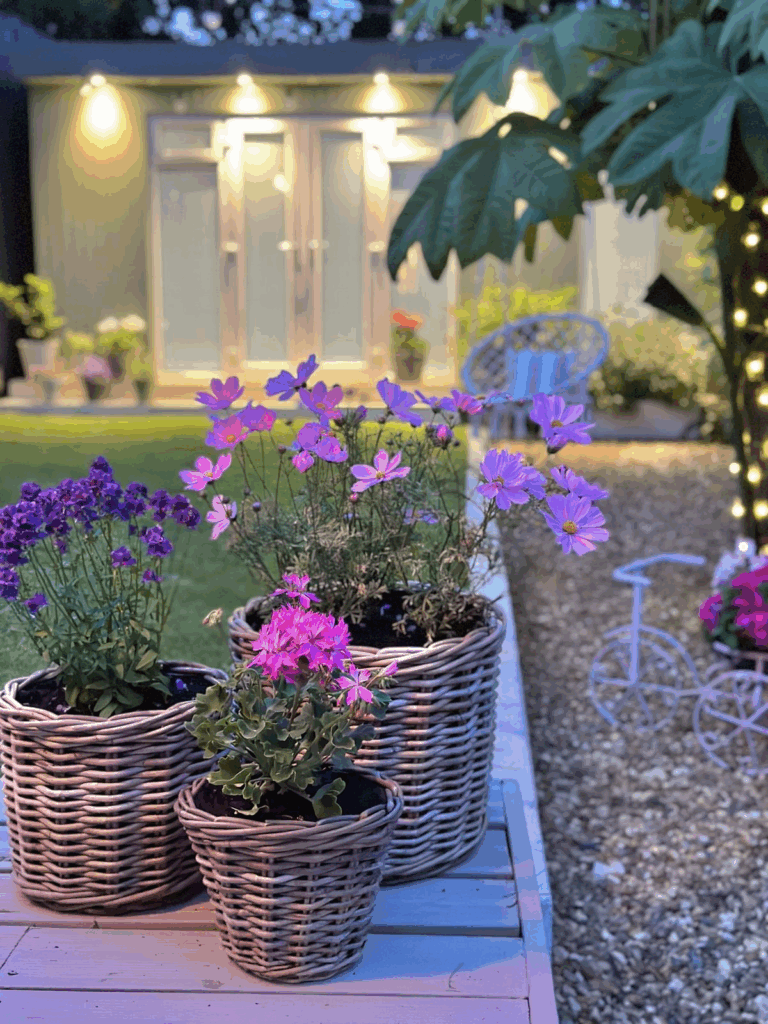
Rustic charm meets fragrant color when lavender and daisies share space in weathered baskets. This pairing suits any white house porch seeking a relaxed, countryside vibe. Lavender offers graceful spires with a calming aroma, while daisies add cheerful bursts of white and yellow, mimicking the brightness of the home’s exterior. When arranged in loosely woven baskets, the combination feels grounded and approachable. These flowers flourish in full sun and enjoy consistent watering without saturation. Elevate the natural texture by selecting baskets with visible age or patina—cracks and imperfections only enhance the storybook appeal. Lavender’s silvery-green foliage complements the starkness of the porch’s palette, while daisies brighten without clashing. Hanging the baskets from railings or setting them at different heights creates a layered visual field, ideal for small porches. A bonus: both plants attract pollinators, making your porch a mini ecosystem. This floral arrangement is particularly beneficial for readers seeking to bridge charm with functionality. As the seasons shift, swap in seasonal herbs like thyme or sage for a dynamic display. With just a little care and thoughtful placement, this combination provides year-round appeal and a welcoming softness that echoes timeless front porch sensibilities.
Hanging Geraniums Over Black Railings
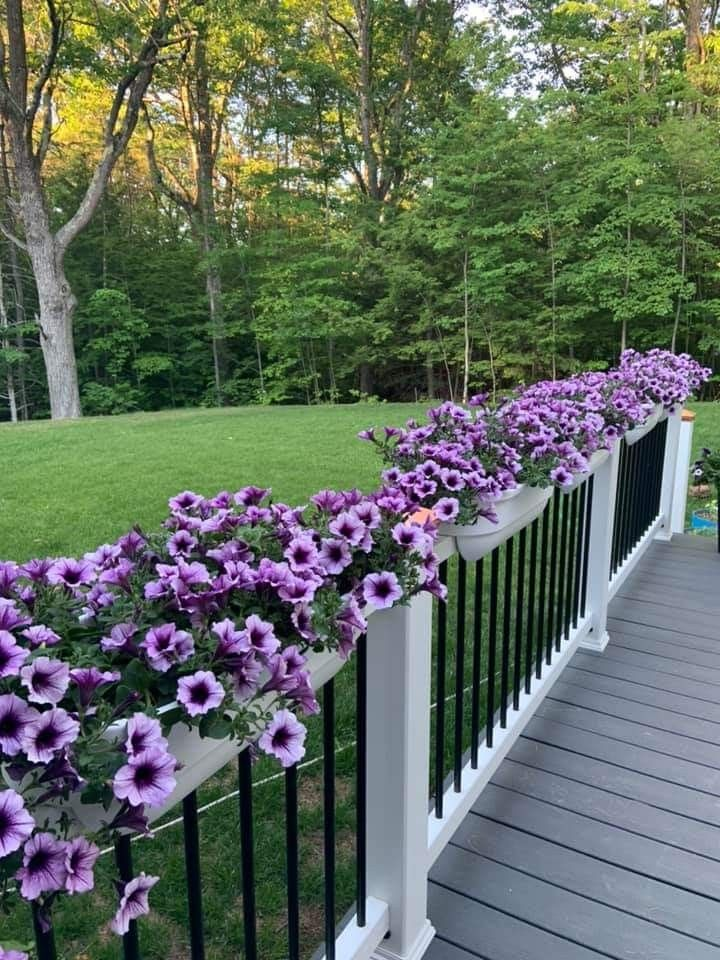
Striking black porch railings gain character and charm when paired with vibrant hanging geraniums. Their full blooms spill over the sides, softening hard lines and infusing bold color against neutral siding. Whether you choose classic red, soft pink, or white varieties, geraniums adapt well to hanging planters and provide consistent flowering when deadheaded regularly. Their slightly upright growth allows for both lush coverage and shape control, preventing overgrowth while still delivering volume. Choose sturdy, breathable containers to prevent root rot, especially in humid conditions. Drainage and sunlight are critical for keeping the blooms abundant and foliage lush. Hanging these baskets along the railing—either symmetrically or staggered—introduces dimension at eye level without cluttering your walking path. For a more refined look, opt for trailing ivy or cascading vinca around the base of each geranium planter to add texture and visual balance. When matched with black railings, the flowers become vivid highlights rather than competing elements, allowing both architectural and natural beauty to coexist. This solution works beautifully for homeowners seeking a fuss-free yet impactful porch upgrade. With minimal effort and smart placement, geraniums bring enduring vibrancy that pairs seamlessly with both classic and contemporary white house exteriors.
Coral Begonias Framing the Front Steps
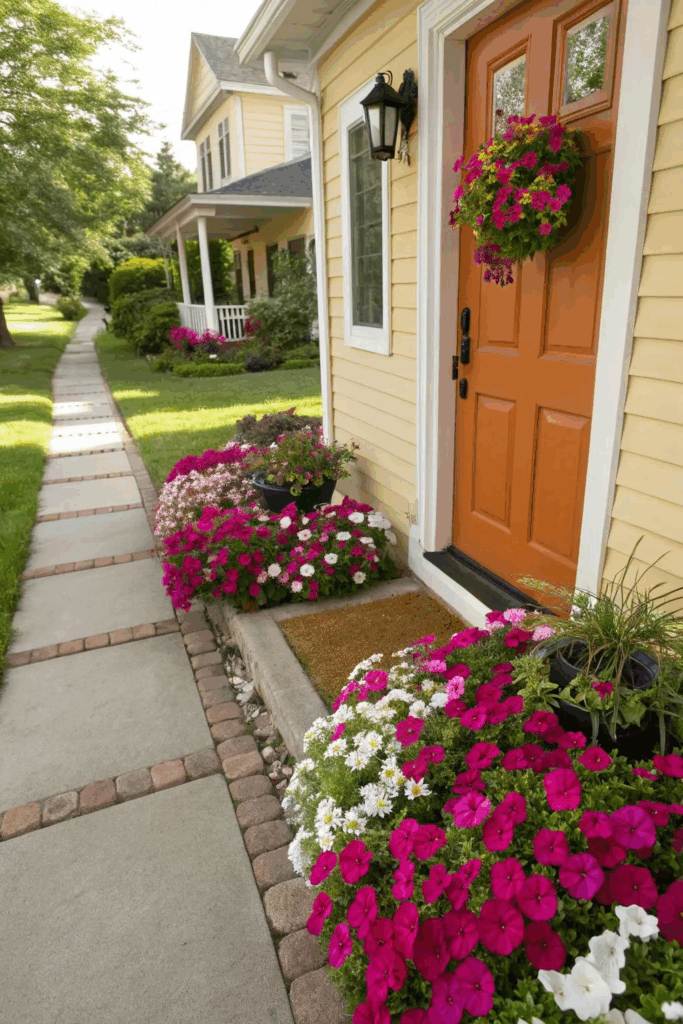
Framing your front steps with vibrant coral begonias creates a warm and inviting transition from yard to porch. These shade-tolerant bloomers thrive even under partial cover, making them perfect for areas where direct sun is limited. Their lush green foliage contrasts brilliantly with white exteriors, while the coral hue introduces a sophisticated burst of color that doesn’t overwhelm. Choose medium to large pots in muted tones—charcoal or stonework textures pair especially well—to allow the begonias’ vivid flowers to stand out. Line them symmetrically up each side of your steps, starting at ground level and rising as the stairs ascend. This approach draws the eye upward and naturally guides visitors toward the entrance. For a fuller look, underplant with creeping Jenny or sweet potato vine to add trailing interest and soften edges. Begonias require moist but well-drained soil and benefit from a balanced, slow-release fertilizer to keep blooming throughout the season. They’re also deer-resistant, which is helpful for exposed front yards. For homeowners seeking a colorful yet polished entry, this arrangement is low-maintenance and high-impact. Coral begonias offer long-lasting color that complements the brightness of a white home without clashing or feeling overpowering.
Hydrangea Bushes with Boxwood Borders
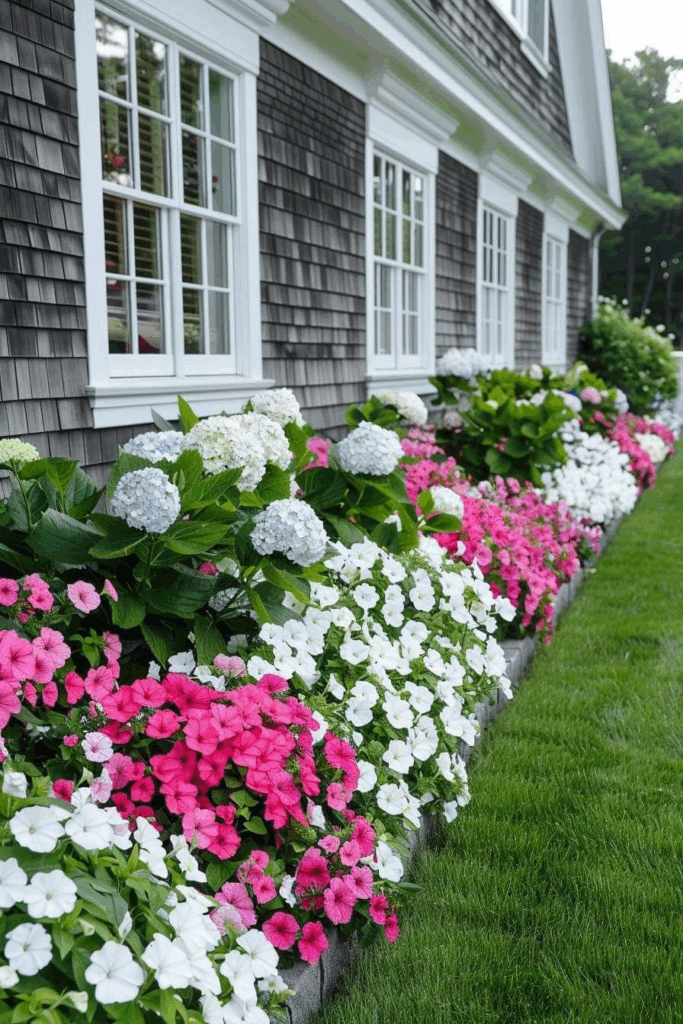
Elegant curb appeal is easy to achieve with the timeless pairing of hydrangea bushes and manicured boxwood borders. This classic combination creates a full, structured look that works beautifully with white house exteriors. Hydrangeas provide voluminous blooms in pink, blue, or white, depending on soil pH, and they thrive in partial sun with well-drained, rich soil. Their rounded forms offer a soft contrast to the sharp lines of a house’s foundation or porch columns. Boxwoods, on the other hand, provide low, evergreen structure year-round, making them perfect for defining flower beds or lining walkways. Their compact shape and dense foliage create visual order that balances the airy nature of hydrangea blooms. This duo is particularly useful in layered beds, where you want height variation and a sense of seasonal rhythm. For symmetry and drama, consider planting hydrangeas in repeating clusters with boxwoods encircling the base. Use mulch to retain moisture and reduce weeds without disrupting the design’s clean look. This landscaping solution doesn’t just beautify—it adds value and architectural interest to your porch area. Ideal for readers wanting long-term visual interest with minimal replanting, this pairing delivers perennial beauty anchored in refined garden structure.
Trailing Ivy with Mini White Impatiens
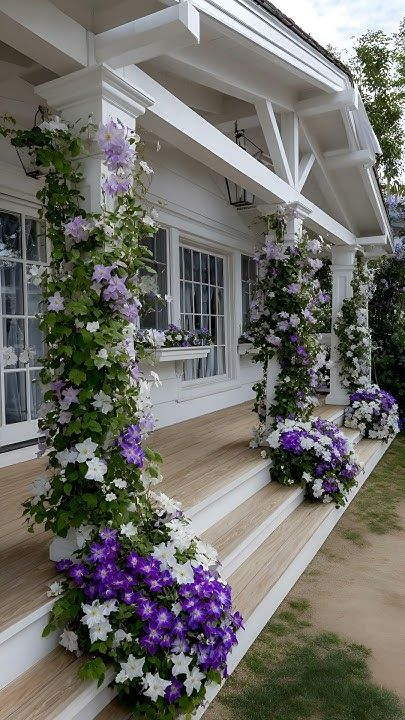
Trailing greenery paired with delicate white blooms can add life and softness to a white porch without overwhelming its clean aesthetic. Ivy’s cascading tendrils provide year-round movement and texture, while mini white impatiens fill the gaps with continuous flowering from spring through fall. Both plants are shade-loving and work especially well in covered porches or areas with indirect light. Use shallow planters mounted on railings or ledges to allow the ivy to spill naturally while the impatiens provide mounded floral coverage. To avoid root crowding, ensure containers are at least 10–12 inches deep and include proper drainage. The bright white petals echo the home’s siding, tying the look together, while the ivy introduces subtle contrast with its lush foliage. This pairing thrives with consistent watering and benefits from slow-release fertilizer applied monthly during the growing season. Ideal for readers seeking low-effort porch accents, this combination brings both structure and softness to railings, steps, or window box displays. For a modern twist, opt for galvanized metal containers, or go classic with painted wood window boxes. Either way, the visual payoff is lasting and highly welcoming without needing constant upkeep. This makes it a reliable and attractive floral solution for shaded white porches.
Bright Marigolds in Matte Terracotta Pots
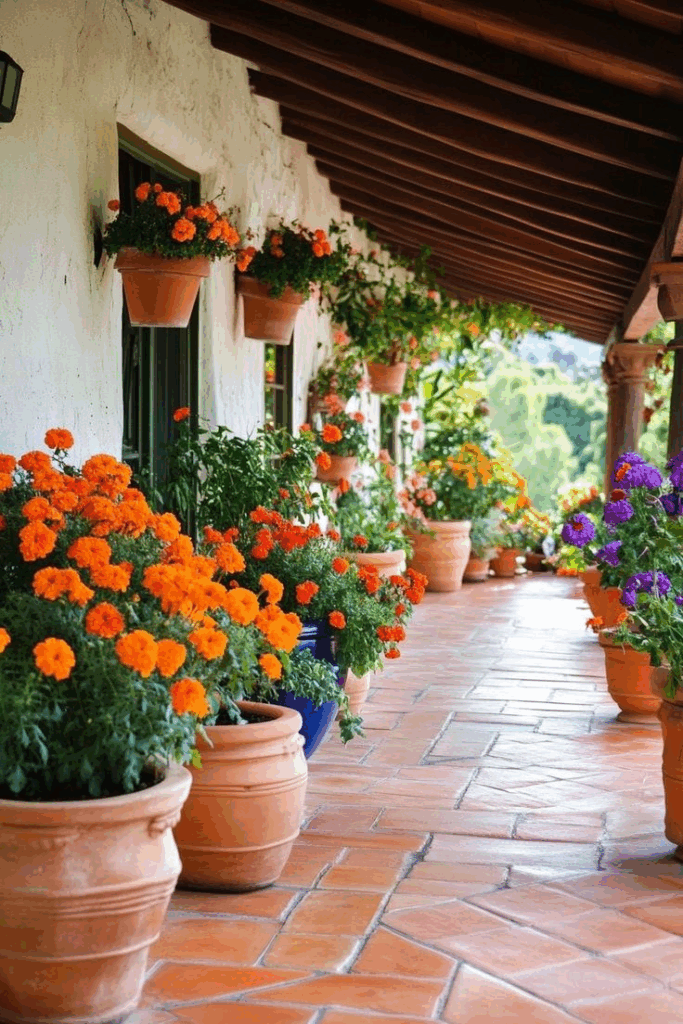
Few floral choices offer the sunny vibrance and resilience of marigolds, especially when planted in earthy terracotta containers. Their fiery yellow-orange blooms add instant energy to a white house porch, standing out boldly without feeling mismatched. Terracotta’s matte texture and warm tones ground the brightness of marigolds, making the pairing feel intentional and timeless. This setup works well in both traditional and eclectic porch styles, especially when arranged in clusters of varied pot sizes. Marigolds prefer full sun and dry, well-drained soil—perfect for front porches that receive steady daylight. Their pest-repellent properties also make them practical as natural garden guardians. To maintain a clean, flourishing look, remove spent blooms regularly and water only when the topsoil feels dry. Grouping pots along steps or framing the entry path adds symmetrical impact and flow. Pairing with companion foliage like dusty miller or basil can enhance visual texture while offering added function. This combination is especially suited for readers seeking bold porch appeal without the hassle of high-maintenance plants. Marigolds in terracotta not only hold their own against a white exterior—they thrive, turning simple porch corners into cheerful highlights all season long. Their sun-loving nature makes them a reliable choice for warm-weather front yard statements.
Soft Pastel Zinnias Along the Walkway
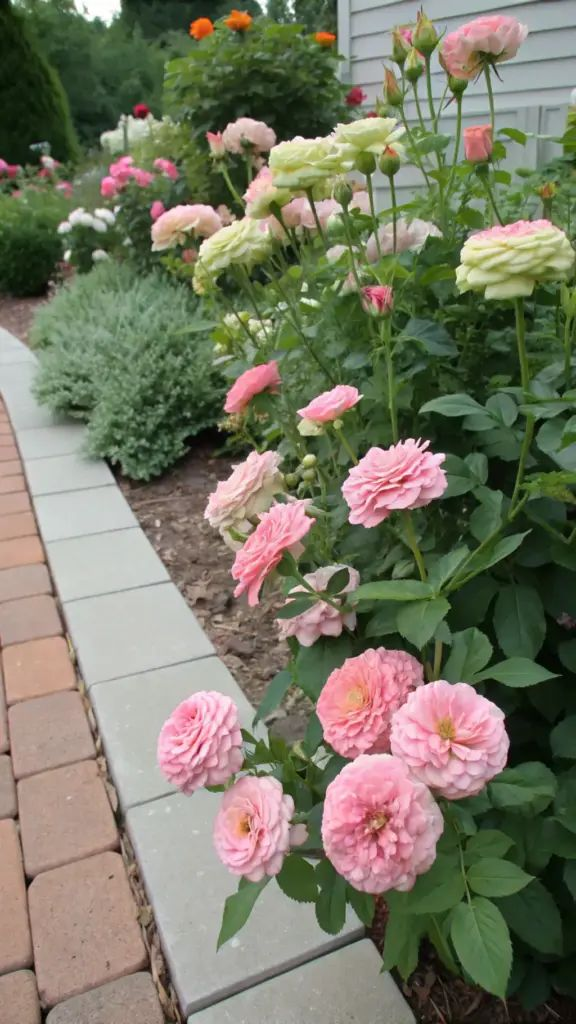
Lining a front walkway with pastel zinnias introduces gentle color progression that naturally leads the eye toward the porch. These easy-to-grow annuals bloom in a rainbow of soft shades, including pale peach, blush, lavender, and ivory—each complementing the brightness of a white house without overwhelming it. Their upright, branching stems support layers of full blooms, ideal for filling in borders or narrow beds. Zinnias love the sun and require minimal attention beyond consistent watering and deadheading to prolong their flowering cycle. For a harmonious walkway display, plant in staggered clusters with slight overlap between colors. This creates a painterly effect that feels curated but organic. Mix in dwarf varieties near the path’s edge to keep the planting low and defined. Pairing with soft green accents like lamb’s ear or artemisia adds a muted backdrop that enhances the floral tones. As guests walk the path, the steady rhythm of pastel zinnias provides a warm welcome that feels effortless yet refined. This layout suits readers looking for structure, color harmony, and simplicity in their porch approach. With long-lasting blooms and high tolerance for heat, zinnias offer a low-fuss solution that enhances curb appeal with romantic garden charm.
Potted Sunflowers by the Porch Columns
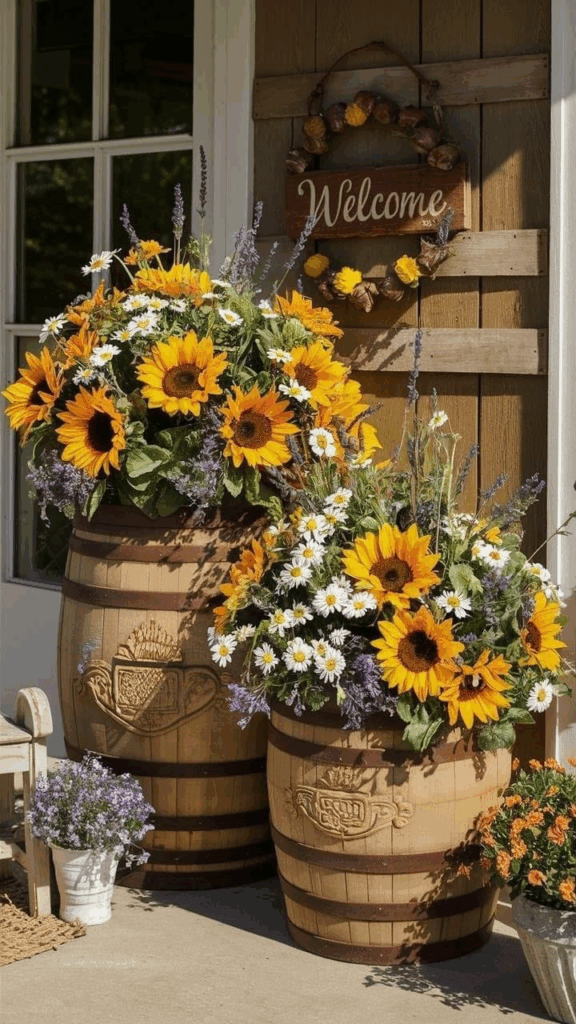
Sunflowers bring instant cheer and bold height when positioned near front porch columns. Their sturdy stems and large golden blooms contrast beautifully with white house exteriors, creating a lively focal point that feels natural and bold. While often grown in garden beds, dwarf or patio varieties are well-suited for containers and thrive with six or more hours of direct sunlight. Use large, heavy pots—at least 12 inches deep—to support root systems and prevent tipping as the flowers grow. Placing them near porch columns emphasizes vertical lines and architectural symmetry while drawing the eye upward. Their broad leaves offer visual fullness, while the blooms themselves act as natural porch beacons, especially when planted in pairs to flank the entrance. For visual balance, mix in trailing plants such as creeping jenny or calibrachoa at the base of the container to soften edges. Sunflowers typically bloom mid to late summer and require minimal care beyond watering and light feeding. Their presence adds rustic charm and works well for homes with farmhouse, cottage, or classic Southern appeal. For homeowners seeking a front porch statement that’s easy to maintain and seasonally vibrant, sunflowers in pots deliver a spirited welcome grounded in warm, natural color.
Peach and White Rose Bush Combo
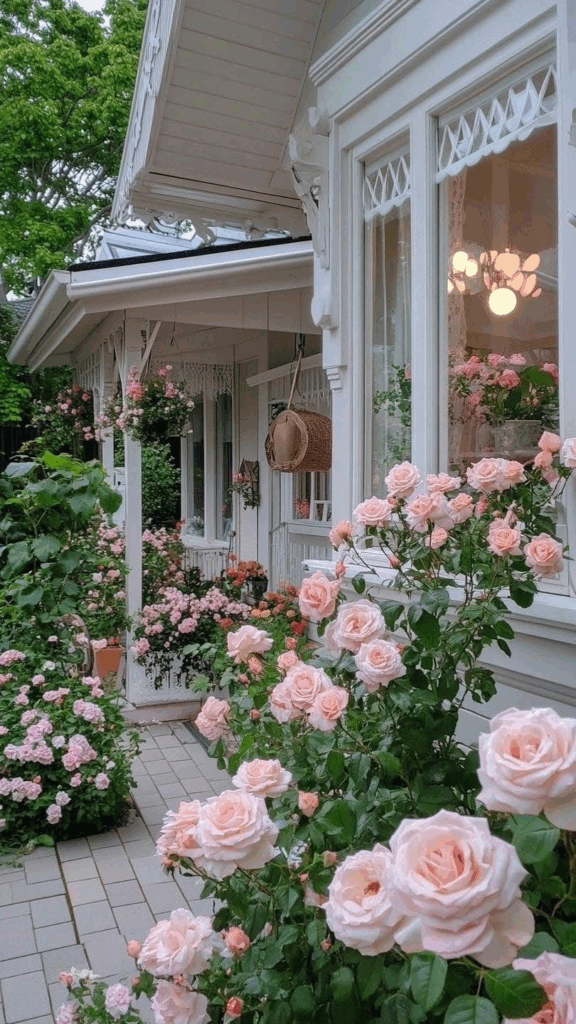
Mixing peach and white rose bushes near a white house front porch yields an elegant color blend that feels intentional and graceful. The peach tones bring warmth, while the white roses echo the home’s palette, making this duo an ideal match for a romantic yet clean design aesthetic. Both varieties prefer full sun and well-drained soil, and once established, they offer long-lasting blooms from spring through fall. Arrange the bushes symmetrically on either side of steps or foundation beds to frame the porch with a soft gradient of color. Roses require regular pruning, feeding, and pest checks, but modern cultivars have been bred for improved disease resistance and lower maintenance. Adding low-growing filler plants like alyssum or lamb’s ear between the bushes can help anchor the space and highlight the height difference. To boost fragrance and pollinator appeal, include lavender or catmint as complementary companions. This combination not only provides beauty—it offers a luxurious sensory experience for guests as they approach. For homeowners who enjoy tending to plants and want a porch display that matures gracefully over time, this rose pairing is both classic and striking. The resulting display enhances the porch with a storybook quality that elevates curbside charm.
Layered Planters with Dusty Miller Accents
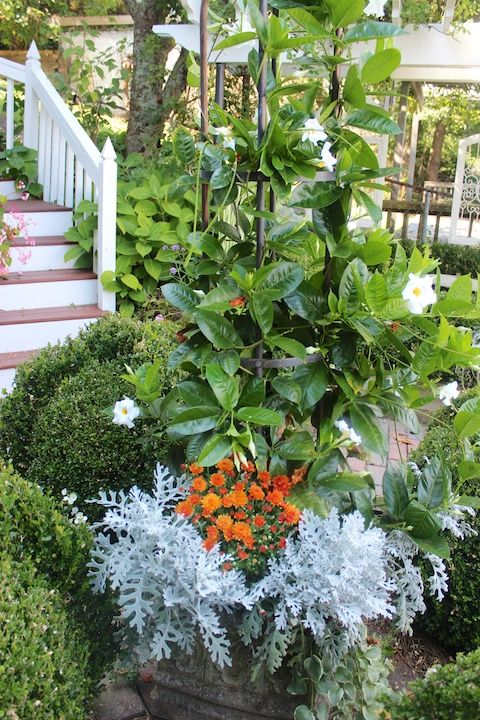
Stacked or tiered planters allow for striking vertical interest, and when framed with the silvery foliage of dusty miller, the arrangement feels both structured and softly whimsical. Dusty miller’s velvety leaves provide a muted contrast to colorful blooms and pair beautifully with a white house exterior. Use layered planters in natural tones—terra cotta, aged iron, or cement—to allow the foliage and flowers to shine without visual competition. Place dusty miller in the outer edges or top layers, then mix in flowers such as pastel pansies, trailing lobelia, or petunias in blush, lavender, or white. This creates a cascading effect with a soft base and vivid highlights. The silver-gray foliage complements most flower hues while also tying back to the clean lines of a white porch. These planters are best positioned near steps or corners where vertical elements can add depth and rhythm to the entry area. Dusty miller thrives in full sun and requires minimal care, making it an ideal anchor plant in multi-tier displays. For readers wanting a container garden that looks curated yet is easy to maintain, this combination offers longevity, flexibility, and year-round texture. The layers provide dynamic structure without crowding the porch’s natural charm.
Window Box Florals with Pink Calibrachoa
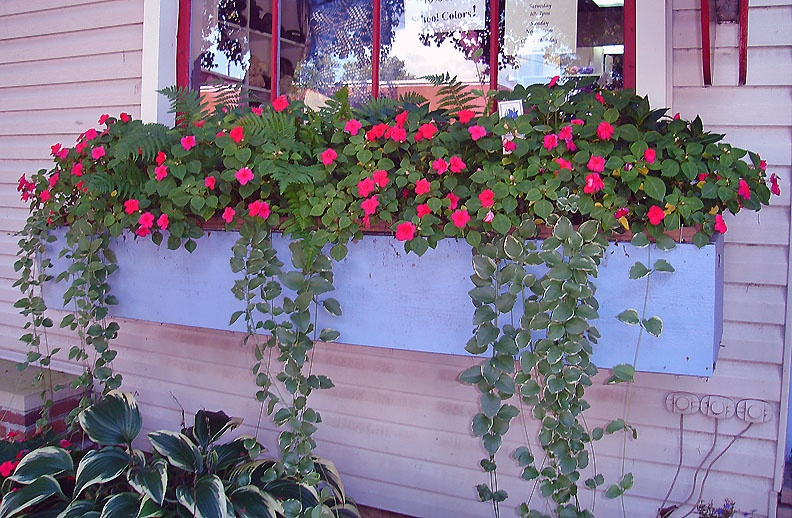
Brightening porch windows with lush, trailing calibrachoa in shades of pink brings movement and charm to any white home exterior. Often referred to as “mini petunias,” calibrachoa offers a continuous display of delicate blooms that spill gracefully over the edges of window boxes. Paired with structured fillers like trailing bacopa, white lobelia, or even ivy, this mix brings a layered look ideal for narrow spaces. These compact annuals thrive in full sun and appreciate well-drained soil, especially in containers that can dry quickly in warm weather. For best results, water daily during peak summer and feed with a liquid fertilizer every couple of weeks. Calibrachoa is self-cleaning, meaning there’s no need for deadheading—an added bonus for busy homeowners. The pink hues add soft contrast against a white backdrop, providing enough color without disrupting the home’s serene aesthetic. This arrangement works beautifully for cottages, farmhouses, or modern porches where space may be limited but visual impact is still a priority. A trio of window boxes filled with calibrachoa can unify the porch visually and make it feel thoughtfully dressed in blooms. For those seeking vibrant color with little effort, this floral choice offers cascading beauty that feels fresh all season long.
Ground-Level Cosmos in Clusters
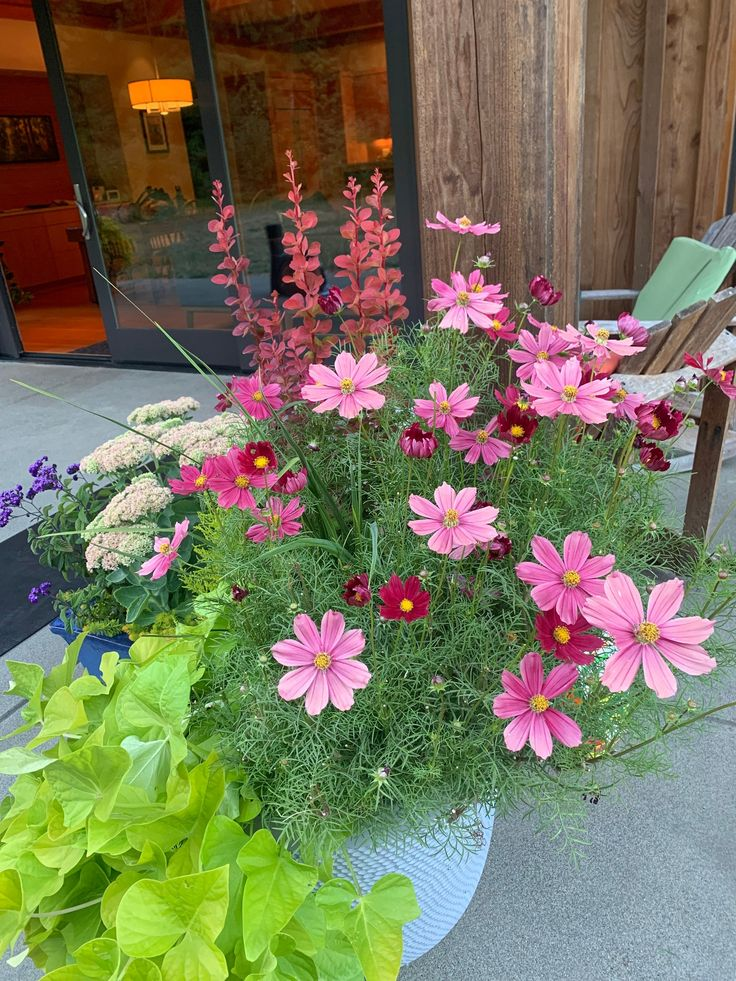
Clusters of cosmos planted at ground level can introduce a wild, carefree rhythm to a front porch garden. These daisy-like blooms with feathery foliage grow quickly from seed and offer a generous flush of color in shades like white, pale pink, and fuchsia. Their height and airy structure lend themselves well to the base of porch steps, along the walkway, or in adjacent garden beds. Cosmos thrive in full sun and well-drained soil, performing best when not overwatered or over-fertilized. Plant them in uneven groupings of five to seven for a more natural, cottage-garden feel, letting taller varieties sway gently in the breeze while shorter ones fill in near the edges. Their informal aesthetic pairs beautifully with the crisp white backdrop of a house, offering contrast without feeling overly styled. The flowers also attract bees and butterflies, turning the porch approach into a pollinator-friendly path. Cosmos reseed easily, making them an affordable and low-maintenance choice for long-term seasonal color. Ideal for those who appreciate a looser, more organic porch garden design, these blooms work as a soft visual bridge between lawn and architecture. The result is a colorful yet unfussy look that feels as effortless as it is inviting.
White Porch Swing Surrounded by Snapdragons
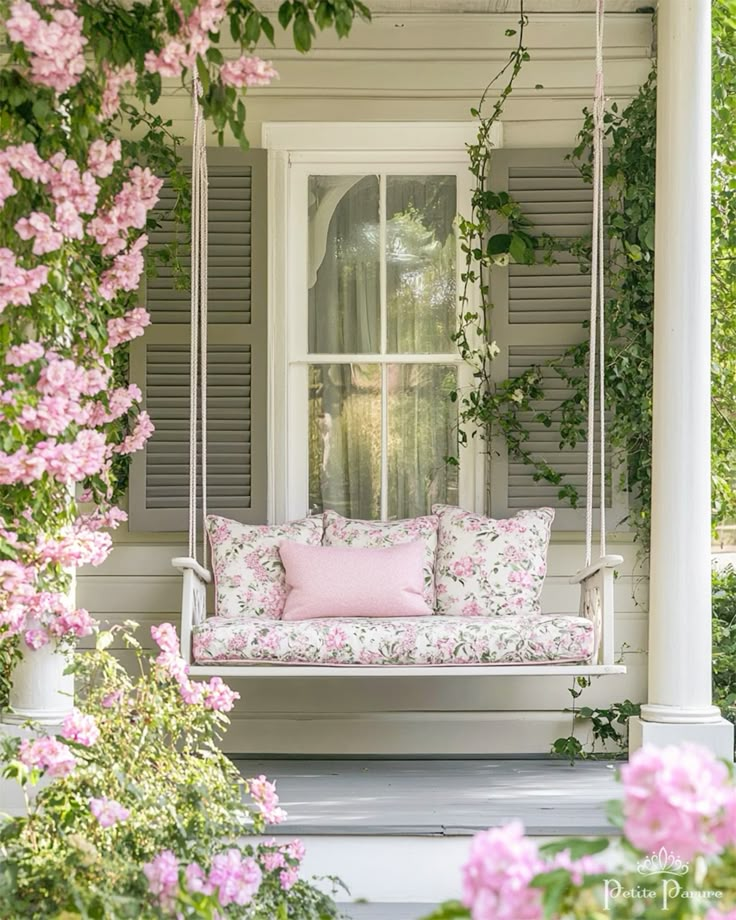
A white porch swing becomes even more charming when surrounded by upright blooms like snapdragons. These vertical flowers create a living frame that adds both color and texture without overwhelming the tranquil setting. Snapdragons offer a palette of pinks, corals, whites, and yellows—ideal for blending in with white siding while introducing seasonal vibrancy. Their height makes them perfect for placing behind or beside a swing, acting almost like a floral backdrop. For a more immersive garden feel, stagger them in rows using containers or narrow garden beds. These flowers prefer cooler temperatures and partial to full sun, making spring and fall their peak blooming seasons. Well-drained soil and weekly watering keep them thriving, especially when spaced properly to allow airflow. Snapdragons also attract pollinators and can bloom again if trimmed after the first flush. For added texture, plant trailing alyssum or low-growing geraniums around the base to soften the transition from flower bed to swing area. This layout works beautifully for homeowners looking to enhance a seating zone without adding clutter or complex design elements. The result is a serene retreat framed by colorful spires—perfect for slow mornings, evening conversations, or just admiring the front yard’s evolving floral story.
Bold Red Salvia in Corner Pots
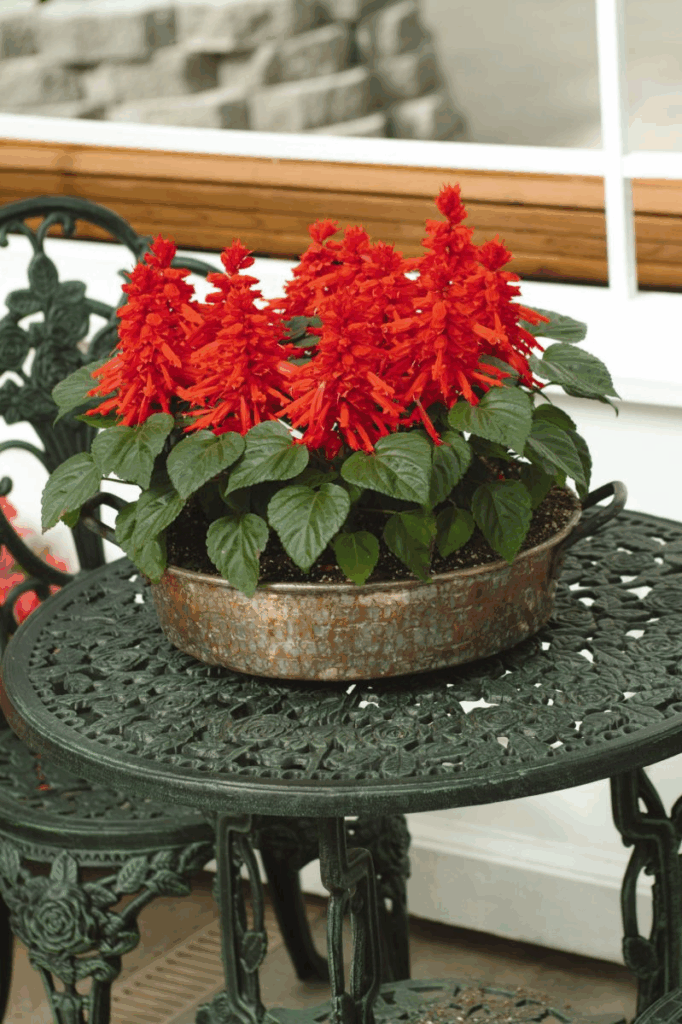
Strategically placing red salvia in corner planters can add definition and bold energy to a white house porch. These spiky blooms offer vertical movement and vivid scarlet tones that command attention, especially when set against crisp, neutral siding. Salvia is sun-loving and drought-tolerant, making it ideal for hot, exposed corners where other plants might struggle. Use sturdy ceramic or metal containers to stabilize their upright form and prevent tipping during windy days. Arrange them symmetrically at porch corners or steps to frame the space and guide the eye toward the entrance. Red salvia pairs well with dark green foliage or trailing accents like creeping jenny for added contrast. Deadheading the spent blooms encourages continued flowering, and their pollinator-friendly nature ensures butterflies and hummingbirds will be frequent visitors. These perennials or annuals (depending on zone) deliver strong visual structure and are especially effective in formal or symmetrical porch layouts. For homeowners looking to balance softness with boldness, red salvia offers color that won’t fade into the background. This plant thrives with minimal upkeep and lends a classic, confident flair that enhances architectural lines. Whether your porch is expansive or compact, corner pots with salvia inject a grounded vibrancy that lasts through the growing season.
Blue Lobelia for Cool Contrast Pop
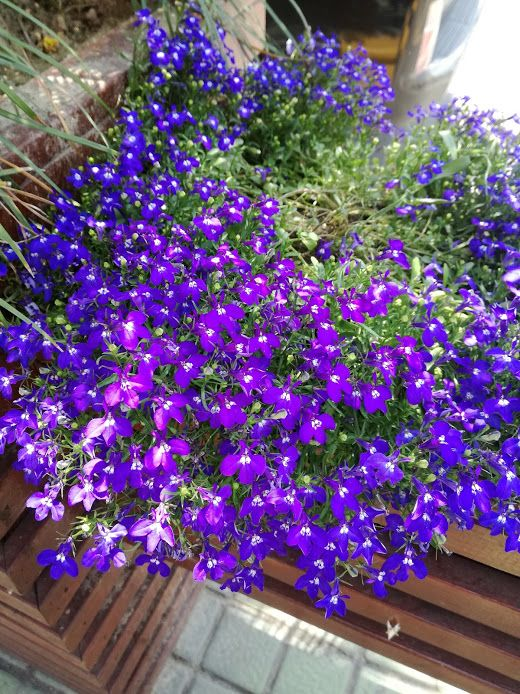
Introducing a touch of blue through cascading lobelia brings a refreshing cool note to the warm tones of a front porch. Against a white exterior, its vivid indigo blooms provide high contrast without overpowering the space. Ideal for hanging baskets, window boxes, or planter edges, lobelia grows in soft draping patterns that fill gaps and soften hard edges. These flowers prefer cooler temperatures and partial sun, thriving in early spring and fall with moist, well-drained soil. Their petite blossoms appear in dense clusters, adding texture and volume in a compact footprint. To keep lobelia blooming longer, consistent watering is key—dry spells can cause quick decline. When combined with white or pastel companions such as alyssum or pink calibrachoa, the color harmony feels soothing and intentional. These accents can be used around porch railings, steps, or ledges to introduce gentle color variety that breaks visual monotony. Lobelia’s trailing form also adds gentle movement, enhancing the porch’s welcoming vibe. For homeowners seeking subtle elegance with a cool undertone, this option delivers vibrant clarity and grace. The result is a polished yet relaxed look that beautifully complements the clean lines and brightness of a white house exterior without overwhelming the eye.
Mini Dahlia Mix for Planter Variety
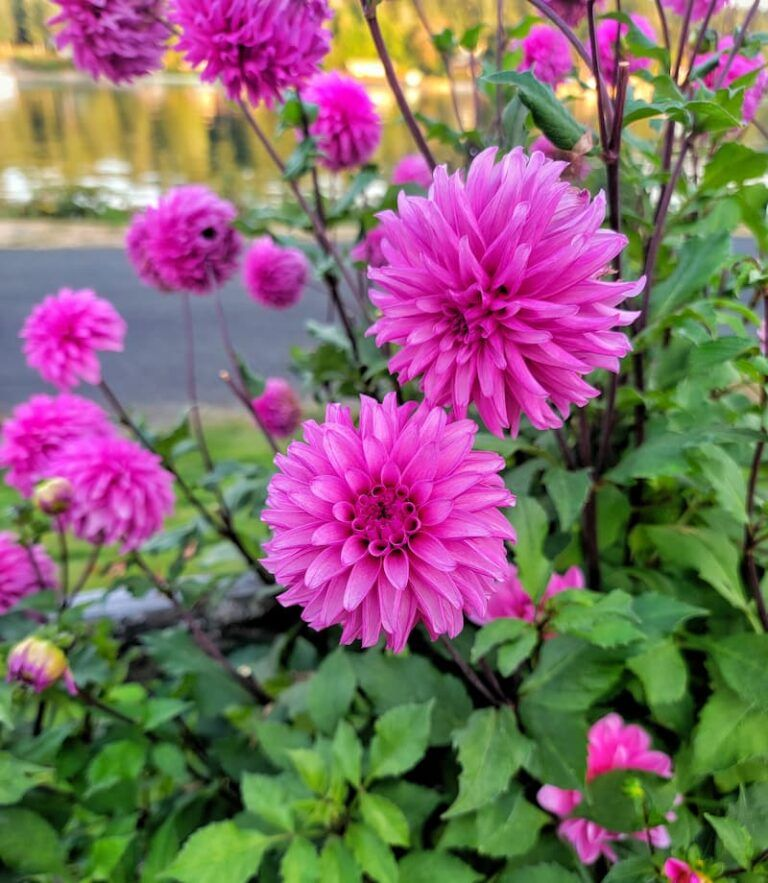
Compact dahlias offer brilliant color diversity in a tidy form, making them ideal for porch planters where space and structure matter. These small-scale varieties come in shades of peach, raspberry, ivory, and soft red, providing bold tones in manageable bursts that harmonize with white siding. Their symmetrical, petal-packed blooms add texture and volume to pots, creating a rich display that feels lush but orderly. Mini dahlias thrive in full sun with well-drained soil and require regular deadheading to maintain their flower production. Grouping them in wide planters or mixed containers alongside low-growing companions like dusty miller or coleus adds contrast in both color and form. Because they grow upright without sprawling, they’re excellent choices for porch corners, stair landings, or anywhere visual punch is needed without sacrificing space. Fertilizing every couple of weeks helps sustain their blooms throughout the summer. This mix is especially appealing to homeowners who enjoy dynamic color schemes without the commitment of replanting perennials. For those wanting a floral setup that looks curated yet full of personality, mini dahlias offer maximum impact in a small package. Their sculptural form and vivid palette make them natural showpieces for any white house porch layout.
Monochrome White Flower Porch Palette
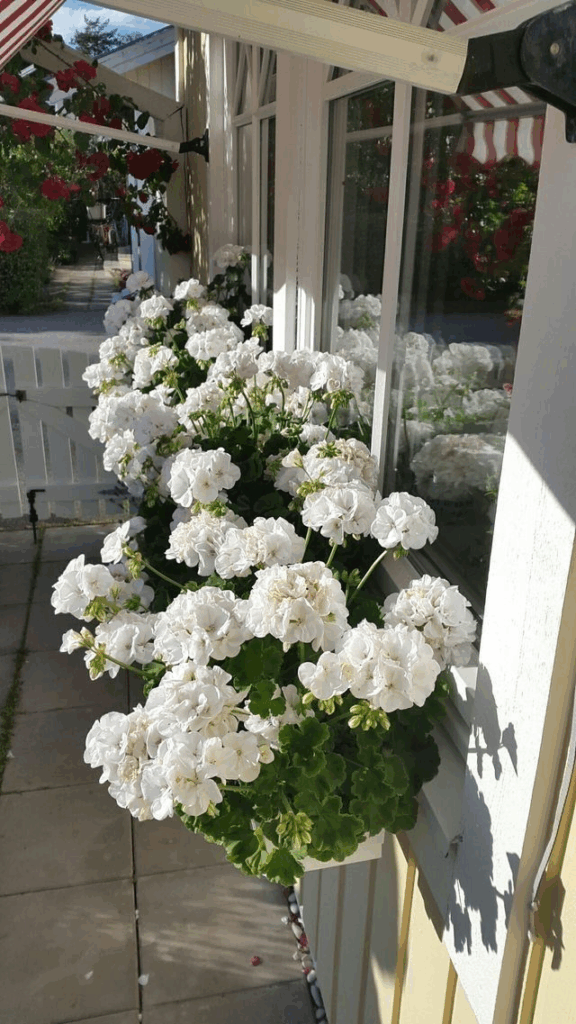
Sticking to a single color can often yield the most sophisticated results—especially when the focus is white. A monochrome porch palette using various white blooms enhances the home’s architectural purity and delivers a cohesive, serene aesthetic. Combine different textures and shapes for visual interest: hydrangeas for volume, petunias for flow, alyssum for ground coverage, and lilies for vertical lift. Group these in matching or tonal planters—stone, cement, or whitewashed wood—to maintain uniformity without looking flat. This approach works especially well with traditional, colonial, or farmhouse-style white homes where symmetry and calm are key design goals. These flowers typically prefer full to partial sun and benefit from consistent watering. Layering plants by height—from trailing to mid-height to tall—ensures each bloom is visible and plays a part in the composition. The result is a porch that feels curated and intentional while allowing seasonal greenery or furniture to subtly stand out. For those seeking tranquility and balance, this all-white scheme acts as both a minimalist gesture and a visual extension of the home’s palette. It’s a design-forward choice that doesn’t sacrifice charm or warmth, delivering timeless curb appeal with minimal color and maximum effect.
Scented Jasmine Vines on Side Trellis
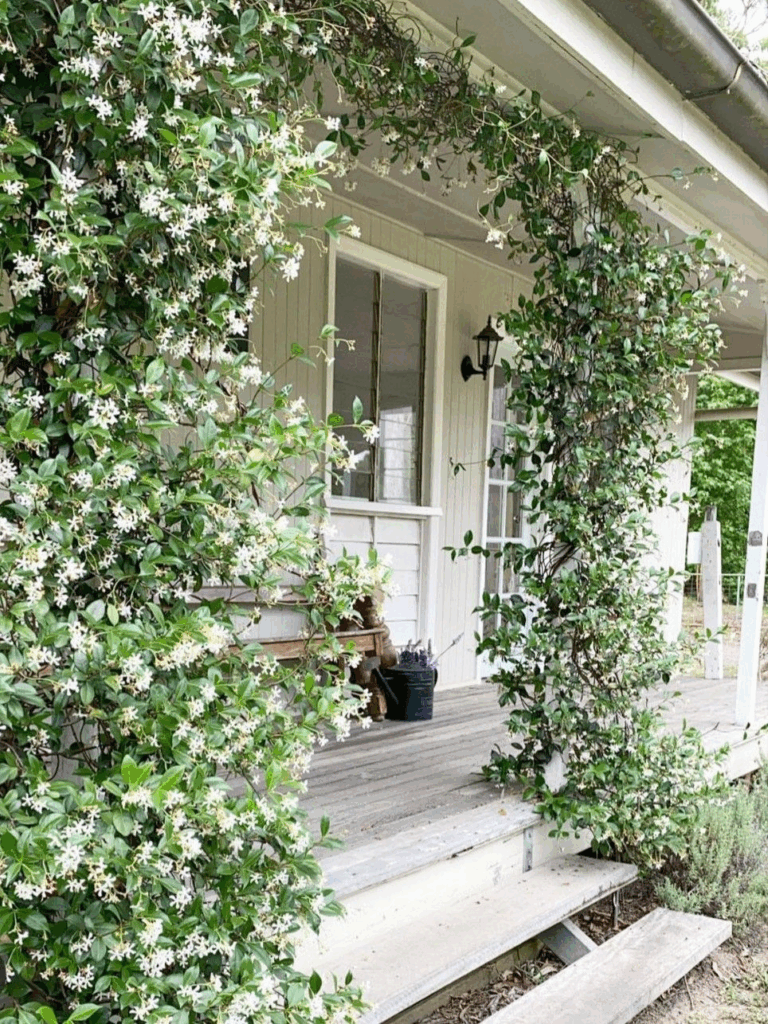
The sweet scent of jasmine greeting you at the porch entrance creates a memorable sensory experience that enhances curb appeal. By training jasmine vines along a side trellis or porch column, you introduce vertical softness and floral fragrance in one elegant move. Jasmine thrives in full to partial sun and prefers well-drained soil, making it ideal for side placements where the plant can climb without interfering with entry paths. Its star-shaped white blooms complement the house’s exterior while its dark green foliage provides year-round structure. Secure vines with soft garden ties to prevent damage and encourage upward growth. Place the trellis near seating areas to enjoy the scent during morning coffee or evening wind-downs. For added texture, consider planting creeping thyme or alyssum at the base of the trellis. While jasmine requires occasional pruning to maintain shape, it’s largely self-sufficient and drought-tolerant once established. This setup is perfect for homeowners seeking beauty with utility—fragrance, privacy, and floral interest all in one vertical accent. With thoughtful placement and care, jasmine vines elevate the side of any porch into a fragrant retreat, seamlessly blending into the home’s bright, inviting style while offering a luxurious outdoor experience.
Two-Tone Tulips in Entry Pathway Pots
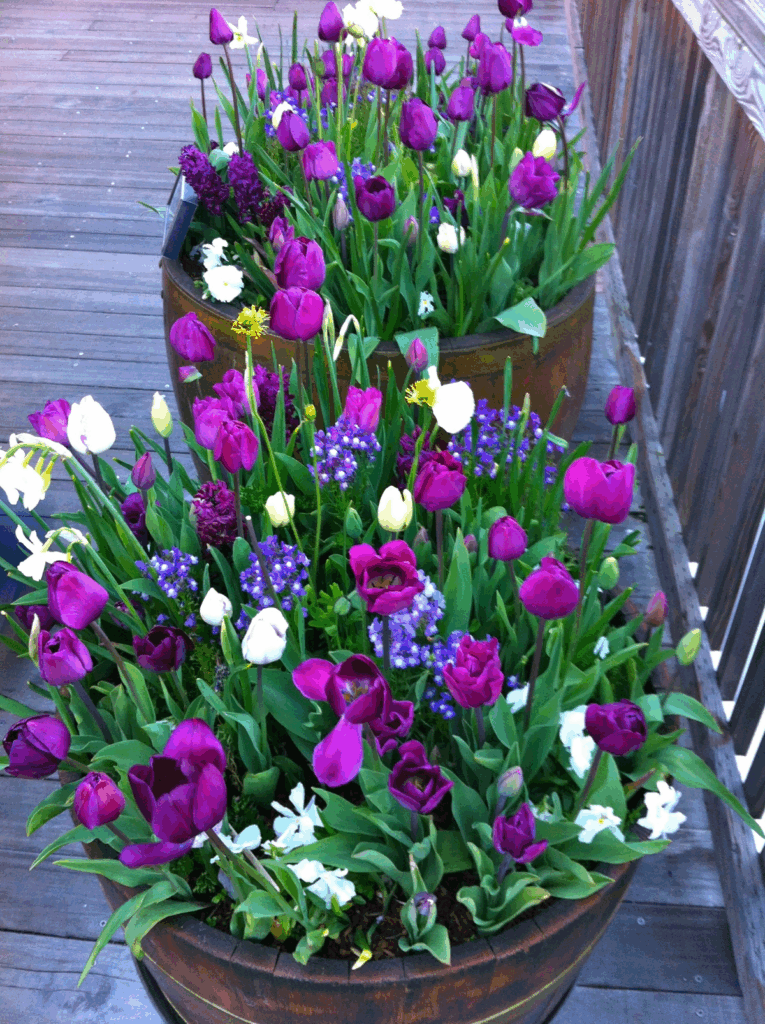
Dual-colored tulips offer a crisp, modern edge that’s perfect for leading guests toward a white house porch. When arranged in matching pathway pots—one on each side of a walkway—these spring bloomers bring structure, rhythm, and a seasonal burst of elegance. Varieties with white and pink, cream and lavender, or yellow and red petals work especially well to contrast against a neutral home exterior. Opt for tall, sleek planters in matte finishes to complement the tulips’ upright form and maintain a clean, intentional aesthetic. These bulbs prefer well-drained soil and full to partial sun, blooming in mid to late spring. Plant in clusters of five to seven bulbs per pot to achieve fullness and a natural presentation. Once blooms fade, the green foliage can remain as filler or be replaced with summer flowers like impatiens or begonias. For best results, plant bulbs in fall, water lightly, and let them rest through winter. This setup is especially valuable for readers looking to add seasonal beauty without permanent planting beds. The tulips’ clean lines and strong vertical presence offer a design-forward introduction to the home’s entrance while celebrating the changing seasons. The result is a symmetrical, colorful, and striking path that feels refined and welcoming.