
Clean symmetry, neutral palettes, and purposeful design define the modern minimalist bathroom, where functionality meets calm sophistication. This style removes clutter and distractions, allowing natural materials, soft lighting, and streamlined fixtures to speak effortlessly. For homeowners seeking balance and serenity, minimalist bathrooms offer a spa-like escape rooted in simplicity and precision. From floating vanities to frameless showers, every element is thoughtfully placed for visual harmony and ease of maintenance—proving that less truly delivers more when it comes to timeless bathroom design.
Monochrome Palette with One Soft Accent
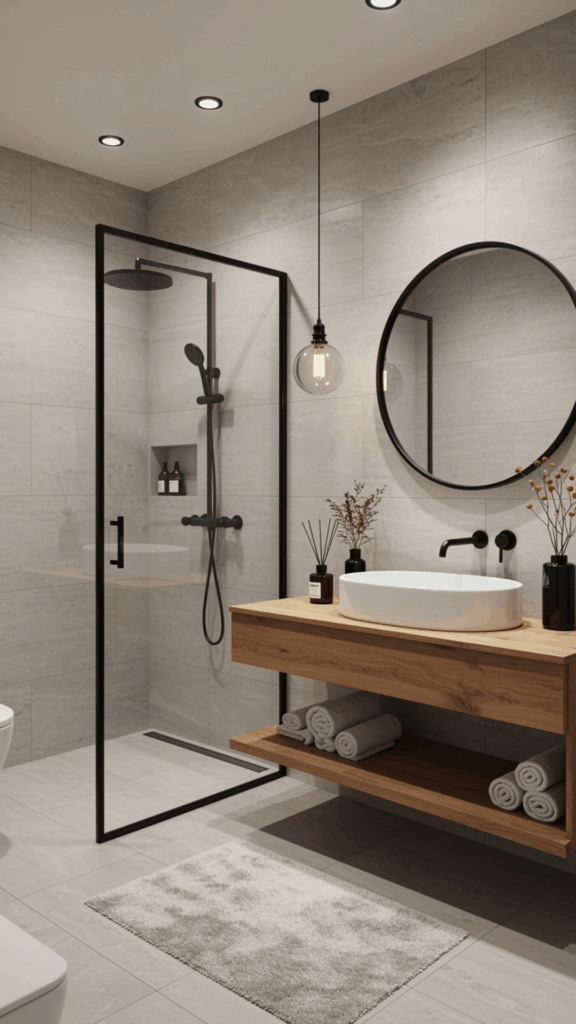
Quiet harmony defines minimalist bathrooms through restrained monochrome schemes balanced by a single accent tone. Crisp white walls paired with charcoal or dove-gray flooring create visual consistency that expands space. Introducing one muted color—like sage green towels or a blush stool—adds personality without clutter. This controlled palette enhances natural light, making surfaces feel sleek and unified. Subtle shifts in texture, such as matte tile beside polished concrete, bring depth while maintaining purity. Neutral continuity across fixtures and finishes prevents distraction, allowing architecture and form to shine. The overall mood feels calm, timeless, and purposefully edited. For compact bathrooms, this method visually elongates boundaries and reduces visual noise. Light reflects evenly across planes, producing a serene, gallery-like setting where every feature feels intentional. The result is a sanctuary that’s visually weightless yet deeply comforting—proving that minimalism thrives when restraint meets thoughtful contrast.
Floating Vanity & Hidden Storage
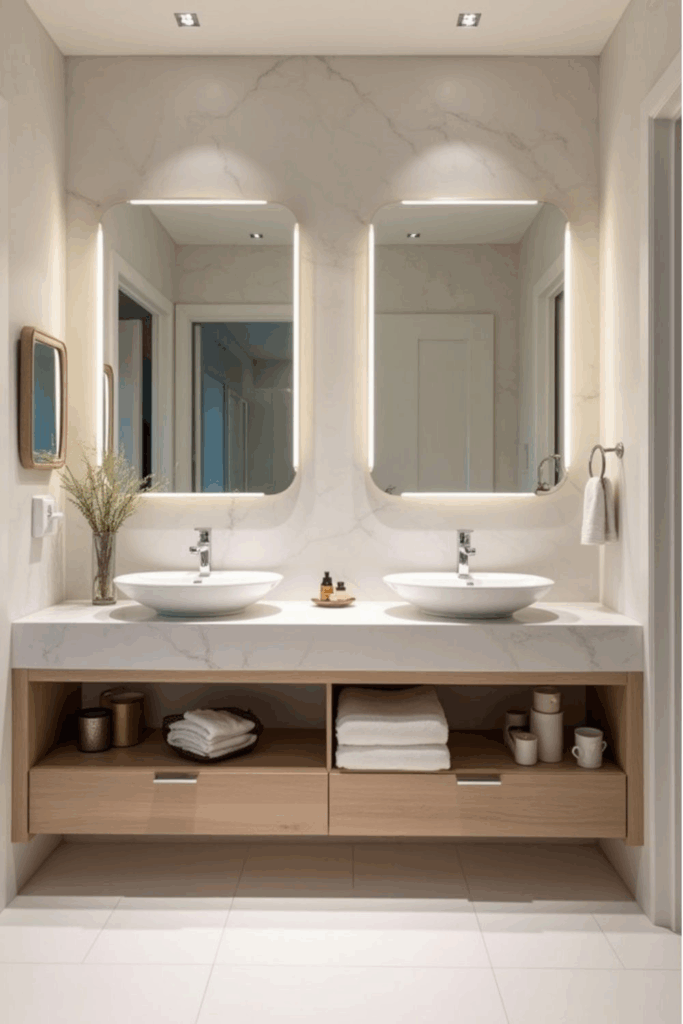
Weightless design becomes practical when floating vanities anchor minimalist bathrooms with elegance and function. Mounted off the floor, they visually enlarge the area by exposing more open floor space, enhancing airiness. Integrated drawers or concealed side compartments preserve clean lines while providing essential storage for daily items. When paired with handle-free fronts and push-to-open systems, the look remains crisp and uninterrupted. Under-cabinet LED lighting further accentuates the floating effect, casting a soft glow that guides at night. Durable finishes such as matte lacquer, light oak, or composite stone complement minimalist interiors while resisting moisture. Every item—from toiletries to towels—disappears behind smooth facades, ensuring counters remain clutter-free. Wall-hung vanities also simplify cleaning, reducing buildup around baseboards. Their geometric simplicity pairs effortlessly with frameless mirrors or neutral backdrops. The combination of elevation, functionality, and clean geometry turns utilitarian storage into an architectural highlight—refined, efficient, and unmistakably modern.
Frameless Glass Shower Partitions
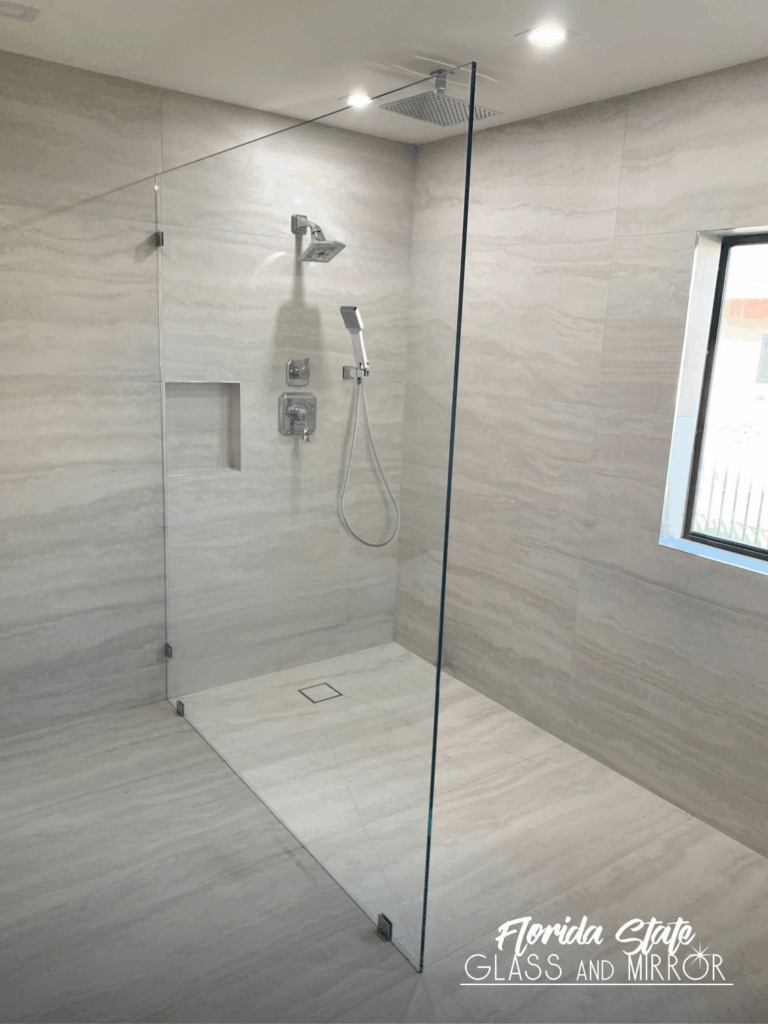
Transparency reigns in minimalist bathrooms where frameless glass enclosures maintain openness and visual flow. Clear partitions dissolve boundaries, connecting wet and dry zones seamlessly without the heaviness of frames. The continuous sightline maximizes both natural and artificial light, making compact bathrooms appear larger. Polished edges, minimal hinges, and low-profile seals maintain a barely-there aesthetic that emphasizes materials and tilework. Cleaning becomes effortless thanks to fewer crevices for residue or mold buildup. When paired with large-format floor tiles or curbless entry designs, the effect feels spa-grade yet highly functional. This choice aligns with minimalist principles—reducing unnecessary visual weight while enhancing sensory clarity. Glass thickness and treatment options such as anti-stain or frosted finishes add customization without compromising purity. The result is architecture defined by absence: light passes freely, materials breathe, and the shower becomes part of the overall continuum of calm.
Wall-Mounted Faucets & Slim Fixtures
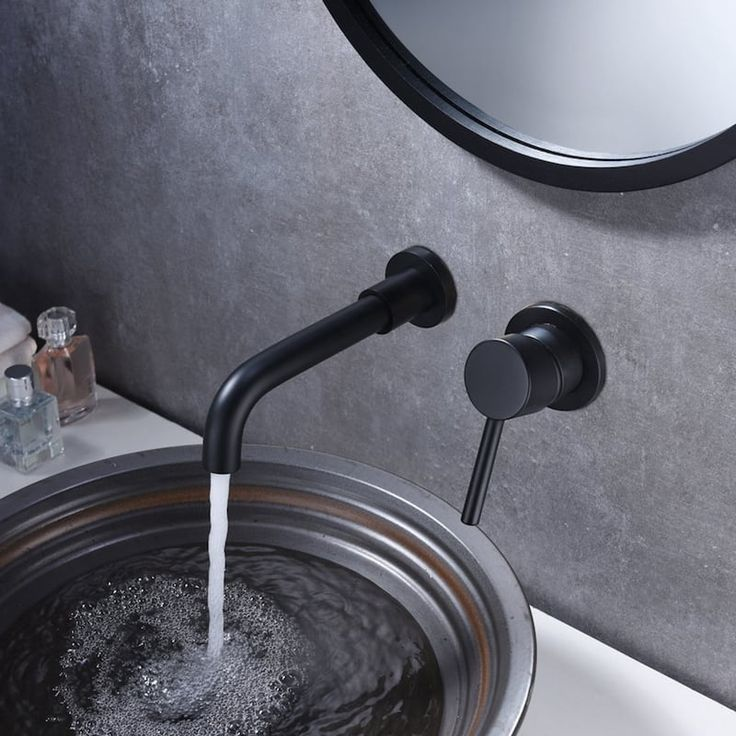
Precision meets simplicity when faucets rise from the wall instead of the countertop. Wall-mounted designs free up valuable vanity space, keeping horizontal planes uninterrupted. Their streamlined form visually lightens the sink area and reinforces modern symmetry. Slim fixtures with slender spouts and minimalist handles create balance without distraction. Brushed nickel, matte black, or champagne bronze finishes add tactile sophistication while maintaining visual quietness. This configuration also simplifies cleaning—no base plates or water rings to scrub. Concealed plumbing maintains the crisp outline that defines minimal design ethos. When paired with vessel basins or floating vanities, wall-mounted taps accentuate geometric alignment and visual height. Consistency in finish across towel bars and shower fittings ties everything together. Beyond aesthetics, these fixtures support functionality and hygiene while reducing clutter. The result is a polished environment that feels intentional, efficient, and visually serene.
Recessed Niches Instead of Shelves
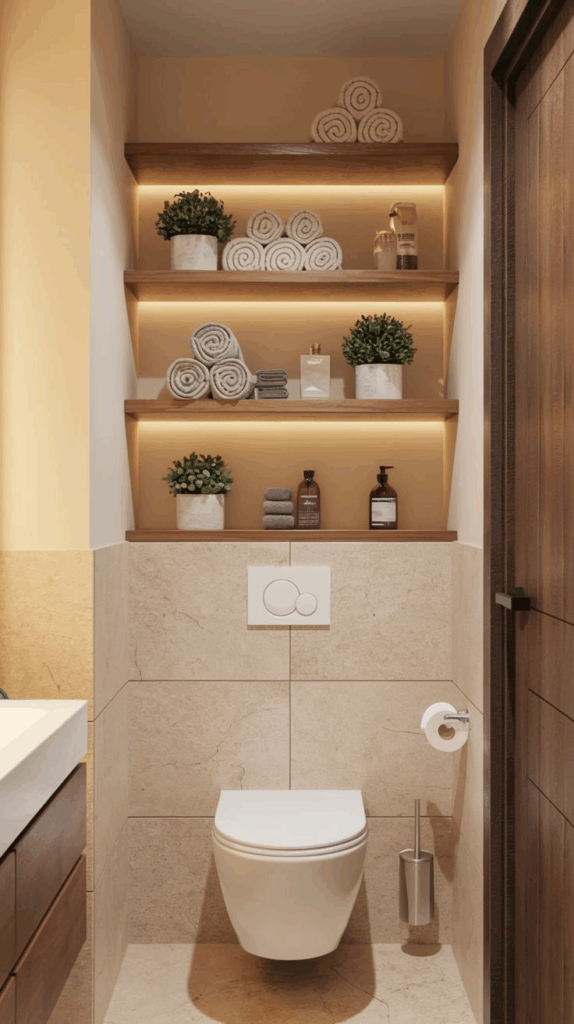
Spatial intelligence drives minimalist bathrooms, and recessed niches demonstrate this philosophy perfectly. Built directly into walls, these storage voids eliminate protruding shelves that interrupt visual harmony. Whether carved beside a bathtub or within a shower wall, niches provide practical storage for essentials like shampoo or candles without breaking clean surfaces. Tiled interiors, matching or subtly contrasting with the main wall, blend structure and style. Edge trims keep corners crisp while protecting against moisture infiltration. The absence of external shelving simplifies cleaning and reduces clutter accumulation. Lighting integration—like soft LEDs tucked along the niche edge—adds subtle emphasis and nighttime ambiance. Recessed storage maintains linear order, allowing materials and proportions to command attention. Each niche functions as an architectural gesture rather than decoration. This approach enhances usability while maintaining visual restraint, proving that thoughtful depth can replace bulk beautifully in any minimalist space.
Large Format Tiles to Minimize Grout Lines
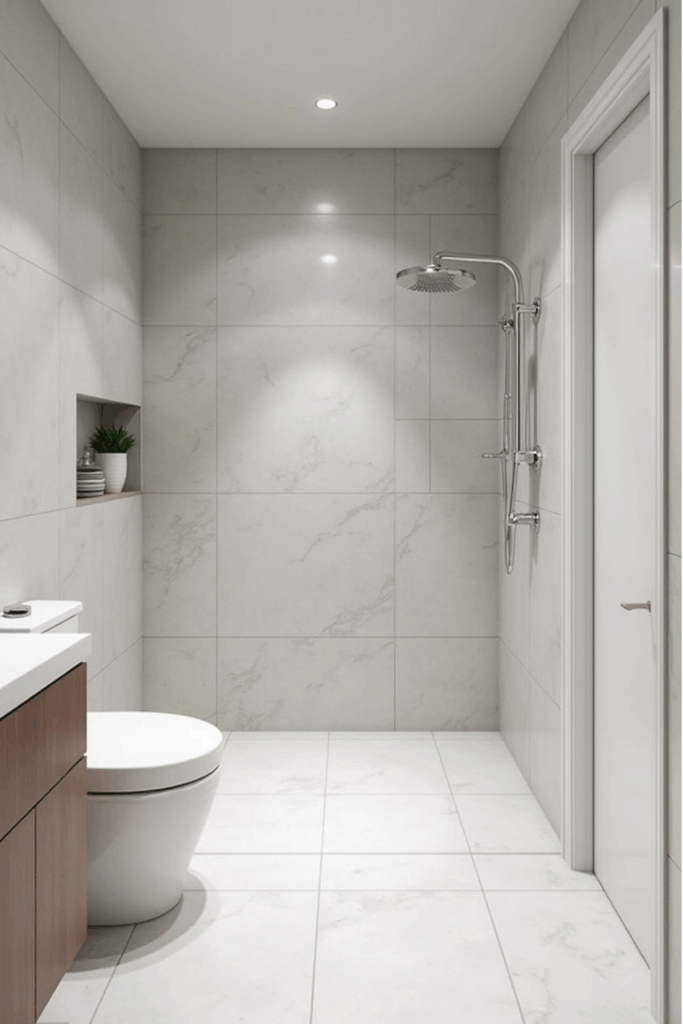
Spatial continuity is instantly achieved when large-format tiles dominate bathroom surfaces. Expansive slabs—porcelain, marble, or terrazzo—reduce the number of grout lines, creating uninterrupted planes that visually expand space. Fewer joints mean easier maintenance, fewer mold traps, and a cleaner, more luxurious appearance. The sleek surfaces reflect light evenly, reinforcing the calm rhythm of minimalist design. Matte finishes offer tactile balance, while subtle veining or tonal variation adds quiet character. Using the same tile across floors and walls enhances cohesion and creates a seamless flow. Precision cutting and tight grout alignment maintain flawless geometry, emphasizing craftsmanship. This design method complements frameless glass and wall-mounted fixtures, highlighting materials over ornamentation. Beyond aesthetics, large-format tiling delivers practical efficiency—less grout equals longevity and simplicity. The result feels monolithic yet welcoming, a sculptural canvas that celebrates proportion, light, and minimalist restraint.
Built-in Lighting (Under Vanity, Behind Mirror)
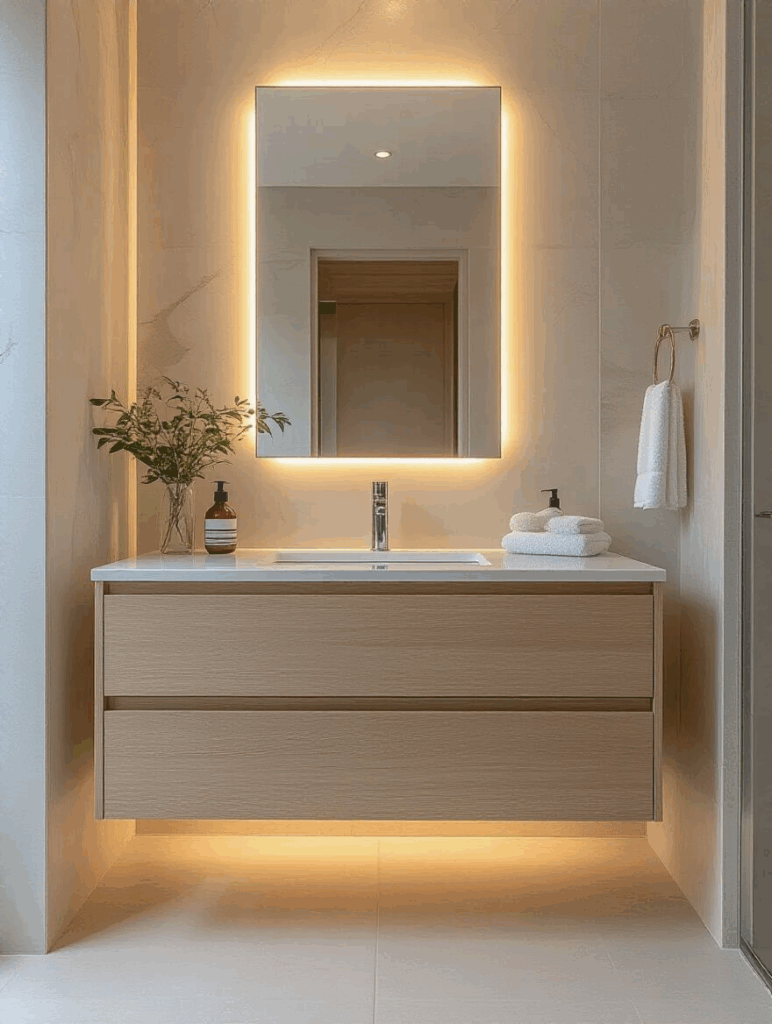
Subtle illumination defines minimal bathroom luxury, and built-in lighting ensures that glow feels integrated rather than added. Concealed LEDs beneath floating vanities lend a soft halo that makes cabinetry appear suspended in air. Back-lit mirrors deliver even brightness for grooming while removing the need for bulky wall sconces. The indirect light flatters both skin tone and surface texture, enriching neutrals with depth. Dimmable options let ambience shift from crisp morning clarity to spa-like calm at night. When installed along recesses or under shelving, hidden lighting emphasizes architectural rhythm instead of drawing attention to the fixtures themselves. This seamless approach prevents glare and keeps focus on material contrast—stone, wood, or tile reflecting light naturally. Energy-efficient strips with warm color temperatures maintain serenity without harsh shadows. Every glow appears intentional, framing the bathroom in quiet sophistication while sustaining the uncluttered aesthetic that defines minimalist design.
Decluttered Countertops with Minimal Accessories
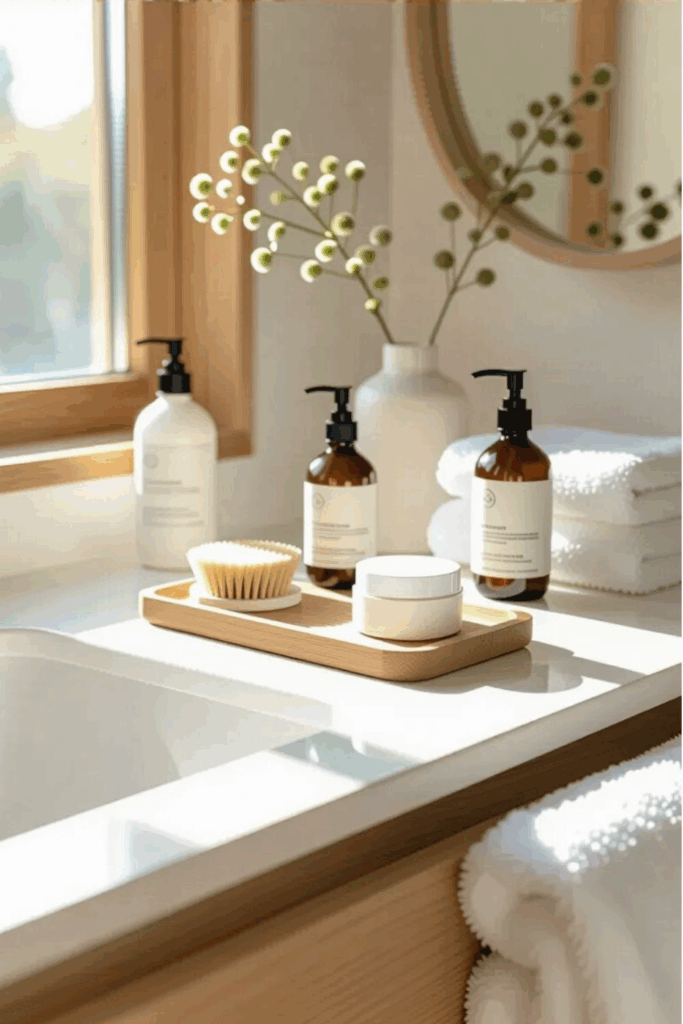
Visual restfulness begins with bare countertops free of unnecessary décor. Keeping surfaces open allows the bathroom’s form, texture, and geometry to breathe. Essentials like soap dispensers or toothbrush holders, if displayed, should follow a single material language—ceramic, glass, or matte metal. Hidden drawers or under-sink compartments handle storage for grooming tools and cosmetics, preventing visual chaos. Using matching trays or minimalist canisters maintains order without distraction. The absence of clutter makes cleaning effortless and amplifies spatial lightness. This approach highlights architectural symmetry, polished stone veins, and the balance between solid and void. Strategic restraint also increases functionality—everything needed remains within reach but unseen. Decluttered counters demonstrate that minimalist interiors rely more on discipline than deprivation, emphasizing thoughtfulness over decoration. When each surface stands unbroken, calm naturally follows, turning daily routines into quietly curated rituals within a tranquil, airy environment.
Natural Materials (Stone, Wood, Concrete Mixes)
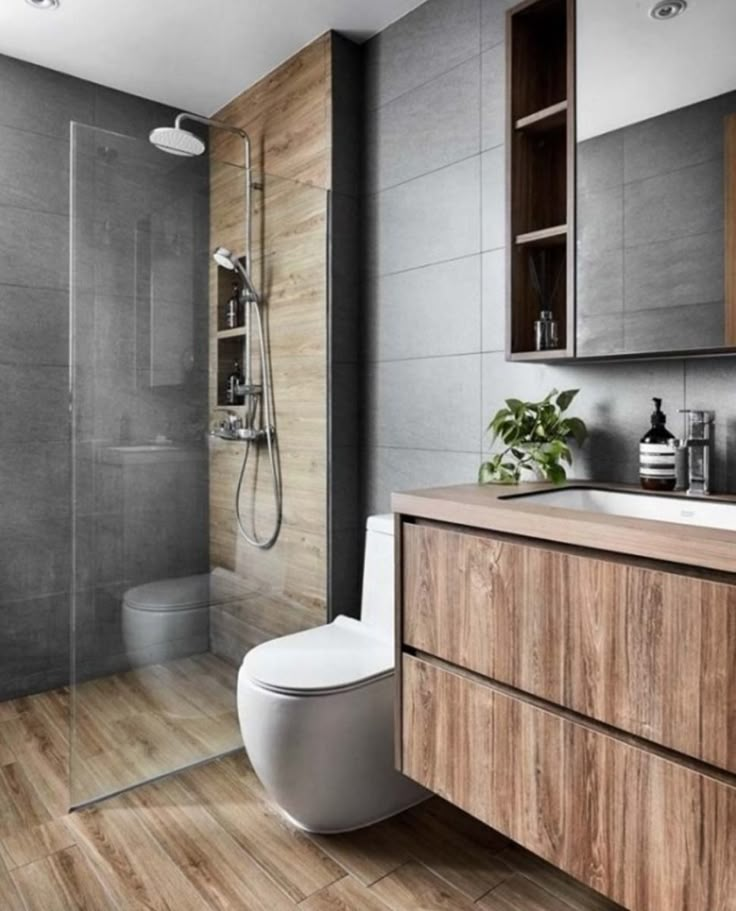
Organic tactility anchors minimal bathrooms, ensuring warmth complements simplicity. Stone brings permanence through subtle veining, while light oak or walnut introduces grounding texture. Concrete or micro-cement walls lend sculptural smoothness without ornamentation, offering durability and modern honesty. Combining these elements in balanced proportions—like a wooden vanity beside stone flooring—creates depth without visual noise. Natural materials regulate temperature and age gracefully, developing soft patina over time. Neutral finishes enhance sunlight, making the palette feel calm and authentic. Choosing eco-friendly sealants or sustainably sourced timber aligns aesthetics with responsibility. The interplay between grain, tone, and finish transforms a functional space into an organic retreat. When polished metal fixtures meet raw texture, contrast feels sophisticated yet understated. Minimalist bathrooms built on natural materials achieve timelessness through balance: rawness meets refinement, texture meets stillness, and simplicity becomes deeply human.
Mirrored or Reflective Surfaces to Amplify Light

Light multiplies effortlessly when reflective materials dominate the composition. Oversized mirrors, glossy wall panels, or metallic accents expand perceived space by doubling depth and brightness. In compact bathrooms, this technique transforms confined layouts into open sanctuaries. Mirror-backed vanities or high-gloss lacquer surfaces bounce illumination across every corner, minimizing shadow and emphasizing cleanliness. Pairing reflective finishes with matte elements—like rough concrete or honed stone—prevents sterility by preserving textural contrast. Frameless designs maintain visual fluidity, while integrated demisters keep clarity uninterrupted. Even subtle chrome trims around shower glass can intensify reflection, tying fixtures into a cohesive visual rhythm. The result feels airier, sharper, and architecturally refined. Amplifying natural and artificial light through reflection not only beautifies but enhances energy efficiency, requiring fewer fixtures overall. Minimalist interiors thrive on luminosity, and mirrored expanses deliver it effortlessly with modern restraint.
Cohesive Fixture Finishes (All Matching Metals / Matte)
Uniformity in hardware finishes transforms scattered elements into a unified composition. When faucets, towel bars, and shower heads share the same tone—be it matte black, brushed brass, or polished chrome—the bathroom instantly feels deliberate and balanced. Mixing too many metals breaks cohesion, while consistent finishes echo minimalist discipline. Matte textures soften reflections, lending tactile depth without glare. Coordinating handles, trim, and drains maintains rhythm and eliminates visual noise. Even hinges and robe hooks benefit from this consistency, turning utility into subtle design continuity. Finishing all pieces in one tone simplifies upkeep and reinforces the room’s personality—cool metals for urban restraint, warm brass for understated luxury. A cohesive finish acts like punctuation throughout the space, guiding the eye fluidly from one form to another. The outcome is serene precision—nothing competes, everything aligns under the quiet harmony minimalism demands.
Soft Textiles in Neutral Tones for Warmth
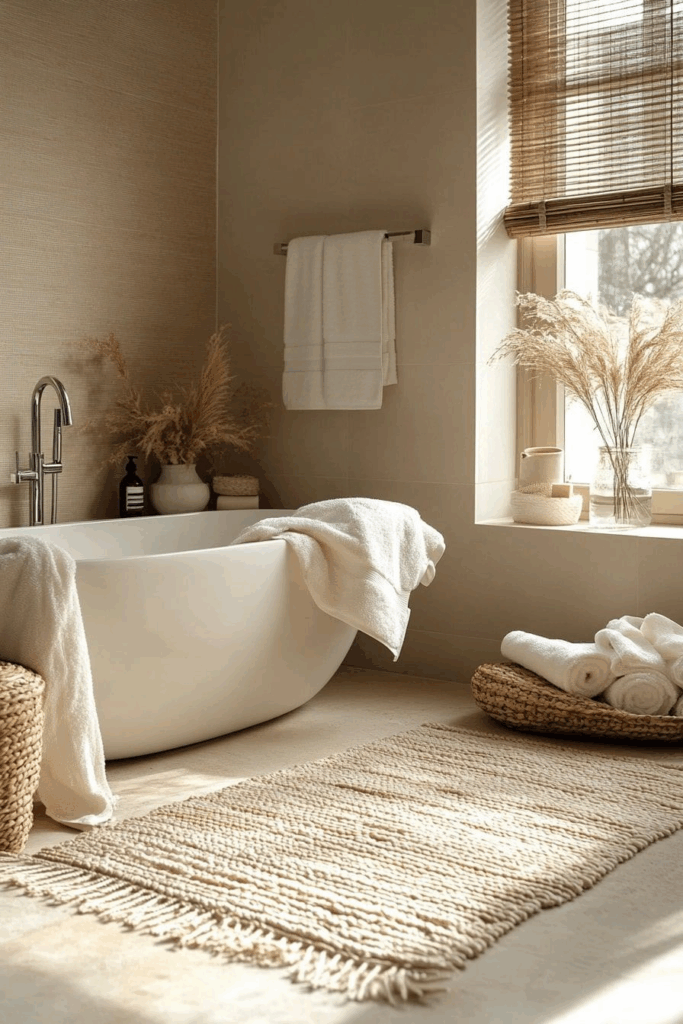
Gentle tactility prevents minimalist bathrooms from feeling sterile. Plush towels in sand, ivory, or stone shades layer comfort over sleek architecture. Cotton or linen bath mats soften acoustics and ground the space visually. Neutral fabrics absorb light gently, balancing the reflective surfaces of tile and metal. Their muted hues connect seamlessly with wood, stone, and concrete elements, promoting tranquility. Waffle textures, ribbed patterns, or fringe-free weaves preserve simplicity while introducing subtle dimension. Storage baskets made from natural fibers reinforce the organic palette without visual heaviness. Even shower curtains, when used, should echo the same tonal range for continuity. This approach maintains serenity while ensuring everyday practicality. Soft textiles introduce the human element within an otherwise sculptural environment, completing the minimalist equation: restraint balanced by comfort, structure softened by warmth, function elevated by touch.