
Light, proportion, and placement play a major role in how an entryway feels the moment someone walks in. Strategic mirror positioning can visually expand small foyers, amplify natural light, and improve overall flow without changing the layout. When placed with intention, mirrors also enhance symmetry, highlight architectural features, and support everyday functionality like last-minute outfit checks. Poor placement, however, can disrupt balance or create glare. This guide breaks down practical mirror placement principles that work across narrow hallways, open entries, and compact spaces. Readers will find clear, experience-backed insights that help create an entryway that feels brighter, more open, and thoughtfully designed from every angle.
Opposite The Door To Reflect Natural Light
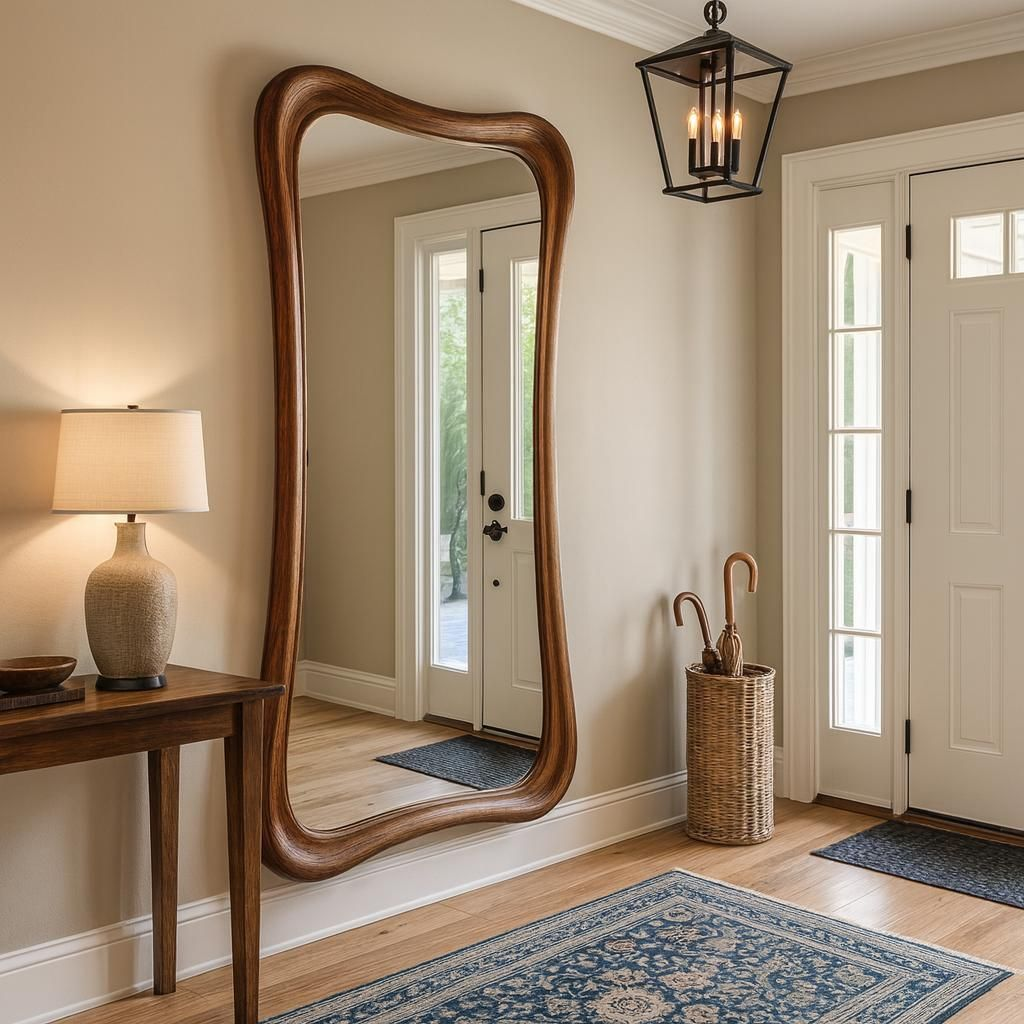
Placing a mirror directly across from the entry door works as a strategic light amplifier, especially in homes with limited windows near the entrance. When daylight enters through the door or adjacent sidelights, the mirror redistributes that brightness deeper into the space, instantly making the entryway feel larger and more welcoming. This placement is particularly effective in apartments, townhomes, or narrow foyers where natural illumination fades quickly. Beyond brightness, the mirror helps visually extend the room by echoing exterior views or soft outdoor light patterns. Frames with slim profiles or neutral finishes prevent visual heaviness while allowing light to remain the primary feature. To maintain functionality, the mirror should be mounted at eye level so it serves both practical and aesthetic purposes. Avoid angling it upward or downward, as that can distort reflections and reduce light efficiency. Clean lines and uncluttered surroundings ensure the reflected view remains calm rather than chaotic. When styled correctly, this positioning balances openness with purpose, improving both first impressions and daily usability without requiring additional lighting fixtures or structural changes.
Centered Above Console For Visual Balance

Symmetry plays a powerful role in entryway design, and centering a mirror above a console table creates an immediate sense of order. This alignment anchors the furniture below while giving the wall a defined focal point that feels intentional rather than decorative filler. The mirror’s width should be proportionate to the console, ideally spanning between two-thirds and three-quarters of its length to maintain visual stability. When centered precisely, the mirror helps ground surrounding decor such as lamps, trays, or sculptural objects without competing for attention. This placement also supports functional routines, offering a convenient last glance before leaving the house. Wall height matters, so positioning the mirror with adequate breathing room above and below prevents a cramped appearance. Subtle framing materials like wood, brushed metal, or matte black add structure without overwhelming the space. Balanced placement works especially well in transitional and contemporary entryways where clean composition matters. The result is an entry that feels polished, calm, and thoughtfully arranged, setting a confident tone the moment someone steps inside.
Full-Length Mirror On Narrow Side Wall

Long, tight entryways benefit significantly from mirrors placed along narrow side walls. A full-length mirror in this location visually stretches the corridor while serving a highly practical purpose. By reflecting the length of the space rather than its width, the mirror reduces the boxed-in feeling common in hall-style entrances. Mounting it flush against the wall keeps walkways clear and avoids creating visual clutter. This placement works particularly well opposite neutral walls or minimal decor, allowing reflections to stay calm and cohesive. Slim frames or frameless designs maintain flow without drawing unnecessary attention. Proper mounting height ensures the mirror captures a full-body view while still aligning with surrounding architectural elements. Lighting also matters, so positioning nearby sconces or overhead fixtures enhances clarity without glare. The mirror should not face storage piles or shoe zones, as this can amplify disorder. When thoughtfully placed, a full-length mirror transforms a narrow entry from restrictive to refined while improving everyday functionality.
Oversized Mirror Anchoring Small Entryways

Compact entryways often struggle with visual weight, and a single oversized mirror can solve that imbalance effectively. Rather than multiple small accents competing for attention, one large mirror establishes a dominant anchor that simplifies the space. The expansive surface reflects light broadly, reducing shadows and visually expanding square footage. Mounting it on the main wall draws the eye upward and outward, creating an illusion of depth that small foyers often lack. To maintain harmony, the mirror should align with one primary element such as a bench, console, or coat hook arrangement. Thin frames or soft-edged designs prevent the mirror from overpowering the room. Placement height should remain practical, allowing reflections to feel natural rather than looming. Keeping surrounding decor minimal ensures the mirror remains the focal point without creating visual noise. This approach is particularly effective in urban apartments or older homes with tight entry footprints, offering a clean, impactful solution that enhances both aesthetics and usability.
Mirror Positioned To Reflect Art Or Greenery
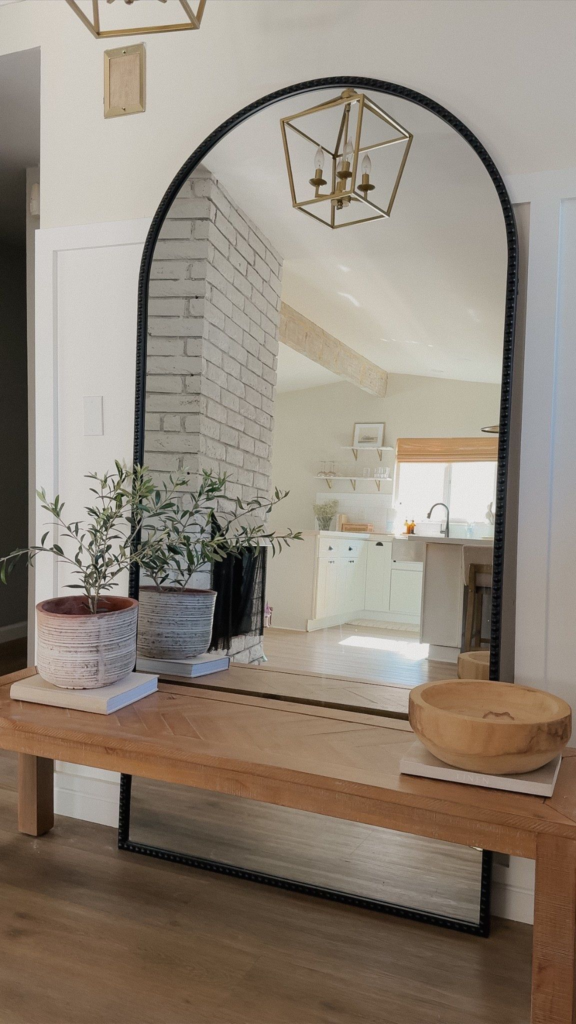
Strategic placement can turn a mirror into a visual multiplier when it reflects intentional design elements like artwork or plants. Positioning the mirror to capture a framed piece, sculptural wall decor, or greenery instantly doubles visual interest without adding clutter. This technique works especially well in entryways with limited wall space, where every element needs to work harder. Reflected greenery introduces softness and movement, while art reflections add depth and personality. The key lies in alignment, ensuring the mirror faces something worth repeating rather than blank walls or functional clutter. Neutral frames help keep focus on the reflected subject instead of the mirror itself. Lighting should support the reflected element, allowing details to remain crisp and inviting. This placement also creates layered visuals, making the entryway feel thoughtfully styled rather than sparsely decorated. By emphasizing curated details, the mirror becomes an active design tool rather than a passive accessory.
Leaned Mirror For Casual Modern Entry Looks

Leaning a mirror against the wall introduces a relaxed, contemporary feel that suits modern and transitional entryways. This approach avoids permanent installation while offering flexibility for future layout changes. A leaned mirror softens rigid architectural lines and brings a lived-in quality without sacrificing function. Proper scale is essential, so selecting a tall mirror ensures stability and proportional balance against the wall. Non-slip pads or discreet anchors keep it secure while maintaining the effortless look. Placement should allow clear walking paths, especially in high-traffic entrances. Surrounding decor works best when minimal, letting the mirror stand as a quiet statement piece. Natural wood or matte metal frames enhance the casual aesthetic without appearing unfinished. This style works particularly well in rental homes or creative spaces where adaptability matters. The result feels intentional yet approachable, offering both style and practicality without rigid formality.
Round Mirror To Soften Sharp Entry Lines

Angular entryways with sharp corners benefit from the visual relief provided by round mirrors. Curved shapes introduce softness that balances straight architectural lines, making the space feel more welcoming. A round mirror draws attention gently without dominating the wall, creating a calm focal point. This placement works well above slim consoles or floating shelves, where symmetry remains subtle rather than strict. Frame materials like brass, wood, or painted finishes enhance warmth while maintaining structure. Proper sizing ensures the mirror complements rather than disappears within the layout. Lighting placed nearby enhances reflections without harsh glare. The circular form also encourages smoother visual flow, guiding the eye naturally around the entryway. This approach suits both modern and classic interiors, offering versatility without visual tension. By softening geometry, the mirror contributes to a more balanced and inviting first impression.
Mirror Aligned With Lighting Source

Aligning a mirror with an existing lighting source maximizes brightness and improves visibility within the entryway. When positioned to catch light from sconces, pendants, or nearby windows, the mirror amplifies illumination without additional fixtures. This alignment ensures reflections appear clear and flattering rather than dim or shadowed. Proper spacing prevents glare while maintaining functional clarity. The mirror should sit slightly offset from direct light beams to avoid harsh reflections. Framing choices matter, as matte finishes reduce light bounce interference. This placement works especially well in entryways used during early mornings or evenings when lighting consistency matters. Balanced illumination enhances both safety and aesthetics, creating a polished look that feels intentional. The mirror becomes part of the lighting strategy rather than a separate decor element, contributing to a cohesive and efficient entryway design.
Vertical Mirror To Enhance Ceiling Height

Tall mirrors oriented vertically draw the eye upward, making entryways with lower ceilings feel more open. This placement emphasizes height rather than width, creating a sense of vertical expansion. Installing the mirror with minimal spacing from the floor enhances the elongation effect. Slim frames or frameless designs reinforce the upward flow without interruption. Vertical mirrors work particularly well in narrow foyers where horizontal elements may feel restrictive. Surrounding decor should remain understated to avoid breaking the visual line. Lighting positioned above or alongside the mirror further supports the height illusion. This technique improves spatial perception without requiring architectural changes. By emphasizing vertical movement, the entryway gains elegance and openness while maintaining practical functionality.
Mirror Used As Primary Focal Point

Designating a mirror as the primary focal point simplifies entryway styling and prevents visual clutter. When treated as the central feature, surrounding elements naturally fall into supporting roles. Placement should align with the main sightline upon entering the home. Size matters, as a substantial mirror commands attention without relying on excessive decor. Frame selection sets the tone, whether refined, modern, or understated. Keeping nearby furnishings minimal allows the mirror to stand confidently on its own. Proper mounting height ensures functionality remains intact while reinforcing its visual importance. Lighting should subtly highlight the mirror without overpowering it. This approach works well in small and large entryways alike, offering clarity and cohesion. A clear focal point helps the space feel intentional, organized, and welcoming.
Mirror Placement Avoiding Direct Clutter Reflection

Thoughtful mirror placement avoids reflecting storage zones, shoe piles, or busy surfaces that disrupt visual calm. Positioning the mirror to capture clean walls or styled elements maintains a polished appearance. This consideration is especially important in functional entryways where everyday items accumulate quickly. The mirror should face areas that remain consistently tidy or aesthetically pleasing. Adjusting angle or height can redirect reflections without compromising usability. Simple frames keep attention on the reflected scene rather than distractions. This approach enhances perceived order and reduces visual stress. By controlling what the mirror reflects, the entryway feels more curated and intentional, even during busy routines.
Single Mirror Instead Of Multiple Small Pieces

Choosing one well-proportioned mirror over several smaller pieces creates visual clarity and cohesion. A single mirror establishes a clear focal point, reducing fragmentation on the wall. This approach simplifies styling and prevents overcrowding, especially in compact entryways. Proper sizing ensures the mirror feels purposeful rather than decorative filler. Clean frames or frameless designs maintain flexibility across styles. Placement should align with key functional zones like consoles or benches. Lighting integration enhances clarity and usability. This choice supports long-term design consistency while remaining adaptable. A single mirror delivers stronger impact, better balance, and easier maintenance, making it a reliable solution for both practical and aesthetic needs.