
Entry tables quietly set expectations for the rest of the home, balancing style and function in a small but high-impact space. Well-planned styling formulas help control clutter, guide visual flow, and create a sense of order the moment the door opens. Scale, layering, and proportion matter more here than expensive décor, especially in narrow or busy entryways. Thoughtful combinations of lighting, trays, greenery, and art can anchor the space while supporting everyday routines. This guide focuses on proven entry table styling principles that work across modern, classic, and transitional homes, offering reliable solutions for creating a polished, welcoming entry without constant restyling.
One Tall Anchor Plus Two Low Objects
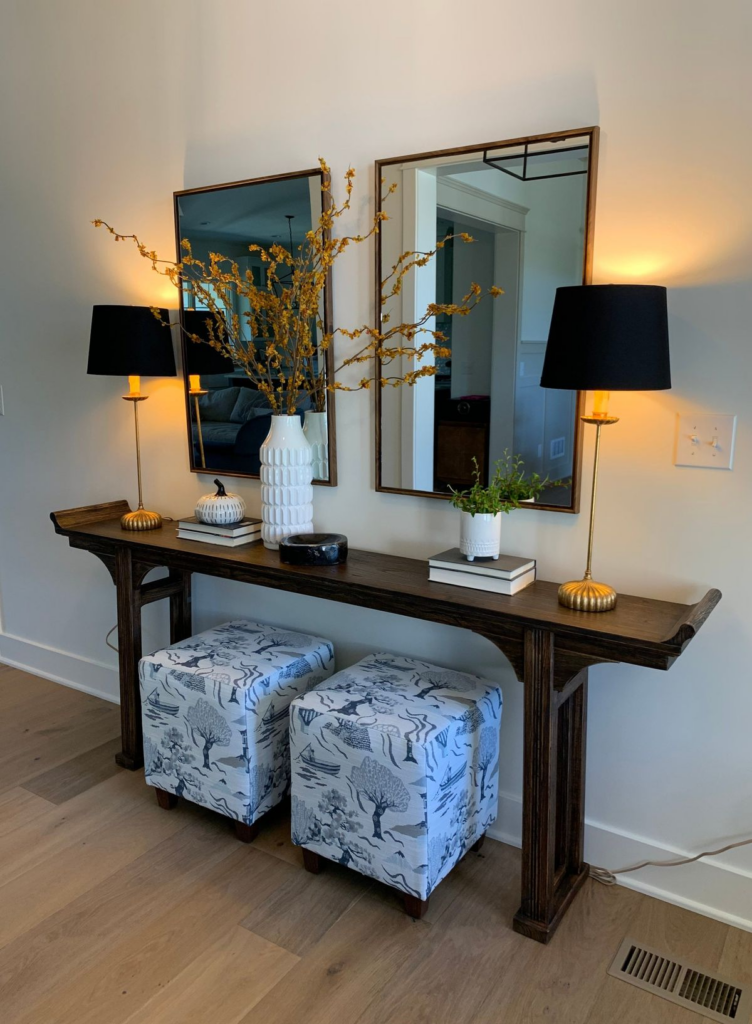
Visual stability on an entry table often depends on anchoring height before layering smaller elements. This formula relies on a single tall object such as a vase, lamp, or sculptural branch placed slightly off center to establish vertical presence. That height immediately frames the table and draws the eye upward, preventing the surface from feeling flat. Two lower objects then complete the arrangement, usually positioned at varying distances from the anchor. These pieces might include a decorative bowl, small box, or low planter, each chosen for contrast in texture or shape rather than size. The key lies in keeping the tall element visually dominant while allowing the smaller items to support it without competing. Spacing matters more than quantity here; leaving breathing room between objects prevents clutter and keeps the table readable at a glance. This approach works particularly well in narrow entryways where excess decor feels overwhelming. Materials should stay cohesive, such as ceramic with wood or glass with metal, to avoid visual noise. Lighting nearby enhances the height contrast, making the arrangement feel intentional. Overall, this formula delivers balance, clarity, and a welcoming first impression with minimal effort.
Oversized Art Leaned With Minimal Table Decor
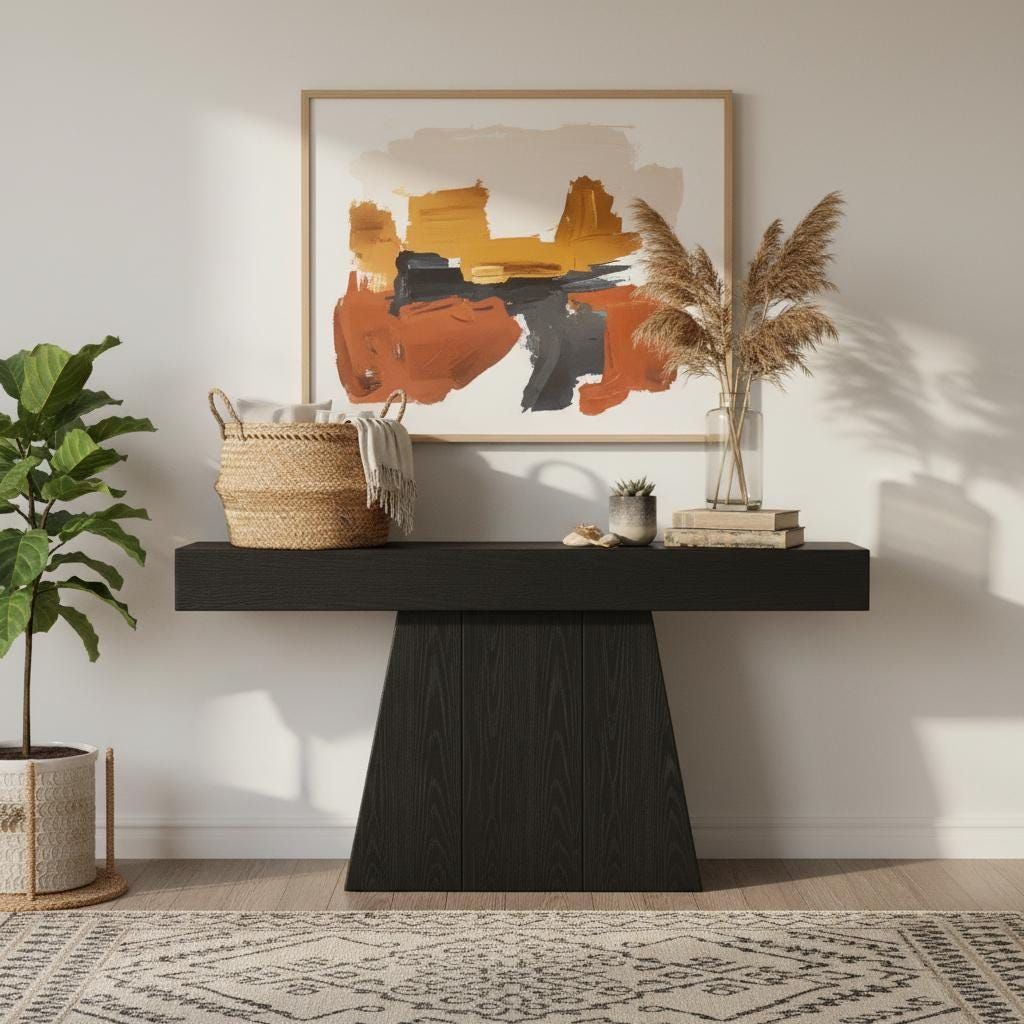
Leaning artwork against the wall introduces scale without requiring complex styling. An oversized framed piece placed directly on the entry table creates instant impact while keeping the surface arrangement restrained. Because the artwork already commands attention, the tabletop elements should remain minimal and low-profile. A single object or two understated pieces placed in front of the frame are enough to ground the composition. Items such as a slim tray, a small ceramic vessel, or a stack of neutral books maintain function without distracting from the art. This method avoids overcrowding and allows the artwork to act as both decor and backdrop. Depth becomes important, so spacing objects slightly away from the frame prevents visual flattening. Choosing art with soft tones or subtle movement ensures longevity and adaptability across seasons. This formula works well in modern, transitional, or gallery-inspired interiors where simplicity matters. Wall color and frame finish should complement the entry table material for cohesion. The result feels curated yet effortless, offering personality without complexity. For busy households, this setup also simplifies cleaning and updates, making it a reliable long-term styling solution.
Functional Tray Paired With One Sculptural Piece
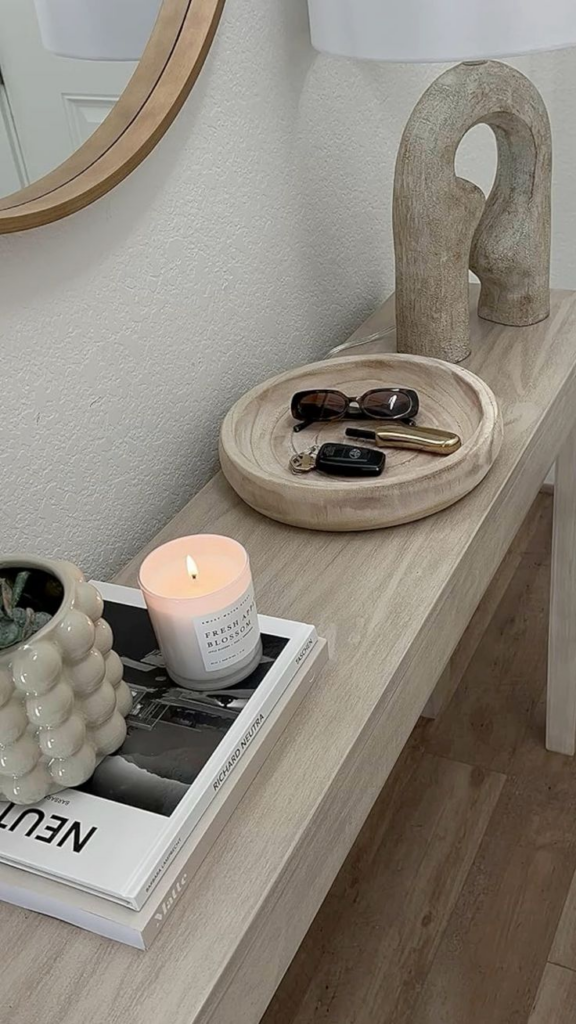
Purpose-driven styling feels intentional when form and function work together. A functional tray placed at the center or edge of an entry table provides structure while serving as a landing zone for everyday essentials. Keys, wallets, or sunglasses remain contained, keeping the surface visually calm. The sculptural element introduces contrast, usually positioned opposite or slightly behind the tray. This piece might be a ceramic form, stone object, or abstract accent chosen for shape rather than utility. Together, these elements balance practicality with visual interest. The tray’s finish should stay subtle so the sculptural piece can stand out without competing. Varying heights between the two objects adds depth, while maintaining enough spacing preserves clarity. This formula suits entryways that require organization without sacrificing style. Material consistency matters, so pairing wood with clay or metal with stone helps maintain cohesion. Avoid adding extra items beyond these two focal points, as restraint is essential to the formula’s success. The arrangement feels polished, usable, and adaptable, making it ideal for everyday living while still presenting a refined first impression.
Mirror Backdrop With Asymmetrical Object Balance
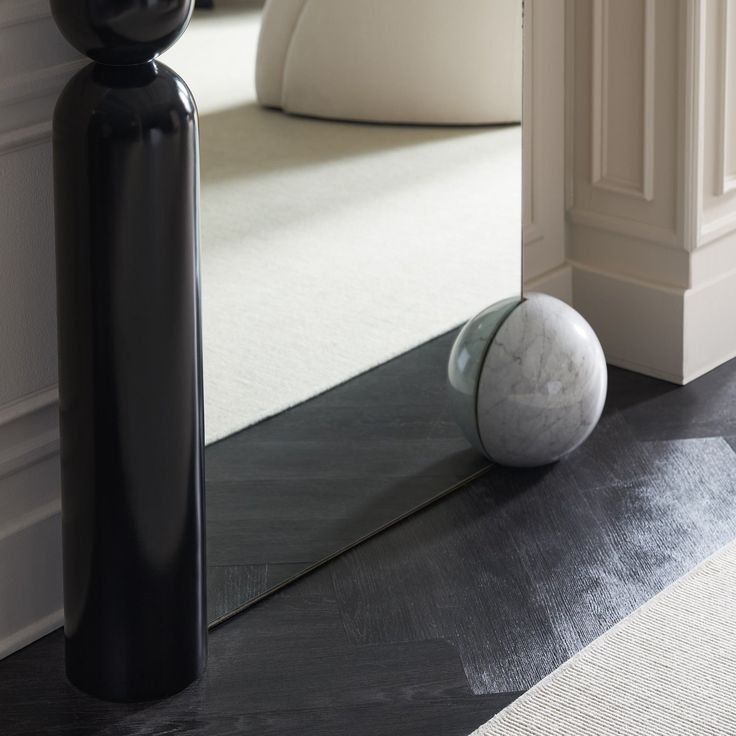
Depth and light become natural styling tools when a mirror anchors the arrangement. Positioned behind the entry table, a mirror reflects movement and brightness while expanding visual space. Rather than centering decor symmetrically, this formula relies on intentional imbalance. Objects of varying heights and shapes are arranged off center, allowing the mirror to act as a unifying backdrop. One side may feature a taller element such as a lamp or vase, while the other holds lower pieces like stacked books or a small bowl. This asymmetry keeps the table dynamic without feeling chaotic. Reflection doubles the visual impact, so restraint becomes essential. Limiting decor to three or four well-chosen items prevents overcrowding. Finishes should remain harmonious to avoid competing reflections. This approach works particularly well in compact or dim entryways where light amplification matters. The mirror also adds functionality for quick checks before leaving. Overall, the formula delivers balance through contrast, making the space feel layered, intentional, and visually engaging without excess ornamentation.
Single Material Repeated In Three Forms
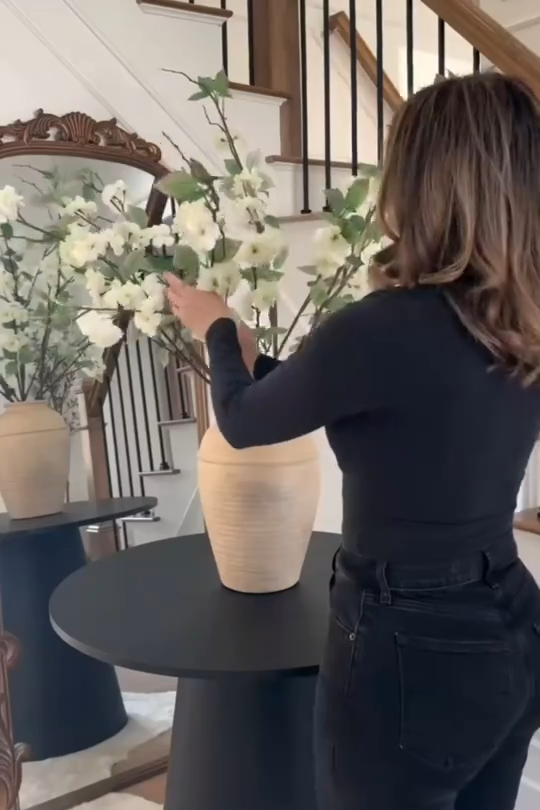
Consistency creates cohesion when a single material appears in varied expressions. This formula focuses on selecting one dominant material such as ceramic, wood, metal, or glass and repeating it in three distinct forms. For example, a ceramic vase, bowl, and small sculptural object share the same material while differing in shape and scale. The repetition feels intentional rather than monotonous because each piece serves a different visual role. Spacing the items thoughtfully across the table prevents clustering and allows each form to be appreciated individually. Neutral tones enhance versatility, while subtle finish variations add interest. This method works well for homeowners who prefer calm, unified interiors without excessive contrast. The table remains visually grounded, making it easy to update surrounding elements without reworking the entire arrangement. Avoid mixing too many additional textures, as the strength of this formula lies in restraint. The result feels polished, modern, and quietly sophisticated, offering a reliable styling solution that withstands trend changes.
Tall Lamp Offset With Flat Decorative Stack

Lighting often doubles as decor when styled with intention. A tall table lamp placed slightly off center provides height and functional illumination. To balance the vertical weight, a flat decorative stack sits on the opposite side. This might include books, trays, or shallow boxes layered neatly. The contrast between height and horizontality creates visual equilibrium without symmetry. The lamp base should feel substantial enough to anchor the arrangement, while the stack remains low and streamlined. Color coordination between the lamp shade and stacked items helps unify the composition. This formula works particularly well in evening-focused spaces where warm lighting enhances ambiance. Keeping the stack minimal prevents the table from feeling crowded. The lamp’s cord management also matters, ensuring the setup remains clean. Overall, this approach blends practicality with structure, delivering a composed entry table that feels both inviting and functional throughout the day.
Negative Space Left Intentionally On One Side
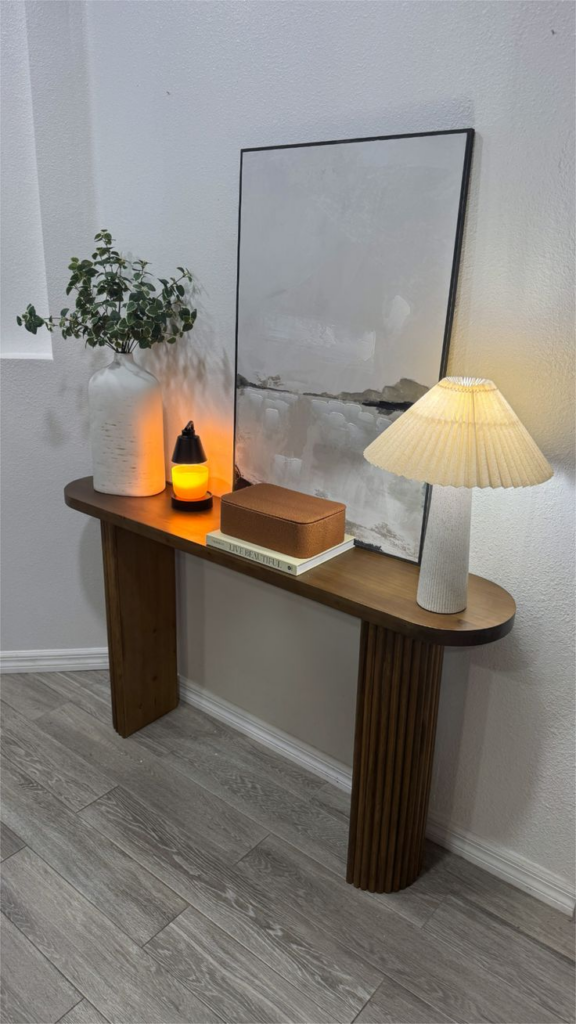
Restraint becomes a design feature when negative space is used deliberately. This formula styles only one portion of the entry table, leaving the remaining surface empty. The decorated side might include two or three coordinated objects arranged tightly, while the open area allows the eye to rest. This contrast highlights the styled elements more effectively than filling the entire surface. Negative space also improves functionality, offering room for bags or temporary items without disrupting the aesthetic. Balance comes from proportion rather than quantity, so the styled cluster should feel substantial enough to justify the open space. Materials and tones should stay cohesive to avoid visual fragmentation. This approach works well in minimalist or modern interiors where simplicity feels intentional. The table appears calm, organized, and confident, proving that absence can be as impactful as decoration when applied thoughtfully.
Seasonal Swap Formula Using One Replaceable Item
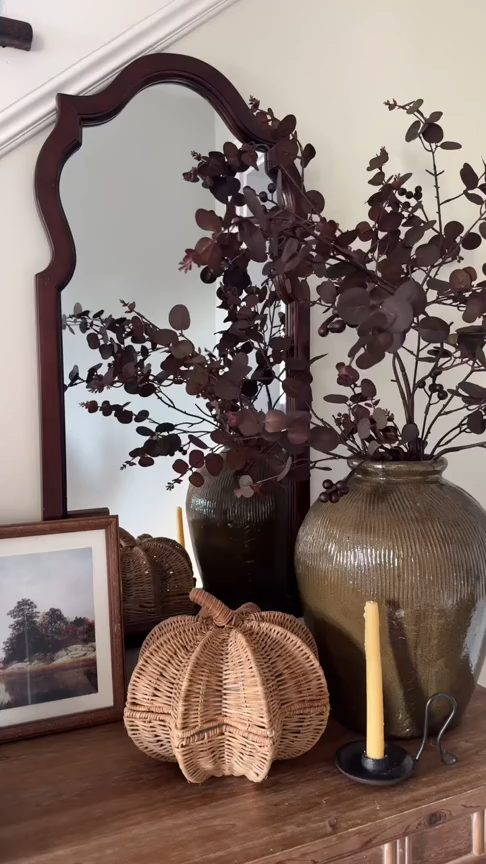
Flexibility defines this entry table strategy. The core arrangement remains consistent year-round, while one easily replaceable item introduces seasonal relevance. A vase, small artwork, or decorative object becomes the changeable element, swapped as seasons shift. The remaining pieces stay neutral and timeless, providing stability. This method reduces effort while keeping the space feeling current. Placement of the replaceable item should be prominent enough to influence the overall look without overpowering the base styling. Natural materials often work best for seasonal updates, such as greenery, branches, or textured accents. Storage remains minimal since only one item rotates. This formula suits homeowners who enjoy subtle updates without frequent redesign. The entry table maintains coherence while reflecting seasonal mood changes effortlessly. It balances consistency with adaptability, making it practical for busy households seeking reliable yet refreshed decor.
Vertical Stack Paired With One Horizontal Element
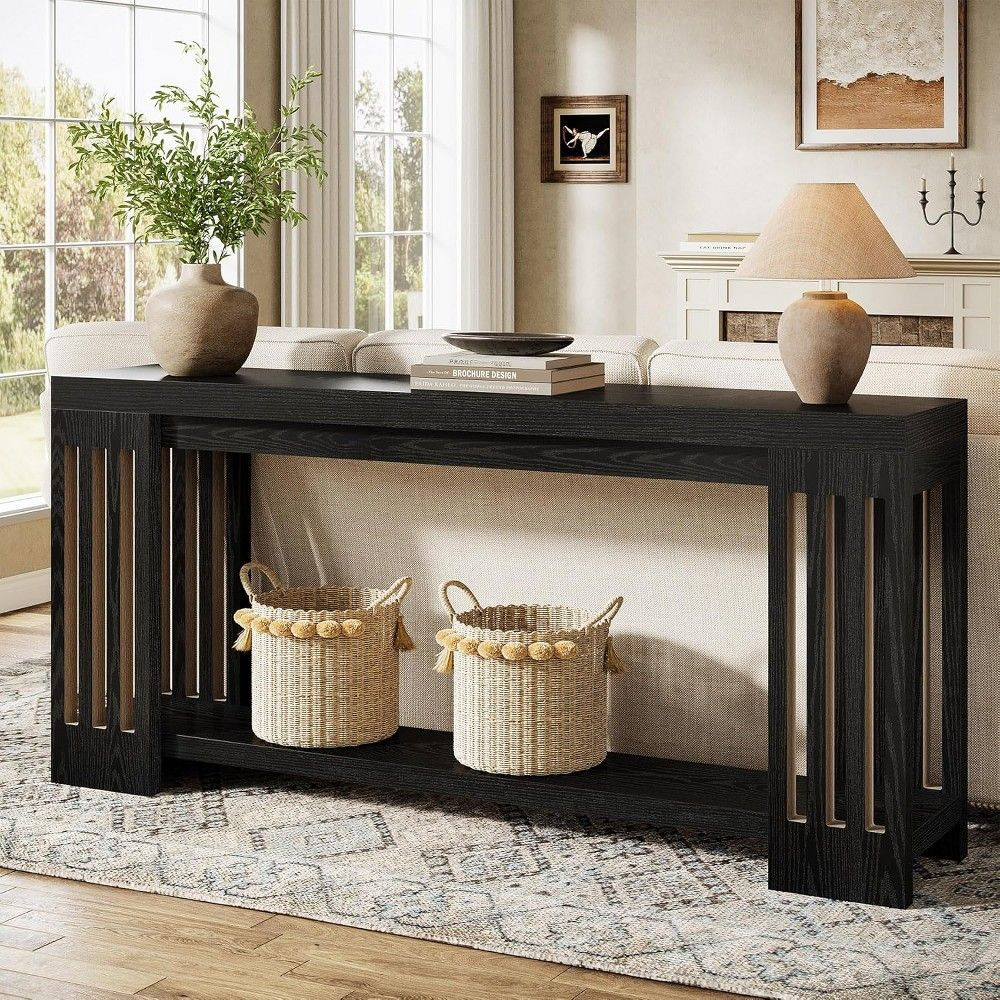
Directionality plays a key role in visual balance. A vertical stack, such as books or boxes, establishes height and structure on the entry table. Paired with a single horizontal element like a tray or elongated object, the composition gains contrast. The vertical stack draws attention upward, while the horizontal piece grounds the arrangement. Spacing between the two elements prevents overlap and maintains clarity. Color coordination ensures cohesion without monotony. This formula works well for rectangular tables where directional balance matters. Limiting accessories keeps the focus on form rather than quantity. The result feels architectural and intentional, offering a clean yet engaging setup that suits both modern and transitional interiors.
Organic Object Balanced With Clean-Lined Decor
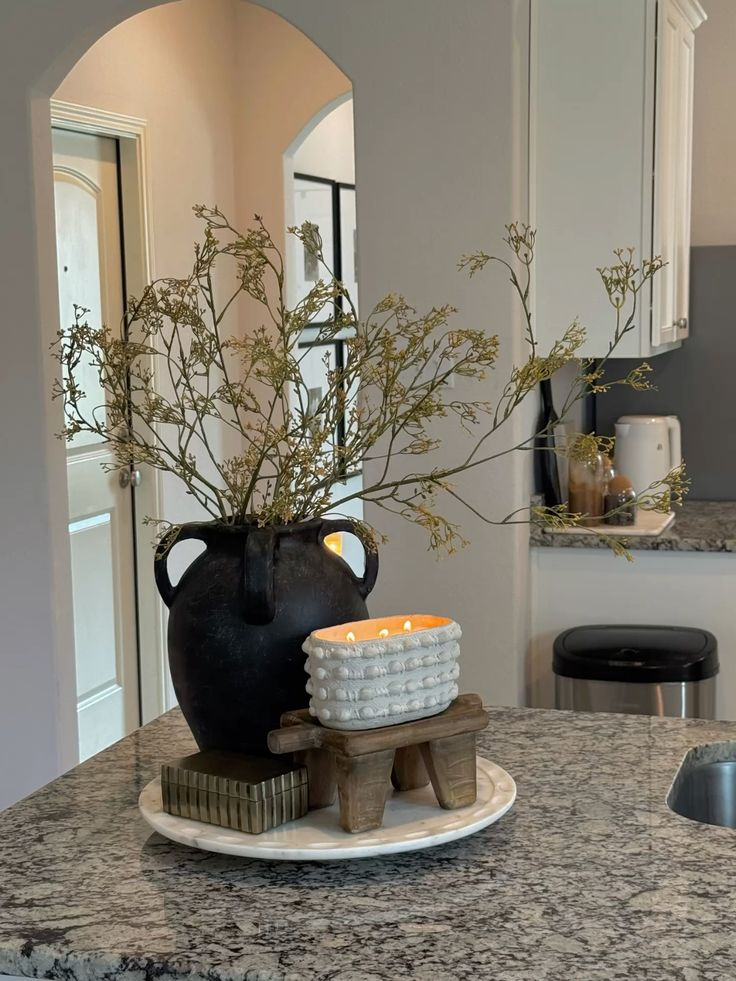
Natural forms introduce warmth when balanced with structured elements. An organic object such as driftwood, stone, or a textured vessel becomes the focal point. Clean-lined decor items, including trays or geometric accents, counterbalance the irregular shape. This contrast prevents the table from feeling either too rigid or too rustic. Placement should allow the organic piece to stand out without dominating. Neutral tones help unify the different forms. This formula suits entryways seeking a relaxed yet refined atmosphere. The balance between natural and structured elements creates depth while maintaining order. The result feels approachable, layered, and thoughtfully curated.
Odd-Number Styling With One Statement Piece
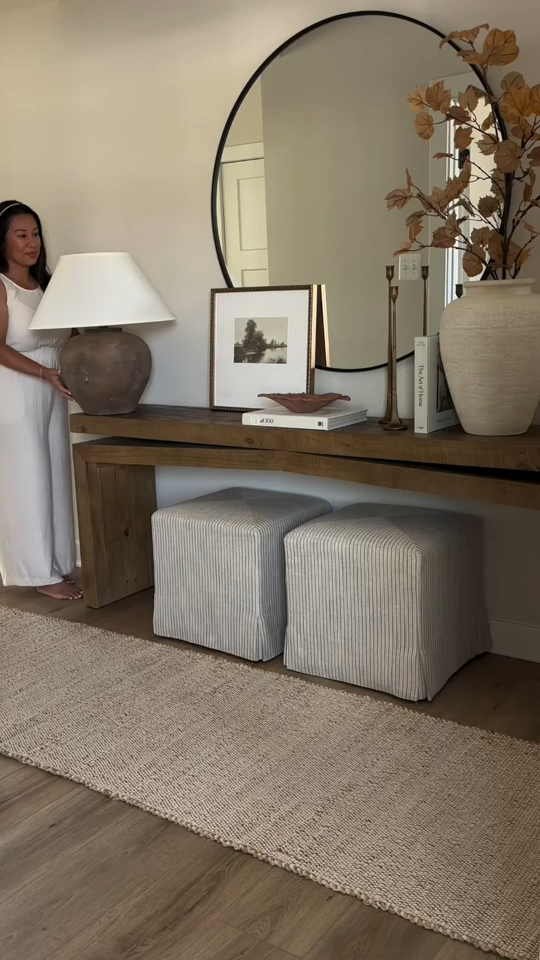
Visual harmony often emerges through odd-number groupings. This formula centers on one statement piece supported by two smaller accents. The primary object anchors the table, while the secondary items provide scale and context. Placement should feel intentional rather than evenly spaced, creating subtle movement. Materials and finishes should complement the statement piece rather than compete. This approach works across styles, from contemporary to classic. Limiting the number of items maintains clarity and prevents clutter. The table feels balanced, expressive, and easy to maintain, offering a dependable styling solution for varied entry spaces.
Minimal Base Styling With One Bold Accent
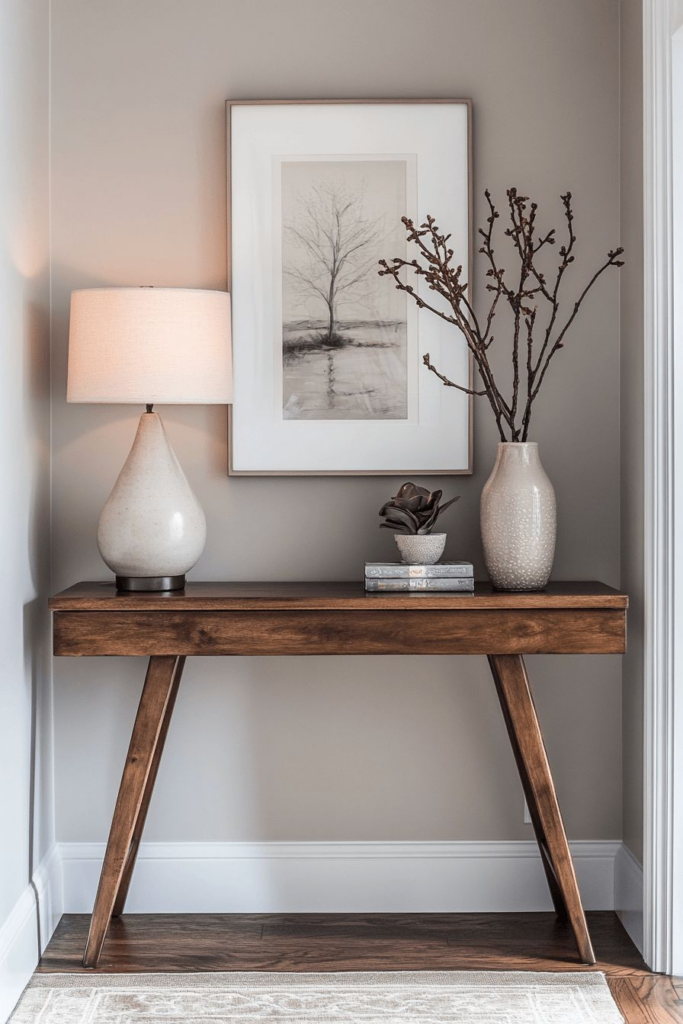
Simplicity forms the foundation of this approach. The base styling consists of neutral, understated elements that fade into the background. One bold accent then introduces color, texture, or form, becoming the focal point. This contrast ensures impact without overwhelming the space. Placement of the accent should feel deliberate, often centered or slightly offset. The surrounding items support rather than distract. This formula works particularly well in modern homes where clean lines dominate. Updating the bold accent refreshes the entire table without reworking the base. The result feels confident, controlled, and visually striking while remaining practical for everyday use.