
Clean lines and intentional restraint create entryways that feel calm, organized, and visually open. Minimalist design focuses on clarity, making it especially effective for high-traffic entrances where clutter quickly becomes overwhelming. Simple furniture, neutral color palettes, and purposeful storage help improve flow while keeping the space functional for daily routines. This approach also enhances natural light and emphasizes architectural details without distraction. Whether working with a narrow hallway or an open foyer, minimalist entryway solutions prioritize balance and usability over excess décor. The ideas ahead highlight practical layouts and styling strategies that help create a welcoming first impression while maintaining a sense of order that lasts.
Wall-Mounted Console With Zero Visual Weight
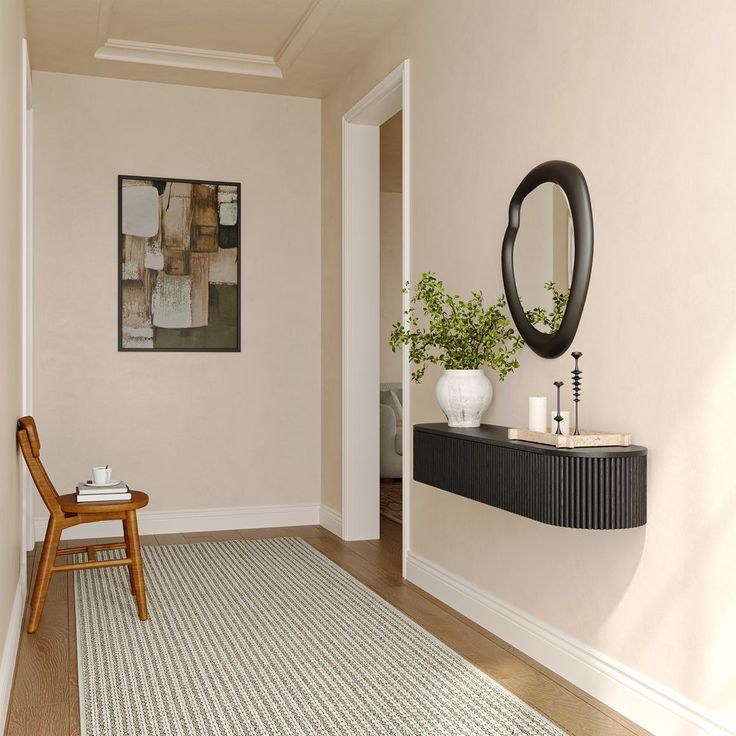
Spaces that feel calm at first glance usually rely on elements that appear to float rather than occupy volume. A wall-mounted console achieves this by lifting storage and display off the floor, allowing sightlines to remain uninterrupted from wall to wall. Slim profiles, shallow depths, and concealed brackets ensure the piece reads as an architectural extension rather than furniture. Materials such as light oak, matte lacquer, or stone veneer help maintain visual lightness while remaining durable for everyday use. Drawers should close flush, without handles, to avoid visual noise. Keeping the console narrow prevents crowding while still offering a landing spot for keys or mail. The area beneath stays empty, reinforcing openness and making cleaning effortless. This approach works especially well in small or narrow entryways where bulky furniture quickly overwhelms proportions. When paired with neutral walls and restrained accessories, the console recedes into the background while still performing its function. The result feels intentional, uncluttered, and refined. Visual weight disappears not because storage is removed, but because structure, scale, and placement are carefully controlled. This balance supports a minimalist entryway that feels breathable, modern, and quietly sophisticated.
Single Statement Object Instead Of Multiple Decor Pieces

Calm entryways often succeed by resisting the urge to fill surfaces. Using one strong object instead of several small accents reduces visual competition and creates immediate focus. This could be a sculptural vase, a hand-thrown ceramic bowl, or a solid stone tray placed with precision. The object should carry enough presence to stand alone, relying on form, texture, or material rather than ornament. Negative space around it is just as important as the item itself, allowing the eye to rest without distraction. Multiple accessories, even when neutral, fragment attention and dilute impact. A single piece simplifies decisions and communicates confidence in restraint. Scale matters more than quantity, so the object should feel proportional to the console or surface beneath it. When chosen thoughtfully, it sets the tone for the entire entryway without requiring additional styling. Maintenance becomes easier, clutter is avoided, and the space remains visually composed day after day. This approach supports minimalist principles by emphasizing intention over accumulation. The entryway feels curated rather than decorated, creating a refined first impression that stays timeless rather than trend-driven.
Neutral Palette Limited To Two Tones Only

Visual calm is strongest when color decisions are deliberately constrained. Limiting an entryway palette to two neutral tones creates cohesion and prevents visual fatigue. Common pairings include warm white with soft beige, greige with charcoal, or sand with muted taupe. The key lies in selecting tones with similar undertones so transitions feel seamless rather than abrupt. Walls, flooring, and built-in elements should share these hues in varying proportions to create depth without introducing contrast. Texture replaces color variation, allowing materials to express richness without disrupting harmony. This strategy works well in both small and large entryways, as it visually expands space while maintaining warmth. Furniture, storage, and accessories remain within the same tonal family, avoiding sharp breaks that draw unnecessary attention. When executed well, the entryway feels grounded and intentional rather than plain. The limited palette also simplifies future updates, as new elements naturally integrate without clashing. This disciplined approach encourages clarity, reduces overstimulation, and supports a minimalist environment that feels serene, balanced, and enduring rather than sterile or unfinished.
Hidden Storage That Blends Into The Wall

Order feels effortless when storage disappears into architecture. Hidden storage solutions maintain clean lines by integrating doors, panels, or cabinets directly into the wall plane. Flush surfaces, push-latch mechanisms, and seamless finishes allow storage to remain invisible until needed. Coats, shoes, bags, and seasonal items stay accessible without becoming part of the visual landscape. Matching storage finishes to wall color further reduces contrast, helping boundaries dissolve. This approach works especially well in entryways where clutter accumulates quickly and visibility magnifies disorder. Built-in storage also maximizes vertical space without adding bulk, keeping the footprint minimal. When storage blends in, the entryway feels intentional and composed even during busy routines. Practical needs are met quietly, without sacrificing aesthetics. The absence of visible hardware reinforces simplicity while supporting daily function. Over time, this reduces visual stress and encourages habits that maintain order. Hidden storage transforms the entryway into a calm transition zone rather than a dumping ground. The space remains light, balanced, and visually uninterrupted, aligning perfectly with minimalist design principles.
Large Mirror Without Decorative Frame

Reflections amplify light and space when they remain visually unobtrusive. A large mirror without a decorative frame achieves this by blending seamlessly into its surroundings. Clean edges, polished glass, and simple mounting allow the mirror to function architecturally rather than ornamentally. Without a frame, attention stays on light movement and spatial depth instead of detailing. This approach suits minimalist entryways where restraint matters more than embellishment. Placed strategically, the mirror expands narrow spaces and enhances natural or ambient light. Scale is essential; a generously sized mirror creates impact without additional decor. Mounting it flush against the wall reinforces a streamlined appearance. The absence of ornament keeps the entryway timeless and adaptable to future changes. Maintenance remains simple, and visual clarity is preserved. This choice avoids trends while supporting everyday practicality. The mirror becomes part of the structure rather than an accessory. Subtlety defines its success, allowing the entryway to feel open, refined, and calm. The result supports both function and aesthetics without introducing unnecessary complexity.
Open Floor Space Kept Completely Clear

Movement feels effortless when the floor remains unobstructed. Keeping entryway floors entirely clear reinforces openness and reduces visual clutter immediately upon entry. Shoes, baskets, and decorative items placed on the floor interrupt flow and make spaces feel smaller. Wall-mounted storage and floating furniture prevent this issue by lifting functional elements upward. Clear flooring also highlights material choices such as wood, stone, or concrete, allowing them to become part of the design. Cleaning becomes easier, and the space stays orderly with minimal effort. This strategy benefits both compact and expansive entryways, as uninterrupted floor lines visually extend boundaries. The absence of obstacles encourages intuitive movement and creates a welcoming transition into the home. Functional needs are still met through concealed or elevated solutions. Over time, this approach reinforces habits that prevent clutter accumulation. The entryway remains calm even during high-traffic moments. Visual simplicity at floor level sets the tone for the rest of the home, making the space feel intentional, breathable, and thoughtfully designed rather than crowded or improvised.
Subtle Texture Used In Place Of Pattern
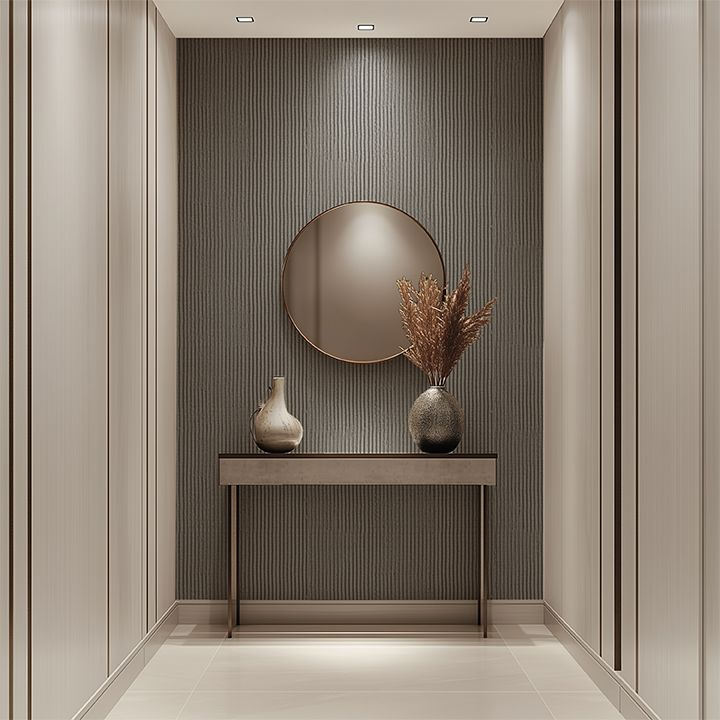
Interest does not require visual busyness. Subtle texture introduces depth without disrupting minimalism. Materials such as limewash walls, brushed wood, honed stone, or woven textiles add tactile variation while remaining visually quiet. Texture engages the senses without demanding attention, allowing the entryway to feel layered yet calm. Patterns, even restrained ones, can dominate small spaces and break visual continuity. Textural variation maintains harmony while preventing flatness. Light interacts differently with textured surfaces, creating gentle shadows that shift throughout the day. This natural variation adds richness without clutter. Combining textures within the same color family reinforces cohesion. The entryway remains timeless, avoiding trends that date quickly. Maintenance stays manageable, as subtle textures hide wear better than smooth or patterned finishes. This approach aligns with minimalist principles by prioritizing material quality over decoration. The space feels considered, warm, and grounded while remaining visually restrained. Texture becomes the quiet hero, supporting comfort and elegance without overwhelming the senses.
One Functional Element Styled As Decor
Purposeful design emerges when everyday items earn their place visually. Selecting one functional element to act as decor reduces the need for additional accessories. A sculptural bench, refined coat rail, or architectural hook system can anchor the entryway while serving daily use. The item should feature clean lines, durable materials, and thoughtful proportions. Its placement must feel intentional, not incidental. When function carries aesthetic value, the space feels efficient and uncluttered. This approach avoids redundancy and supports minimalist discipline. The chosen element becomes a focal point without overpowering the room. It also encourages consistent use, reinforcing organization habits. Over time, reliance on decorative fillers diminishes, replaced by meaningful objects that serve a clear role. Visual clarity improves, and maintenance becomes simpler. The entryway reads as designed rather than styled. This balance between utility and form creates a welcoming environment that feels authentic and practical. One strong functional piece can define the space, delivering both beauty and usefulness without excess.
Repetition Of One Material For Calm Flow

Consistency creates visual ease. Repeating one primary material across the entryway establishes rhythm and continuity. Wood, stone, metal, or plaster can appear in multiple elements such as flooring, storage fronts, benches, or wall accents. Variation comes from scale and application rather than material changes. This repetition reduces cognitive load, allowing the eye to move smoothly through the space. When materials shift too frequently, the entryway feels fragmented. A unified material palette supports minimalist clarity while still offering depth. Finishes should remain consistent to avoid visual breaks. This strategy also simplifies sourcing and maintenance. Over time, the space ages gracefully as materials develop character together. The entryway feels cohesive and intentional rather than pieced together. Repetition reinforces calm without sacrificing interest. Subtle contrasts in texture or grain prevent monotony. The result is a balanced environment that feels grounded and harmonious. Material continuity anchors the design, making the entryway feel like a natural extension of the home rather than a transitional afterthought.
Soft Indirect Lighting Over Harsh Fixtures

Atmosphere depends heavily on lighting quality. Soft, indirect lighting creates a welcoming entryway without glare or harsh shadows. Concealed LED strips, wall washers, or recessed uplighting gently illuminate surfaces rather than spotlighting objects. This approach enhances architectural features while preserving calm. Direct overhead fixtures often create stark contrasts and visual tension. Indirect light distributes brightness evenly, supporting relaxation and clarity. Warm color temperatures reinforce comfort while remaining functional. Lighting layers should remain minimal, avoiding excessive fixtures. When light sources are hidden, attention shifts to space rather than hardware. This strategy also complements reflective surfaces like mirrors and polished floors. Energy efficiency improves without sacrificing ambiance. The entryway feels composed at all times of day. Soft lighting supports minimalist goals by reducing visual noise and emphasizing form. The result is a calm transition space that feels intentional, refined, and easy on the eyes, setting a balanced tone for the rest of the home.
Artwork Reduced To One Oversized Piece

Visual focus strengthens when art selection is restrained. Choosing one oversized artwork instead of multiple small pieces creates impact without clutter. Scale provides presence, allowing the piece to anchor the entryway confidently. Subject matter should remain simple, abstract, or tonal to support calm. Frames, if used, should be minimal and neutral. Placement matters; the artwork should align proportionally with surrounding architecture. This approach avoids gallery-style busyness and reinforces clarity. One piece communicates intention, making the entryway feel curated rather than decorated. Negative space around the artwork enhances its effect. Maintenance becomes easier, and visual balance improves. The artwork sets mood without overwhelming the space. Over time, this choice remains timeless, resisting trends that rely on accumulation. The entryway gains personality while maintaining restraint. Art becomes a statement of taste rather than quantity. This simplicity supports a refined first impression grounded in confidence and clarity.
Intentional Emptiness To Create Visual Rest

Calm environments allow space to breathe. Intentional emptiness is not absence, but a deliberate design choice. Leaving areas unfilled provides visual rest and prevents overstimulation. In entryways, this might mean bare walls, open corners, or surfaces left clear. These pauses balance functional elements and enhance their presence. Visual rest improves orientation and comfort, especially during transitions. Empty space highlights quality over quantity. It also allows architecture and materials to stand on their own. This approach requires discipline, resisting the urge to fill every gap. Over time, emptiness becomes a defining feature rather than a perceived lack. The entryway feels composed, thoughtful, and serene. Daily routines benefit from clarity and reduced distraction. Visual breathing room supports minimalist values by prioritizing intention. The result is a space that feels calm, balanced, and quietly confident, offering a gentle transition from outside to inside without unnecessary stimulation.