
First impressions form instantly at the entryway, making wall design a powerful tool for setting the tone of the entire home. Gallery wall arrangements offer a flexible way to add personality, visual structure, and depth to this high-traffic space without major renovations. Thoughtfully placed frames, artwork, and photographs can guide the eye, balance proportions, and make narrow or awkward entryways feel intentional. When planned correctly, gallery walls also help anchor furniture like consoles or benches while reflecting personal style. This guide focuses on smart layout strategies, spacing tips, and styling ideas that help create a cohesive, polished entryway display that feels curated rather than cluttered.
Oversized Anchor Frame With Smaller Supporting Pieces
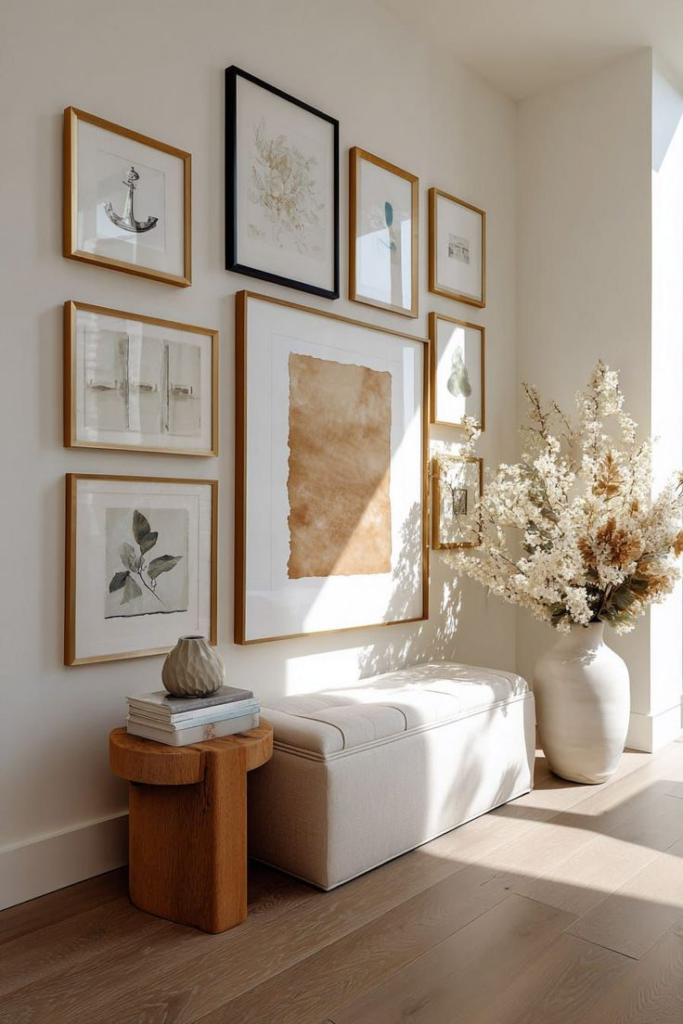
Scale hierarchy defines this arrangement, allowing one commanding artwork to establish visual authority while surrounding pieces reinforce balance. An oversized frame placed slightly above eye level grounds the entryway and instantly communicates intention. Smaller frames orbit the anchor with consistent spacing, preventing clutter while guiding the eye outward. This method works particularly well in transitional spaces where visitors pause briefly, since the focal point registers immediately without demanding prolonged attention. Neutral mats or restrained artwork within the large frame keep the composition from overpowering the entry. Supporting pieces should echo either color, subject, or frame finish to maintain unity. Consistency in spacing matters more than symmetry, as irregular placement can still feel deliberate when intervals remain uniform. Wall color plays a supporting role; mid-tone or light shades allow the anchor piece to stand out without harsh contrast. Lighting should wash the entire grouping evenly to avoid isolating the centerpiece. This approach suits homeowners seeking structure without rigidity, offering flexibility for future additions. The oversized element anchors the visual weight, while smaller frames add rhythm and storytelling depth, creating a gallery wall that feels curated, confident, and immediately legible in an entryway setting.
Vertical Stack Layout For Narrow Hallways

Limited width calls for upward thinking, and a vertical stacking approach answers that constraint with clarity. Frames aligned in a single column draw the eye upward, visually elongating narrow entry corridors without overwhelming walking space. Each piece should share a common width or frame finish to preserve continuity, while artwork can vary subtly to prevent monotony. Spacing consistency is critical, as uneven gaps quickly read as accidental in tight areas. Starting the lowest frame slightly above shoulder height keeps the arrangement clear of traffic and prevents visual crowding. This layout pairs well with slim console tables or wall-mounted hooks, allowing décor elements to coexist without overlap. Vertical stacks also adapt easily to ceiling height, making them suitable for apartments and older homes with tall proportions. Monochrome artwork or restrained color palettes reinforce cohesion, while textured paper or mixed media introduces quiet interest. The result feels intentional and architectural rather than decorative excess. For homeowners navigating spatial limitations, this method delivers order, elegance, and visual lift, transforming narrow entryways into composed passages that feel taller, calmer, and thoughtfully designed.
Single-Color Frame Mix For Instant Cohesion

Visual harmony often depends less on artwork and more on framing discipline. Using frames in a single color creates immediate cohesion, even when art styles differ widely. Black, white, wood, or metallic finishes act as unifying elements that allow photographs, illustrations, and prints to coexist without visual conflict. This strategy works especially well in entryways, where quick impressions matter more than detailed inspection. Mixed frame sizes remain acceptable when the shared color provides continuity. Layout flexibility increases, since alignment rules become more forgiving under a consistent frame palette. Wall tone should contrast gently with the frame color to avoid flattening the display. Mat choices can vary subtly, introducing depth while preserving uniformity. This approach suits rotating collections, as new pieces integrate seamlessly without requiring structural changes. Lighting remains straightforward, since reflections and shadows behave consistently across identical finishes. The overall effect feels calm, curated, and reliable, ideal for homeowners seeking a polished look without rigid design rules. A single-color frame mix delivers visual order, supports diverse artwork, and ensures the gallery wall reads as a unified statement rather than a collection of unrelated pieces.
Art And Object Hybrid Gallery Arrangement

Blending framed artwork with dimensional objects introduces depth and tactile interest to entryway walls. Sculptural elements, small mirrors, woven pieces, or wall-mounted objects break the flatness typical of traditional galleries. Balance remains essential; objects should complement rather than dominate the arrangement. Weight distribution matters more than symmetry, ensuring no single element visually tips the composition. Frames often serve as anchors, while objects act as punctuation marks that guide the eye. Consistent spacing and a limited material palette prevent chaos. This method works particularly well in homes aiming for layered character rather than formal presentation. Neutral walls allow mixed materials to stand out without visual noise. Practical considerations apply, as protruding items should remain clear of traffic flow. Lighting should be diffused to avoid harsh shadows that exaggerate depth differences. The result feels collected and expressive, reflecting personality without sacrificing order. For entryways, this hybrid approach creates an engaging first impression, encouraging exploration while maintaining clarity. Art and object combinations offer flexibility, adaptability, and a lived-in quality that traditional frame-only layouts often lack.
Leaning Frames On Slim Picture Ledges

Picture ledges offer adaptability without commitment, making them ideal for evolving entryway displays. Frames leaning against the wall introduce a relaxed, gallery-like feel while allowing effortless updates. Slim ledges prevent visual heaviness and maintain circulation space. Varying frame heights adds rhythm, while overlapping edges subtly increases depth. Consistent ledge spacing keeps the arrangement intentional rather than casual clutter. This method pairs well with neutral artwork, as the informal presentation already adds character. Wall color should contrast gently with frames to ensure legibility. Safety matters; ledges must be securely anchored, especially in high-traffic entryways. Lighting from above enhances depth and reduces glare on glass surfaces. This setup suits renters and homeowners who prefer flexibility over permanence. Seasonal updates become simple, supporting fresh visuals without wall damage. Leaning arrangements soften entryway formality while retaining structure. The overall impression feels curated yet approachable, delivering visual interest without rigid placement rules or long-term commitment.
Symmetrical Grid With One Intentional Break

Order provides comfort, yet perfection can feel sterile. A symmetrical grid establishes structure through evenly spaced frames aligned both horizontally and vertically. Introducing one deliberate deviation, such as a contrasting image or shifted placement, adds personality without disrupting balance. The break should remain subtle, clearly intentional rather than accidental. Frame consistency reinforces order, while artwork variation supplies interest. This approach works well in entryways where calm organization supports daily routines. Wall color neutrality ensures the grid reads clearly. Measuring accuracy is essential, as symmetry relies on precision. The intentional break often performs best near the center or along a natural sightline. Lighting should be uniform to avoid emphasizing irregularities. This method suits homeowners who appreciate discipline with nuance. The result feels thoughtful and composed, offering visual relief without abandoning structure. A controlled grid with a single exception communicates confidence, restraint, and design awareness, making it an effective solution for refined entryway gallery walls.
Gallery Wall Wrapped Around A Corner Turn

Corners often feel underutilized, yet they present unique opportunities for continuity. Extending a gallery wall around a corner creates flow, guiding movement through the entryway. Frames should maintain consistent spacing across both planes to preserve cohesion. Artwork scale can shift subtly to accommodate changing wall lengths. Sightlines matter; the transition should feel smooth rather than abrupt. This arrangement works particularly well in open-plan entries where walls intersect near circulation paths. Neutral framing keeps attention on the spatial journey rather than individual pieces. Lighting must address both walls evenly to avoid visual drop-off. The corner wrap introduces depth and architectural interest, transforming a functional junction into a design feature. For homeowners seeking continuity and movement, this approach turns an overlooked area into a cohesive visual experience that feels intentional, immersive, and spatially aware.
Large-Scale Art Paired With Minimal Accents

Restraint amplifies impact when one substantial artwork anchors the entryway. Large-scale art commands attention, while a few smaller accents provide balance without competition. Placement should respect proportions, allowing breathing room around the main piece. Supporting elements work best when understated, echoing colors or themes rather than introducing new narratives. This approach suits modern and transitional interiors where clarity matters. Wall color neutrality ensures the artwork remains the focal point. Lighting should emphasize the primary piece while softly illuminating accents. This composition reduces visual noise, offering immediate comprehension upon entry. For busy households, simplicity supports calm. Large-scale art with minimal companions delivers elegance, confidence, and clarity, proving that fewer elements often create stronger impressions in entryway gallery arrangements.
Monochrome Prints With Texture Variation

Limiting color simplifies decision-making, while texture prevents flatness. Monochrome prints unify the gallery wall through shared tones, allowing variations in paper, technique, and subject to add depth. Textured photography, line drawings, and layered prints coexist without visual conflict. Frame consistency reinforces cohesion. This approach suits entryways seeking calm sophistication rather than bold contrast. Lighting enhances surface differences, revealing subtle shadows and grain. Wall color should support contrast without overpowering. The result feels curated and serene, offering visual interest through material nuance rather than color shifts. Monochrome with texture variation delivers understated richness ideal for welcoming spaces.
Gallery Wall Centered To Doorway Sightline

Alignment with natural sightlines enhances impact. Centering a gallery wall to the primary doorway view ensures immediate engagement upon entry. The composition should radiate outward from this visual axis, maintaining balance even when asymmetrical. Frame scale can adjust gradually, guiding the eye without distraction. This method respects architecture, reinforcing spatial logic. Lighting alignment matters, as shadows should not distort the central focus. Wall color neutrality supports clarity. For homeowners prioritizing first impressions, this approach guarantees relevance and visibility. A sightline-centered gallery wall feels purposeful, intuitive, and architecturally grounded.
Mixed Frame Depths Without Size Chaos

Depth variation introduces dimension, yet requires discipline. Mixing shallow and deep frames adds interest without relying on size differences. Consistent outer dimensions maintain order, while varied depths create shadow play. This approach works well in entryways with good lighting. Neutral palettes prevent visual overload. Spacing precision keeps the arrangement coherent. The result feels layered and thoughtful, offering tactile interest without disorder. Mixed depths provide subtle sophistication suited to curated entry displays.
Negative Space–Driven Gallery Composition

Absence can be as powerful as presence. Allowing generous negative space around frames enhances clarity and focus. Each piece gains importance through isolation, preventing visual fatigue. This approach suits entryways where calm transitions matter. Frame placement should feel deliberate, respecting proportions. Wall color becomes part of the composition, supporting balance. Lighting should remain soft and even. Negative space-driven layouts communicate confidence, restraint, and clarity, delivering a refined gallery wall that feels breathable, intentional, and quietly impactful.