
First impressions begin the moment the front door opens, making the entryway one of the most influential spaces in any home. Thoughtful decor choices help this area feel welcoming, organized, and visually connected to the rest of the interior. Well-selected entry decor balances style with function through furniture scale, wall accents, lighting, and practical storage solutions. It also supports daily routines by improving flow and reducing clutter. For homes of every size, smart entry styling creates a polished transition rather than a forgotten corner. The ideas ahead focus on practical, stylish approaches that deliver impact without complexity or wasted space.
Statement Entry Mirror
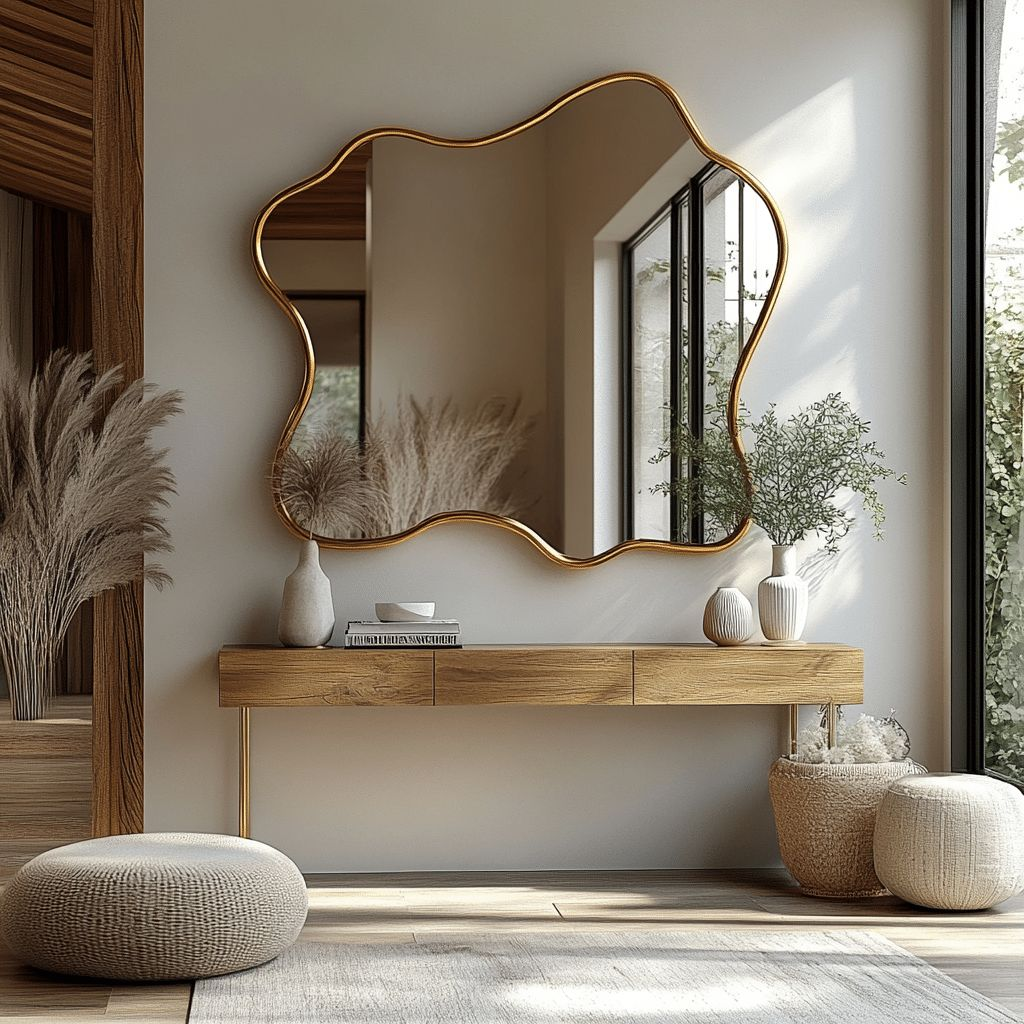
Visual balance in an entryway often begins with reflective surfaces that serve both function and form. A well-chosen mirror enhances light flow, improves spatial perception, and provides a final checkpoint before heading out. Larger mirrors work especially well in compact or narrow entries, as they visually expand the area while anchoring the wall with purpose. Framed styles in wood, metal, or stone finishes help establish the home’s overall design direction from the first glance.
Placement matters as much as scale. Hanging the mirror at eye level ensures daily usability while maintaining symmetry with nearby furniture. Arched or irregular silhouettes add personality, while clean-lined rectangular designs suit transitional and modern interiors. Positioning opposite a window or light source helps bounce illumination deeper into the space, reducing shadowed corners.
Avoid overcrowding the wall around the mirror. Let negative space do some of the visual work. When paired with a console or slim shelf below, the mirror becomes part of a cohesive composition rather than a standalone object. This thoughtful approach supports both style and practicality, making the entry feel considered, polished, and welcoming without unnecessary decoration.
Sculptural Console Table

Furniture in an entryway benefits from purpose-driven design paired with visual interest. A console with sculptural qualities introduces depth and dimension while remaining functional for daily routines. Curved legs, asymmetrical bases, or carved wood forms transform a simple surface into an architectural feature that grounds the space.
Proportion is critical. Narrow profiles prevent crowding in high-traffic zones while still offering room for essentials such as keys, mail, or decorative accents. Materials like stone, solid wood, or concrete composites add durability and weight, giving the entry a sense of permanence. Open bases help maintain visual flow, especially in smaller homes where bulky furniture can feel restrictive.
Styling should remain intentional. Limiting accessories to a few meaningful pieces keeps the surface uncluttered and highlights the table’s form. Height variation through lamps or vases creates rhythm without distraction. When positioned against a wall with artwork or a mirror above, the console becomes a visual anchor that organizes the entire entry layout.
This type of furniture works best when it complements surrounding finishes rather than competing with them. The result is an entry that feels curated, balanced, and confidently styled from the moment the door opens.
Oversized Ceramic Vase

Floor-level accents often provide the grounding element an entryway needs. A large ceramic vessel offers scale and texture while guiding the eye upward, especially in spaces with high ceilings or open staircases. Neutral glazes, matte finishes, or subtle patterns allow the piece to integrate seamlessly without overwhelming nearby decor.
Placement along a wall corner or beside a console creates structure and fills otherwise underutilized space. Even without florals, a sculptural vase stands on its own as an art object. When stems are added, choosing branches or dried botanicals with vertical movement reinforces height and balance rather than clutter.
Material choice plays a role in longevity. Stoneware and porcelain are durable options that resist chipping and maintain their finish over time. Earth-toned palettes connect well with wood floors, natural fibers, and warm wall colors, creating continuity from the entry to adjoining rooms.
Care should be taken to keep surrounding elements minimal. Let the vessel command attention without competition. This approach introduces character while maintaining a calm visual hierarchy. A thoughtfully placed ceramic vase signals intentional styling and adds quiet confidence to the entry’s overall presentation.
Layered Entry Lighting

Lighting determines how an entryway functions at different times of day. Relying on a single overhead fixture often results in harsh shadows or uneven illumination. Multiple light sources create balance, improve visibility, and contribute to a more welcoming atmosphere.
Ambient lighting establishes overall brightness, typically through ceiling fixtures or recessed lighting. Supplementing this with wall sconces or table lamps adds warmth and depth, preventing the space from feeling flat. Accent lighting, such as picture lights or directional fixtures, draws attention to artwork or architectural details.
Fixture scale should align with ceiling height and room size. Oversized pendants work well in tall entries, while flush or semi-flush mounts suit lower ceilings. Warm-toned bulbs enhance comfort and complement natural materials like wood and stone.
Thoughtful placement ensures practical benefits. Light near storage areas improves functionality, while softer pools of light near seating or decor create visual interest. Dimmers provide flexibility, allowing the entry to shift from bright and functional during the day to calm and inviting at night.
This layered approach supports both usability and style, resulting in an entryway that feels considered, adaptable, and visually cohesive.
Curated Wall Art Moment
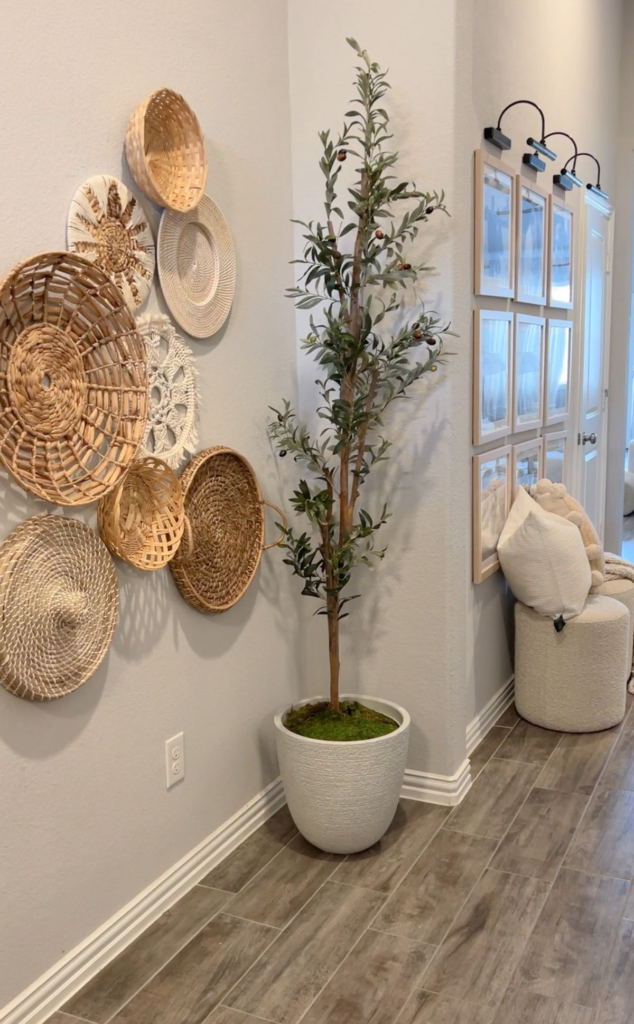
Wall art introduces personality and narrative into an entryway, offering an immediate sense of the home’s character. A focused arrangement feels more intentional than scattered pieces, guiding attention and setting expectations for the rooms beyond.
Scale should match wall proportions. One large artwork can create impact, while a tight grouping of smaller pieces offers texture and rhythm. Consistent framing finishes help maintain cohesion even when mixing styles or mediums. Neutral mats allow artwork to stand out without overwhelming the space.
Hanging height is often overlooked. Artwork should align with average eye level, ensuring comfortable viewing without disrupting visual flow. Spacing between pieces matters as well; consistent gaps prevent the arrangement from feeling chaotic.
Themes work best when subtle. Abstracts, landscapes, or architectural photography provide interest without demanding prolonged focus. Color palettes that echo nearby furnishings strengthen continuity throughout the entry.
Lighting enhances presentation. Picture lights or directional sconces highlight the art and add depth after dark. A well-composed wall moment transforms the entry into more than a pass-through, offering a polished introduction to the home’s aesthetic.
Textured Entry Rug

Floor coverings play a practical and visual role in entry design. A rug helps define the space, protects flooring, and adds softness underfoot. Texture is particularly important, as it introduces depth without relying on bold color or pattern.
Flatweaves, low-pile wool, or natural fiber blends perform well in high-traffic zones. These materials resist wear while maintaining structure. Subtle patterns hide dirt more effectively than solid tones, making upkeep easier over time.
Sizing should allow the rug to sit comfortably beneath furniture without obstructing door movement. A rug that feels too small can make the entry appear unfinished, while one that fits proportionally reinforces balance.
Layering texture through woven or ribbed surfaces enhances warmth, especially in homes with hard flooring. Neutral shades connect seamlessly with various decor styles, ensuring longevity even as accessories change.
Regular maintenance preserves appearance. Shaking out debris and rotating the rug prevents uneven wear. When chosen thoughtfully, a textured rug supports both function and design, contributing to an entryway that feels grounded, inviting, and ready for daily use.
Minimal Catch-All Tray

Daily routines benefit from designated landing zones that prevent clutter from spreading. A compact tray provides a clear solution for storing small essentials like keys, wallets, or sunglasses. This simple addition improves organization while maintaining a clean visual profile.
Material choice influences durability and style. Stone, metal, wood, or leather options each offer distinct character while withstanding regular handling. Neutral tones blend seamlessly into most entry setups, allowing the tray to function quietly rather than dominate attention.
Placement matters. Situating the tray near the door or on a console ensures items are deposited consistently. Keeping contents limited prevents the area from becoming a catch-all for unrelated objects.
Shape can subtly enhance design. Rectangular trays align well with consoles, while round forms soften angular furniture. Raised edges keep items contained without sacrificing accessibility.
This understated element supports efficiency and order, reducing daily friction as items remain easy to locate. Over time, such small systems contribute significantly to a calmer, more functional entryway that supports real-life use without visual clutter.
Slim Accent Bench

Seating in an entryway adds comfort and functionality without requiring significant floor space. A narrow bench provides a convenient spot for putting on or removing shoes while visually anchoring the area.
Design should prioritize proportion. Slim profiles maintain clear pathways, especially in narrow halls or apartments. Upholstered tops introduce softness, while wood or metal bases ensure durability. Neutral fabrics offer flexibility and resist showing wear.
Placement against a wall or beneath artwork creates a structured layout. When paired with a rug beneath, the bench feels intentional rather than temporary. Storage options beneath the seat can house shoes or baskets, improving organization without adding bulk.
Height matters for comfort. A bench that aligns with standard chair height supports ease of use across age groups. Simple silhouettes work best, allowing surrounding decor to shine without competition.
This seating solution balances aesthetics and practicality, enhancing the entry’s usability while maintaining a streamlined appearance that feels welcoming from the moment someone arrives.
Greenery with Presence

Plants introduce life and movement into an entryway, softening hard surfaces and improving visual balance. Choosing greenery with strong form ensures the addition feels intentional rather than decorative filler.
Tall plants work well in corners or near furniture, drawing the eye upward and adding structure. Broad-leaf varieties create impact without requiring frequent rearrangement. Faux options can perform equally well in low-light areas when realism is prioritized.
Planters deserve equal consideration. Materials such as ceramic, stone, or textured composites complement natural elements already present in the entry. Neutral containers allow foliage to remain the focal point.
Placement should avoid obstructing walkways. Instead, greenery should frame the space, guiding movement while enhancing atmosphere. Consistent maintenance keeps the look polished; dust-free leaves and appropriate watering preserve visual freshness.
Thoughtfully chosen plants support a calm, welcoming tone while reinforcing the home’s connection to natural elements. This presence elevates the entry without relying on excess decor or seasonal updates.
Architectural Table Lamp

Secondary lighting elements often provide the warmth that overhead fixtures cannot. A table lamp with architectural character introduces sculptural interest while improving functionality during evening hours.
Design details matter. Strong bases, tapered shades, or mixed materials contribute visual weight and anchor nearby surfaces. Scale should align with the console or table beneath to maintain balance.
Placement near mirrors or artwork amplifies light distribution, reducing shadows and enhancing depth. Warm bulbs create a softer glow that feels inviting rather than clinical.
Cord management should not be overlooked. Concealing cables preserves a clean appearance and prevents visual distraction. Lamps with dimming capabilities offer flexibility for different times of day.
Beyond illumination, this element acts as a decorative statement that supports the entry’s overall composition. When chosen thoughtfully, a table lamp contributes both form and function, reinforcing the space’s layered, intentional design.
Styled Book Stack

Books add subtle sophistication and personal expression to an entryway. A small stack introduces height variation and texture while offering an opportunity to reflect interests or design sensibilities.
Selection matters. Hardcover books with cohesive color palettes or neutral spines maintain visual calm. Subjects such as architecture, travel, or art align well with entry styling without feeling overly thematic.
Arrangement should feel deliberate. Stacking two or three books horizontally creates a stable base for small objects like bowls or decorative accents. Keeping the stack modest prevents clutter and preserves balance.
Placement on consoles or shelves near the door integrates books naturally into the space. Dust jackets can be removed for a cleaner look, allowing bindings to contribute texture.
This simple addition enhances depth without overwhelming the area. Over time, rotating titles refreshes the display while maintaining familiarity. A well-considered book stack adds quiet character and reinforces the entry’s curated feel.
Signature Scent Element

Atmosphere extends beyond visuals, and scent plays a powerful role in first impressions. Introducing a consistent fragrance establishes familiarity and comfort from the moment the door opens.
Options range from candles and diffusers to sachets or subtle room sprays. The key lies in restraint. Light, clean notes work best in shared spaces, avoiding anything overpowering.
Placement near airflow allows fragrance to disperse gently without concentrating in one spot. Containers should complement surrounding decor, maintaining cohesion with finishes and materials already present.
Consistency builds recognition. Using the same scent throughout adjacent spaces reinforces continuity and creates a signature experience associated with the home.
Maintenance ensures effectiveness. Refilling diffusers or replacing candles as needed keeps the entry feeling fresh. This understated element enhances the sensory experience without visual clutter, completing an entryway that feels thoughtfully composed and welcoming on every level.