
Neutral tones paired with farmhouse details create entryways that feel warm, calm, and effortlessly welcoming. Beige works as a versatile foundation, allowing natural wood, woven textures, and vintage-inspired accents to stand out without visual noise. In farmhouse entryways, this palette helps brighten small or dim spaces while maintaining a cozy, lived-in character. Practical elements like benches, hooks, and durable flooring blend seamlessly into the design, supporting everyday routines. This style remains popular because it balances comfort with timeless appeal. The ideas ahead focus on realistic, high-impact ways to use beige farmhouse elements to create an entryway that feels cohesive, functional, and inviting from the first step inside.
Layered Beige Tones With Natural Wood Contrast
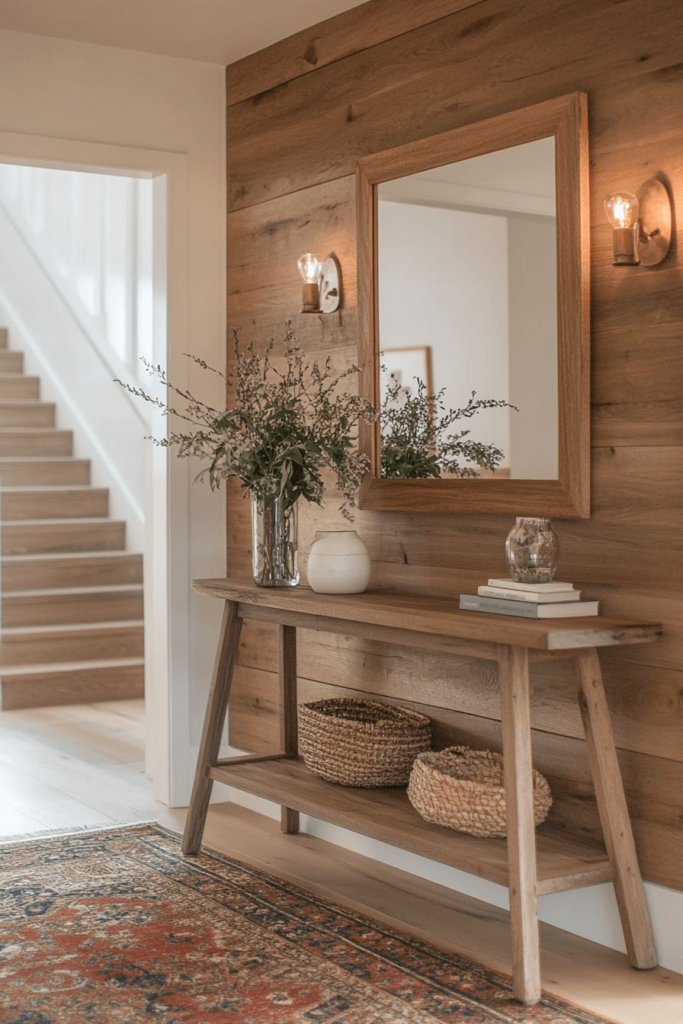
Thoughtful use of tonal variation allows beige to feel intentional rather than flat, especially when paired with visible wood grain. Subtle shifts between warm sand, oat, and stone hues on walls, trim, and decor create depth without visual noise. Natural wood elements such as oak consoles, maple benches, or pine shelving introduce contrast that feels organic and grounded. Grain patterns break up the softness of beige while reinforcing the farmhouse aesthetic. Matte finishes work best, preventing glare and keeping the entryway calm. Texture matters as much as color; lightly distressed wood, hand-brushed finishes, and woven baskets add quiet character. Keeping the palette restrained helps the entry feel cohesive from every angle. This approach suits both small and large entryways because it avoids sharp color breaks. Light reflects gently across layered neutrals, making the space appear open and welcoming. Wood tones should lean warm rather than gray to maintain harmony with beige. Simple black or bronze hardware can be added sparingly without disrupting the balance. Overall, the look delivers warmth, practicality, and timeless appeal that adapts easily to seasonal changes and everyday use.
Soft Linen Textures Paired With Rustic Elements

Textural contrast defines successful farmhouse entryways, and linen provides an ideal starting point. Natural linen pillows, slipcovers, or wall panels introduce a relaxed, breathable quality that immediately softens the space. When paired with rustic materials such as reclaimed wood, wrought iron hooks, or aged ceramics, the entryway feels lived-in yet intentional. Linen’s subtle weave prevents the beige palette from appearing overly polished. Rustic elements ground the look, offering visual weight and durability. A linen-upholstered bench beside a rough-hewn console creates balance between comfort and structure. Neutral tones keep the focus on texture rather than color. Lighting plays an important role, as warm bulbs enhance linen’s natural depth and highlight imperfections in wood surfaces. This combination works well for high-traffic entries because it hides wear gracefully. Nothing feels precious or staged. Instead, the space communicates ease and practicality. The overall impression is calm, welcoming, and authentic, reflecting farmhouse style without leaning into excess ornamentation or decorative clutter.
Warm Beige Walls With Black Metal Accents
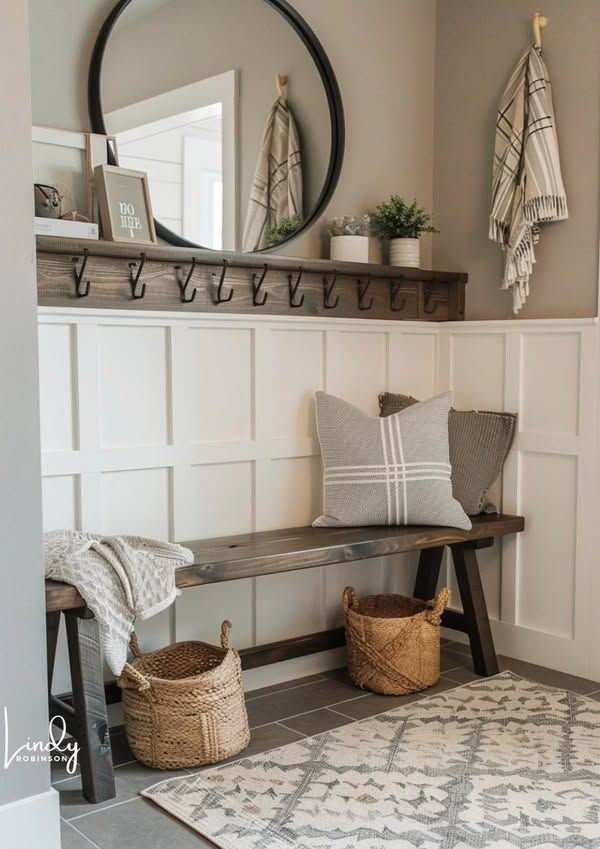
Balanced contrast brings definition to beige farmhouse entryways, and black metal accents provide that clarity. Warm beige walls create a neutral backdrop that feels inviting rather than stark. Black metal elements such as wall hooks, lantern-style lighting, stair railings, or console legs add structure and visual rhythm. The dark accents sharpen architectural lines and prevent the space from feeling washed out. Matte or satin finishes work best, maintaining a soft farmhouse character rather than an industrial edge. Spacing matters; accents should be evenly distributed to guide the eye naturally through the entry. Beige walls reflect light well, keeping the area bright even with darker hardware. Wood tones can be layered in to soften the contrast further. This approach suits modern farmhouse homes that favor clean lines while preserving warmth. Black metal is durable, low maintenance, and timeless, making it practical for busy households. The result is an entryway that feels grounded, cohesive, and effortlessly polished.
Neutral Farmhouse Entry With Light Stone Flooring

Flooring establishes the foundation of an entryway, and light stone delivers both durability and visual calm. Pale limestone, travertine, or stone-look tile pairs seamlessly with beige farmhouse interiors. The subtle variation in stone adds interest without overwhelming the space. Neutral flooring reflects light, helping the entry feel open and clean. Beige walls and wood accents layer naturally on top, creating a cohesive palette. Stone also handles foot traffic, moisture, and seasonal wear better than many alternatives. Grout lines should remain minimal to avoid visual clutter. When combined with simple rugs or runners, stone flooring offers flexibility for changing decor over time. Texture from stone balances softer materials like linen, baskets, or upholstered seating. The overall effect feels grounded and practical, ideal for homes that prioritize function alongside style. Light stone anchors the entry without dominating it, allowing farmhouse details to remain the focal point.
Beige Shiplap Walls For Subtle Texture

Wall treatments shape the character of farmhouse entryways, and shiplap offers texture without excess. Beige-painted shiplap adds gentle dimension while preserving a calm color palette. Vertical or horizontal orientation can subtly influence how the space feels, with vertical lines adding height and horizontal lines enhancing width. Soft beige tones prevent the shiplap from appearing too bold or nautical. The seams introduce rhythm and shadow, creating interest even in minimal layouts. Shiplap pairs well with wood benches, metal hooks, and woven accessories. Satin or eggshell finishes keep reflections soft and understated. This treatment works especially well in narrow or transitional entryways where decor remains minimal. Shiplap provides character on its own, reducing the need for heavy wall art. The result is a welcoming, textured backdrop that supports farmhouse style while remaining timeless and adaptable.
Farmhouse Bench In Natural Wood And Beige Cushions
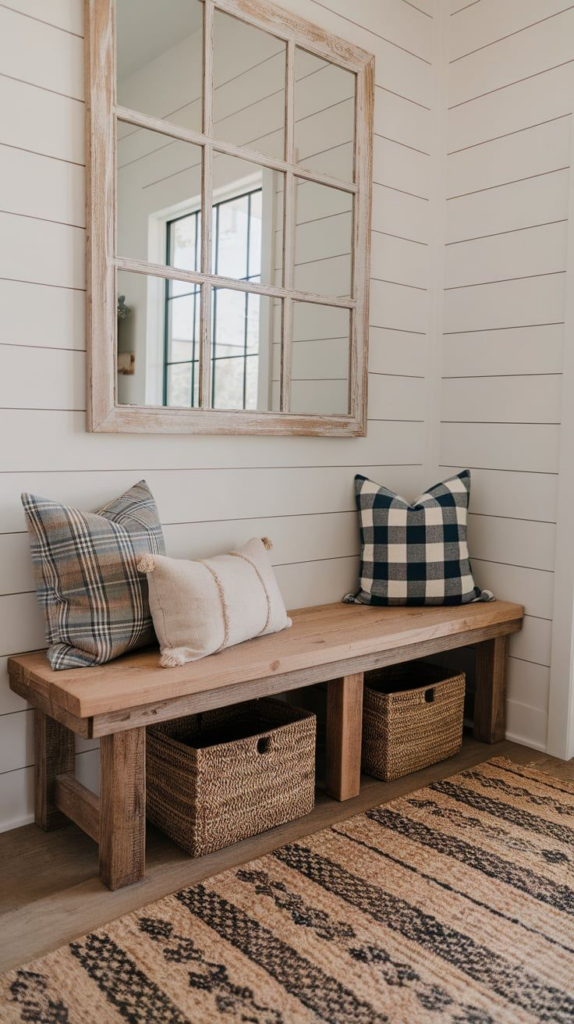
Seating transforms an entryway from pass-through space to functional landing zone. A natural wood bench with beige cushions offers both comfort and visual warmth. Wood grain introduces organic detail, while neutral cushions soften the look and improve usability. This combination suits daily routines such as putting on shoes or setting down bags. Cushion fabric should feel durable yet relaxed, such as canvas or linen blends. Under-bench storage baskets enhance practicality without disrupting the aesthetic. The bench anchors the entry visually, providing structure along open walls. Beige upholstery keeps the palette cohesive and forgiving of wear. Natural wood finishes age gracefully, aligning with farmhouse values of longevity and simplicity. This setup balances function and style, making the entry feel welcoming, purposeful, and thoughtfully arranged.
Vintage-Inspired Beige Runner For Entry Flow

Runners guide movement through entryways while adding warmth underfoot. Vintage-inspired beige runners introduce pattern without overpowering the space. Subtle motifs and faded finishes complement farmhouse interiors naturally. Beige tones keep the rug versatile, working with wood, stone, or tile flooring. Low-pile construction ensures durability and ease of cleaning in high-traffic areas. Runners visually lengthen the entry, improving flow and cohesion. Traditional patterns add character while remaining timeless. This element anchors furniture placement and defines the walkway. Layering a runner helps soften acoustics and adds comfort during daily use. The result feels intentional, welcoming, and practical for busy households seeking understated style.
Soft Beige Walls Anchored With Woven Decor

Visual warmth increases when smooth surfaces meet natural textures. Beige walls provide a calming canvas, while woven decor introduces depth and character. Baskets, trays, wall hangings, and light fixtures made from rattan or seagrass ground the space organically. These materials echo farmhouse roots without appearing rustic or heavy. Woven accents prevent beige walls from feeling flat or unfinished. Placement should feel balanced rather than crowded. Natural fibers add warmth while remaining neutral. This approach works especially well in compact entryways where minimal decor is preferred. The space feels relaxed, tactile, and thoughtfully layered without relying on bold colors or trends.
Minimal Beige Palette With Antique Accents

Restrained color schemes benefit from carefully chosen focal points. A minimal beige palette sets a calm foundation, while antique accents introduce history and character. Weathered mirrors, aged frames, or vintage hardware add depth without clutter. Beige tones keep the entry cohesive, allowing antiques to stand out subtly. Each piece should feel purposeful rather than decorative filler. Patina and wear enhance authenticity. This balance suits homeowners seeking elegance without excess. The space remains practical while reflecting personal style. Antique elements soften modern lines, creating timeless appeal that feels collected rather than styled.
Beige Entryway With Distressed Wood Console
Furniture anchors an entryway, and a distressed wood console provides both function and character. Beige surroundings allow the texture of aged wood to take center stage. Imperfections in the finish add warmth and authenticity. Consoles offer surface space for keys, lamps, or simple decor. Neutral walls keep the focus on craftsmanship rather than color. Distressed wood pairs naturally with woven baskets and metal accents. This setup works well in both narrow and open entries. The overall impression feels welcoming, practical, and grounded in farmhouse tradition.
Warm Beige And Cream Layered Farmhouse Look
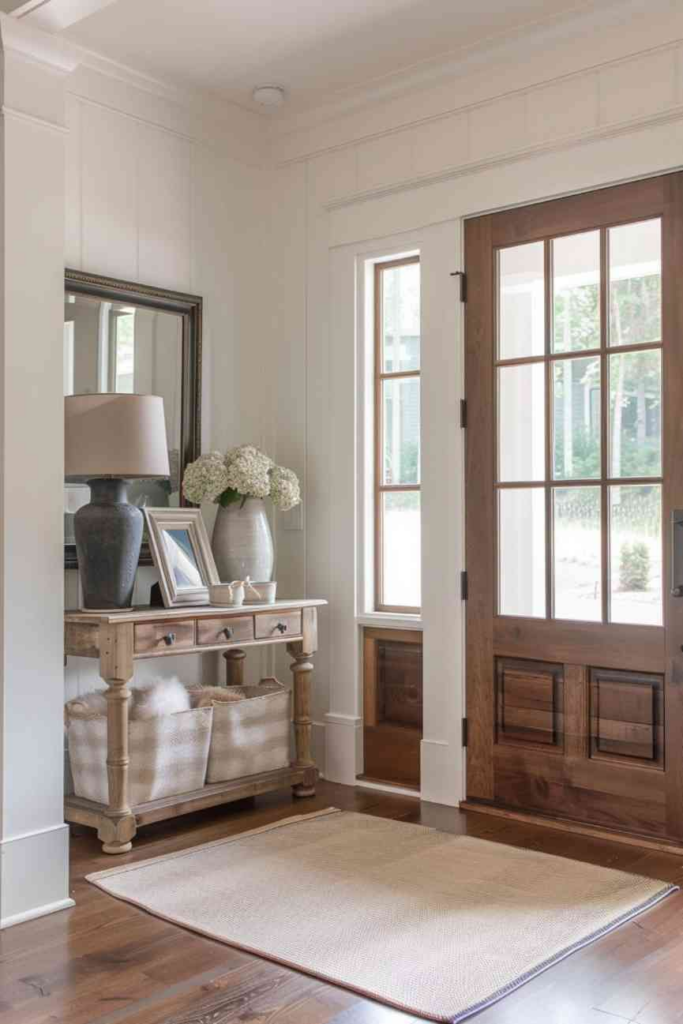
Layering closely related tones creates depth without visual clutter. Beige and cream work together to form a soft, cohesive palette ideal for farmhouse entries. Walls, textiles, and furniture transition gently between shades. This approach enhances light and makes the space feel larger. Wood and metal accents add structure without disrupting harmony. Cream brightens darker corners while beige grounds the look. The result feels calm, inviting, and adaptable to seasonal decor changes.
Beige Farmhouse Entry With Simple Greenery
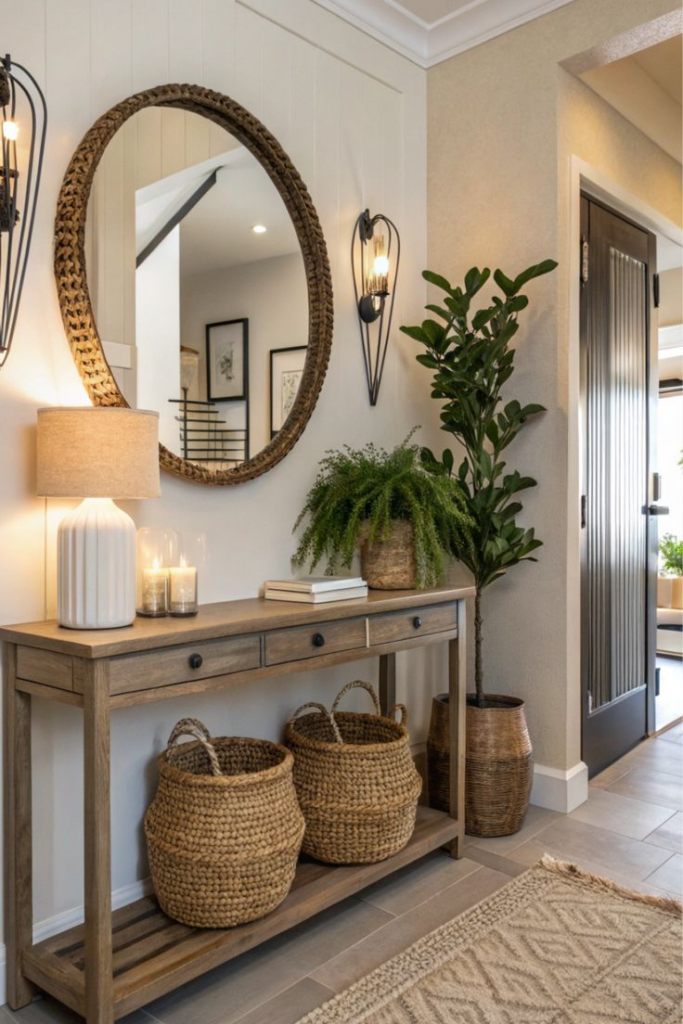
Natural greenery introduces life into neutral entryways. Beige backdrops allow plants to stand out without overwhelming the space. Simple greenery such as olive branches, eucalyptus, or potted herbs complements farmhouse style effortlessly. Green tones add freshness and balance to warm neutrals. Containers should remain understated, using clay, stone, or woven materials. Greenery softens hard edges and improves visual flow. This addition feels timeless and approachable, enhancing warmth while keeping maintenance minimal.