
Split-level homes present a unique entry experience that often feels awkward without thoughtful design. With stairs immediately in view and limited landing space, this area requires smart planning to feel cohesive and welcoming. Well-considered layouts, lighting choices, and visual cues can improve flow between levels while reducing clutter and confusion at the front door. Practical upgrades also help define zones for storage, movement, and first impressions. This topic matters for homeowners seeking both function and style in a challenging footprint. The ideas ahead focus on realistic, design-forward solutions that help split-level entries feel intentional, balanced, and visually connected to the rest of the home.
Upper-Level Console Styling To Define Arrival Zone

Clear spatial definition becomes essential when the first landing opens directly into circulation paths. Thoughtful console placement on the upper tier establishes a visual pause that signals arrival without obstructing movement. Slim-profile consoles work best, allowing storage and styling while preserving openness. Wall-mounted or leg-light designs prevent the space from feeling crowded, especially in compact split-level entries. Styling should remain intentional rather than decorative, using structured trays, a single sculptural object, and practical catch-all elements. Height balance matters, so pairing the console with vertical artwork or a restrained mirror ensures proportion without visual overload. Electrical outlets nearby support functional lighting or discreet charging zones. Avoid deep drawers that interfere with stair clearance, opting instead for shallow storage that maintains accessibility. Neutral finishes help the console blend with adjacent flooring changes, while subtle contrast prevents it from disappearing visually. This approach creates a psychological threshold that helps guests orient themselves immediately. When designed correctly, the upper-level console becomes an anchor point that introduces order, reduces transitional confusion, and supports daily routines without drawing unnecessary attention to level changes or spatial constraints.
Lower-Level Drop Zone With Hidden Storage Focus

Daily clutter tends to accumulate at the lowest point of a split entry, making storage strategy critical. Purpose-built drop zones on the lower level prevent shoes, bags, and outerwear from migrating upward. Closed cabinetry with push-latch doors keeps visual noise controlled while remaining easy to access. Bench-integrated compartments work particularly well, offering seating and concealed storage without expanding the footprint. Materials should resist moisture and abrasion, especially in climates with seasonal debris. Toe-kick drawers add extra capacity without interrupting circulation, while vertical cubbies behind flush panels maintain clean sightlines. Lighting should be soft but sufficient, ensuring usability during darker hours without spotlighting clutter-prone areas. Coordinating finishes with stair treads helps the zone feel intentional rather than secondary. Clear labeling inside cabinets improves household efficiency while keeping the exterior minimal. This lower-level organization strategy supports smoother transitions, reduces cleaning effort, and prevents visual spillover into the main living space. When storage remains hidden yet intuitive, the entry functions efficiently without sacrificing the streamlined appearance essential to split-level homes.
Visual Divider Using Half Wall Or Open Slats
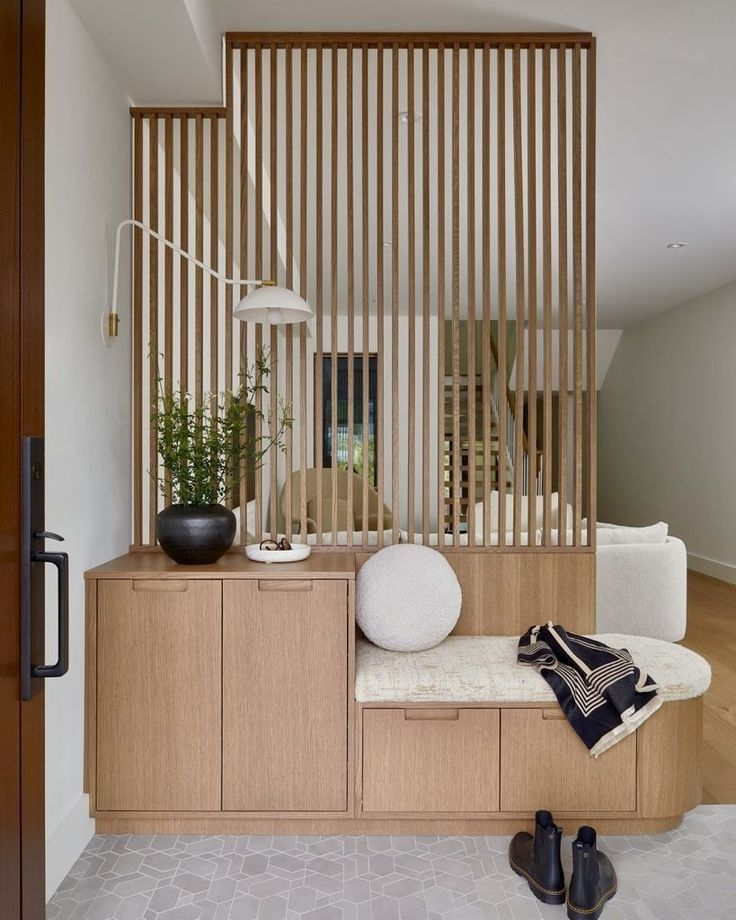
Subtle separation between levels helps define purpose without sacrificing openness. Half walls or vertical slat dividers offer structure while preserving light flow. Height control is critical, keeping dividers low enough to maintain connection yet tall enough to signal transition. Open slats allow visual continuity while creating rhythm that guides the eye upward. Material selection should echo stair railings or flooring tones to reinforce cohesion. Spacing between slats influences transparency, with tighter gaps providing privacy and wider gaps supporting openness. Half walls can double as ledges for minimal styling, though restraint prevents clutter buildup. Electrical planning allows integrated lighting or outlets without surface disruption. Dividers should align precisely with stair edges to avoid awkward offsets. This technique improves wayfinding, reduces visual chaos, and creates intentional zones without permanent enclosure. In split-level entries, where abrupt elevation changes can feel disjointed, these dividers restore balance and clarity. Properly executed, they become architectural features rather than decorative afterthoughts, enhancing both form and function while respecting the compact nature of entry spaces.
Statement Lighting To Unite Both Levels

Lighting becomes the unifying element when levels shift abruptly. A single statement fixture spanning vertical space visually connects upper and lower zones. Multi-drop pendants or sculptural chandeliers work particularly well, drawing attention upward while grounding the entry. Scale matters more than ornamentation, ensuring the fixture complements ceiling height without overwhelming sightlines. Placement should align with stair geometry, centered between landings for balance. Warm light temperatures promote welcome without distorting finishes. Dimmers add flexibility, adapting brightness for different times of day. Avoid fixtures that cast harsh shadows across steps, prioritizing even illumination. Coordinated wall sconces can reinforce the main fixture without competing visually. Wiring should be planned early to avoid surface conduits that disrupt clean lines. This lighting strategy eliminates the fragmented feel common in split entries, replacing it with cohesion and flow. When light behaves as a connector rather than an accent, the entire space feels intentional, safe, and visually organized. Proper illumination enhances usability while subtly emphasizing architectural transitions, making the entry feel larger and more refined.
Vertical Art Composition Connecting Height Change

Artwork can bridge elevation shifts when arranged with purpose. Vertical compositions draw the eye along the stair path, visually smoothing level transitions. Gallery layouts should follow the incline rather than traditional grids, maintaining consistent spacing aligned with stair rise. Medium-scale pieces prevent visual heaviness while still commanding presence. Frame finishes should coordinate subtly with railings or console hardware. Avoid overly busy imagery that competes with movement. Lighting considerations include glare control and even distribution across pieces. Wall anchors must accommodate varying heights securely. This curated approach transforms blank stair walls into cohesive narratives that connect spaces emotionally and visually. Rather than decorating individual levels, the art treats the entry as one continuous experience. Proper alignment reinforces flow, helping occupants intuitively navigate the space. When executed carefully, vertical art compositions soften architectural breaks and introduce personality without overwhelming the compact footprint typical of split-level entries.
Bench Placement Aligned With Step Transition

Seating placement gains importance where level changes occur. Benches positioned parallel to stair transitions provide functionality without interrupting circulation. Length should correspond proportionally to stair width, ensuring balance. Upholstered benches offer comfort, while wood or composite options improve durability. Clearance around the bench must support easy movement and door swing. Storage beneath seating enhances utility without visual clutter. Anchoring the bench against a wall or divider improves stability and orientation. Finishes should harmonize with flooring changes, reinforcing cohesion. Proper bench placement creates a natural pause point for shoe removal or bag placement. This strategic alignment supports daily routines while maintaining clean sightlines. When thoughtfully integrated, benches become part of the architecture rather than an added furnishing, enhancing usability in tight split entries.
Color Blocking To Separate Levels Cleanly

Color differentiation helps define zones without physical barriers. Strategic blocking distinguishes upper and lower levels clearly. Neutral contrasts work best, avoiding dramatic shifts that overwhelm. Flooring transitions should complement wall color changes for continuity. Crisp edges maintain precision, preventing visual bleed. Matte finishes reduce glare on stairs. This technique clarifies spatial hierarchy while preserving openness. When executed with restraint, color blocking organizes movement intuitively and enhances architectural clarity in split-level entries.
Runner Rug Guiding Movement Between Levels

Textiles influence flow when chosen deliberately. Runner rugs aligned with stair paths guide movement naturally. Low-pile materials improve safety and durability. Length should extend beyond both landings for continuity. Subtle patterns hide wear without visual clutter. Proper padding prevents slippage. Coordinated colors reinforce zoning while maintaining cohesion. This approach softens transitions and improves comfort underfoot, making split entries feel intentional and inviting.
Floating Storage To Avoid Visual Bulk

Wall-mounted storage solutions offer a practical way to manage entryway needs without overwhelming a split-level layout. By lifting cabinetry off the floor, the eye reads more negative space, which immediately makes the entry feel lighter and more open. Floating units work best when proportions are carefully controlled, keeping depth shallow enough to avoid encroaching on walking paths. Closed-front designs help conceal everyday items such as shoes, keys, and mail, preventing visual clutter from spreading across levels. Hardware-free fronts or recessed pulls maintain clean lines and reduce distractions. Proper anchoring is essential, especially in high-traffic entry zones, ensuring safety while preserving a streamlined look. Aligning floating storage with stair railings or wall breaks reinforces architectural order rather than introducing randomness. Integrated lighting beneath units can improve functionality while subtly defining zones. Material choice matters, with finishes that echo flooring or trim helping storage feel intentional rather than added on. When floating storage is thoughtfully planned, it delivers maximum organization while preserving openness, making it ideal for split-level entries where visual balance is critical.
Mirror Placement To Expand Tight Split Entries

Reflective surfaces play a powerful role in visually expanding compact split-level entries. Strategic mirror placement can counteract the compressed feeling often created by short landings and stair transitions. Positioning a mirror where it captures natural or artificial light enhances brightness and creates depth. Vertical orientations work especially well, visually extending height and echoing the upward movement of stairs. Slim frames or frameless designs maintain simplicity, preventing the mirror from becoming visually dominant. Safety considerations are important, with secure mounting and appropriate placement away from high-impact zones. Mirrors should reflect orderly views rather than storage-heavy areas, reinforcing a sense of calm and openness. Coordinating mirror size with nearby furniture ensures balanced proportions. In narrow entries, a well-placed mirror reduces visual barriers and improves spatial awareness for movement between levels. This approach delivers both functional benefits and aesthetic clarity, helping tight split-level entries feel more open, welcoming, and cohesive without structural changes.
Wall Paneling To Create Architectural Continuity
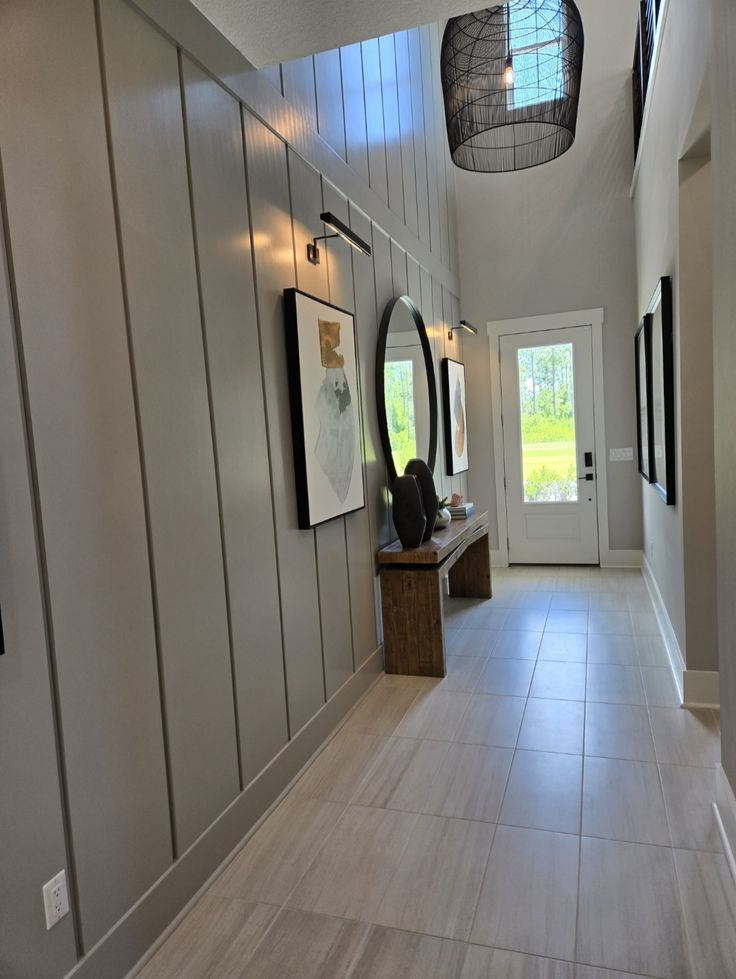
Consistent wall treatments help unify split-level entries where abrupt elevation changes can feel disconnected. Paneling introduces rhythm and structure, visually linking upper and lower zones into one cohesive space. Vertical panel profiles emphasize height, supporting smoother transitions between levels. Material durability is essential, particularly in entryways exposed to frequent contact. Panels should align precisely across landings and stair walls to avoid visual breaks. Neutral tones or subtle textures prevent paneling from overpowering the space while still adding depth. Proper spacing and proportion maintain elegance without crowding. Trim alignment at stair edges further reinforces continuity. This architectural approach transforms plain walls into a cohesive backdrop that anchors movement and orientation. When executed thoughtfully, wall paneling provides long-term visual stability, enhances perceived quality, and reduces the fragmented appearance common in split-level designs, making the entry feel intentional and refined.
Minimal Styling To Reduce Split-Level Clutter

Controlled styling is essential in split-level entries where multiple sightlines intersect. Excess accessories can quickly overwhelm these transitional spaces, making them feel chaotic. Limiting décor to a few purposeful elements preserves clarity and function. Surfaces should remain largely clear, supporting easy daily use and maintenance. Storage solutions should prioritize concealment, allowing styling to remain secondary rather than dominant. Neutral color palettes reduce visual noise and help connect levels seamlessly. Texture can replace quantity, using materials such as wood, stone, or metal for subtle interest. Functional items should earn their place, contributing utility rather than decoration alone. Consistency across levels avoids visual fragmentation. This restrained approach improves circulation, reduces stress, and supports efficient routines. Minimal styling does not mean sparse design, but rather intentional selection. In split-level entries, this discipline ensures the space feels calm, organized, and welcoming, even during busy daily use.