
Neatly framed flower beds and tidy lawn borders instantly boost curb appeal without requiring a major overhaul. That’s where beautiful brick garden edging ideas step in—offering structure, definition, and timeless charm using one of the most durable materials around. Bricks not only keep mulch in place and weeds out, but also add visual texture that suits both modern and cottage-style landscapes. Whether laid flat, stacked, or diagonally placed, this classic edging option balances function with style. If you’re looking to refresh your garden’s layout with budget-friendly impact, the following ideas deliver both inspiration and practical guidance for every skill level.
Classic single-layer curve
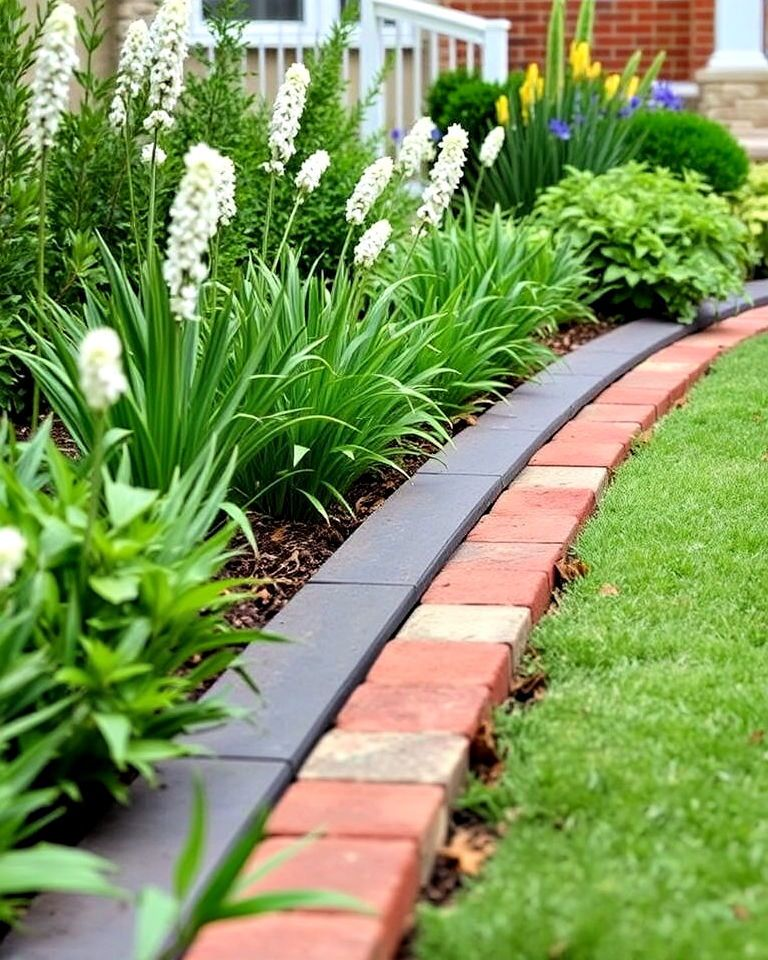
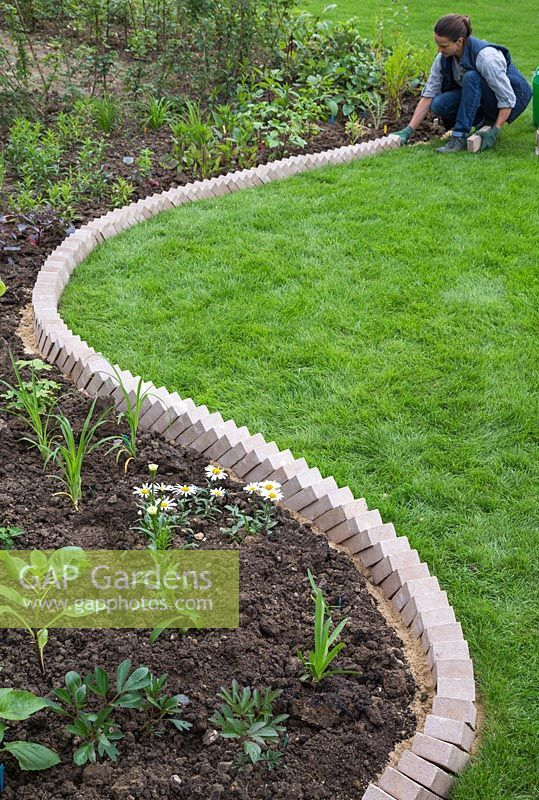
Smooth continuity in garden edging often begins with a classic curved layout, particularly when using single-layer bricks. This design works effortlessly for outlining flower beds, framing lawn borders, or shaping winding paths. The bricks follow a gentle arc, laid tightly against each other without requiring vertical height, offering a tidy and approachable visual. Flexibility in placement makes it perfect for DIY gardeners who want to highlight organic shapes without complex builds.
When aligned on a slight angle, the curve feels natural and enhances flow across different zones in the landscape. This method suits both modern and traditional gardens, depending on the brick type and color. Red clay bricks offer rustic appeal, while charcoal or grey-toned options lend a more updated feel.
Mulch, gravel, or turf tucked tightly behind the edge keeps the look clean while reducing weed intrusion. With no mortar required, this edging remains easy to adjust or repair, especially after frost shifts. This edging style is ideal for those wanting to refresh borders without extensive digging or permanent installation. It also pairs well with perennials or ground covers, subtly guiding the eye through each bed while keeping everything defined and accessible for maintenance.
Raised brick bed with vertical border
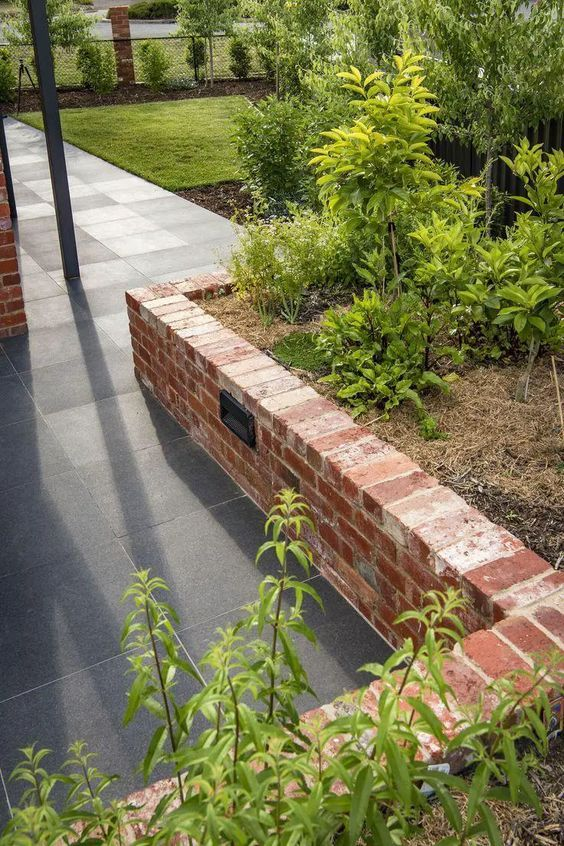
Visual structure is instantly elevated when bricks are laid flat for the bed base and vertically at the edge. This vertical border not only frames raised beds with clean definition but also adds a pleasing variation in texture. Vertical bricks—often referred to as “sailor” bricks—stand upright, forming a neat wall that helps retain soil and mulch while enhancing the bed’s height perception.
This setup works well for vegetable plots, herb gardens, or decorative floral installations where containment and structure matter. Lining the inner face with landscape fabric can reduce soil erosion between brick gaps while still allowing water drainage.
Brick color and finish can shift the tone of the space: aged bricks offer an English cottage garden charm, while smooth modern bricks lend themselves to more structured aesthetics. In sloped areas, the vertical border can even provide slight terracing benefits.
Installing this style requires a sturdy base—typically compacted gravel or sand—to prevent bricks from leaning over time. For homeowners who want low-maintenance edges with maximum definition, this dual-layered system offers long-term reliability. It’s also an excellent choice for delineating garden beds along walkways or patios where crisp lines and soil control are key.
Herringbone‑patterned edge
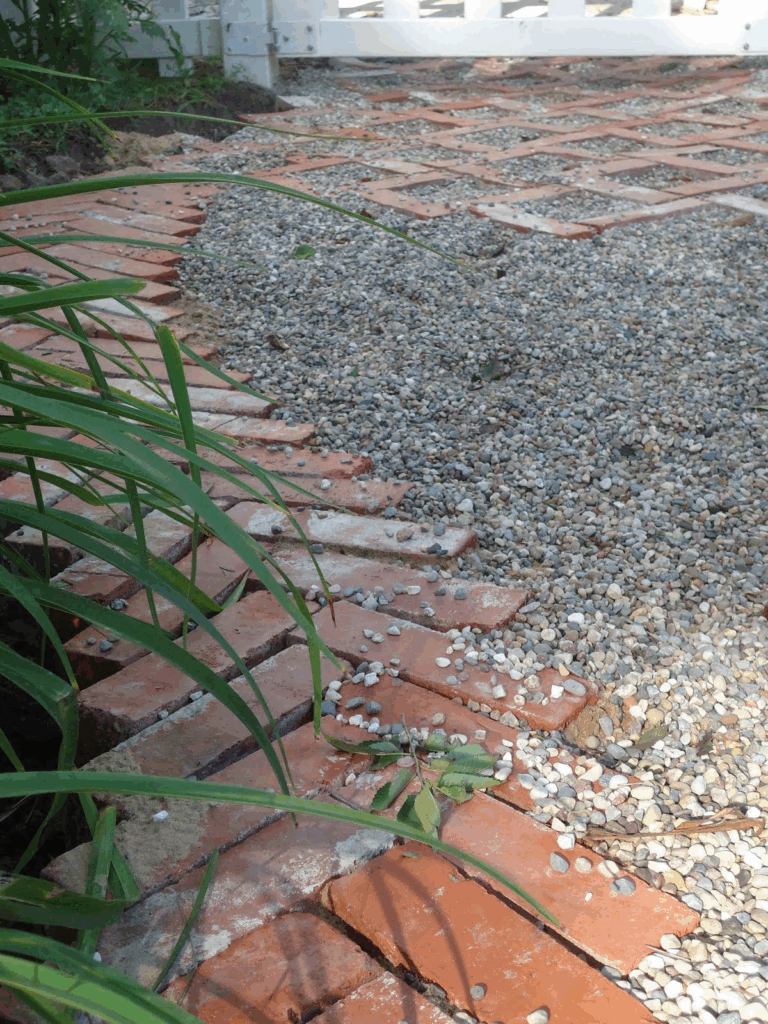
Architectural character meets landscape design in the herringbone brick edge, a pattern known for its interlocking V-shape layout. This visually arresting format creates dynamic movement along paths or planting zones, turning functional garden borders into decorative statements.
To execute it properly, bricks are cut or angled to maintain the repeating 45-degree zigzag. This interlocking style increases stability by dispersing weight evenly across the row—ideal for high-traffic spots or heavily mulched beds. While slightly more labor-intensive than standard rows, the payoff is a polished look typically reserved for professional landscaping.
This edge pairs beautifully with formal boxwood gardens, English-inspired parterres, or even Mediterranean themes when using warm-hued bricks. The alternating angles draw the eye, especially when paired with contrasting planting textures like ornamental grasses or low shrubs.
For added visual definition, some gardeners outline the herringbone strip with a flat-lay soldier course on either side. This finishing detail keeps everything in place while adding contrast. Sand or mortar can be used between joints, depending on permanence and location.
This edge isn’t just decorative—it functions as a durable weed and grass barrier while injecting timeless design into the most utilitarian zones of your outdoor space.
Sawtooth angled row
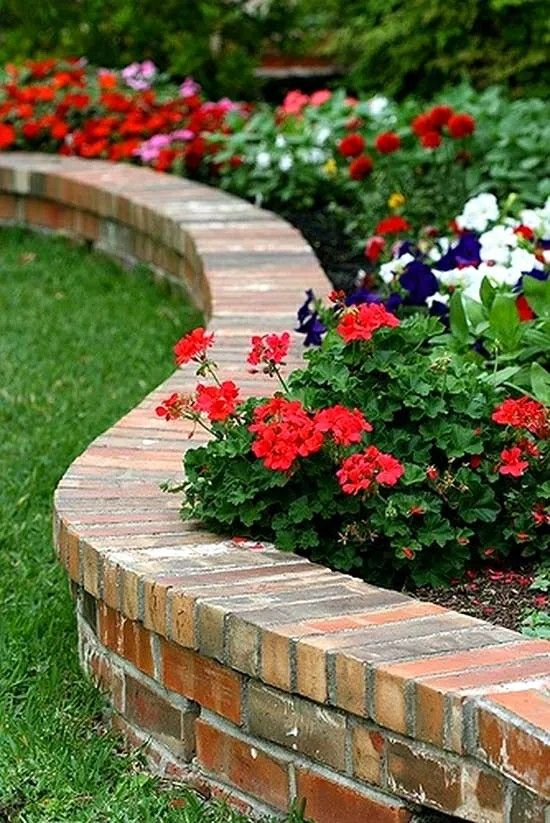
Jagged yet symmetrical, the sawtooth brick edge introduces a sharp, rhythmic look along beds and walkways. This style is formed by tilting bricks at 45-degree angles in alternating directions, mimicking the teeth of a saw. The design brings energy to linear spaces and works especially well where gardens need movement without curves.
Because the bricks are partly embedded into the soil, this setup ensures stability without extensive digging or concrete support. It’s one of the more accessible DIY methods for homeowners wanting to break visual monotony in straight borders. A consistent angle and spacing are key to maintaining the crisp pattern throughout the length of the edge.
Choosing uniform-sized bricks with clean edges makes layout easier and results more refined. Red, tan, or reclaimed bricks each bring a different tone—ranging from rustic to structured. Gravel, mulch, or turf nestled tightly against the edge enhances contrast.
Functionally, this angled layout provides modest containment for loose materials while adding a sculptural quality to the garden’s layout. Whether bordering a flower bed or outlining a path, the sawtooth edge draws attention with its geometric rhythm, proving that small tweaks in brick placement can leave a lasting design impact.
Double-stacked raised planter edging
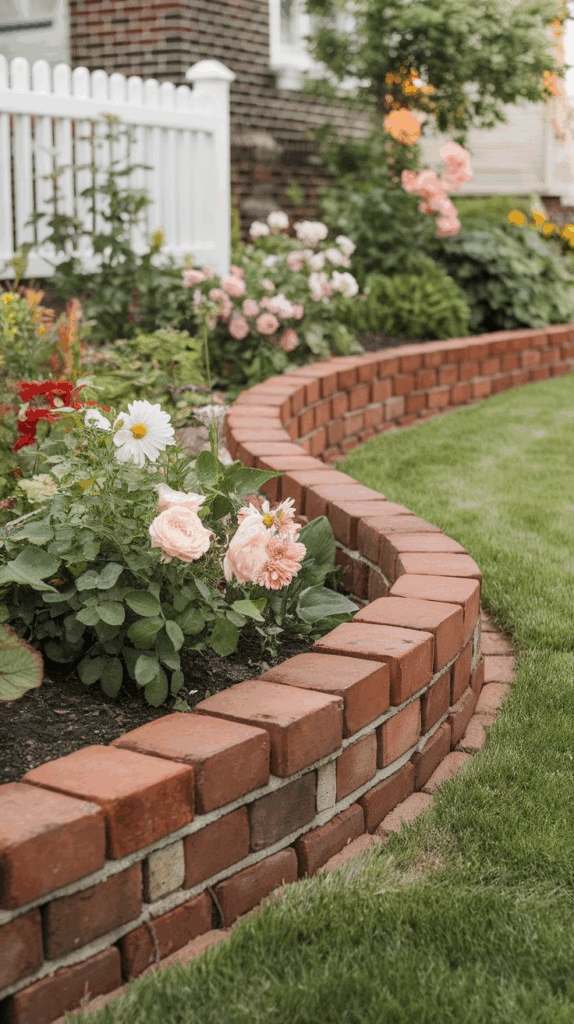
Two layers of stacked bricks instantly provide additional structure and visual mass for garden beds. This approach gives raised edging without committing to full retaining walls, making it suitable for both permanent and semi-permanent garden plans.
Ideal for framing herbs, annual flowers, or pathway beds, the first layer offers foundation stability, while the second creates an elevated profile that improves soil containment and watering depth. In sloped yards, it can also serve as a subtle terrace, reducing runoff.
For durability, it’s best to lay the first layer over compacted gravel or sand, followed by staggered joints in the second layer for structural integrity. Some designs use mortar for added stability, but dry stacking remains popular for flexibility and water drainage.
Color and finish options can define the look—weathered bricks yield a traditional cottage garden vibe, while smoother, charcoal-toned bricks lean modern. This setup also lends itself to integration with metal garden markers, lighting stakes, or drip irrigation tubes.
For homeowners who want raised garden presence without full-scale construction, this double-layer format delivers practicality, visual interest, and boundary clarity. It works as both a functional planting support and a design element that grounds the garden in a polished, cohesive way.
Stepped bricks for tiered borders
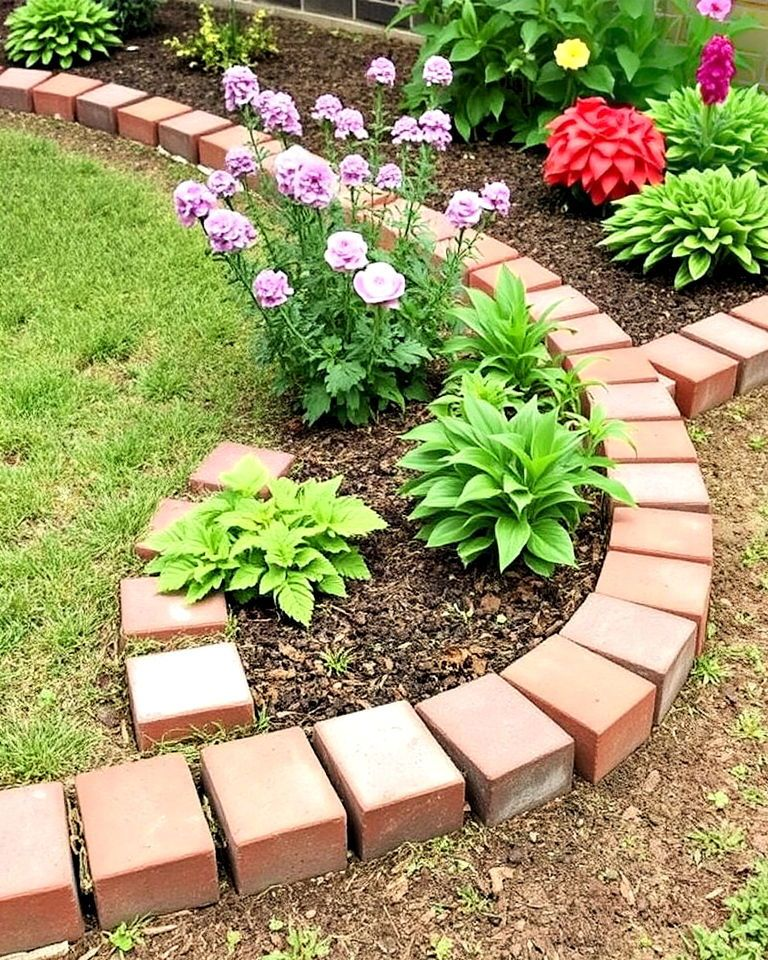
Terracing doesn’t always require complex builds—stepped brick edging provides a gradual transition in elevation while segmenting space. By offsetting each brick slightly higher or lower than the last, this edging design mimics a staircase and adds architectural rhythm to garden contours.
Particularly effective along sloped beds or winding paths, stepped bricks guide the eye downward or upward with ease. Each “step” visually anchors a section of soil or mulch, preventing erosion while adding dimension. This technique also helps in directing water flow during rain, reducing pooling at bed bases.
Brick selection matters—longer bricks or pavers give a sleeker step, while traditional shorter bricks lend a more rustic feel. Color can accentuate the stepped effect, especially when alternating tones across the rise.
Precision in laying each step is essential; bricks must rest on leveled platforms to prevent tilt or collapse. Dry stacking is common, but mortar can be used for permanent setups.
Besides functional benefits, this layout doubles as a sculptural design accent, especially when paired with low-maintenance plants like creeping thyme or succulents tucked between tiers. The stepped edge balances practical support with visual cadence, making it an ideal solution for gently graded garden zones.
Mixed-height undulating edge
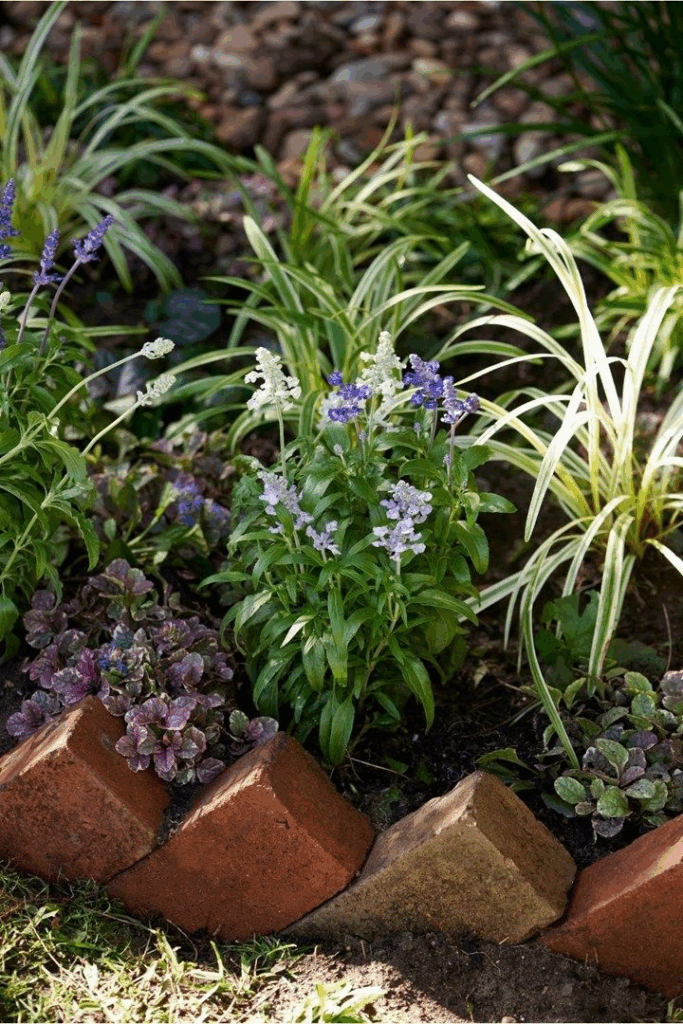
Shifting brick heights along a border brings subtle movement and softness to otherwise rigid garden layouts. A mixed-height undulating edge uses alternating brick levels—some flush with the soil, others elevated—to mimic natural waves across the border. This design works best in informal or cottage-style gardens where irregularity enhances charm.
Bricks can be laid flat, partially buried, or upright, allowing creative flexibility with height combinations. It’s especially effective along curved beds, where the visual ebb and flow mirrors plant growth patterns. For extra texture, mixing brick types or finishes enhances the handcrafted appearance without sacrificing cohesion.
Though it appears random, successful execution requires careful planning. Each brick should be stabilized with packed soil or gravel underneath to prevent future shifting. This layout also offers practical benefits—higher bricks prevent mulch spillover, while lower ones maintain seamless lawn transitions.
Plants like lavender, salvia, or creeping Jenny thrive alongside this edging, filling gaps and accentuating the rhythmic lines. As light hits different heights throughout the day, shadows shift and bring dimensional depth to the border. For those wanting both function and a sense of artistic flair, this approach provides a balance between structure and fluidity rarely seen in traditional edging styles.
Brick arch accent within edging
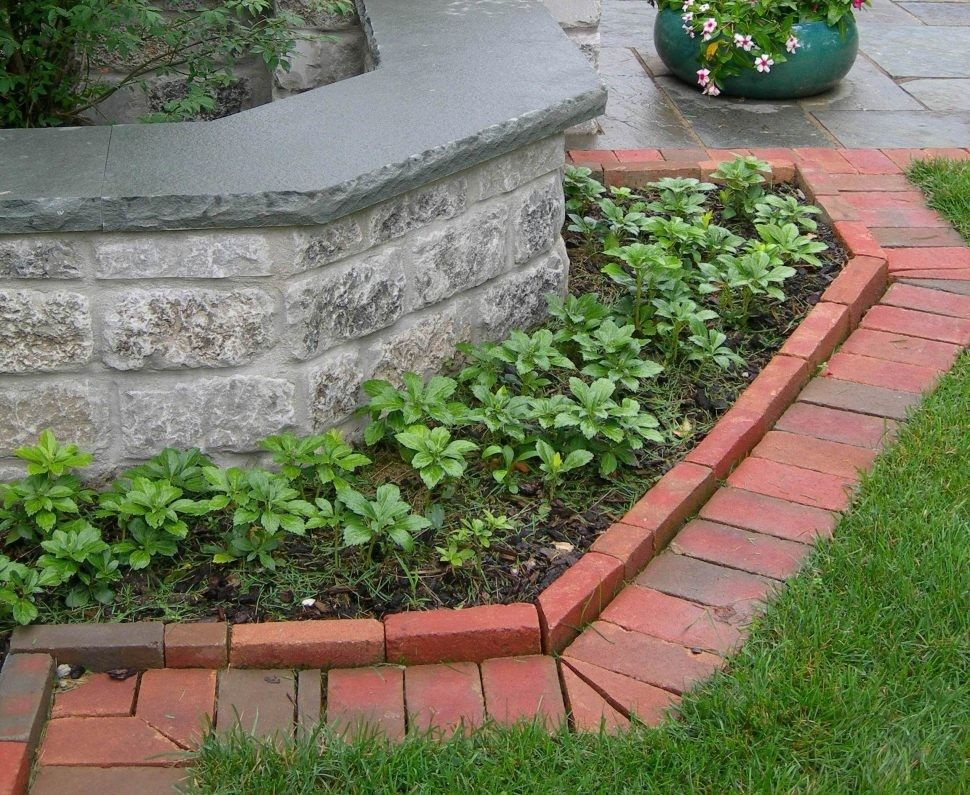
Design-focused gardeners often seek moments of surprise along functional borders, and an inset brick arch offers exactly that. By curving bricks inward or upward within a straight run, a small arch creates a focal detail within a continuous edging line. While it doesn’t alter bed containment, it elevates the visual appeal and gives the border a handcrafted, artisan look.
The key is in the precision—bricks must be carefully trimmed or angled to maintain symmetry around the apex. A solid base layer ensures the arch remains secure over time, and optional mortar can lock the pattern in place.
Some use these mini arches to frame ground-level solar lights, miniature statues, or creeping plants that spill through the gap. The effect draws the eye to specific garden features while breaking up monotony. For more modern looks, angular arches work well with monochrome bricks. For rustic charm, opt for warm-toned, weathered bricks with natural variation.
This technique is often reserved for specific sections—corner turns, walkway transitions, or focal plant frames—where a little design goes a long way. It’s perfect for those who appreciate subtle yet intentional craftsmanship in the garden’s smallest details.
Contrast mortar inset with gravel
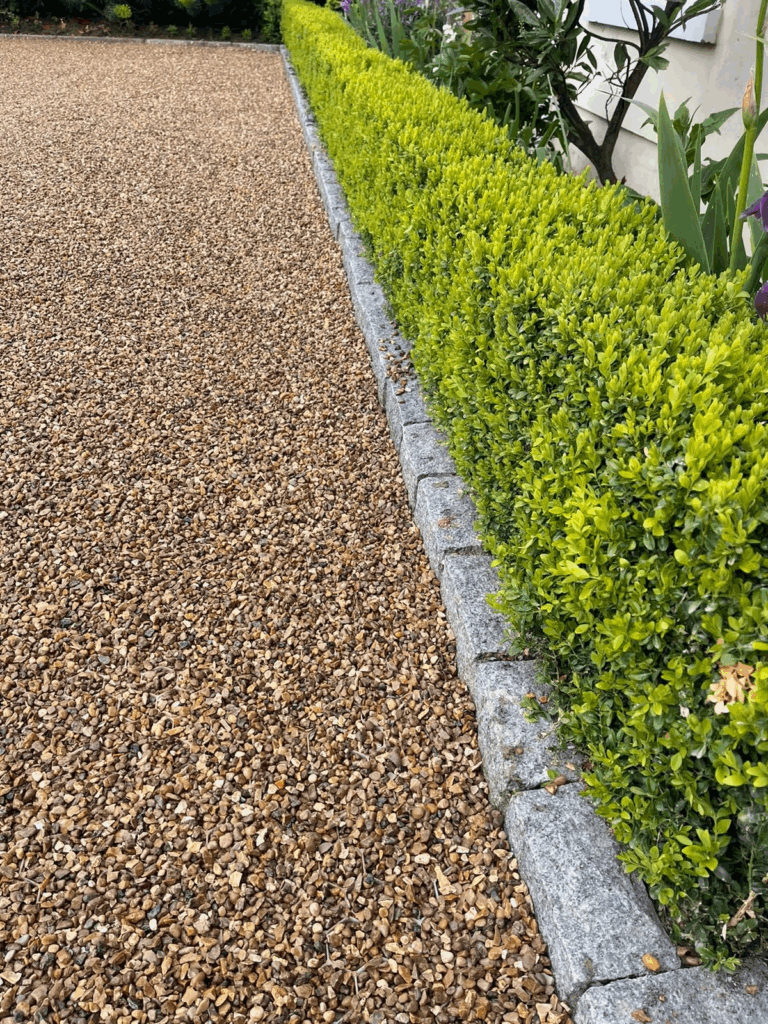
Texture and tone variation can redefine simple brick borders. When bricks are mortared in place and inlaid with contrasting gravel, the resulting edge blends durability with striking visual contrast. This design not only anchors the bricks solidly but also introduces decorative gravel in between or adjacent to them—either as filler, accent, or pathway buffer.
Popular combinations include red bricks paired with white gravel, or dark bricks outlined in warm tan pea pebbles. These contrasting materials emphasize the shape and layout, particularly when viewed from above. While some designs feature gravel tucked tightly into brick recesses, others offset the bricks slightly so gravel lines run alongside the border.
This edging works well for defining patio perimeters, succulent beds, or rock gardens. It’s particularly suited for dry-climate landscaping where gravel already plays a major role.
To maintain the look, edging fabric below the gravel helps block weeds, while periodic brushing keeps the brick face clean. This technique requires a bit more upfront work but reduces maintenance long-term thanks to weed control and stabilized materials.
The pairing of hard edges with granular softness results in a border that feels intentional, visually pleasing, and highly functional—all while complementing drought-friendly plantings or minimalist landscapes.
Flat-lay soldier-course border
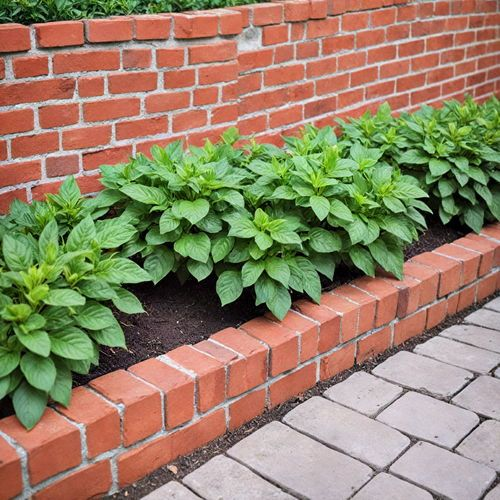
Simplicity meets structure in the flat-lay soldier-course technique, where bricks are laid end-to-end in a single straight line. This layout forms a clean visual line along garden beds or paths, offering definition without overwhelming nearby planting schemes. Unlike stacked or vertical styles, the bricks sit flush with the soil, giving a sleek, almost built-in appearance.
Perfect for separating lawns from flower beds, this format prevents grass from encroaching while also acting as a mowing strip. With consistent spacing and a compacted sand or gravel base, bricks stay aligned season after season. Dry laying is typically sufficient, though mortar can add extra security for high-traffic zones.
Color and finish can either blend into the surrounding soil or create deliberate contrast—lighter bricks against dark mulch make a subtle frame, while deep red tones emphasize curves and corners.
This edging approach is particularly effective when uniformity is the goal. Straight runs around vegetable beds, patio edges, or even gravel paths benefit from the crisp finish of a soldier course. It’s also easily extendable, making it ideal for evolving garden layouts. Durable, tidy, and low-maintenance, this method remains a go-to for functional beauty in residential and professional landscaping alike.
Patterned mosaic insets
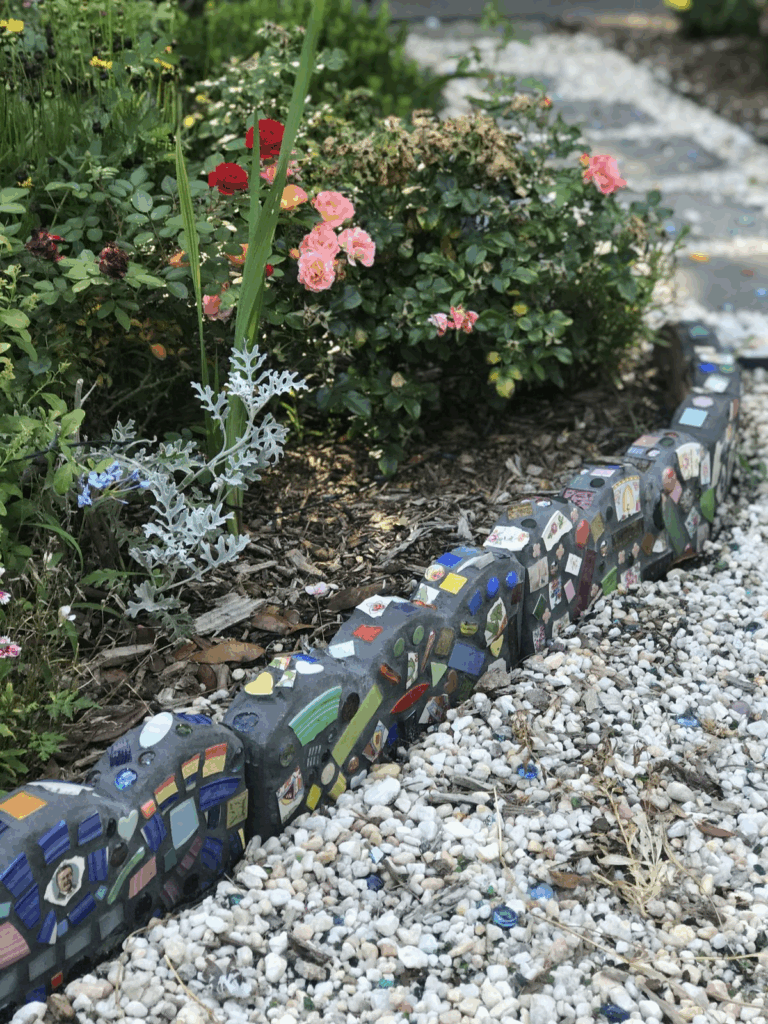
Artistic flair takes the spotlight when bricks are cut or placed to form decorative mosaic insets within garden borders. These intricate layouts go beyond function, transforming brick edging into eye-catching art. Common patterns include diamonds, chevrons, or geometric shapes formed by combining differently colored or sized bricks within a defined edging path.
Often used at entrance points, corners, or focal beds, these mosaics offer visual pause and detail that draws attention. They’re also ideal for marking transitions between garden zones or integrating personal design touches—initials, symbols, or subtle motifs.
Precision is key. A solid gravel base followed by careful placement ensures the pattern holds its shape and doesn’t shift over time. Using mortar or sanded joints helps lock everything in place while still allowing for drainage.
Color contrast is essential to make the pattern pop. Pairing neutral bricks with bold insets—such as charcoal grey against terracotta—adds dimension and clarity.
While more labor-intensive than traditional rows, the payoff is a garden element that feels custom and carefully curated. Best suited for accent areas rather than entire borders, mosaic insets allow creative expression to merge with durable functionality. The result is edging that’s not just part of the background—it becomes part of the design story.
Brick edge framing focal plantings
Garden elements like ornamental trees, flowering shrubs, or sculptural succulents benefit from subtle yet structured framing. A brick border that outlines these focal plantings emphasizes their presence while organizing the surrounding bed. Unlike full circular planters or raised rings, this style keeps bricks at ground level, tracing the perimeter around the chosen plant without adding height or bulk.
This design works particularly well for symmetrical gardens, where repetition and spacing matter. For example, bricks can encircle a boxwood topiary in a courtyard, or highlight a weeping Japanese maple in a gravel bed. The layout may be circular, square, or freeform, depending on the plant’s shape and the garden style.
Installation involves laying bricks in a tight formation over a compacted base, ensuring each unit is level for a polished finish. A thin layer of gravel or mulch around the interior keeps weeds at bay while blending the root zone into the edge.
Beyond aesthetics, this method also serves as a practical barrier, protecting plant roots from accidental trampling and defining irrigation zones. Whether used singly or repeated across the landscape, brick framing draws attention to prized specimens without overwhelming the rest of the garden.
Recycled or mismatched brick style
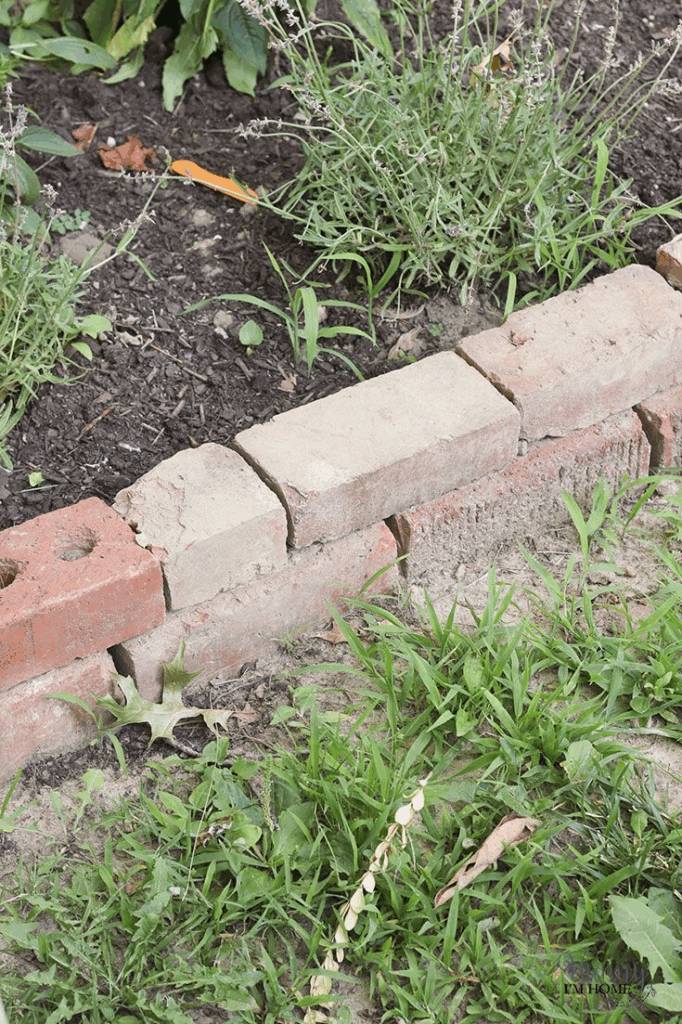
Sustainability meets character in edging that features recycled or mismatched bricks. This style embraces visual irregularity—colors, textures, and sizes vary slightly from one brick to the next, creating a border that feels storied and authentic. Gardeners often source bricks from salvage yards, demolition sites, or leftover construction materials, giving each edge a unique, upcycled identity.
This look complements rustic, farmhouse, and eclectic garden styles, blending especially well with native plantings or whimsical layouts. No two installations are identical, and that’s part of the charm. Variations in wear, patina, and hue bring richness that uniform bricks can’t replicate.
Bricks may be laid end-to-end, stacked, or angled—technique depends on personal preference and available materials. Dry laying makes it easy to shift elements as the garden evolves. Adding pea gravel or crushed granite between bricks fills gaps and increases stability.
This approach suits gardeners who value eco-friendly solutions and creative reuse. It’s also budget-conscious, especially when bricks are obtained for free or low cost. By transforming what would be discarded into something functional and attractive, this edging method proves that beauty doesn’t require perfection—it just needs thoughtful placement and a vision grounded in sustainability.
Brick path edge fusion
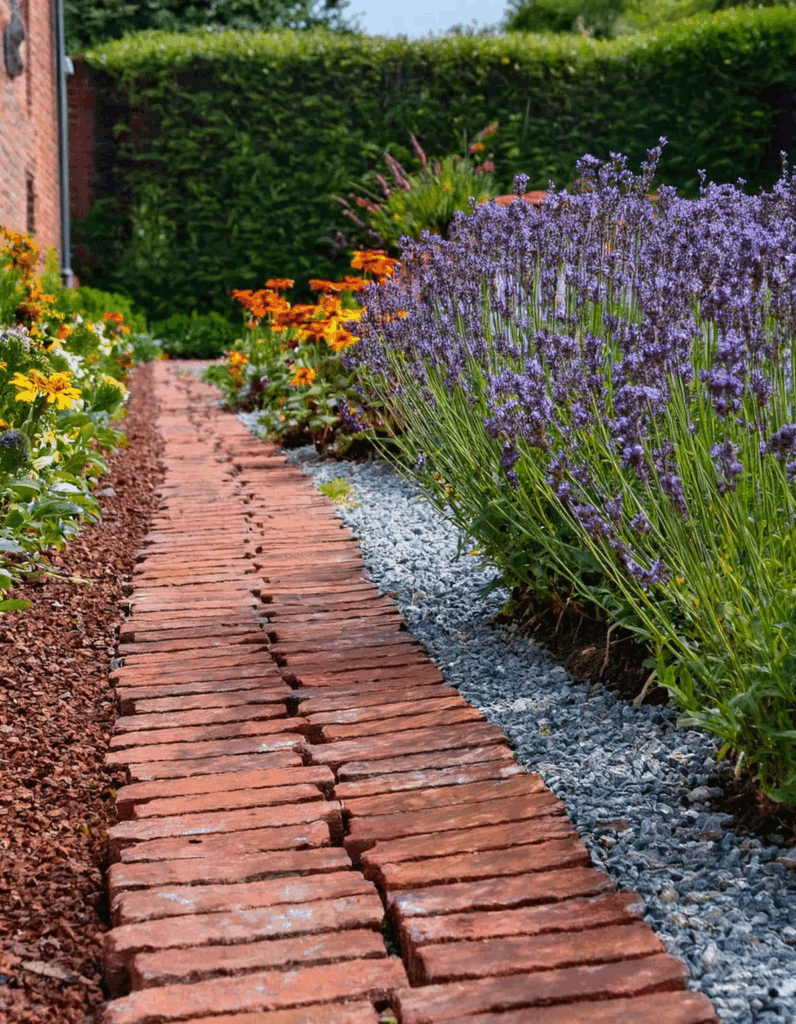
When garden paths meet planted beds, seamless integration becomes key. A brick path edge fusion achieves this by blending the walkway’s boundary into adjacent garden zones using matching or complementary bricks. Instead of stark separation, the edge continues the rhythm of the path while still defining the planting area.
This design works especially well with curved or meandering paths, where the continuity of material creates visual harmony. Bricks can be laid flush with the path surface or slightly elevated to create a soft containment line for mulch or soil. In some cases, the same pattern from the path—like herringbone or basket weave—is echoed along the border for full cohesion.
Installation requires a firm base and careful alignment to ensure the edge doesn’t shift under foot traffic. Edging bricks may be mortared for permanence or dry laid with gravel fill for flexibility.
Using the same brick type for both the path and its edge ensures a unified look, while variations in orientation or tone can add subtle contrast. This style not only defines space but also reduces maintenance by preventing erosion and keeping mulch off the walkway. For those aiming for flow and structure, this method brings both into perfect balance.
Mini brick wall retaining slope
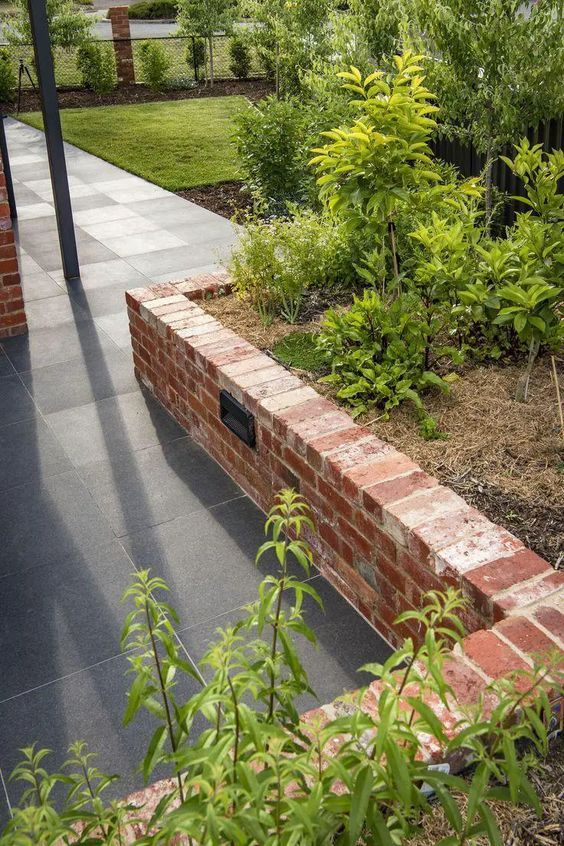
Gardeners working with uneven terrain often need small-scale solutions to prevent soil movement. A mini brick retaining wall offers that functionality while adding a decorative edge. Constructed with a short stack—typically two to four brick courses high—this edging gently holds back earth while doubling as a visual border.
It’s perfect for raised flower beds, tiered vegetable plots, or sloped edges around patios. The wall can follow straight lines or curve naturally with the land’s contour. For added strength, bricks are mortared or dry-stacked in a staggered bond pattern, with a slight backward pitch toward the slope to counteract soil pressure.
Compacted gravel and landscape fabric behind the wall assist with drainage and stability. Topping the wall with a flat row of cap bricks creates a finished look and prevents soil washout.
Color choice and brick texture can either blend into the garden or make a subtle design statement. Red or reclaimed bricks evoke a traditional feel, while neutral greys suit contemporary gardens.
This edging method bridges aesthetics and utility—managing erosion while providing polished definition. It’s particularly helpful where full retaining walls aren’t needed, but some reinforcement is essential for plant health and structural integrity.