
Striking contrast and natural texture make black rocks a standout element in modern landscaping. Their versatility allows homeowners to enhance pathways, define garden borders, highlight water features, or create dramatic focal points with minimal effort. Unlike other materials, black stones add depth while complementing greenery, wood, and concrete for a polished outdoor look. They are durable, low-maintenance, and budget-friendly, making them a practical choice for long-term curb appeal. This guide explores creative and functional ways to use black rocks in your landscaping, offering inspiration for stylish designs that balance beauty, affordability, and sustainability in any outdoor setting.
Polished Pebble “River” Pathways
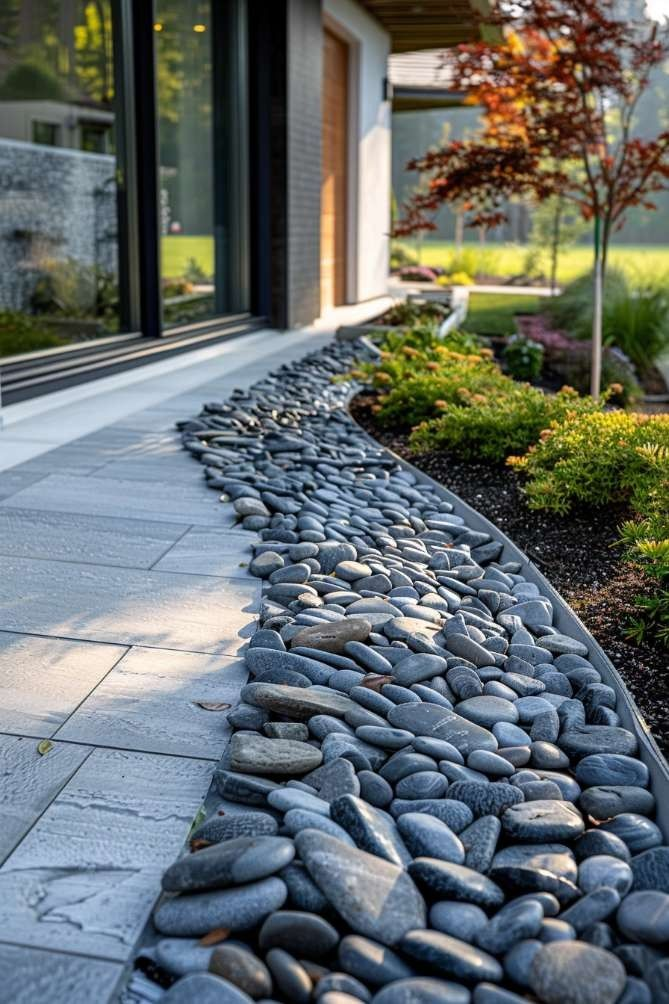
Flowing bands of polished black pebbles can mimic the appearance of natural streams, guiding movement while grounding the landscape. When set into compacted sand or mortar, these stones create a durable surface that resists erosion and stays tidy through seasonal changes. Homeowners often frame the pathway with lighter gravel or stone edging, heightening contrast and ensuring the dark pebbles stand out. These “river” effects work particularly well near patios, between garden beds, or alongside water features. Proper drainage is essential, so installing a base layer of crushed gravel allows rainwater to filter through without pooling. Maintenance remains minimal, requiring only occasional rinsing or repositioning of pebbles if they shift. Pairing these dark pathways with ornamental grasses, hostas, or groundcovers softens the edges and highlights the sleek texture of the stones. In smaller yards, even a short “river” section adds depth and movement, while larger spaces benefit from meandering patterns that visually extend the garden. This design not only improves functionality but also enriches the space with a modern, timeless look.
Bold Bed Borders & Accents
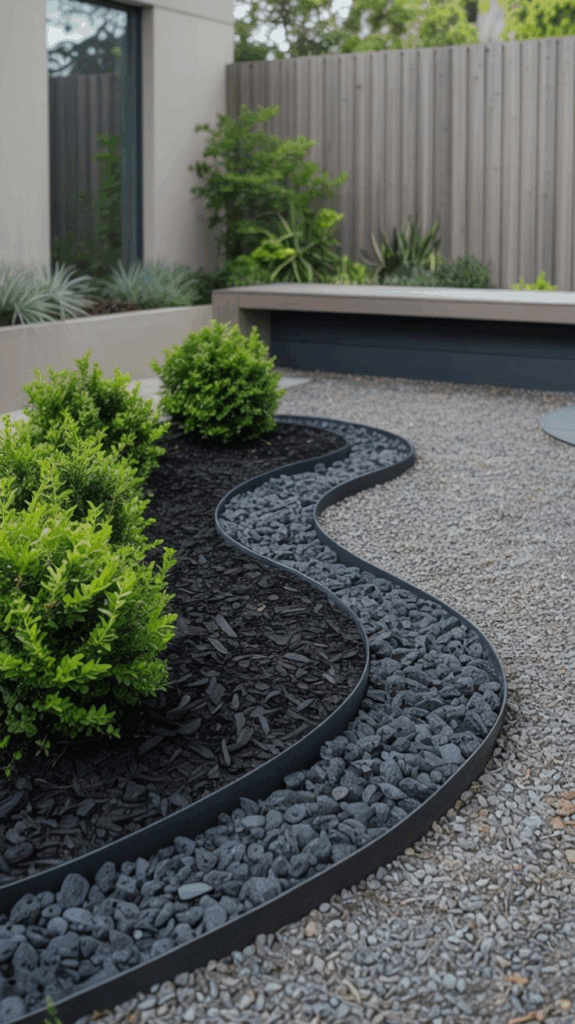
Defining garden beds with black rock borders instantly brings order and precision to landscaping layouts. The sharp contrast against lawn grass or colorful flowers establishes clean visual lines that accentuate shape and symmetry. Whether using angular lava rock, smooth basalt, or polished river stones, the dark hues provide a striking backdrop that makes greenery appear brighter and more structured. For larger yards, wide borders filled with black rocks reduce weed growth and improve water retention, cutting down on long-term upkeep. Smaller gardens benefit from slimmer edging, which still delivers definition without overwhelming delicate plantings. Placement along walkways or driveways adds continuity, tying the landscape together through consistent material use. These accents also protect soil from erosion, especially on sloped areas where mulch would wash away. Choosing irregular sizes creates a rustic appeal, while uniform rock layers lean toward modern minimalism. Adding solar or low-profile lighting beside the borders enhances the dark stones at night, emphasizing texture and depth. Beyond aesthetics, black rock borders serve a practical role in keeping soil in place and reducing maintenance, while ensuring the landscape feels intentional, refined, and grounded in structure.
Zen Garden Contrast Zones
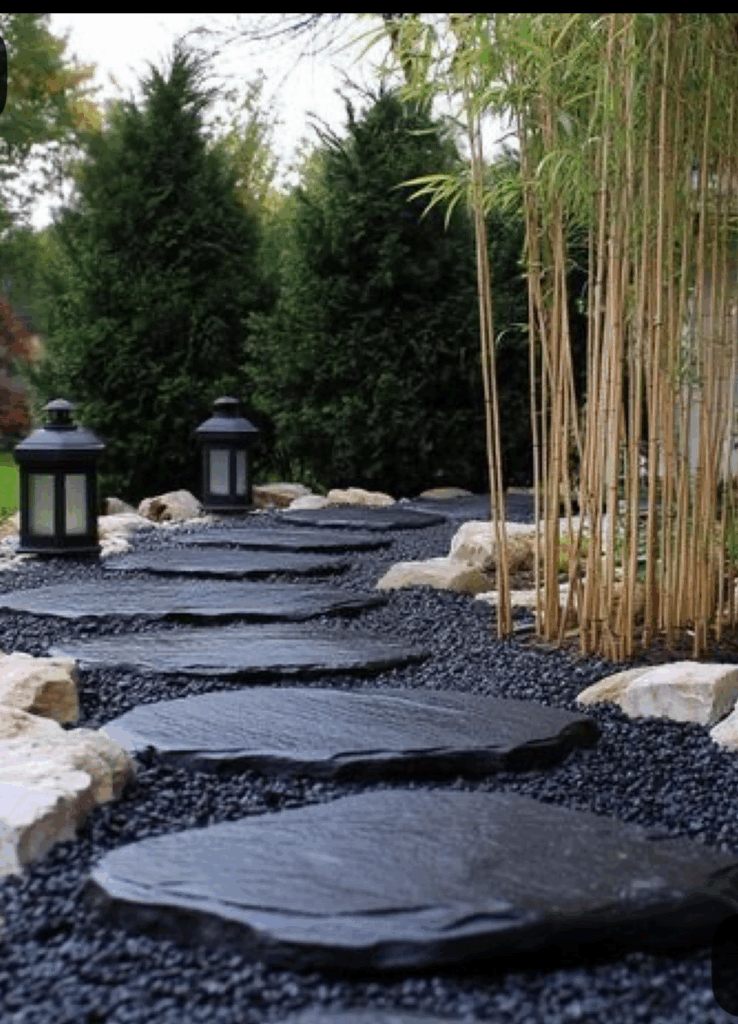
Calm, balanced spaces emerge when dark stones form contrast zones within a minimalist Zen garden. Black lava rock or polished pebbles laid in geometric or circular patches interrupt the lighter raked gravel, symbolizing grounding and strength. These zones help break visual monotony, providing areas of rest for the eye and creating balance between movement and stillness. Gardeners often combine larger basalt boulders with fine crushed black gravel, evoking islands rising from a sea of white sand. The simplicity of color contrast enhances meditative qualities, encouraging reflection and focus. Such arrangements work beautifully in courtyards, side yards, or intimate meditation nooks. Plant accents like Japanese maples, dwarf pines, or bamboo can soften the starkness while complementing the tranquil design. Low lanterns or subtle water basins further deepen the aesthetic, blending cultural tradition with practical beauty. Maintenance involves raking patterns into the lighter gravel while ensuring the dark rock zones remain neat and defined. These compositions adapt easily to both expansive landscapes and compact spaces, providing a timeless design solution. Ultimately, using black rocks in contrast zones elevates serenity, ensuring every element contributes to an atmosphere of calm, order, and enduring elegance.
Black Water Feature Anchors
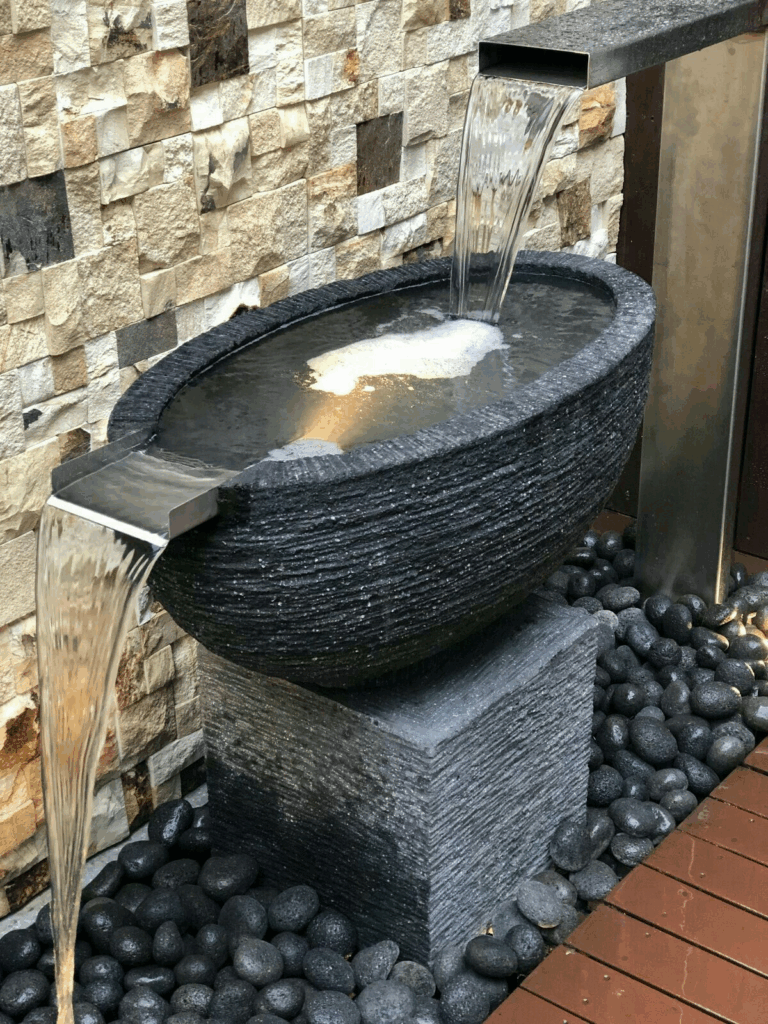
Water features gain striking dimension when framed with dark rock bases that anchor the design. Whether surrounding a koi pond, sleek fountain, or modern reflecting pool, black stones emphasize the clarity and shimmer of moving water. Their deep tones contrast with rippling reflections, making the feature appear more vivid and eye-catching. Rounded river stones provide a softer look, while angular lava rock creates rugged edges with dramatic flair. Designers often arrange the rocks in tiered layers to stabilize soil and prevent water runoff, ensuring longevity of the structure. For added depth, mixing textures—smooth pebbles alongside jagged pieces—draws the eye and enhances natural character. These dark foundations are also practical, masking algae stains more effectively than lighter rocks, which often show discoloration. Paired with aquatic plants like water lilies, irises, or lotus, the black base enhances greenery and floral hues, achieving harmony between elements. Subtle LED uplighting directed across wet stone surfaces further highlights reflective qualities at night, transforming the water feature into a luminous focal point. Beyond decoration, black rocks provide stability, structure, and timeless elegance, ensuring that ponds and fountains remain both beautiful and functional throughout the seasons.
Stepped Slate or Flagstone Edges

Terraced edges built with dark slate or flagstone lend both structural integrity and modern appeal to landscaping designs. These stones, when arranged in step-like layers, create depth along sloped gardens, raised beds, or transitions between lawn and patio. The matte black or charcoal surface provides a bold contrast against lighter gravel, mulch, or foliage, ensuring boundaries feel sharp and intentional. Functionally, the stepped design helps reduce erosion by breaking rainfall impact and supporting soil stability. Gardeners often plant creeping thyme, sedum, or moss between the layers, softening the hard lines while introducing seasonal color. For patios or seating areas, these edges double as informal seating ledges, merging practicality with aesthetic charm. Installation typically involves stacking flat stones in staggered rows with compacted gravel beneath, ensuring durability and proper drainage. Larger landscapes may feature continuous terraced walls, while smaller gardens benefit from modest two-step borders that still deliver structure. At night, low lighting tucked beneath the stone steps highlights texture and depth, reinforcing the layered effect. The combination of durability, function, and elegance makes stepped slate or flagstone edges a versatile and lasting solution for modern outdoor spaces.
Succulent + Lava Rock Plant Pockets

Succulents thrive when paired with porous black lava rock, forming striking plant pockets that blend texture and resilience. Lava rock offers excellent drainage, preventing root rot while storing small amounts of moisture within its surface, ideal for drought-tolerant species. Gardeners often carve out small beds or clusters within gravel spreads, filling them with echeveria, agave, or aloe framed by jagged black rock. The contrast between fleshy green leaves and dark stone intensifies visual appeal, giving even compact areas a dramatic look. These pockets can be arranged along walkways, patio edges, or as standalone accent zones, adding architectural character without demanding intensive upkeep. Over time, moss or lichens may colonize the lava surface, enriching the natural patina and enhancing authenticity. For larger projects, creating sweeping lava-and-succulent mounds establishes bold focal points that require minimal irrigation. Smaller gardens benefit from micro-pockets placed within containers or narrow strips, maximizing space. Lighting directed at the rocks at night adds depth, emphasizing the plant silhouettes against their textured base. The resilience of lava rock combined with the sculptural quality of succulents results in low-maintenance, long-lasting displays that celebrate both functionality and beauty in equal measure.
Modern Retaining Walls
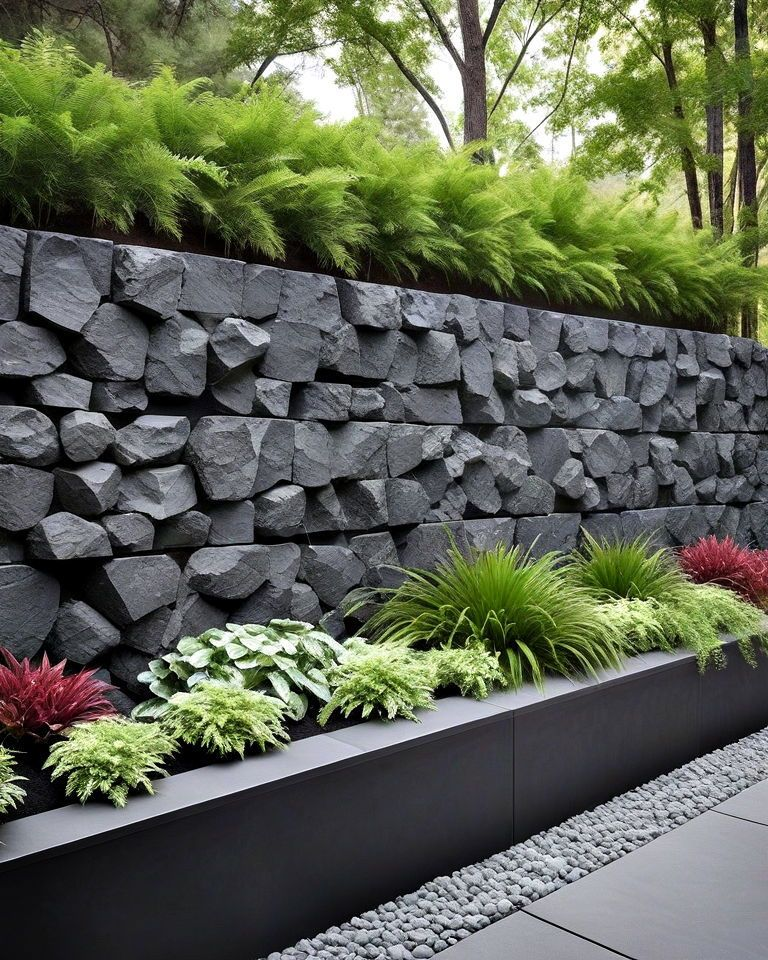
Contemporary landscapes benefit greatly from retaining walls constructed with dark stone materials. Black basalt blocks, slate panels, or lava rock modules provide structural support for terraced gardens, sloped yards, or elevated beds while delivering a refined, architectural finish. The sleek tones contrast vividly with surrounding greenery, turning functional walls into standout design elements. These walls not only manage soil erosion but also expand usable yard space by creating defined levels for planting or seating. Dry-stack methods deliver a rugged, natural look, while mortared finishes lean toward clean, geometric precision. Incorporating built-in lighting within wall crevices further enhances nighttime aesthetics, highlighting the stone’s textures and casting dramatic shadows. Designers often integrate seating ledges or planter pockets into the structure, blending form with function. When paired with ornamental grasses, shrubs, or trailing vines, the walls soften visually while retaining their commanding presence. Beyond appearance, dark stone materials are durable, weather-resistant, and capable of withstanding decades of exposure with minimal upkeep. By combining practical engineering with modern design aesthetics, black rock retaining walls anchor outdoor layouts, bringing both resilience and elevated style to residential and commercial landscapes alike.
Textural Groundcover Mats
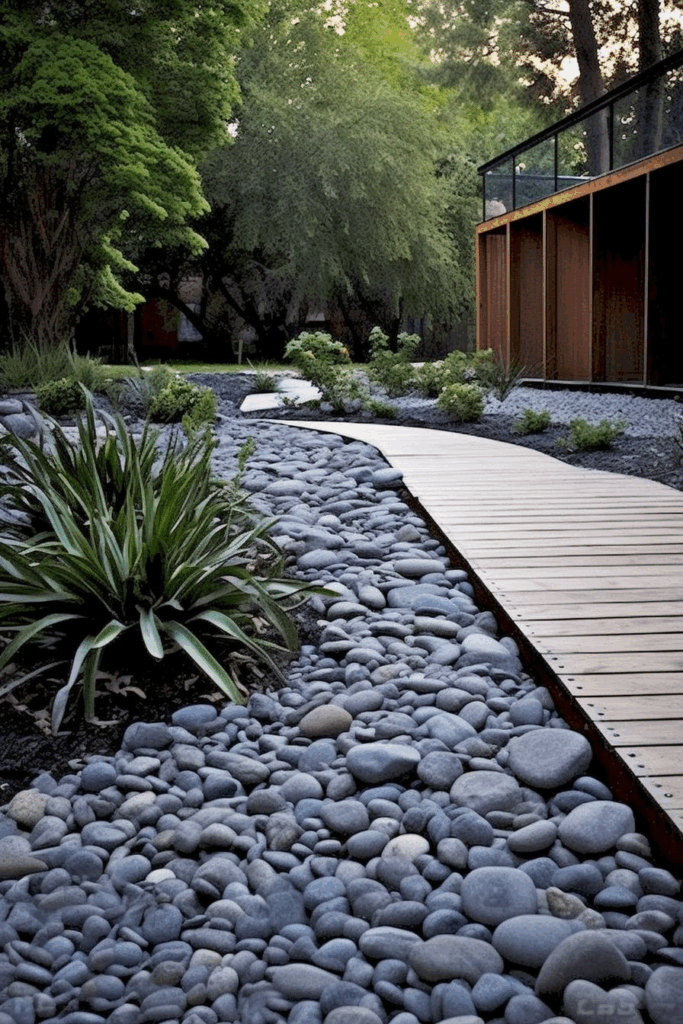
Ground surfaces take on a refined, layered feel when carpeted with dark stone mats that highlight surrounding plantings. Black gravel or crushed basalt spread across open soil delivers a polished, uniform look while suppressing weed growth and improving moisture retention. Unlike mulch, which fades or decomposes, stone mats maintain their color and texture over time, reducing long-term maintenance. The matte finish of black rock grounds bright floral displays, making reds, yellows, and purples appear more vibrant against the subdued backdrop. Designers often blend multiple textures—fine gravel for coverage, larger stones for accent—to prevent monotony and add depth. These mats work well beneath shrubs, around trees, or between stepping stones, tying the yard together through consistent design. For sloped terrain, gravel mats stabilize soil while allowing rainwater to filter naturally, minimizing erosion. They also provide clean transitions between lawn, patio, and garden beds, ensuring the layout feels structured and cohesive. Periodic raking refreshes the surface, preventing compaction while restoring even distribution. As a design strategy, dark stone groundcovers combine durability with elegance, offering homeowners a practical yet stylish method to achieve low-maintenance landscapes with enduring visual appeal.
Dark Stone Reflective Focal Points
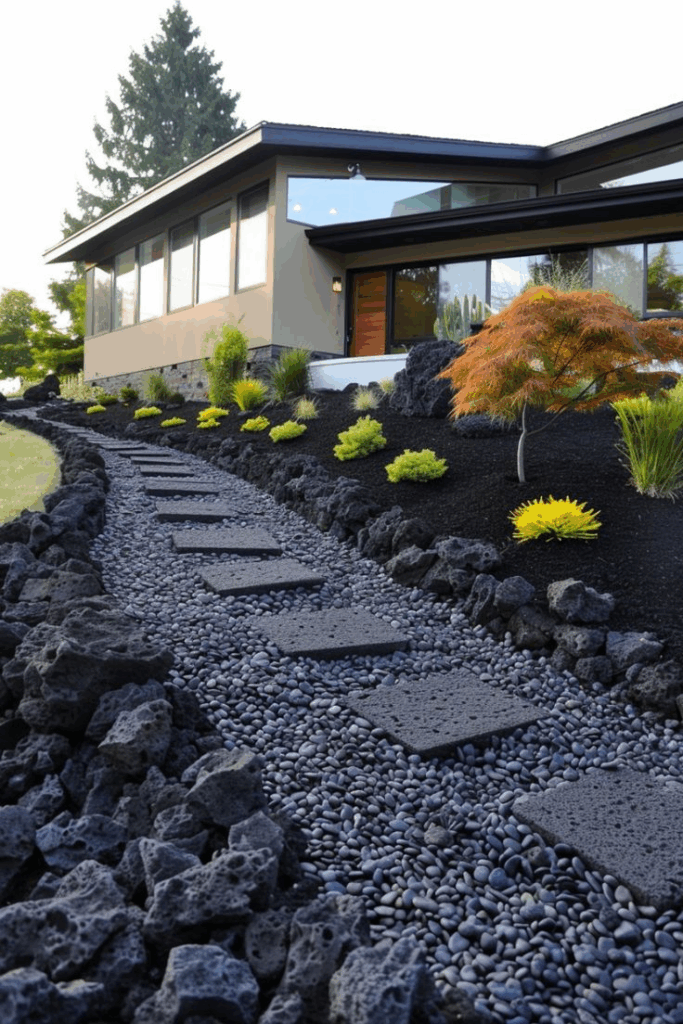
Glossy black stones, whether polished river rock or volcanic glass fragments, create captivating focal points when arranged strategically in garden spaces. Their reflective surfaces mirror light, water, and surrounding plants, infusing landscapes with visual intrigue that shifts throughout the day. Designers often cluster these stones in circular beds, at the base of sculptures, or beside water features, amplifying their shimmering qualities. At night, subtle lighting enhances their reflective nature, turning them into luminous accents that command attention. Larger pieces function as sculptural anchors, while smaller polished pebbles add understated elegance when spread in defined zones. Beyond beauty, dark reflective stones require little maintenance, resisting fading and weathering far better than lighter materials. Pairing them with grasses, succulents, or minimalist shrubs ensures that plantings don’t compete visually, instead highlighting the stones’ sleek appearance. These focal points are especially effective in modern landscapes where clean lines and material contrasts dominate design. When used thoughtfully, black reflective stones bridge natural texture with contemporary style, establishing grounding elements that are both functional and visually dynamic, ensuring the garden remains engaging through every season.
Geometric Path Inlays
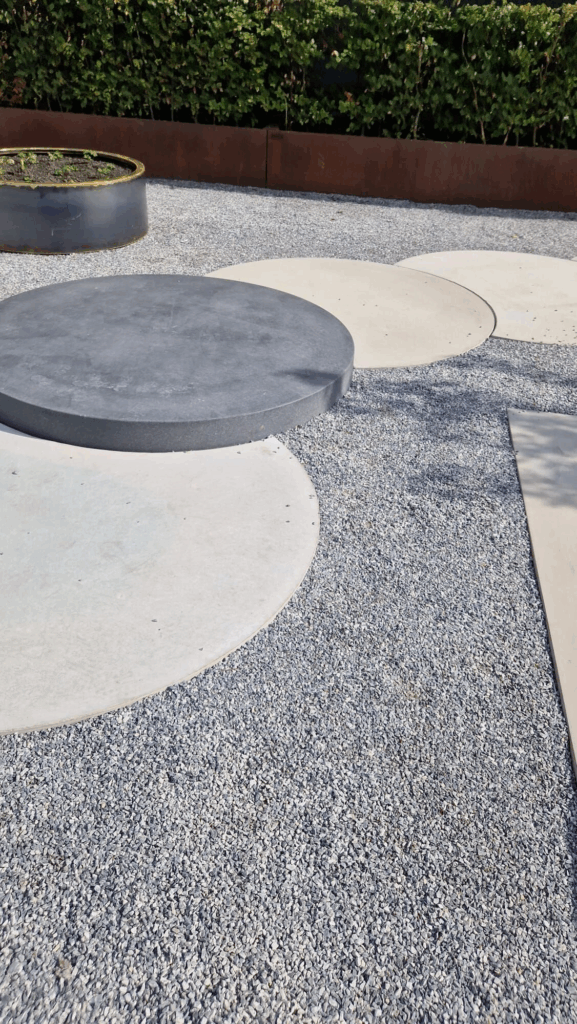
Symmetry and precision come to life when black stones are arranged as geometric inlays within walkways or patios. Squares, diamonds, or hexagonal patterns formed with polished pebbles or cut basalt tiles offer a modern interpretation of traditional paving. These designs not only improve traction but also draw the eye, transforming simple paths into design statements. By alternating black stones with lighter materials such as sandstone or concrete, homeowners achieve striking contrast that defines each shape. Such layouts are particularly effective in courtyards or entryways, where first impressions matter. For durability, inlays are typically embedded in mortar or resin, ensuring long-lasting stability and resistance to shifting. Smaller patterns suit compact spaces, while larger geometric grids add rhythm to expansive patios or garden promenades. Incorporating low lighting along path edges further emphasizes the geometric details at night, extending usability while showcasing craftsmanship. Maintenance requires little more than sweeping and occasional resealing, making this both a stylish and practical upgrade. By merging mathematical precision with natural materials, geometric black stone inlays provide timeless appeal, grounding outdoor spaces in structure, function, and bold artistic expression.
Curving Gravel “Creek” Designs
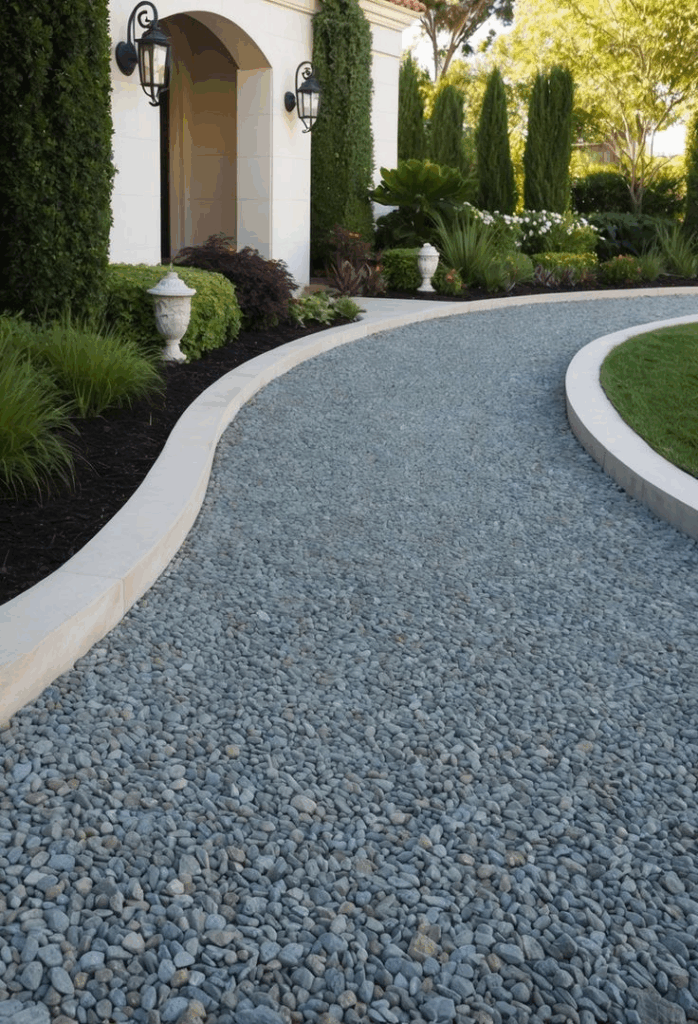
Naturalistic flow can be recreated by curving channels of black gravel meandering through garden landscapes like dry creeks. These winding lines simulate the movement of water, adding depth and rhythm without requiring irrigation. Designers often frame the curves with larger dark stones or contrasting lighter gravel, intensifying the visual impression of a streambed. Plantings such as ornamental grasses, ferns, or low succulents soften the edges, reinforcing the illusion of natural banks. The dark tones ground the design, helping the “creek” stand out even in lush or heavily planted yards. This technique works particularly well in drought-prone regions, offering a water-free way to introduce the serenity of flowing features. Proper installation involves layering compacted gravel for drainage and shaping gentle bends that follow the natural slope of the land. At night, strategically placed path lights cast shadows across the stones, enhancing the illusion of movement. Larger yards benefit from extended creekbeds that weave across the property, while smaller gardens can adopt compact versions that still achieve drama. Ultimately, black gravel creek designs marry functionality with aesthetics, delivering a timeless landscaping solution rooted in both simplicity and artistry.
Black Rock Accent Circles
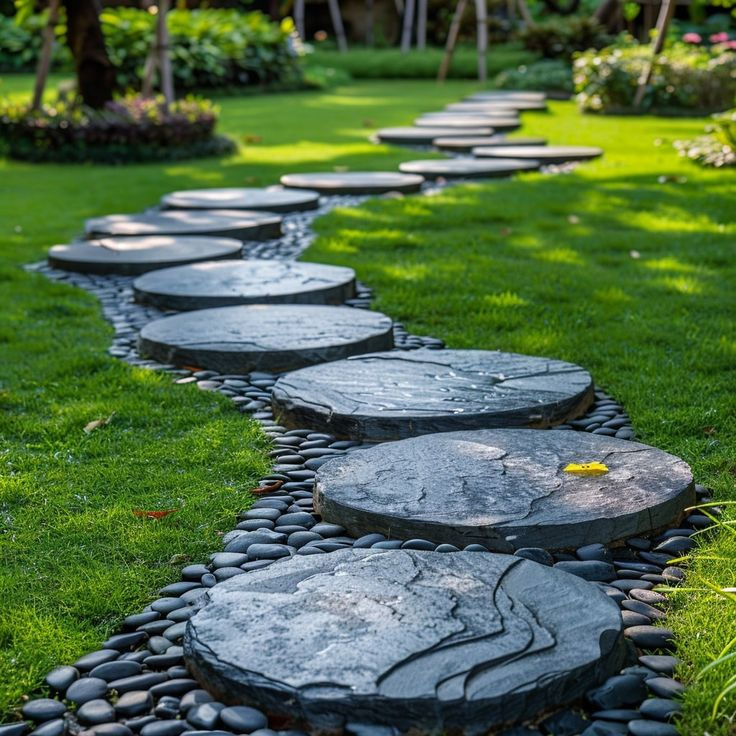
Circular stone arrangements introduce balance and harmony into outdoor layouts, with black rocks providing dramatic emphasis. These accent circles work as standalone focal points or as frames for trees, sculptures, or seating areas. Their strong geometry contrasts with organic plant shapes, grounding the space while drawing attention to central elements. Designers often layer different stone sizes—fine gravel for base coverage, medium pebbles for fill, and larger rocks for edging—to prevent flattening of the circle’s depth. Placement at intersections of paths or within open lawn areas ensures maximum visual impact. In smaller yards, compact circles create defined vignettes without consuming too much space, while expansive properties benefit from larger installations that serve as gathering zones. Accent circles can also double as fire pit surrounds or bases for raised planters, merging aesthetics with utility. Low lighting around the perimeter enhances the dramatic contrast of the dark stones after sunset. Beyond their striking appearance, these circles simplify maintenance by reducing grass trimming or mulching needs. By integrating black rock circles, landscapes gain structure, focus, and a timeless visual anchor that resonates with both modern and traditional design sensibilities.