
Efficient work environments often depend on thoughtful spatial planning, making small office layout ideas essential for anyone trying to maximize limited square footage. When space feels tight, smart arrangement strategies can dramatically improve comfort, focus, and daily workflow without requiring major renovations. Practical zoning, multi-functional furniture, vertical storage, and streamlined traffic flow all contribute to a setup that supports productivity while keeping clutter under control. This introduction guides readers toward reliable, design-forward solutions that suit compact work areas, offering clear insights grounded in organization principles, ergonomic considerations, and modern workspace trends to help them build a setup that truly works.
Wall-to-Wall Floating Desk Setup
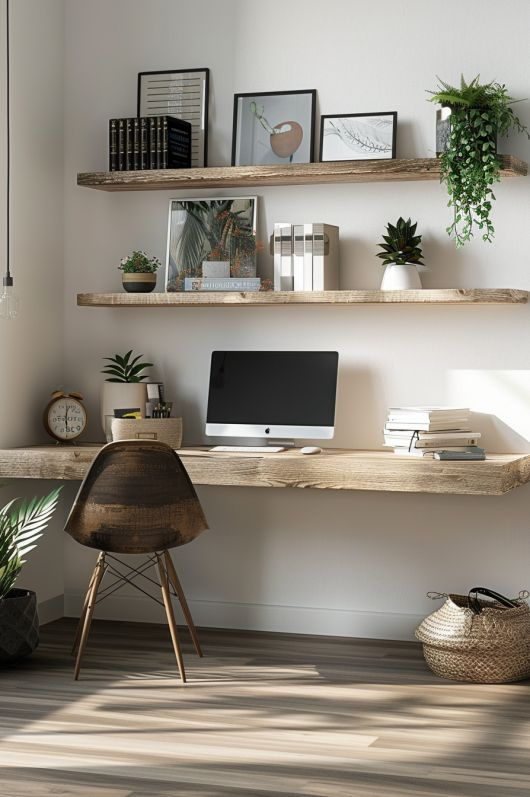
Space begins to feel more intentional when a wall-to-wall floating desk anchors the layout with clean lines and uninterrupted surfaces. This setup works especially well in compact rooms, where every inch matters and clutter must be controlled thoughtfully. A full-length floating desk provides generous workspace without the bulk of legged furniture, allowing chairs to slide freely and floor space to remain visually open. Paired with slim under-desk drawers or wall-mounted organizers, the layout keeps essentials within reach while maintaining a streamlined aesthetic. Lighting plays a key role here; soft task lights or a linear LED strip beneath the desk edge improves visibility without overwhelming the room. Homeowners often choose this arrangement to support multitasking—spreading paperwork on one side and keeping digital tools on the other—without feeling cramped. With the desk spanning the width of the wall, the area naturally frames a focused working zone, making it easier to stay productive in smaller environments. The continuous surface line also gives the illusion of a wider room, especially when matched with pale wall colors. This layout remains highly adaptable, fitting home offices, study corners, or shared workstations seamlessly while preserving a clean, structured, and efficient atmosphere.
Corner L-Shaped Minimal Work Zone

Rooms instantly feel more organized when an L-shaped workspace utilizes an unused corner to form a balanced and purposeful zone. This layout naturally boosts productivity by separating tasks—one arm for computer work, the other for writing or planning—without increasing the footprint. Many homeowners appreciate how the design tucks neatly into corners that would otherwise remain forgotten, making it ideal for apartments and small home offices. Storage can be integrated vertically with floating shelves, creating a structured arrangement that keeps documents, supplies, and gadgets accessible yet visually unobtrusive. A neutral tabletop paired with minimal decor supports a clean working rhythm and prevents distractions. Ergonomics improves too, since monitors can be placed at the perfect angle without compromising desk depth. With the additional surface space, users can place printers, diaries, plants, or productivity tools without overcrowding the primary working area. Lighting can be enhanced by positioning a compact lamp or relying on nearby windows for consistent brightness. The overall setup feels intentional—balancing comfort, clarity, and efficient use of real estate. Whether used for professional tasks, creative hobbies, or academic work, this corner-based L-shaped layout promotes a calm and structured environment, encouraging better focus throughout the day.
Vertical Shelf-and-Desk Hybrid Layout
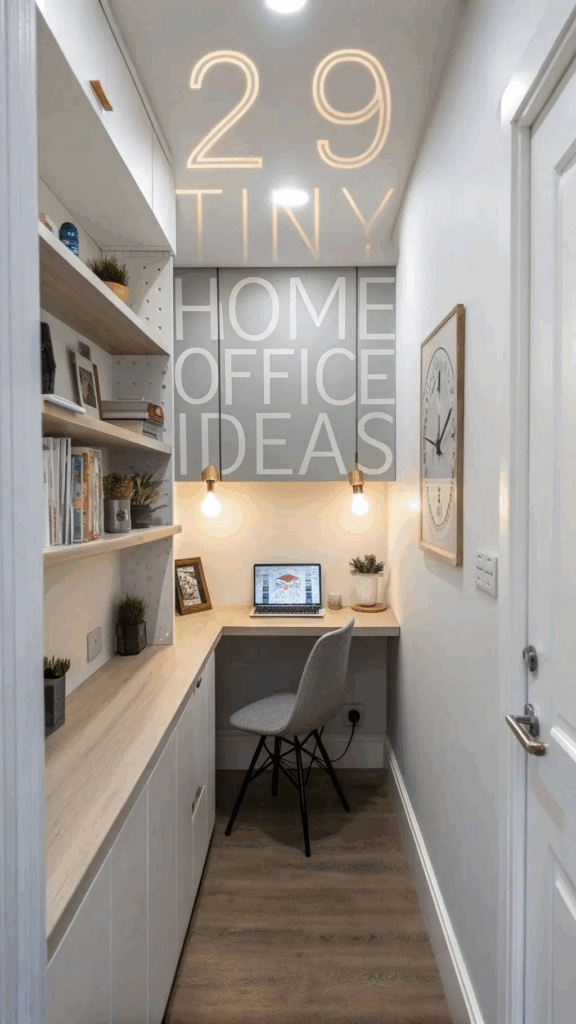
Homes with limited square footage benefit greatly when vertical shelving merges with a compact desk to form a cohesive hybrid workspace. Floor-to-ceiling storage supports organization while keeping the desktop free of unnecessary items, making tasks feel more manageable. The layout encourages users to sort essentials into dedicated zones—technology, documents, craft supplies, or decor—without overwhelming the room. Because the shelves align closely with the desk below, movement stays minimal and efficient, improving the overall work rhythm. Slim shelving, especially with adjustable heights, maximizes flexibility as needs shift over time. The desk portion can remain minimalist, equipped with only the essentials to maintain clarity and focus. Many people choose this layout for its ability to serve as both an office and display area, especially when blending books, baskets, and small storage boxes to soften the look. Good lighting enhances the function of the vertical elements, whether through sconces, clip-on lamps, or integrated LED strips. This arrangement keeps clutter off the floor and reduces the need for separate bulky furniture pieces, making it ideal for small rooms. The hybrid system offers balance—ample storage above and clean workspace below—creating a harmonious solution that feels efficient and visually organized.
Hidden Closet Workspace Conversion
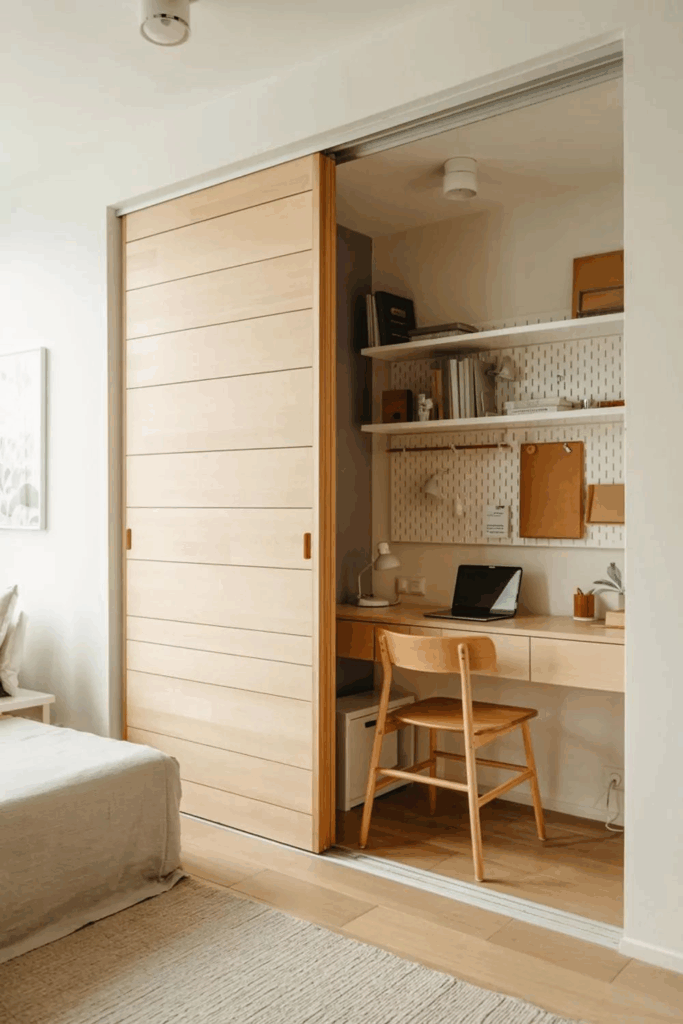
Small homes gain valuable function when an unused closet transforms into a discreet and productive workspace. By clearing the interior and installing a sturdy desk surface, the area becomes a compact yet highly efficient workstation tucked neatly behind closed doors. Shelves mounted above the desk help categorize supplies, ensuring everything stays within reach while maintaining a clean visual profile. Lighting is essential—adding LED strips or a small sconce prevents shadows and makes the workspace comfortable for extended use. Many people appreciate how this layout preserves the larger room’s openness; once the doors close, the office visually disappears, helping separate work from leisure. Cable management plays a vital role, keeping wires hidden to maintain order inside the confined space. The back wall can feature pegboards, pinboards, or vertical organizers to hold daily essentials without cluttering the desk surface. Whether used for remote work, bill management, or student study needs, this closet conversion offers privacy and focus without consuming additional square footage. Chairs can slide right under the desk or be folded and tucked away to maintain easy access. Overall, the setup delivers a practical, refined, and space-conscious approach to home office design.
Narrow Hallway Office Stretch
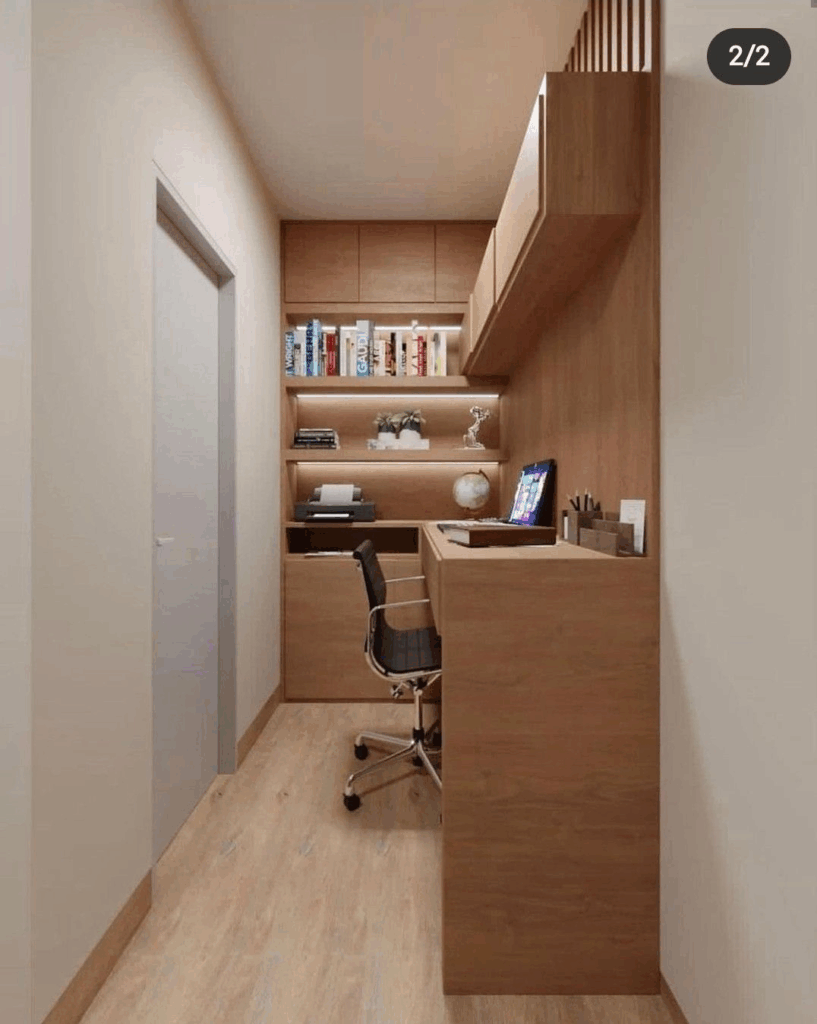
Some homes rely on hallway stretches to accommodate a dedicated workspace, turning overlooked transitional areas into purposeful office zones. When designed thoughtfully, even a long, narrow corridor can support productivity without obstructing movement. A slim-profile desk anchors the setup, offering just enough depth for laptops, notebooks, and daily essentials. Wall-mounted shelves or rails provide vertical storage while keeping the walkway clear. This layout works well with consistent lighting—either wall sconces or LED tracks—to avoid shadows and maintain an inviting atmosphere. Many homeowners use the longest wall to create a continuous flow, ensuring that the desk does not interfere with foot traffic. Choosing light finishes and tidy organization helps maintain spaciousness and prevents the hallway from feeling compressed. Pinboards, pegboards, or magnetic strips can add functional storage without dominating the wall. Despite its compact nature, the setup supports focused tasks while keeping the rest of the home uncluttered. This approach is especially useful in apartments where every square foot should serve a purpose. With careful planning, the hallway office becomes a harmonious extension of the living area, blending function, comfort, and efficiency into an area often ignored during home design.
Under-the-Stairs Compact Office Nook
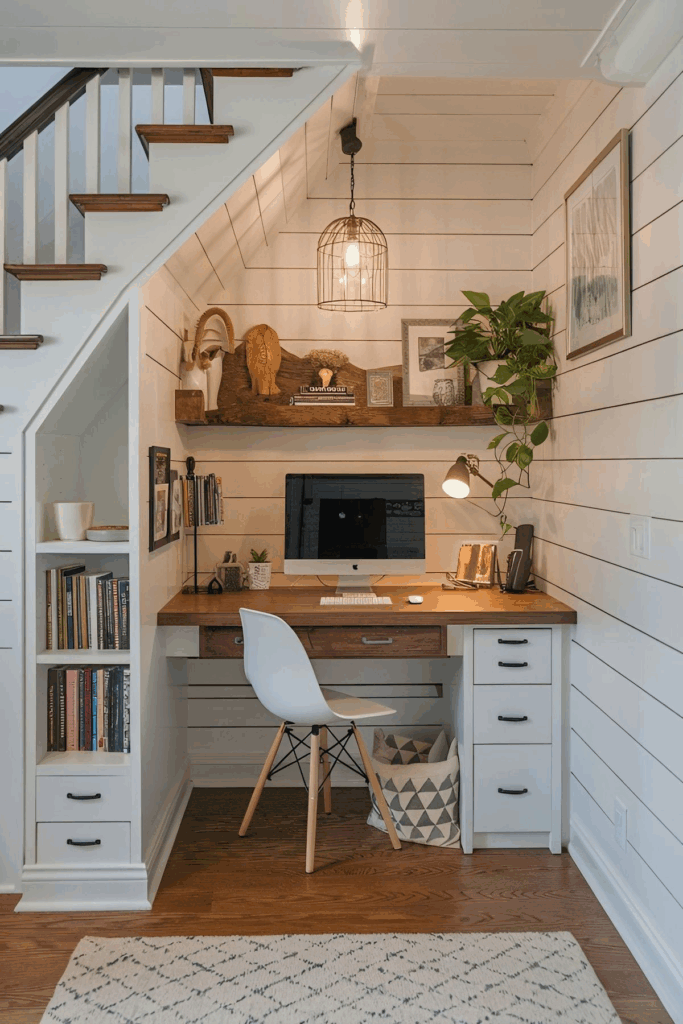
Unused space beneath staircases offers surprising potential for establishing a productive office nook that feels intentional and stylish. By fitting a small desk into the recess, homeowners create a designated workspace without sacrificing valuable room elsewhere. Shelving built into the sloped wall maximizes awkward angles, producing storage zones perfectly suited for books, decor, and essentials. Lighting deserves extra attention since stair areas often lack natural brightness; a directional lamp or concealed LED strip can effectively illuminate the nook. This setup works well for individuals who prefer a tucked-away environment where distractions are minimized and focus becomes easier. With smart cable management and a slim chair, the nook can stay highly functional without feeling cramped. The compact footprint encourages disciplined organization, helping maintain a clean working rhythm. Finishes matter—lighter shades can open up the space while wood accents add warmth and character. Whether used occasionally or daily, the nook provides an efficient solution for tight homes seeking dual-purpose flexibility. Many people appreciate how this layout transforms previously wasted space into a meaningful and efficient working zone, adding both practicality and charm to the home.
Window-Ledged Workspace with Slim Desk

Rooms feel more energizing when a workspace sits directly beside a window, allowing natural light to support focus, comfort, and productivity. A slim desk placed along the window ledge maximizes surface area while maintaining clear pathways throughout the room. The narrow profile ensures that the workstation feels airy, preventing visual heaviness that often comes with deeper desks. Natural light helps reduce eye strain, making this an appealing setup for long workdays, creative tasks, or reading. Homeowners can enhance functionality by adding small floating shelves or minimal storage units that sit close to the window without blocking the view. Plants thrive in this setup, lending a refreshing touch without cluttering the surface. A clean tabletop paired with a supportive chair makes the layout ideal for both compact bedrooms and multi-purpose living spaces. This design suits homeowners who appreciate subtle productivity zones that blend seamlessly with the rest of the room. Careful management of cables and accessories ensures the space stays organized and visually calm. Overall, this window-ledged workspace offers a bright, motivating environment that supports clarity and efficiency without overwhelming small rooms.
Fold-Down Murphy Desk Layout
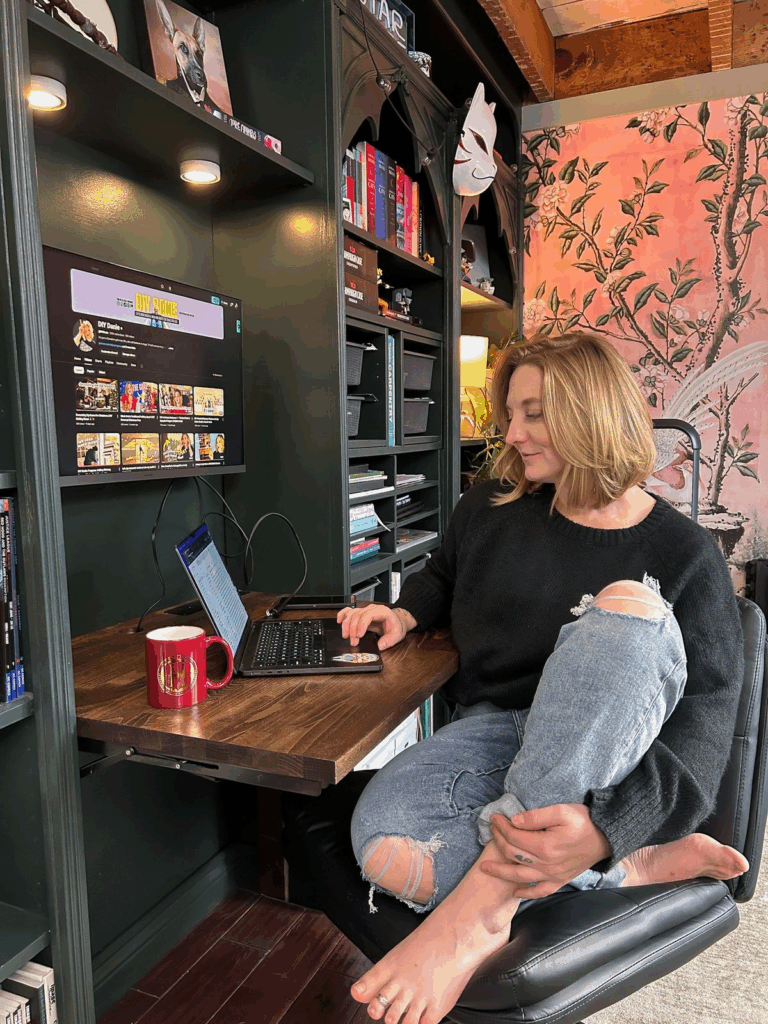
Multipurpose rooms benefit greatly when a fold-down Murphy desk offers workspace only when needed and folds away seamlessly when not in use. This wall-mounted feature saves significant floor space, making it particularly advantageous for studio apartments, guest rooms, or small bedrooms. When lowered, the desk provides ample surface area for laptops, notebooks, and project materials. When closed, it transforms into a clean panel that blends effortlessly with the wall. Interior shelves or small compartments inside the unit can store office essentials, helping maintain organization and reducing clutter. Homeowners appreciate how this adaptable solution supports both productivity and room versatility. Good installation ensures stability, while choosing finishes that match the wall color creates a cohesive and unobtrusive look. Lighting can be integrated directly into the unit with a mounted sconce or LED strip, improving visibility during tasks. A lightweight foldable chair completes the setup, easily stored away after use. This layout is well-suited for individuals seeking a workspace that doesn’t permanently occupy valuable square footage. The combination of flexibility, function, and clean design makes it a reliable option for compact homes looking to balance daily work needs with limited space.
Two-Tier Desktop for Small Rooms

A structured workflow emerges naturally when a desk incorporates two tiers, separating screens, tools, and essentials across defined levels. This thoughtful layout is particularly beneficial for small rooms where organizing items vertically helps maintain clarity. The upper tier is ideal for monitors, speakers, or decor, keeping the main desktop free for writing, reading, or using a laptop. By lifting frequently used items to eye level, posture improves and desk depth feels more generous. Homeowners appreciate how this system reduces clutter without relying on bulky additional storage furniture. With proper cable routing, the desk remains tidy and visually light. Floating shelves or slim organizers can be added around the desk to complement the tiered setup. Lighting plays an important role, and a small task lamp or LED strip under the upper tier provides ample brightness for evening work. This structure supports a focused routine, allowing users to transition easily between digital and physical tasks. The multi-level approach maximizes every inch while maintaining an open, breathable workspace that suits bedrooms, studio apartments, and compact home offices. Overall, this two-tier design enhances usability and aesthetics without overwhelming small rooms.
Pegboard-Controlled Layout System

Organization becomes significantly easier when a pegboard system supports a compact workspace with highly customizable storage. Pegboards adapt effortlessly as needs evolve, making them ideal for small home offices where flexibility is essential. Tools, cords, office supplies, and decor can be rearranged quickly without adding surface clutter, keeping the desk open and efficient. Pegboard hooks, shelves, bins, and magnetic strips offer endless configurations, ensuring everything stays sorted and accessible. This layout benefits homeowners who prefer a visually engaging yet functional setup that encourages creativity and structure simultaneously. Because the board sits vertically, floor space remains untouched, helping the room feel larger and more streamlined. Pairing the pegboard with a slim desk ensures balance between storage and workspace. Good lighting, whether from a clamp lamp or overhead fixture, highlights the board’s arrangement and helps reduce visual strain. The setup works well in bedrooms, craft corners, or multipurpose rooms where organization must stay adaptable. With a well-planned pegboard, even small areas gain a strong sense of order, making work tasks more enjoyable and productive.
Sliding-Door Office Partition Setup
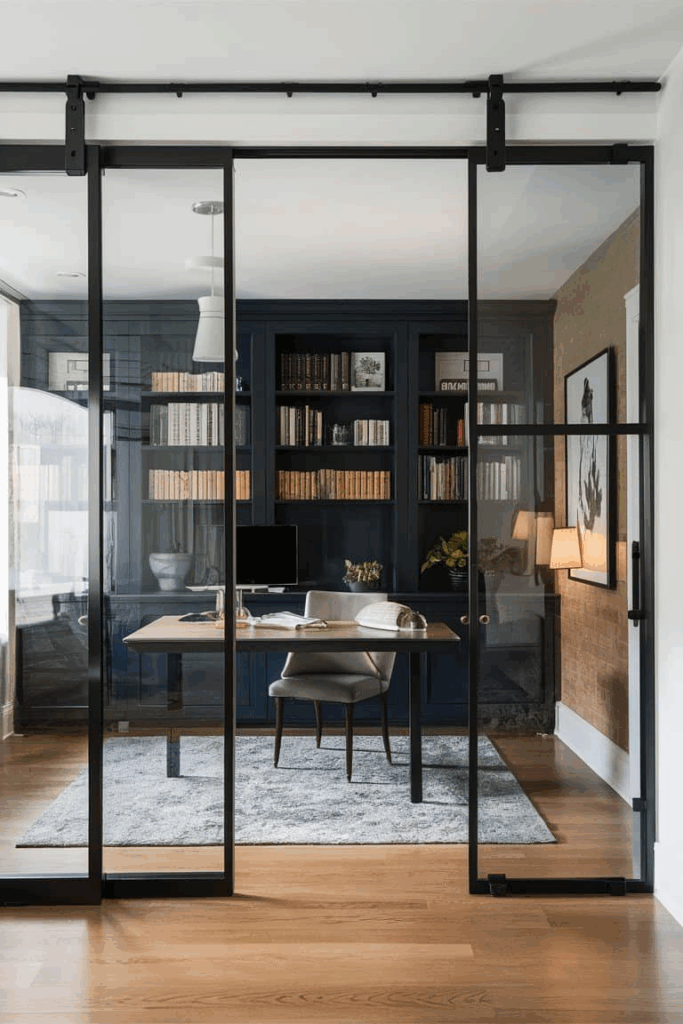
Homes with open layouts benefit greatly when sliding doors create a defined office zone without permanently closing off the room. This setup offers the flexibility to separate work from daily life while maintaining an airy and modern aesthetic. Glass or wooden sliding doors help enclose the workspace for privacy during calls or deep-focus sessions. When opened, the area seamlessly reconnects with the surrounding space, preventing the room from feeling boxed in. A slim desk, ergonomic chair, and vertical storage support function without crowding the designated zone. Light plays a key role; translucent panels maintain brightness even when closed. Cable management and clutter-free surfaces ensure the workspace feels polished and professional. Many individuals choose this layout to strike a balance between living space and productivity needs, especially in apartments or shared rooms. Sound absorption panels or soft rugs can help improve acoustic comfort inside the partitioned area. Overall, sliding doors enable a dynamic environment where users can toggle between open interaction and private concentration, making the setup highly practical for modern homes seeking adaptable solutions.
Dual-Purpose Office + Guest Corner
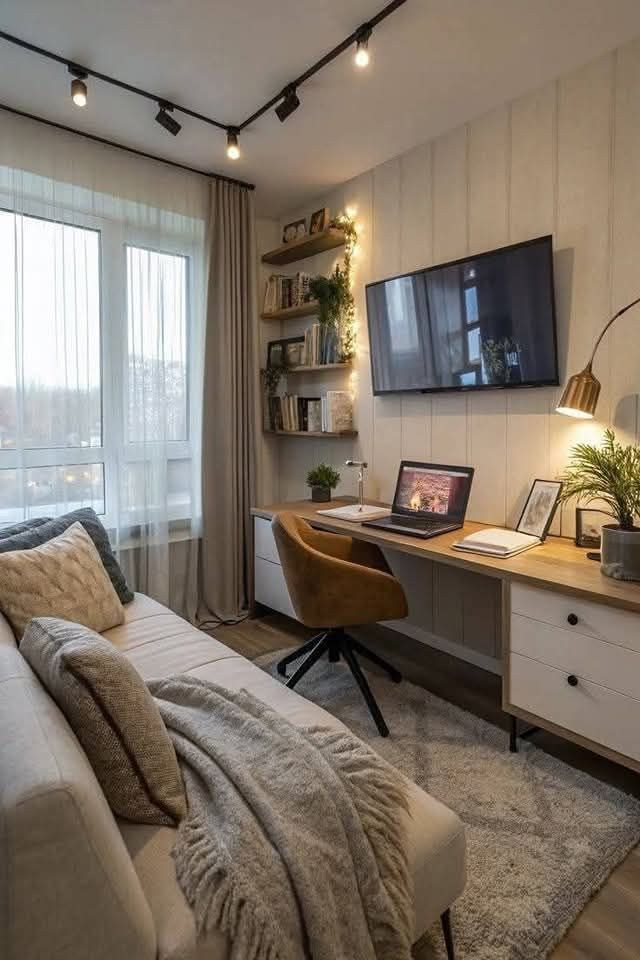
Smaller homes thrive when one room supports both guest accommodations and a functional workspace without feeling crowded or disjointed. A dual-purpose layout typically pairs a compact office zone with a neatly arranged guest corner, using thoughtful furniture placement to maintain balance. A slim desk positioned against the wall allows guests to move freely, while vertical storage maintains organization without encroaching on sleeping space. A daybed or sleeper chair offers comfort for visitors without dominating the room. Neutral tones and cohesive decor tie the two functions together, making the space feel welcoming rather than divided. Homeowners often use baskets, under-bed storage, or floating shelves to keep work items contained when guests arrive. Adequate lighting ensures that both the office and guest areas feel comfortable—task lighting for work and ambient lighting for relaxation. This arrangement supports remote work during the day while easily transitioning into a restful setup for overnight stays. With thoughtful planning, this combination feels natural and functional, offering flexibility without sacrificing comfort or productivity.