
Warm textures and natural tones make wood one of the most timeless materials for poolside design. Beyond its visual charm, a well-constructed deck offers durability, comfort underfoot, and the perfect transition between water and landscape. Whether surrounding an above ground pool or enhancing an in-ground layout, wooden decks provide flexibility in style, from rustic planks to sleek modern finishes. This guide on the best wooden pool decks highlights functional ideas that blend beauty with practicality, helping homeowners choose options that increase safety, boost property value, and create a welcoming atmosphere for relaxation, gatherings, and year-round outdoor enjoyment.
Floating Plank Islands
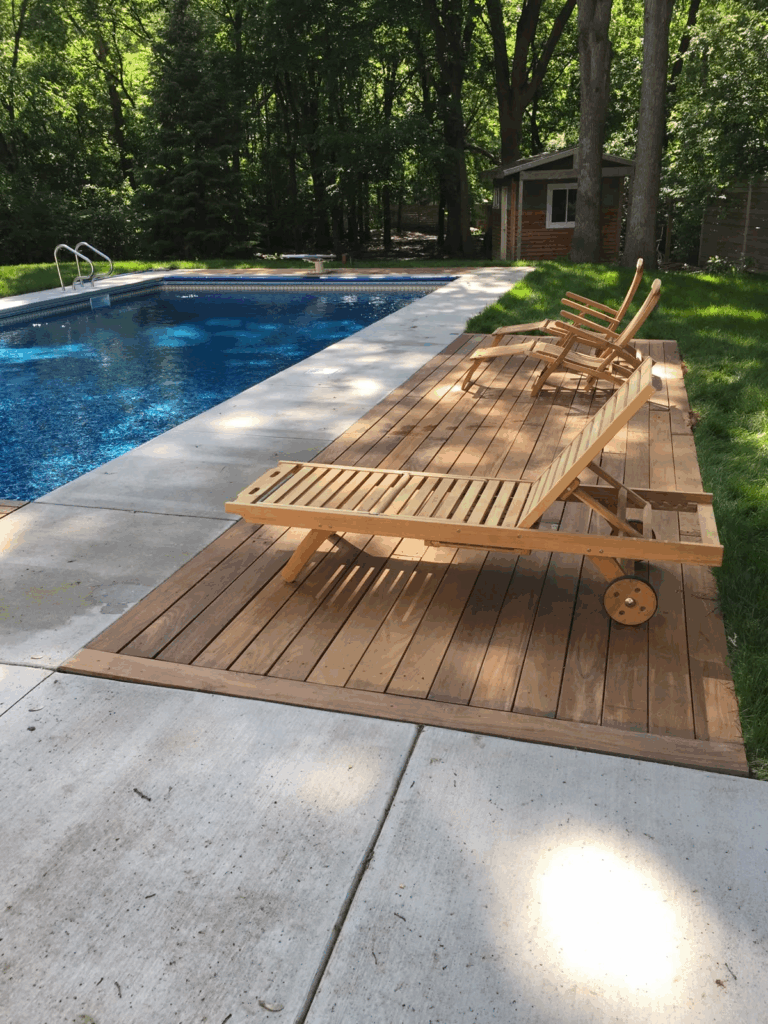
Designing a pool deck with floating plank islands brings movement and modularity to an outdoor space. Instead of a solid surface, this style relies on separated wooden platforms arranged over water or gravel, creating the impression of floating structures. Typically constructed with durable hardwoods like ipe, teak, or thermally treated ash, these islands resist moisture and retain strength under constant exposure. Spacing between planks allows for proper drainage and airflow, reducing swelling and rot. Some homeowners integrate LED lighting beneath the platforms, giving the appearance of suspended panels at night. Others place potted palms or minimalist loungers directly on individual islands for zoning purposes. The benefit of this approach lies in flexibility: islands can be adjusted, added, or rearranged depending on entertaining needs. Safety is preserved by using non-slip finishes and rounded edges. A floating plank concept also suits homes with modern or Zen-inspired landscaping, where visual openness and rhythm are essential. Maintenance involves periodic oiling or sealing, as well as checking anchor supports to prevent wobbling. For those seeking a sculptural, contemporary look that balances utility and design, floating plank islands deliver a striking poolside feature without requiring full-coverage decking.
Curved Radial Slats
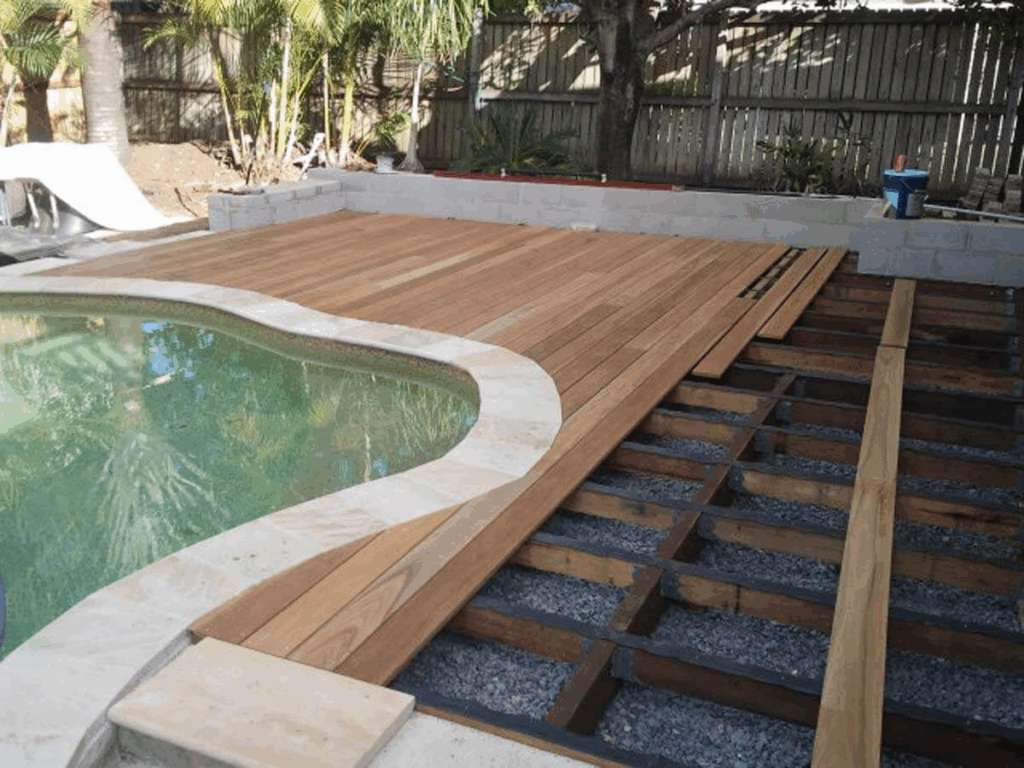
Curved radial slats introduce geometry and flow, softening the typically linear aesthetic of pool decks. By arranging planks in an outward, fan-like pattern around a focal point—often the pool’s curve or a hot tub—the deck becomes visually dynamic. Hardwood or engineered timber slats are cut and bent with heat treatment, ensuring long-term stability despite weather shifts. When installed correctly, radial layouts prevent warping by allowing natural expansion lines, a common challenge in humid zones. The curved design not only enhances movement around the deck but also provides ergonomic walking paths. Accent inlays of lighter or darker wood highlight the curvature further, giving the deck an artisanal feel. Some homeowners pair radial slats with circular lounge seating, built-in planters, or a central fire pit to mirror the geometry. The aesthetic works particularly well with organically shaped pools where straight decking may appear forced. Practicality is ensured by using hidden fasteners, keeping surfaces smooth and splinter-free. Applying marine-grade sealants extends lifespan while preserving color richness. For anyone looking to combine artistry with usability, curved radial slats provide a standout feature that defines the pool perimeter and transforms deck movement into a natural extension of landscape flow.
Integrated Bench Planters

Blending seating and greenery, integrated bench planters maximize function within poolside spaces. This concept replaces standalone furniture with timber benches built seamlessly into the deck structure, featuring recessed planter boxes at each end or behind the backrest. Using pressure-treated wood or composite timber ensures resilience against moisture from splashing water. Built-in drainage layers inside the planter prevent root rot, while lining with protective membranes adds durability. Popular plant choices include ornamental grasses, lavender, or succulents, which thrive in sunny conditions and require minimal upkeep. The fusion of seating and greenery reduces clutter, keeping pool decks spacious yet vibrant. Designers often extend benches along an entire side of the pool, offering continuous lounging areas shaded by climbing vines or small citrus trees rooted in the integrated boxes. LED strip lighting under the bench edges enhances safety and nighttime ambiance. The design also helps delineate zones, turning corners of the deck into intimate conversation nooks without the need for extra furniture. Homeowners appreciate the dual function: comfortable seating paired with natural softening of hard deck lines. Integrated bench planters offer a cost-effective way to personalize outdoor areas while balancing modern design with ecological appeal.
Sunken Wood Lounge Nook

Lowering part of the deck to form a sunken lounge nook creates intimacy while maintaining visual connection with the pool. This recessed seating pit is framed with durable hardwoods or engineered wood panels, often lined with plush cushions and weather-resistant fabrics. The drop in level provides wind protection, making it ideal for extended gatherings. Some designs incorporate built-in fire features at the center, adding warmth for evening use. Drainage solutions are critical: slot drains or gravel basins beneath the structure prevent water pooling. Sunken nooks are particularly effective for maximizing small backyards since they generate a separate social zone without requiring more square footage. Surrounding walls can double as backrests, while integrated lighting ensures safety along the steps. When paired with glass balustrades, the depression maintains openness without blocking pool views. Finishes like charred shou sugi ban or oiled teak add a tactile richness, complementing both rustic and modern aesthetics. Functionally, these nooks encourage barefoot lounging close to the water, turning the pool deck into a multi-level retreat. Regular sealing protects against humidity and sun exposure, ensuring the wood retains structure. A sunken lounge nook offers atmosphere, comfort, and architectural distinction in any pool deck setting.
Perimeter Timber Step Lighting
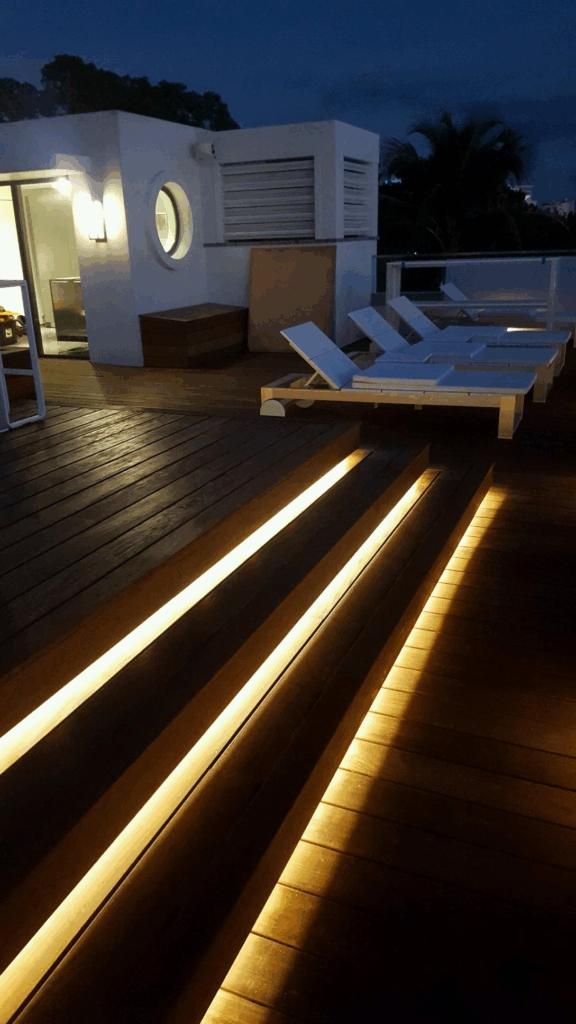
Integrating step lighting into the perimeter of a wooden pool deck ensures both style and safety. By embedding low-voltage LED strips or recessed fixtures directly into the vertical face of the timber steps, walkways remain illuminated without relying on overhead lighting. This technique reduces glare on the water’s surface, enhancing nighttime relaxation. Hardwood options such as ipe, cedar, or thermally modified pine are ideal because they tolerate heat from the fixtures without warping. Designers often use warm-white tones to accentuate the wood’s natural grain while creating a welcoming glow. Beyond safety, lighting outlines the pool deck’s boundaries, preventing trips and slips during evening swims. Some homeowners extend this system around the entire deck edge, blending seamlessly into landscaping paths. Waterproof housings are essential to protect wiring from moisture, while solar-powered alternatives minimize energy consumption. Maintenance involves periodic cleaning of the fixtures to prevent dirt buildup. This approach elevates functionality while turning the pool area into a polished evening retreat. With properly positioned perimeter lighting, a wooden deck gains definition, safety, and a sophisticated after-dark aesthetic that complements any backyard design.
Slot-Drain Deck Channels
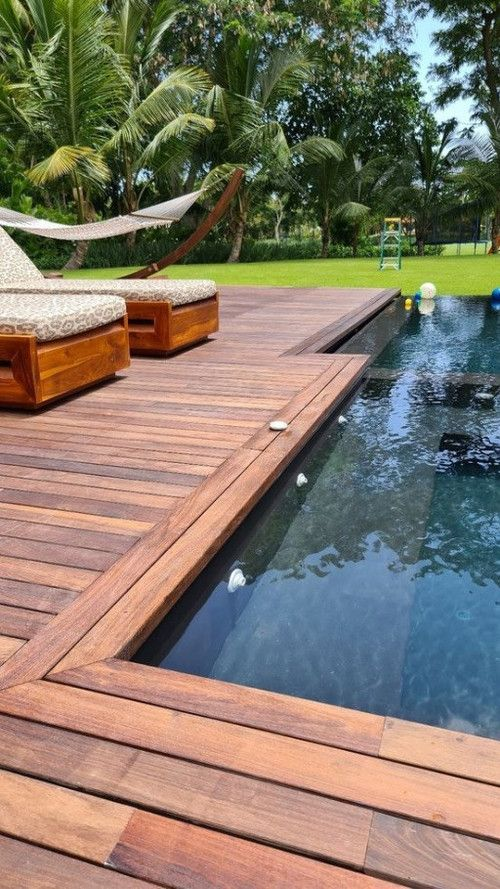
Slot-drain channels integrated into wooden pool decks provide discreet water management without disrupting design flow. Rather than bulky grates, these narrow openings run between planks or along the perimeter, channeling excess splash or rainwater into concealed drainage systems. The precision of this setup reduces puddling, extending the deck’s lifespan by limiting rot and mold development. High-quality hardwood or composite timber surrounding the channels must be treated with marine-grade sealants to withstand constant moisture exposure. The sleek slots are often stainless-steel lined, preventing warping and easing maintenance. A practical benefit is barefoot comfort—no large gaps or grates that snag toes. Designers often align slot drains with the deck’s linear pattern, keeping aesthetics uninterrupted. In modern poolscapes, they are paired with hidden overflow systems for a seamless transition between deck and water. Regular upkeep requires flushing the channels to clear debris and ensure proper flow. For homeowners seeking durability and clean design, slot-drain deck channels balance engineering efficiency with visual minimalism. This detail ensures that pool decks remain safe, dry, and visually cohesive across all seasons.
Mixed-Width Plank Mosaic
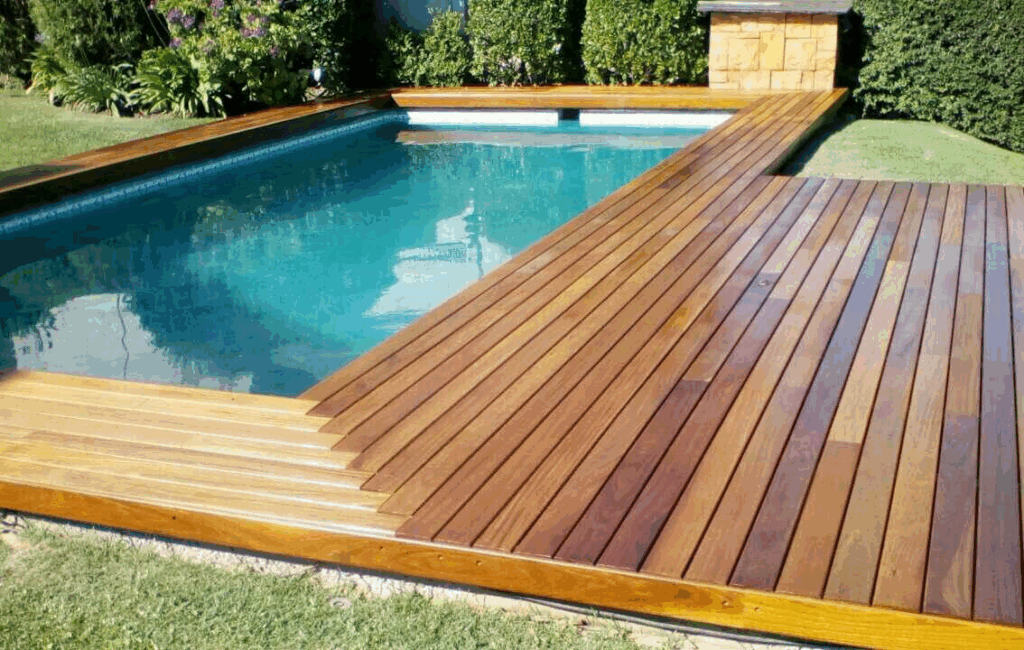
Alternating plank widths transforms a pool deck from uniform surface to dynamic mosaic. Instead of relying on identical slats, this style arranges boards of varying widths—sometimes mixing 4-inch, 6-inch, and 8-inch planks—for a layered, artisanal texture. Durable hardwoods like teak or cumaru provide the strength required to maintain alignment, while composite materials offer color consistency for more contemporary looks. Staggering the seams prevents warping and adds visual rhythm. This design works especially well in large decks where repetition can feel monotonous. Accent borders of contrasting wood species can frame the pool, highlighting the mosaic effect. Homeowners often combine the style with subtle lighting to cast shadows that emphasize depth. Non-slip finishes remain important, especially when using wider planks prone to surface slickness. The overall impression is custom craftsmanship without the need for intricate patterns. Maintenance involves cleaning between the variable gaps to prevent dirt collection. The mixed-width plank mosaic delivers a deck that feels both organic and refined, offering character and artistry while maintaining full durability for heavy poolside use.
Reclaimed Wood Patchwork

Sustainability meets artistry when reclaimed wood is used for patchwork decking. Salvaged timber from barns, factories, or shipping pallets brings unique grains, tones, and textures, ensuring every pool deck is one-of-a-kind. Boards may include weathered patina, nail marks, or naturally faded hues, giving the surface authenticity that new lumber cannot replicate. Careful sanding and sealing are essential to smooth surfaces while preserving character. Arranging planks in alternating shades or patterns—like herringbone, chevron, or checkerboard—further emphasizes the patchwork appeal. Because reclaimed wood varies in density, mixing species such as oak, maple, and pine creates a durable yet rustic composition. Environmentally conscious homeowners value this approach for reducing waste while showcasing history in their outdoor spaces. Protective finishes guard against moisture intrusion and sun fading, ensuring longevity despite age. The irregularities in the wood make every deck unique, with subtle imperfections turning into conversation points. Regular resealing is necessary to maintain performance near a pool environment. Reclaimed wood patchwork proves that sustainable choices can be stylish, combining eco-responsibility with undeniable visual warmth.
Deck-Edge Swing Seat
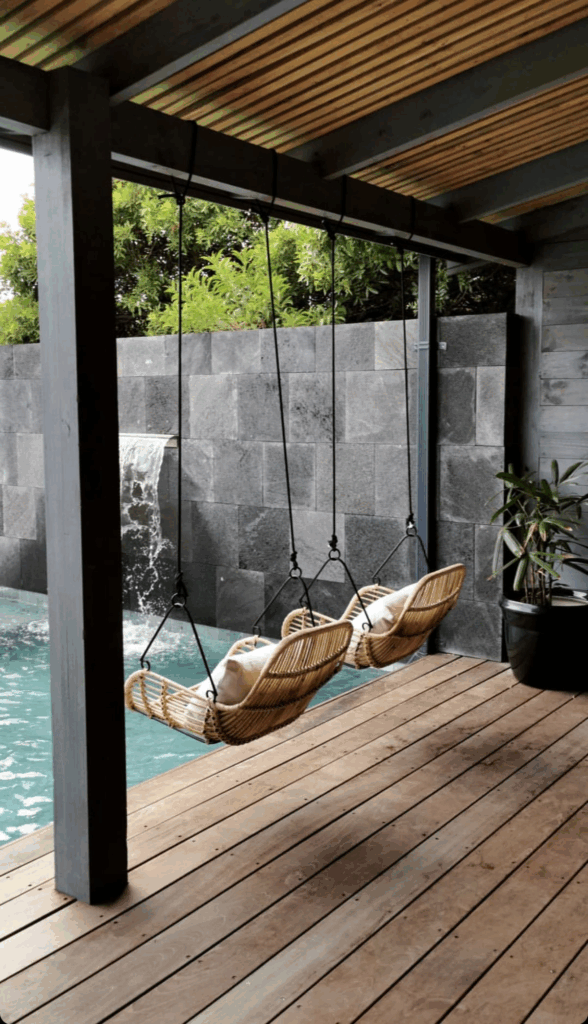
Suspending a swing seat from the edge of a wooden deck adds playful charm and functionality. Built from strong timber beams reinforced with metal brackets, the structure supports hanging bench swings or single pod seats overlooking the pool. This feature turns unused deck edges into interactive zones, ideal for reading, lounging, or casual conversation. Weather-resistant ropes or stainless chains ensure durability, while seat bases are crafted from the same wood species as the deck for seamless integration. Cushions covered in UV-resistant fabrics withstand sun and splash exposure. When positioned over shallow water or just beside the pool, swing seats enhance the sense of relaxation by blending movement with the aquatic setting. For safety, anchoring systems must be installed into reinforced beams, and clear swing paths maintained. Lighting beneath or near the swing highlights its presence at night, making it a centerpiece. Families appreciate the versatility, as it appeals to both children and adults. The deck-edge swing seat transforms simple timber platforms into lifestyle-driven spaces, merging leisure, design, and comfort into one engaging element.
Pergola Shade & Water Curtain
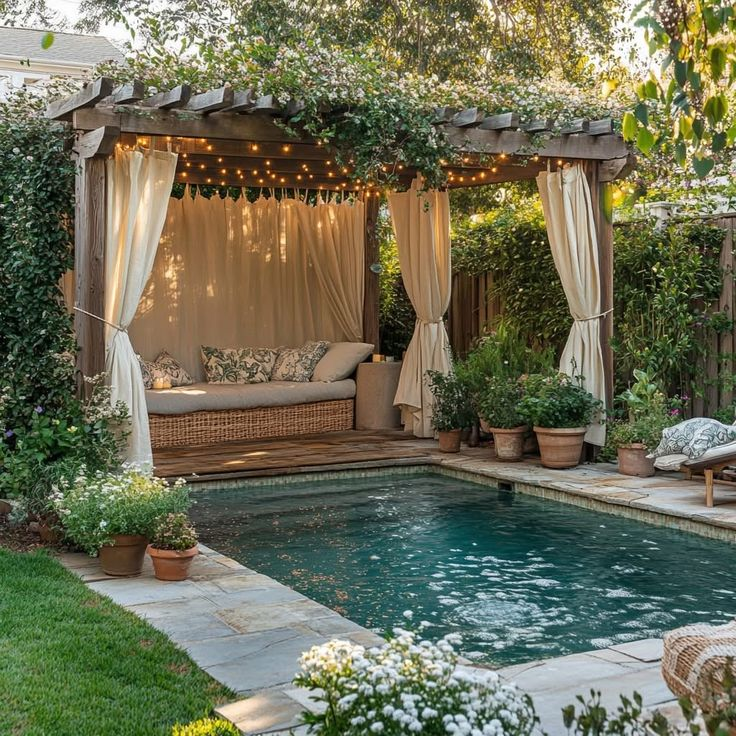
Incorporating a pergola with a cascading water curtain brings luxury and function to wooden pool decks. Timber pergolas built from cedar or redwood provide structural shading while visually anchoring one end of the deck. Beneath the beams, integrated channels allow water to flow in thin sheets, creating a curtain effect that doubles as a cooling feature. The sound of running water enhances relaxation, masking neighborhood noise and boosting ambiance. Structural posts must be treated to resist moisture, while the curtain’s circulation pump ensures steady flow without waste. Some designs illuminate the water with LED backlighting at night, producing dramatic visuals against the timber framework. Seating beneath the pergola offers a shaded retreat, while the gentle mist cools hot afternoons. For sustainability, many systems recycle pool water through filtration before returning it as a decorative curtain. Maintenance involves occasional pump cleaning and re-sealing timber exposed to constant dampness. The combination of architectural shade and playful water elements transforms an ordinary deck into a resort-like haven that feels both private and indulgent.
Convertible Table-Deck Combo
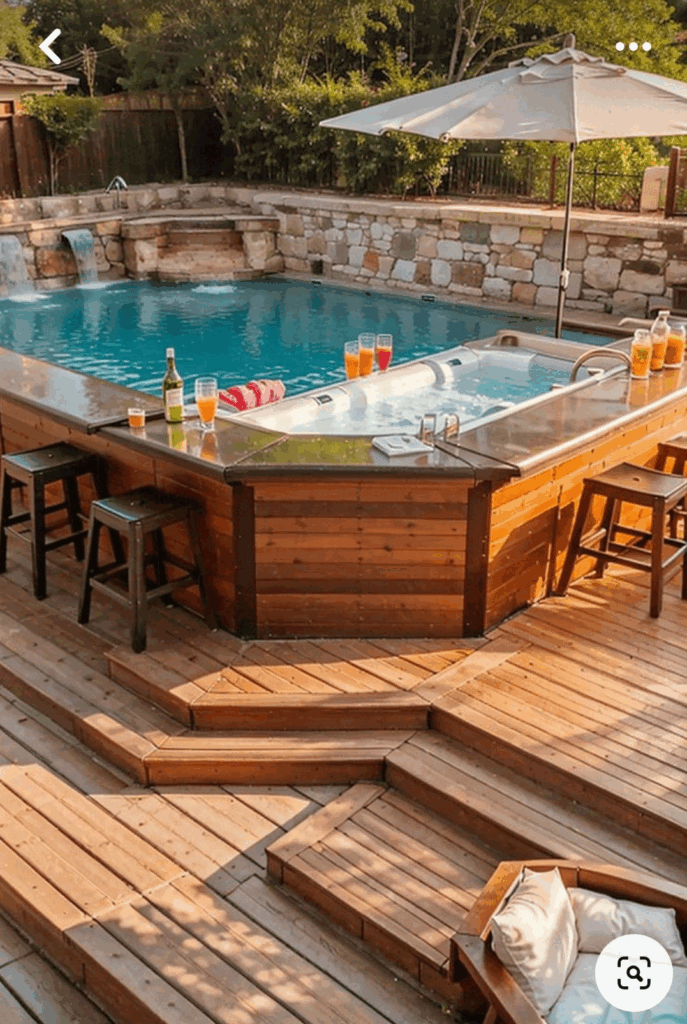
Designing a pool deck with convertible furniture systems maximizes flexibility. One standout option is a table-deck combo, where sections of timber decking rise mechanically or fold to reveal hidden dining or bar-height tables. When closed, the area maintains the clean look of uninterrupted planks; when open, it instantly transforms into an entertainment surface. This works particularly well for small yards where storage and multifunctionality are priorities. Hydraulic lifts or hinged frames are typically integrated beneath reinforced hardwood sections, ensuring durability under foot traffic. Composite or pressure-treated timbers prevent warping from water exposure. Families appreciate the practicality, as the deck can transition between lounging, dining, and swimming zones with minimal effort. Designers often finish the hidden table with the same wood grain, keeping the transformation discreet until revealed. Regular oiling and inspection of hardware prolong lifespan, while concealed storage under the table provides bonus utility. The convertible table-deck combo exemplifies adaptability, merging design creativity with day-to-day functionality.
Stepped Wooden Garden Walls
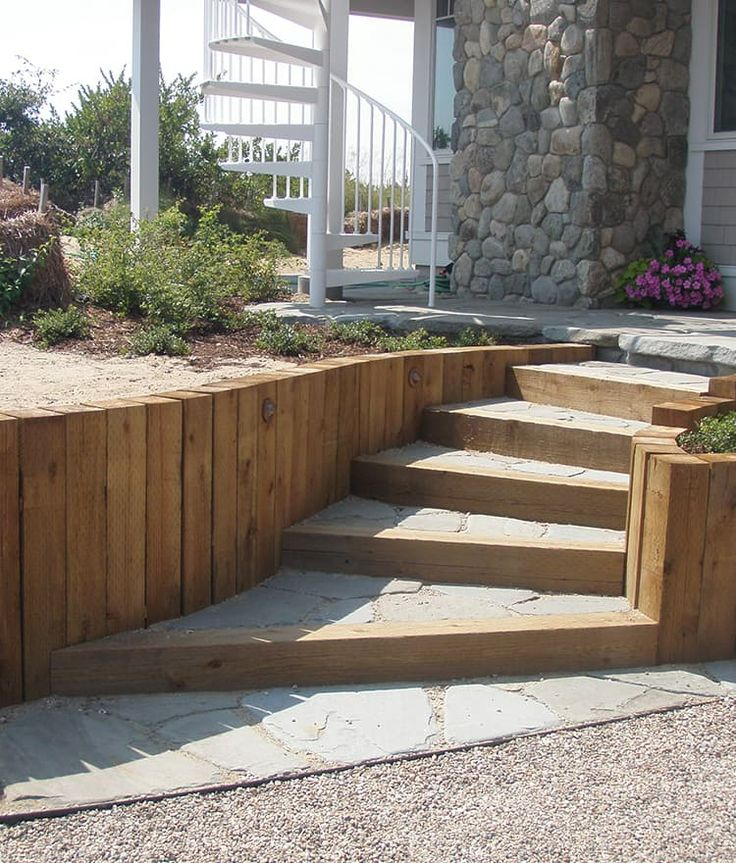
Multi-level garden walls built from timber extend a pool deck into surrounding landscaping, creating depth and cohesion. Instead of abrupt boundaries, stepped wooden walls rise gradually, doubling as seating, planters, or retaining structures. Using pressure-treated pine or hardwood sleepers ensures structural stability against soil pressure and water splash. The layered arrangement allows homeowners to integrate greenery at each tier, softening the transition from deck to garden. Wide steps can be used for casual seating, while narrower ones emphasize vertical planting. Lighting strips tucked beneath steps accentuate the texture after dark, highlighting both the timber grain and plant silhouettes. This approach works particularly well on sloped sites, where leveling with a single wall may appear harsh. By staggering heights, the deck merges organically with terrain while preventing erosion. Finishes like oiling or staining maintain natural tones, though charred wood techniques can also provide striking contrast. Stepped wooden garden walls extend utility, enhance aesthetics, and provide an architectural frame that grounds the entire poolscape in natural harmony.