
Entryways often set expectations for the entire home, making thoughtful styling especially important. Vintage decor offers character, history, and authenticity that modern pieces alone often lack. When used with intention, antique furniture, thrifted accents, and aged materials can create warmth without feeling cluttered or outdated. Homeowners and renters alike seek practical ways to balance old and new while maintaining function, storage, and flow. This guide focuses on smart placement, proportion, and styling techniques that help vintage entryway pieces feel curated, welcoming, and purposeful, ensuring lasting visual impact and everyday usability from the moment guests arrive.
Antique Console as the Anchor
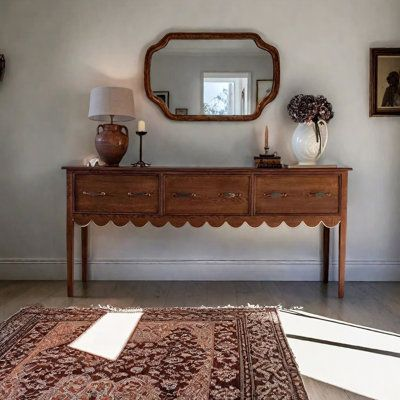
Grounding an entryway begins with a statement piece that carries visual weight and function. A timeworn console table introduces immediate character while offering a practical surface for daily essentials. Solid wood construction, visible joinery, and subtle wear patterns signal authenticity and history, helping the space feel established rather than styled overnight. Narrow silhouettes work well in tight foyers, while deeper profiles suit larger halls without overwhelming circulation. Styling remains restrained: a shallow bowl for keys, a small stack of books, and one accent object maintain balance. Wall clearance is critical, allowing doors and walk paths to remain unobstructed. Warm wood tones soften harder architectural lines such as tile flooring or crisp wall finishes. Patina should appear honest, not distressed for effect, ensuring longevity in both appearance and structure. Lighting above or beside the console enhances texture and highlights grain variation. This approach creates a visual anchor that organizes the entry while quietly setting the tone for the rest of the home. When chosen carefully, an antique console provides stability, storage, and timeless appeal without demanding excess decoration or frequent updates.
Thrifted Mirror with Patina
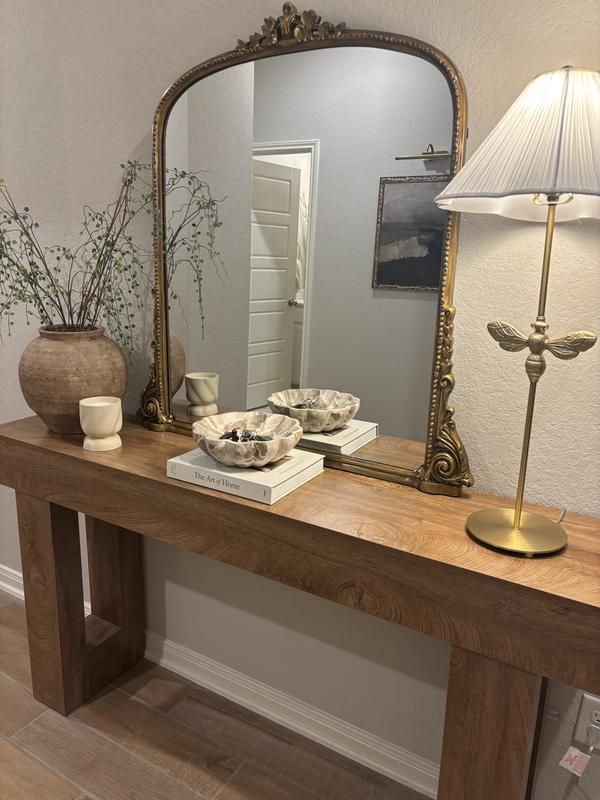
Reflected light plays a quiet but powerful role near the front door. A vintage mirror with natural aging introduces depth while softening the formality of an entryway. Slight desilvering, foxing, or uneven glass adds character that modern reproductions struggle to replicate. Placement matters; mounting at eye level ensures functionality while maintaining proportion with surrounding furniture. Ornate frames suit traditional homes, while simpler wood or metal profiles complement transitional spaces. The mirror’s imperfections diffuse light gently, reducing glare and creating a welcoming first impression. Pairing it with neutral walls allows the frame’s texture to stand out without visual noise. Structural integrity should always be checked, especially with older glass, to ensure safety and longevity. When sourced thoughtfully, a thrifted mirror becomes both decorative and useful, expanding perceived space while reinforcing a collected, lived-in aesthetic. Its presence supports daily routines while contributing a layer of authenticity that feels personal rather than staged.
Vintage Trunk Drop Zone
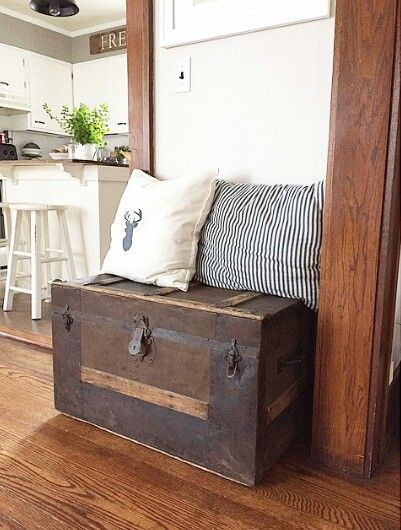
Function meets heritage when an old trunk earns a second life near the front door. Sturdy construction makes it ideal for holding shoes, seasonal accessories, or pet supplies while doubling as a bench. Leather straps, metal corners, and aged hardware introduce texture that contrasts clean architectural lines. Positioning along a wall or beneath artwork keeps circulation clear and visually organized. Interior liners or baskets help separate contents without altering the trunk’s exterior character. Height should align comfortably with seating standards, ensuring ease of use. Surface wear adds narrative, hinting at past journeys without overwhelming the space. Neutral upholstery or a folded textile placed on top can soften the look while protecting the finish. This solution delivers storage without modern cabinetry, preserving flexibility and charm. Over time, a vintage trunk becomes part of daily habits, proving that practical entryway organization does not require sacrificing personality or warmth.
Old Frames with Updated Art
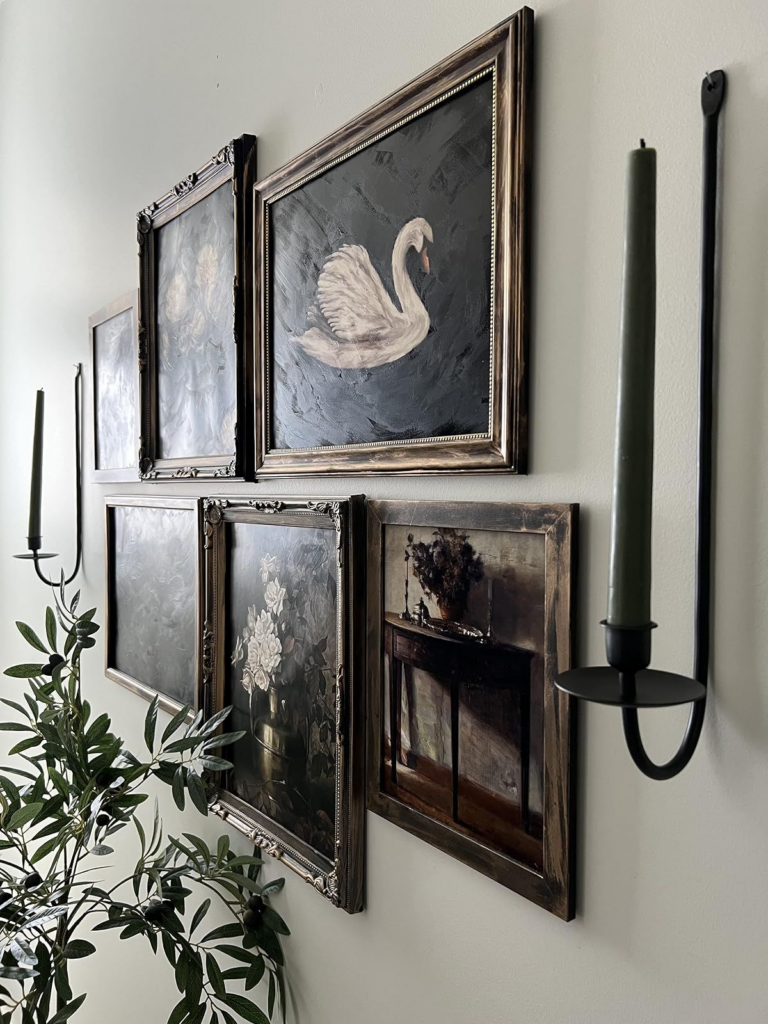
Wall décor offers an opportunity to blend past and present effortlessly. Antique or vintage frames provide texture and craftsmanship that elevate even simple artwork. Gilded edges, carved wood, or subtle distressing introduce depth against flat walls. Contemporary prints, sketches, or monochrome photography inside these frames prevent the display from feeling dated. Consistent matting creates cohesion when mixing frame styles. Hanging at a unified sightline keeps the arrangement orderly and easy to read. Lightweight pieces work best in entryways to avoid visual heaviness. Glass clarity should be checked, replacing cracked panes while preserving original frames. This contrast between aged framing and fresh imagery creates balance, allowing individuality without clutter. The result feels curated rather than themed, supporting an entryway that welcomes without overwhelming. Thoughtful frame reuse also reduces waste while celebrating enduring craftsmanship.
Repurposed Antique Hooks
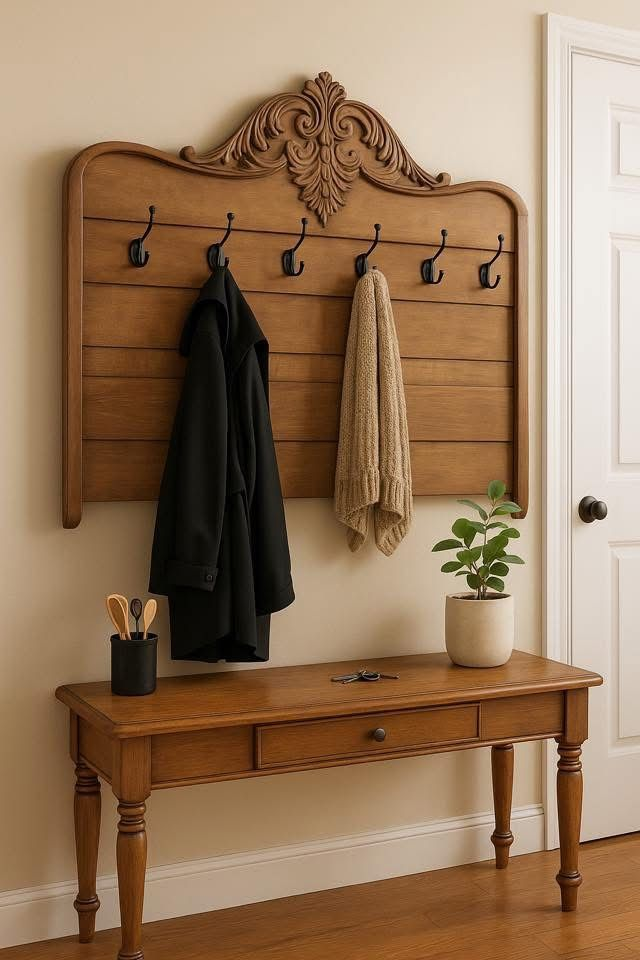
Wall-mounted storage benefits from pieces that serve both purpose and presence. Antique hooks, once used in workshops or homes, bring durability and character to entryway walls. Cast iron, brass, or aged steel finishes offer strength for coats and bags. Mounting into studs ensures stability, especially for heavier items. Spacing should allow garments to hang freely without crowding. Natural wear on the metal adds visual interest and authenticity. Installing them in a straight line maintains order, while staggered placement suits casual interiors. Pairing hooks with a simple backer board can protect walls and add contrast. This approach replaces modern racks with something more enduring and visually grounded. Daily use enhances their appeal, proving that practical storage can also reinforce a timeless aesthetic rooted in quality materials.
Layered Vintage Rugs
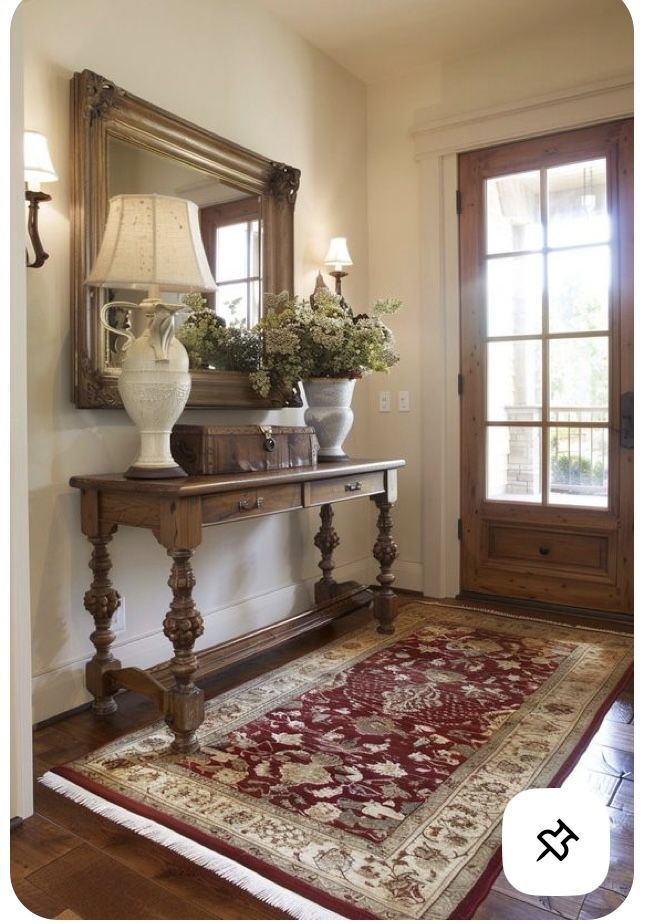
Floor treatments define the emotional tone of an entryway. Vintage rugs introduce warmth, pattern, and a sense of history underfoot. Layering smaller rugs over durable base runners adds dimension while protecting high-traffic areas. Flatweaves and low-pile options reduce tripping hazards and simplify maintenance. Faded dyes and softened fibers suggest longevity without demanding perfection. Placement should guide movement from the door inward, subtly directing flow. Non-slip pads are essential for safety and stability. Color selection can echo surrounding finishes, tying walls, furniture, and accessories together. This method creates comfort immediately upon entry, grounding the space while enhancing acoustic softness. Over time, layered rugs develop character through use, reinforcing the idea that beauty and practicality can coexist naturally
Salvaged Wood Bench
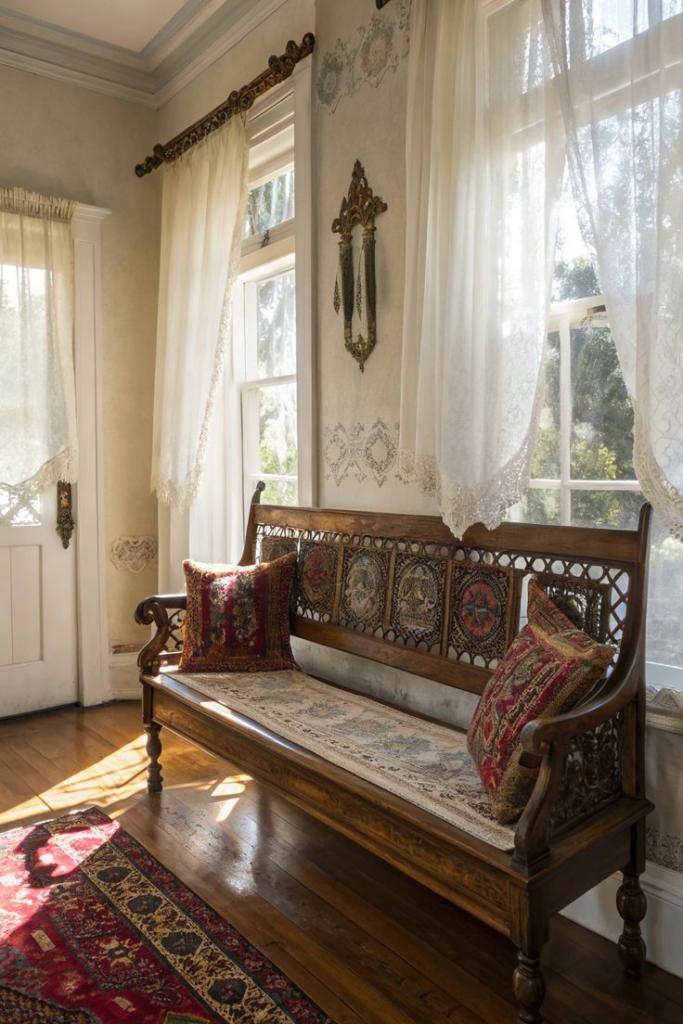
Seating near the entrance supports daily routines with ease. A bench crafted from reclaimed or salvaged wood brings texture and honesty to the space. Visible knots, saw marks, and aged finishes add depth without visual clutter. Proportions should remain slim to preserve circulation. Positioning beneath artwork or a mirror creates a functional vignette. Storage baskets placed underneath increase utility while keeping the surface clear. Structural soundness is key, ensuring weight-bearing capability. Neutral cushions or textiles can add comfort while maintaining a restrained palette. This piece anchors the entryway quietly, offering a place to pause without drawing excessive attention. Its understated presence reinforces a collected aesthetic grounded in craftsmanship and thoughtful reuse.
Vintage Storage Baskets
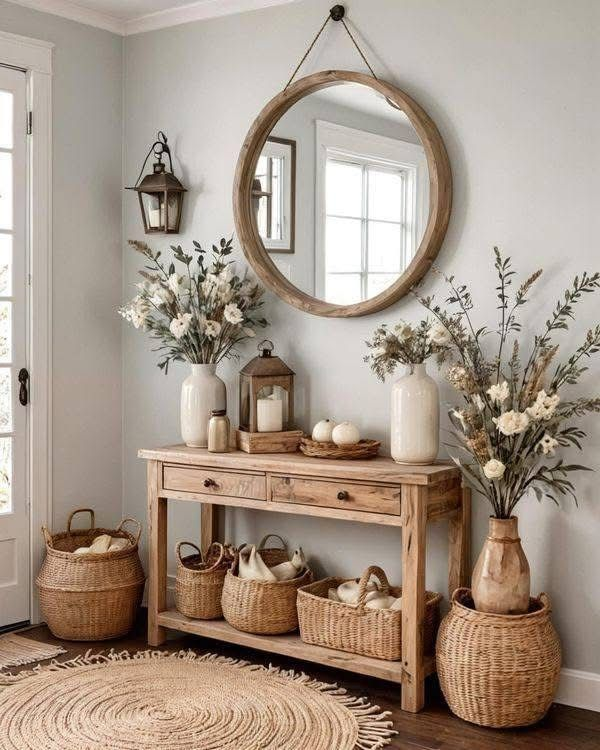
Containment becomes more appealing when materials carry character. Woven baskets made from rattan, wire, or canvas provide flexible storage while contributing texture. Variations in weave and patina suggest age and authenticity. Sizing should accommodate shoes, scarves, or umbrellas without overflowing. Placement beneath consoles or benches maintains order. Liners protect contents while preserving the exterior look. Neutral tones integrate easily with diverse palettes. Handles enhance portability, supporting changing needs. This solution keeps everyday items accessible yet visually contained, reinforcing calm at the entry point. Over time, baskets adapt effortlessly, proving that organization can remain fluid and aesthetically pleasing.
Classic Table Lamp Styling
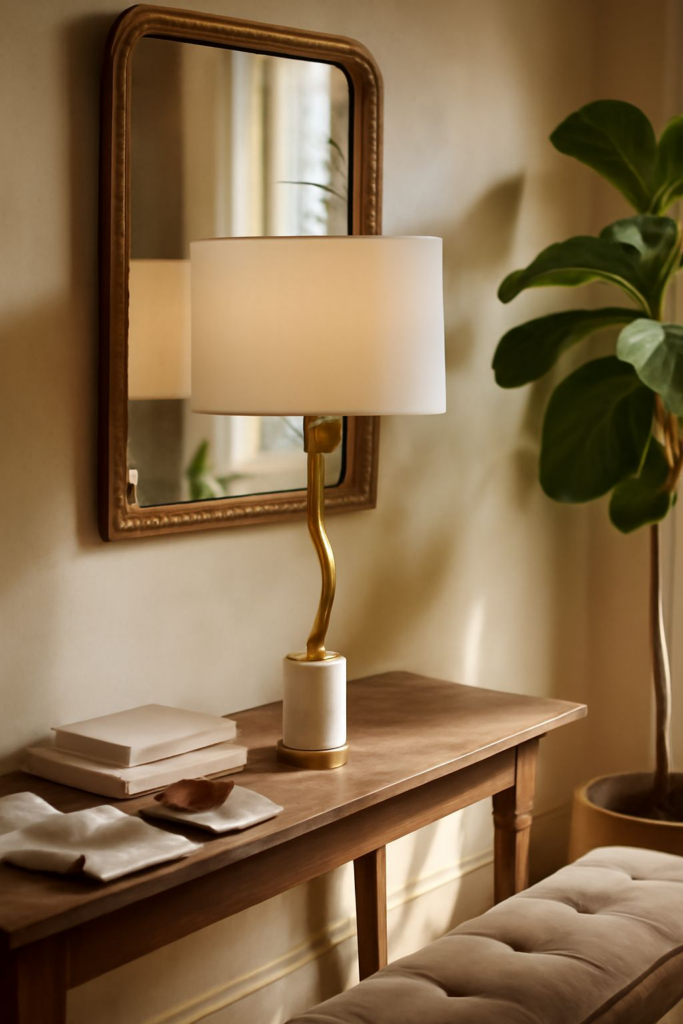
Warm, consistent lighting shapes how an entryway is experienced throughout the day. A classic table lamp introduces softness while providing functional illumination for evening arrivals. Traditional bases crafted from ceramic, aged brass, or turned wood add substance and visual balance when placed on a console or side surface. Proportion is essential; the lamp height should complement surrounding furniture without blocking sightlines or wall décor. A well-fitted fabric shade diffuses light evenly, reducing harsh shadows and glare. Neutral shade tones maintain versatility and work across changing seasons. Cord placement should remain discreet to preserve a clean appearance. This type of lighting supports practical tasks such as locating keys while reinforcing a welcoming atmosphere. The gentle glow highlights textures in wood, stone, and textiles nearby, subtly enhancing depth. Over time, a thoughtfully chosen lamp becomes part of daily rhythm, offering familiarity and comfort. Rather than serving as a decorative afterthought, it anchors the space visually and emotionally, ensuring the entryway feels calm, intentional, and lived in from the moment the door opens.
Found Sculptural Objects
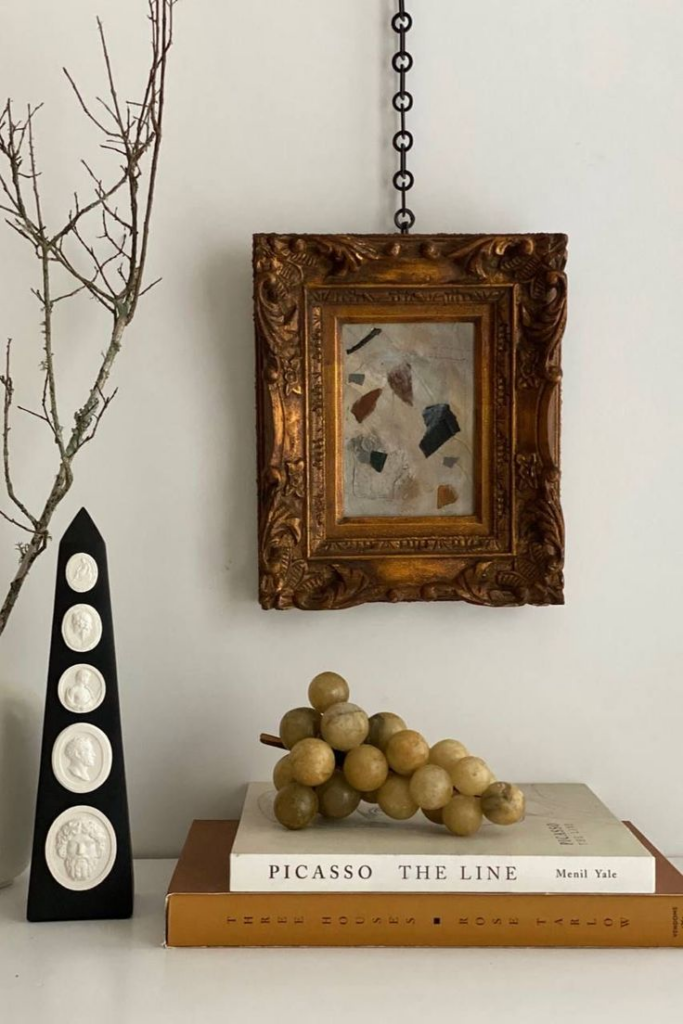
Small-scale objects with strong form can add meaning without overwhelming an entryway. Sculptural pieces sourced from markets, travels, or vintage collections introduce individuality through shape and material. Stone, ceramic, carved wood, or metal forms offer tactile contrast against smooth surfaces like painted walls or polished consoles. Placement should feel deliberate, allowing negative space to frame each object clearly. Limiting the number of pieces avoids visual clutter while giving each form presence. Natural wear, irregular edges, or hand-carved details contribute authenticity and depth. These objects often act as quiet focal points, encouraging a pause rather than demanding attention. Rotating selections seasonally keeps the display fresh while maintaining cohesion. When chosen with restraint, sculptural accents communicate personal taste and history, helping the entryway feel curated rather than styled. Their role is subtle yet impactful, adding character through form rather than color or scale.
Aged Pottery Planters
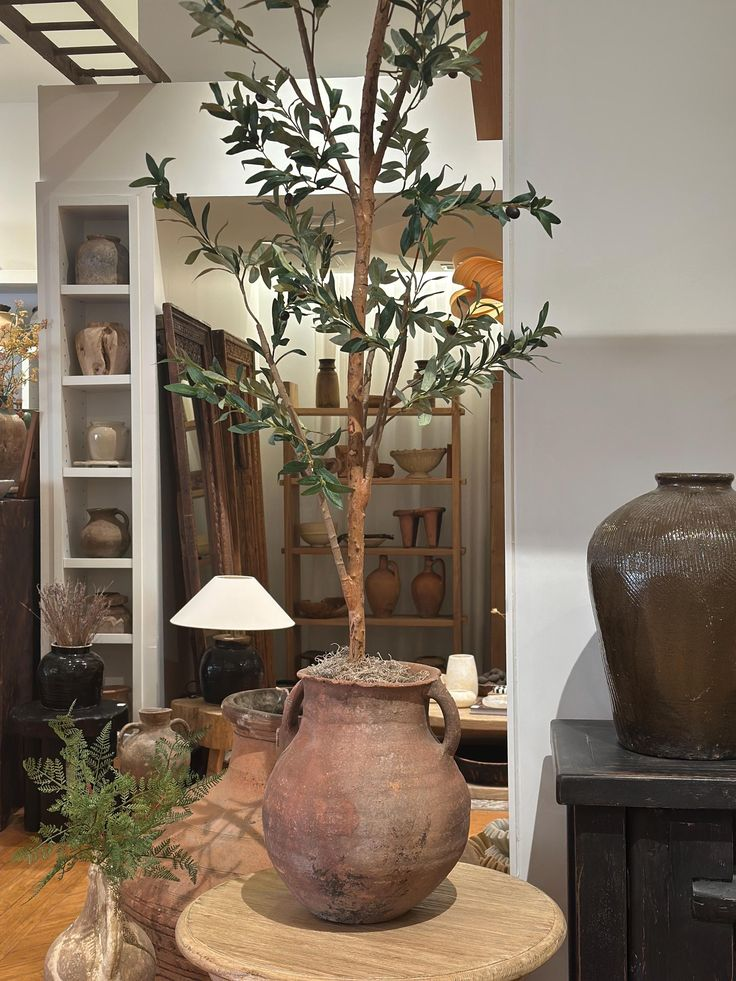
Organic elements soften transitional spaces effectively. Aged pottery planters bring texture and grounded warmth to an entryway, bridging indoor and outdoor environments. Natural imperfections such as hairline cracks, mineral staining, or uneven glazing create visual interest that new containers often lack. Earth-toned finishes pair well with wood, stone, and neutral walls. Size selection matters; larger vessels anchor corners, while smaller planters work well on consoles or low stools. Choosing resilient plants ensures longevity and minimal upkeep. Adequate drainage protects flooring while supporting healthy growth. The presence of greenery introduces movement and life, balancing harder architectural lines. Over time, both plant and vessel develop character together, reinforcing a sense of continuity. This approach adds freshness without excess decoration, making the entryway feel calm, welcoming, and naturally composed.
Heritage Color Accent
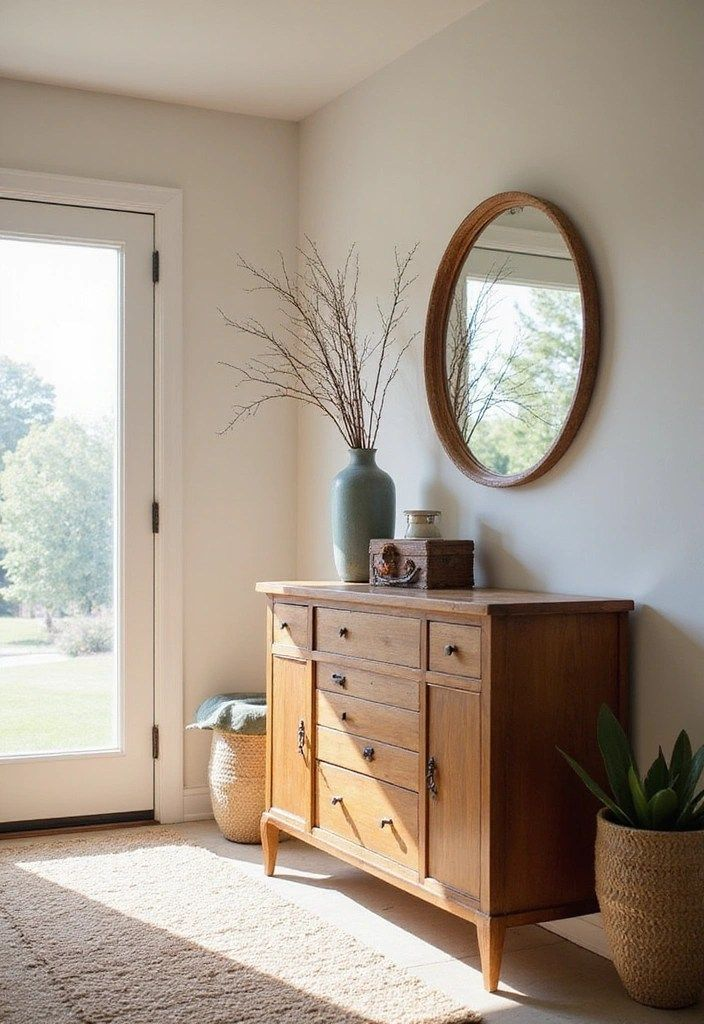
A carefully chosen color can define an entryway without dominating it. Heritage-inspired shades draw from traditional palettes, offering depth and familiarity rather than trend-driven intensity. Muted greens, warm ochres, soft clays, or deep navies work particularly well in transitional spaces. Applying color selectively—on a door, trim, or a single wall—creates focus while preserving balance. Surrounding finishes should remain restrained to prevent visual overload. Light conditions influence how the color reads, making sample testing essential before commitment. This subtle use of color adds identity and warmth, guiding the eye and setting expectations for the home beyond. When executed thoughtfully, a heritage accent enhances architectural details and complements vintage furnishings, resulting in an entryway that feels confident, cohesive, and enduring rather than decorative for its own sake.