
Limited square footage does not prevent an entry from making a strong statement. With the right design decisions, a small foyer can feel intentional, elevated, and visually impressive the moment the door opens. Strategic lighting, vertical elements, reflective surfaces, and smart furniture choices help enhance scale while improving everyday functionality. Even compact layouts benefit from thoughtful layering that guides movement and reduces visual clutter. This approach is especially relevant for apartments and narrow entryways where first impressions matter most. The ideas ahead focus on space-smart solutions that create a grand entrance effect, proving that size alone never defines impact or style.
Oversized Mirror To Multiply Light And Space
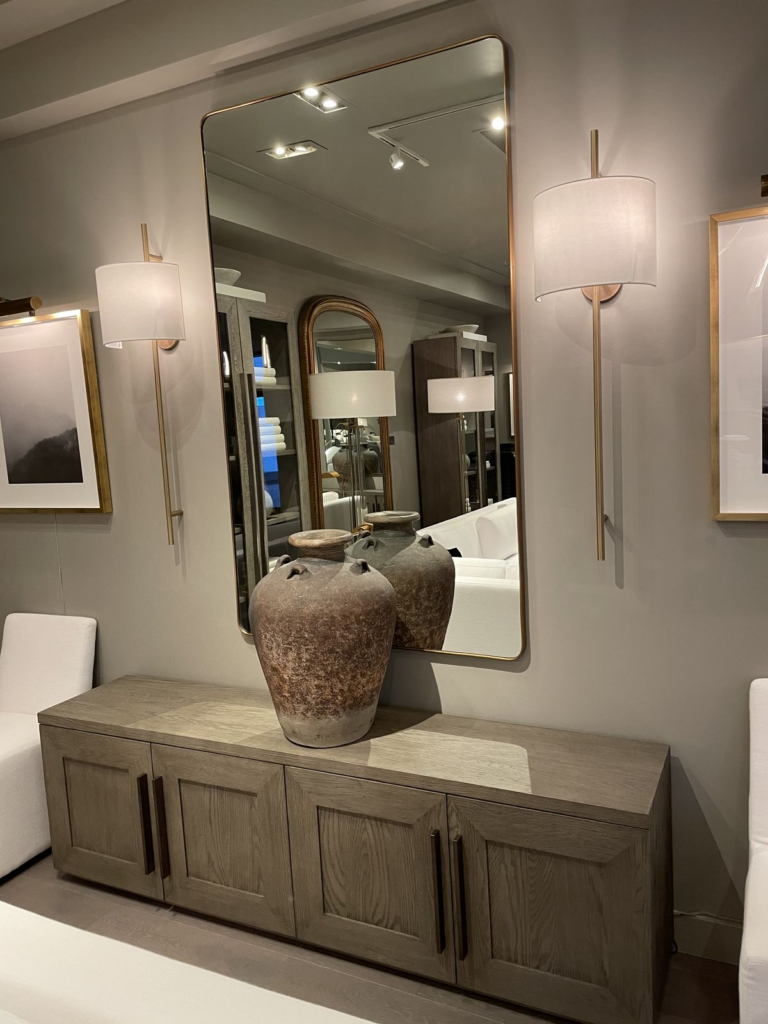
Strategic reflection can completely change how a small foyer is perceived the moment someone steps inside. An oversized mirror placed opposite the door or along a narrow wall instantly doubles visible depth while bouncing both natural and artificial light throughout the space. This visual expansion is especially effective in compact entryways that lack windows or feel boxed in. Choosing a mirror with a thin frame or frameless edge prevents visual clutter while still delivering maximum impact. Tall vertical mirrors emphasize ceiling height, while wide horizontal styles make tight corridors feel broader. Placement matters as much as scale; aligning the mirror with a light source amplifies brightness and prevents shadowy corners. Clean lines and neutral framing ensure the mirror integrates seamlessly with surrounding decor rather than feeling decorative overload. Beyond aesthetics, mirrors add practical value for last-minute checks before leaving home. When paired with subtle wall tones and streamlined furniture, the reflective surface becomes an architectural tool rather than an accessory. The result is a small foyer that feels open, intentional, and far more expansive than its actual footprint, setting a confident tone for the rest of the home.
Wall-Mounted Console To Keep Floors Visually Open
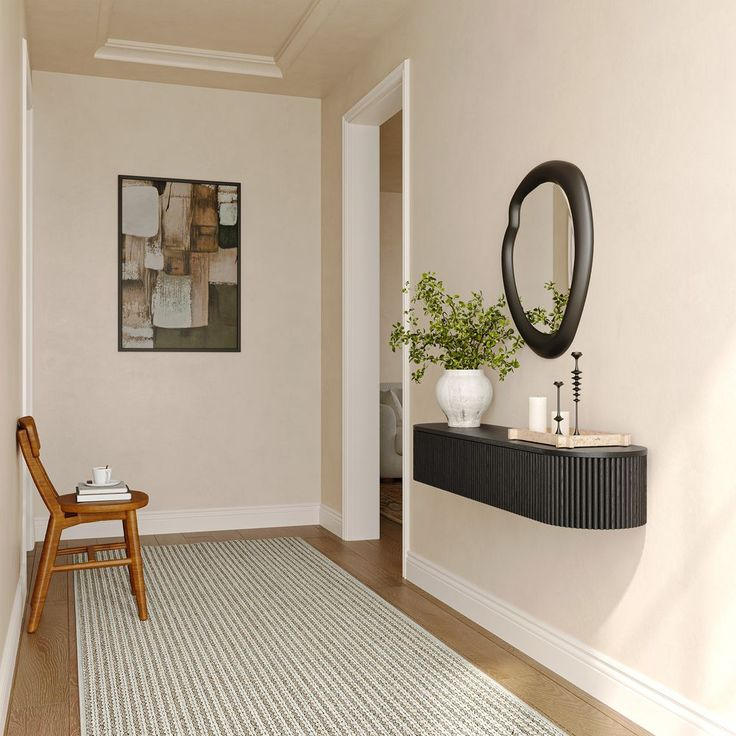
Floor visibility plays a major role in how spacious an entryway appears at first glance. A wall-mounted console creates storage and styling opportunities without visually weighing down the space. By lifting the console off the floor, uninterrupted sightlines are preserved, making the foyer feel lighter and more breathable. Slim-profile designs work best, offering enough surface area for essentials like keys, mail, or a decorative tray while maintaining a streamlined look. Floating consoles also simplify cleaning and prevent visual crowding in narrow layouts. Materials such as wood veneer, matte lacquer, or stone-look finishes introduce texture without bulk. Proportion is key; the console should feel balanced against wall width and mirror placement rather than dominating the area. Integrated drawers help conceal clutter, reinforcing a clean, intentional aesthetic. Pairing the console with subtle wall lighting or a mirror above enhances both function and style. This approach supports a grand entrance effect by focusing on elegance and restraint rather than size, proving that thoughtful placement can make even the smallest foyer feel refined and spacious.
Statement Light Fixture Scaled Bigger Than The Space
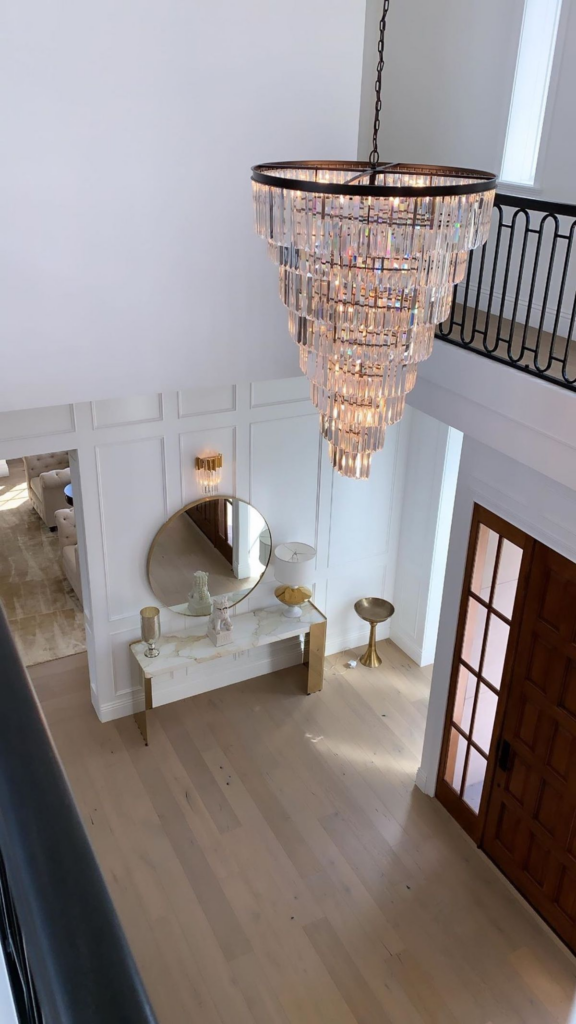
Lighting decisions significantly influence how a compact foyer is perceived, and scale can be used to dramatic advantage. A statement light fixture that is intentionally larger than expected draws attention upward and establishes a strong focal point. This contrast between fixture size and room dimensions creates visual intrigue while giving the entry a high-end, designed feel. Pendant lights, sculptural chandeliers, or oversized flush mounts work particularly well when ceiling height allows. Clean silhouettes prevent the fixture from overwhelming the space, while warm lighting tones keep the atmosphere inviting rather than harsh. Centering the fixture correctly ensures balance and avoids visual awkwardness. When combined with restrained wall finishes and minimal furniture, the light becomes the hero element that defines the foyer’s personality. This tactic shifts focus away from limited square footage and toward architectural impact. Proper illumination also improves safety and usability, especially during evening hours. A bold lighting choice signals intention and confidence, making the entry feel curated and memorable from the very first step inside.
Vertical Art Arrangement To Draw Eyes Upward
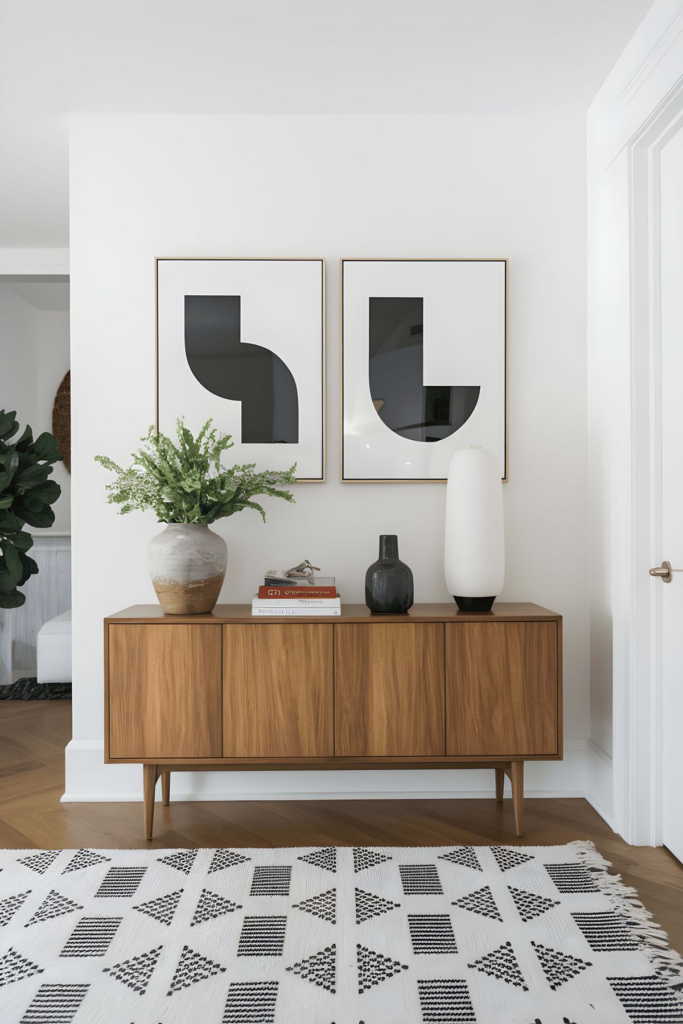
Wall decor can subtly reshape spatial perception when arranged with intention. A vertical art arrangement naturally guides the eye upward, emphasizing height rather than width in a small foyer. Stacking artwork in a straight column or staggered vertical line creates a sense of movement that elongates the wall visually. This technique works especially well in entryways with standard ceiling heights that feel lower than desired. Selecting artwork with consistent framing or a cohesive color palette prevents visual noise while maintaining interest. Narrow frames and medium-scale pieces keep the composition balanced without crowding the wall. Spacing between pieces should feel deliberate, allowing each element to breathe while contributing to the overall flow. Vertical arrangements also complement tall mirrors or slim lighting fixtures, reinforcing the upward emphasis. Beyond aesthetics, art adds personality and warmth, helping the foyer feel welcoming rather than transitional. When executed thoughtfully, this approach transforms a simple wall into a design feature that enhances scale, character, and visual harmony within a compact entrance.
Monochrome Color Palette For Seamless Flow
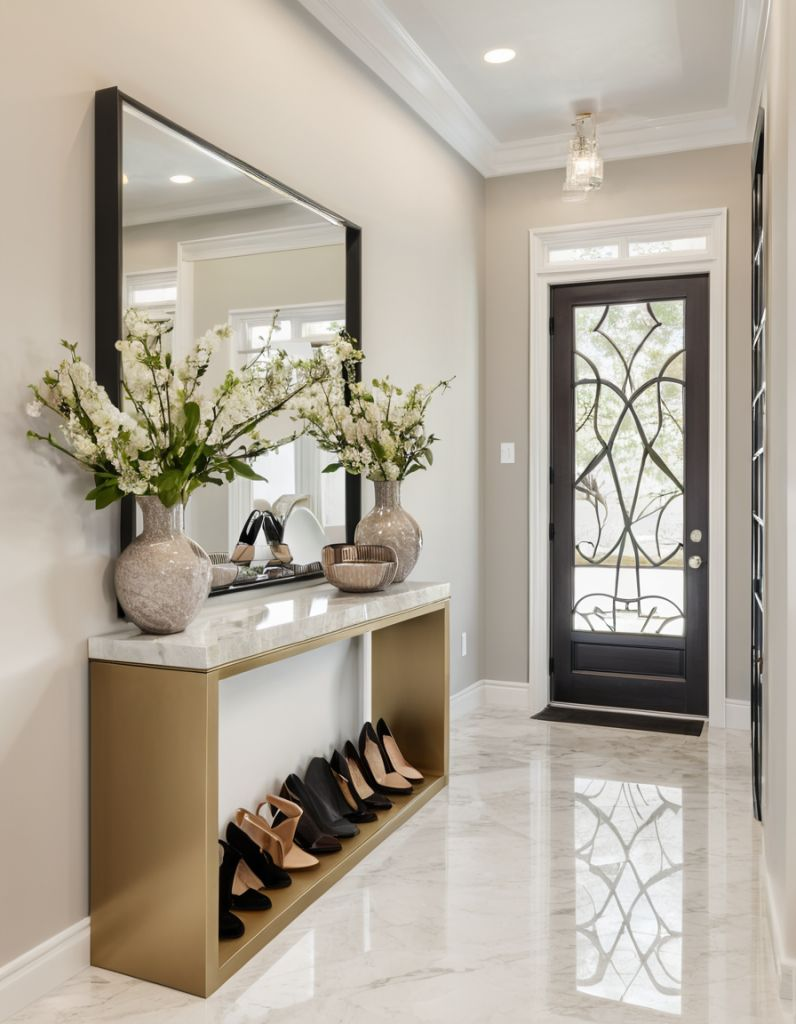
Color continuity plays a critical role in making a small foyer feel expansive and cohesive. A monochrome palette, built around varying shades of a single color, eliminates harsh visual breaks that can shrink a space. Subtle shifts in tone across walls, trim, and furnishings create depth while maintaining a seamless flow. Light neutrals such as warm whites, soft greiges, or pale taupes are particularly effective, reflecting light and reducing contrast. Texture becomes the primary source of interest, introduced through finishes like matte paint, natural wood, or woven accents. This restrained approach allows architectural elements to stand out without distraction. A monochrome scheme also connects the foyer to adjacent rooms, making the entire entry sequence feel intentional and well-planned. Accessories and hardware in similar tones reinforce the cohesive effect. Rather than feeling flat, the space gains sophistication through subtle layering. This strategy supports a grand entrance impression by prioritizing harmony and visual calm, proving that simplicity can be both impactful and elegant.
Slim Runner Rug To Elongate The Entry Path
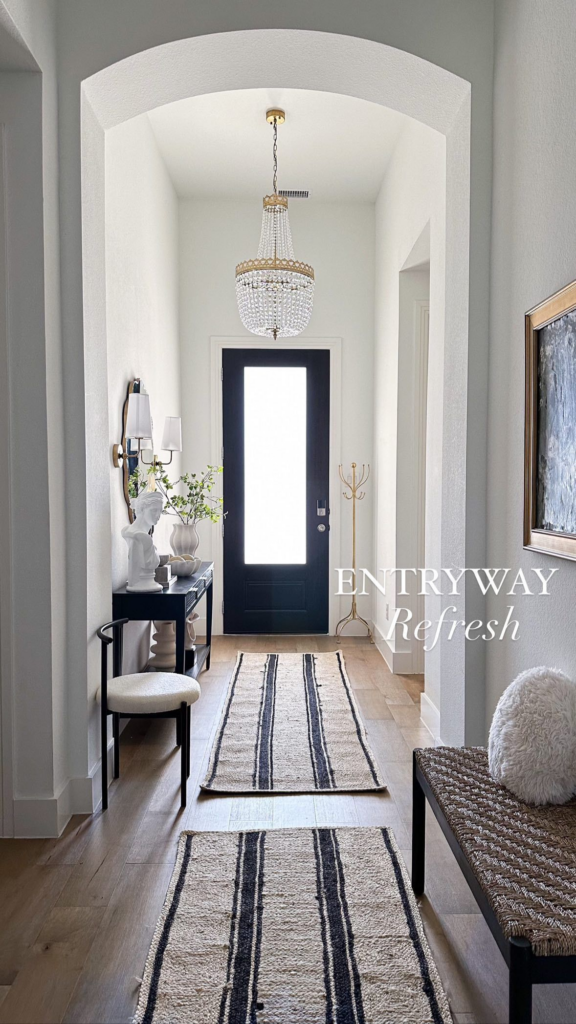
Floor styling offers a powerful opportunity to influence how a foyer is experienced spatially. A slim runner rug placed lengthwise naturally elongates the entry path, guiding movement and making the space appear longer than it is. This effect is especially useful in narrow or hallway-style foyers where width is limited. Choosing a low-pile rug ensures doors open easily and maintains a streamlined look. Patterns with linear motifs or subtle stripes reinforce the lengthening effect without overwhelming the floor. Neutral tones with gentle contrast keep the rug visually connected to surrounding finishes. Proper sizing is essential; the runner should leave visible flooring on both sides to avoid a cramped appearance. Beyond aesthetics, a runner adds comfort underfoot and protects high-traffic areas from wear. When coordinated with wall colors and furniture materials, it enhances cohesion while providing a welcoming transition into the home. This simple addition balances practicality with visual strategy, helping a small foyer feel intentional, polished, and thoughtfully designed.
Floating Shelf Styled As A Micro Gallery
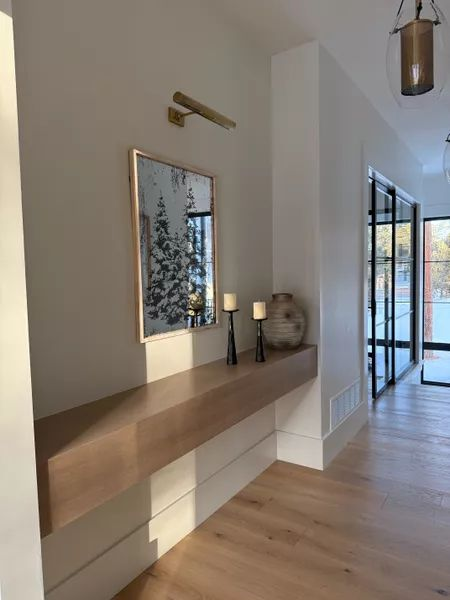
Wall-mounted shelving offers both function and personality when used with restraint. A floating shelf styled as a micro gallery provides a focal point without consuming valuable floor space. Positioned at eye level, it allows for curated decor such as framed photos, small artwork, or sculptural objects. Limiting the number of items prevents clutter and keeps the composition refined. Variation in height and texture adds interest while maintaining balance. Floating shelves work particularly well in tight foyers where traditional consoles may feel bulky. Clean lines and a slim profile ensure the shelf blends seamlessly into the wall. Coordinating shelf material with nearby finishes strengthens visual cohesion. This approach also allows flexibility; decor can be refreshed seasonally without redesigning the space. Thoughtful styling transforms the shelf into a design statement rather than mere storage. By treating the shelf as a gallery rather than a catchall, the foyer gains character and sophistication, reinforcing the impression of a well-considered entrance despite limited square footage.
One Bold Accent Element Against Neutral Walls
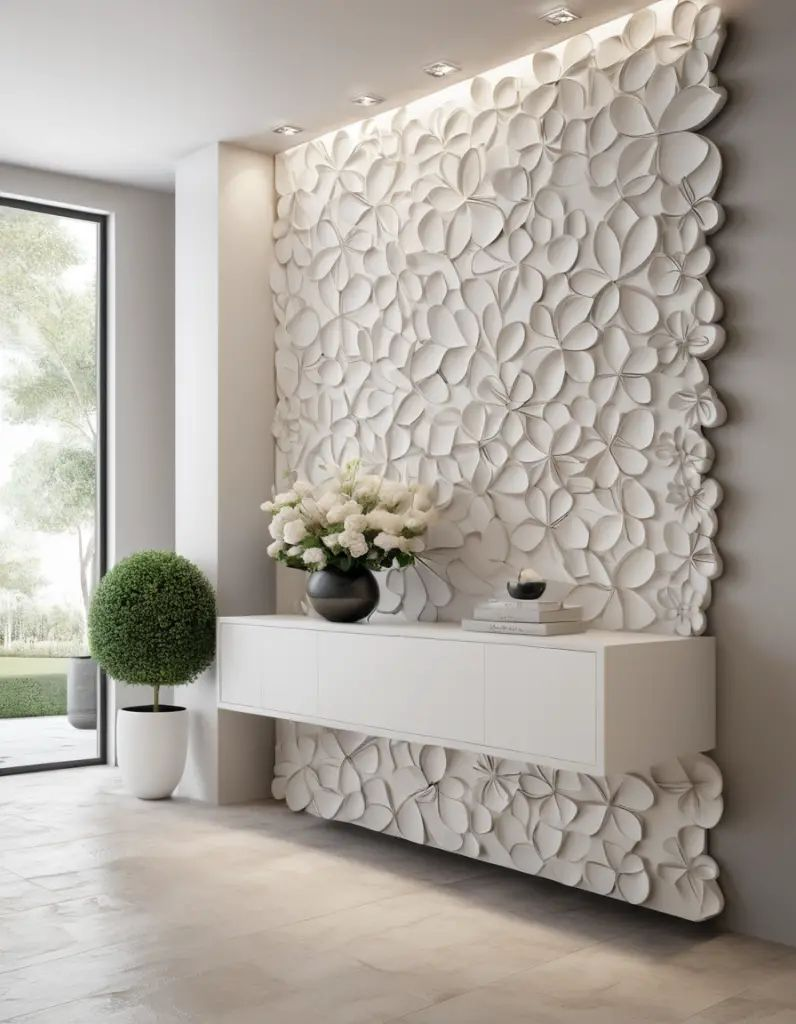
Strategic contrast can elevate a small foyer without overwhelming it. Introducing one bold accent element against neutral walls creates visual interest while maintaining balance. This accent might take the form of a sculptural chair, a striking piece of art, or a uniquely shaped mirror. Neutral walls provide a calm backdrop that allows the accent to stand out clearly. Limiting boldness to a single element prevents visual competition and keeps the space feeling intentional. Color, texture, or form can all serve as the defining feature, depending on the desired mood. Placement should feel deliberate, anchoring the entry visually rather than appearing random. This technique draws attention to design rather than size, shifting focus away from spatial constraints. The result is a foyer that feels curated and expressive without clutter. By exercising restraint and clarity, one standout feature can deliver a sense of drama and personality, helping a compact entrance leave a memorable first impression.
Hidden Storage That Disappears Into The Wall
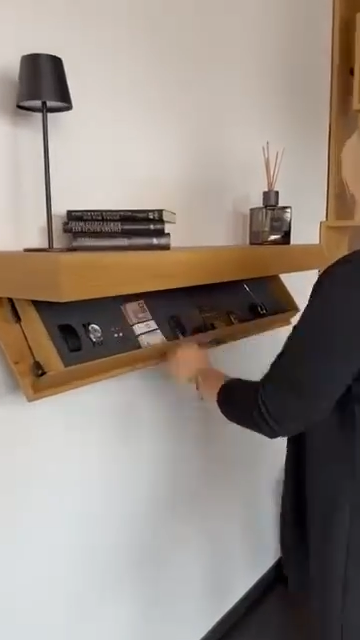
Storage needs often conflict with aesthetics in small entryways, but integrated solutions resolve this challenge elegantly. Hidden storage that blends into the wall keeps essentials accessible while maintaining a clean visual profile. Flush cabinets, recessed niches, or panelled doors create the illusion of uninterrupted surfaces. Matching storage finishes to wall color further minimizes visual impact. This approach prevents the foyer from feeling crowded or utilitarian. Interior organization ensures items like shoes, bags, and accessories remain neatly contained. Hidden storage supports daily functionality without compromising design integrity. Proper planning is essential to maximize capacity while preserving proportion. When executed well, storage becomes an invisible asset rather than a dominant feature. This contributes to a calm, ordered atmosphere that feels intentional from the moment of entry. By reducing visual noise, the foyer appears larger and more refined. Integrated solutions demonstrate how thoughtful design can meet practical needs while sustaining a grand entrance aesthetic in limited space.
Consistent Material Use For Instant Cohesion
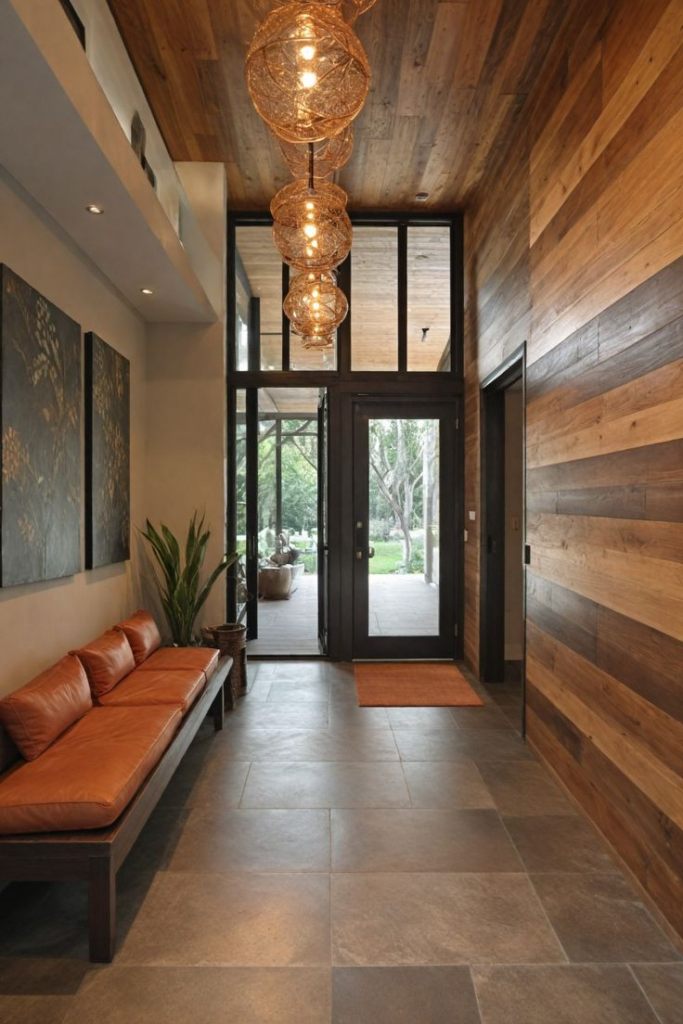
Material consistency plays a vital role in creating a unified and spacious-looking foyer. Repeating the same materials across surfaces establishes visual rhythm and prevents fragmentation. Wood tones, metal finishes, or stone textures used consistently help the space feel intentional and connected. This repetition reduces visual complexity, allowing the eye to move smoothly throughout the area. In small foyers, too many materials can feel chaotic and shrink perceived size. Limiting the palette to two or three complementary finishes maintains balance. Consistent materials also tie the foyer to adjoining rooms, reinforcing continuity within the home. Subtle variation in texture keeps the look from feeling flat while preserving cohesion. Hardware, lighting, and decor should align with the chosen material story. This disciplined approach creates an immediate sense of order and quality. By focusing on harmony rather than variety, the entry achieves a polished, welcoming presence that feels far more expansive and thoughtfully designed than its square footage suggests.
Reflective Surfaces To Enhance Depth
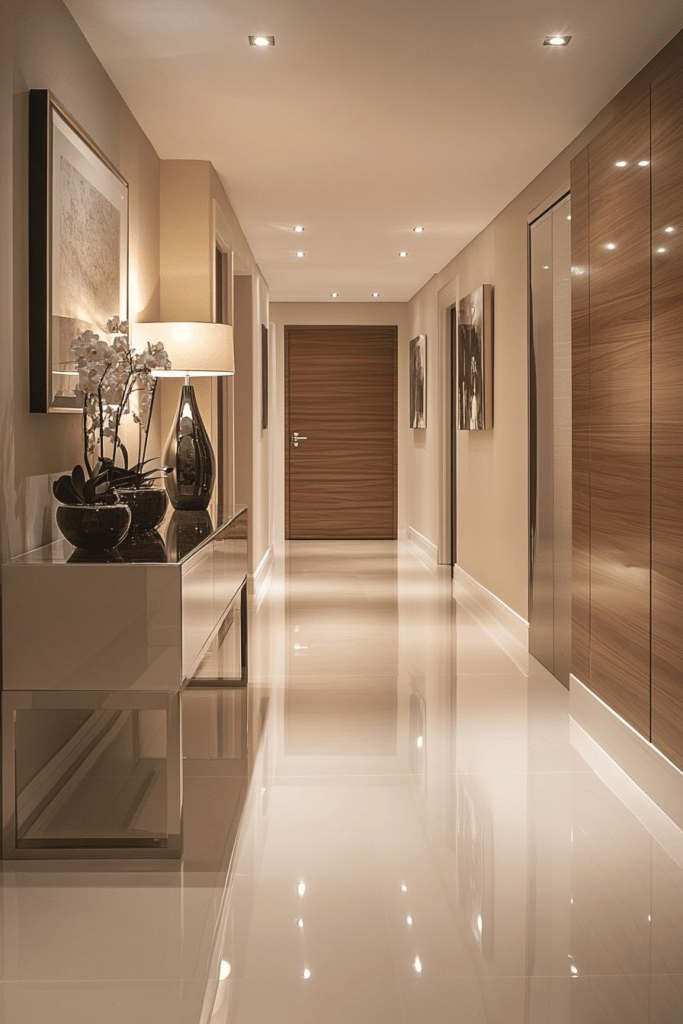
Surface finishes influence how light and depth interact within a compact foyer. Reflective surfaces such as glass, polished metal, or glossy finishes subtly bounce light around the space, increasing perceived depth. Used sparingly, these elements prevent the area from feeling dull or enclosed. A lacquered console, metallic accents, or glass decor introduces brightness without visual clutter. Placement near light sources maximizes the reflective effect. Balance is crucial; excessive shine can feel overwhelming, while strategic touches enhance sophistication. Reflective finishes also pair well with neutral palettes, adding dimension without color contrast. This technique supports both daytime and evening lighting conditions. Beyond aesthetics, reflective materials convey a sense of refinement and intentional design. When integrated thoughtfully, they expand visual boundaries and contribute to a more open, elegant entry. This approach proves particularly effective in windowless foyers, where light amplification becomes essential to creating an inviting first impression.
Intentional Negative Space For A Clean First Impression
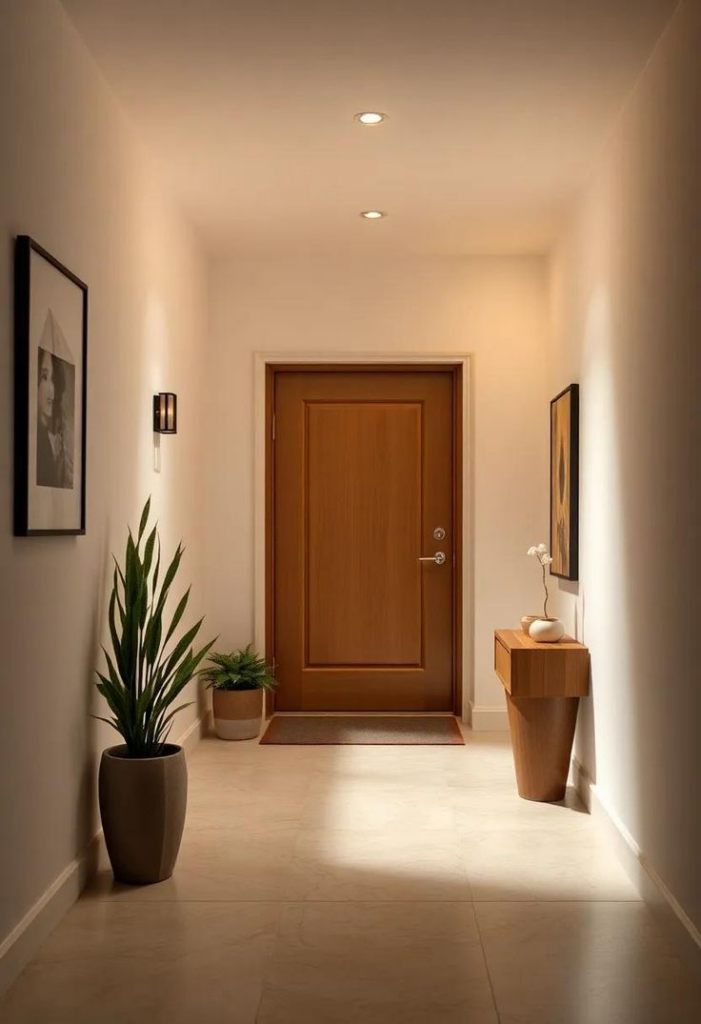
Visual breathing room is often overlooked yet essential in small entryway design. Intentional negative space allows key elements to stand out while preventing the foyer from feeling cramped. Leaving portions of walls or floors unoccupied creates balance and clarity. This restraint directs attention to carefully chosen features rather than overwhelming the senses. Negative space also enhances circulation, making the entry feel more comfortable and functional. Thoughtful spacing between furniture and decor reinforces a sense of order. This approach aligns with a refined aesthetic that prioritizes quality over quantity. Rather than filling every corner, the design focuses on what truly matters. The result is a calm, confident first impression that feels deliberate and welcoming. Negative space supports visual flow and highlights architectural features. In a small foyer, what is left out can be just as impactful as what is included, contributing significantly to a grand entrance effect.