
Limited bathroom space can quickly feel overwhelming when every corner is packed with toiletries, towels, and cleaning supplies. Best Small Bathroom Hacks provide clever, functional ways to regain order without expensive remodels. From vertical storage tricks and under-sink organizers to space-saving shelves and multi-purpose accessories, these solutions turn cramped areas into practical, stylish retreats. Readers will gain quick, reliable ideas designed to maximize every inch while maintaining comfort and aesthetics. Whether you live in a studio apartment or manage a family home, these hacks make daily routines smoother, proving that even the tiniest bathrooms can feel organized and welcoming.
Use floor-to-ceiling same paint color — visually expands space
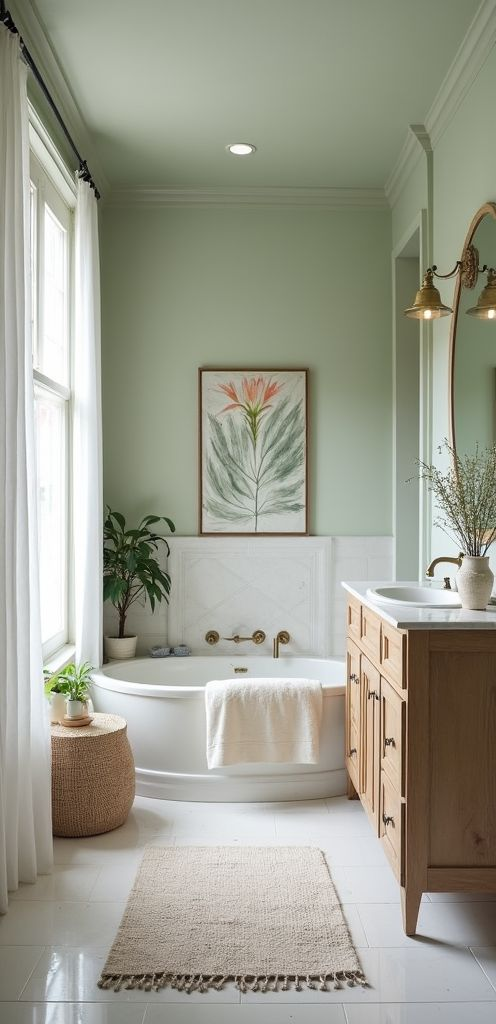
Consistency in wall and ceiling color tricks the eye into perceiving more square footage than the room actually offers. When a single shade envelops all surfaces, the visual breaks that normally define boundaries disappear, giving a seamless sense of height and width. Lighter tones such as soft whites, pale grays, or muted pastels are especially effective because they reflect natural and artificial light evenly across surfaces. For those who prefer a bolder statement, rich jewel tones can also work, provided they remain uniform from floor to ceiling. The continuity removes harsh transitions and visually raises the ceiling line, making a modest bathroom feel spacious. Matte finishes add sophistication while avoiding glare, whereas satin finishes provide subtle sheen and added durability. This approach also minimizes distraction from architectural irregularities, like angled ceilings or narrow layouts. Accessories and fixtures stand out more vividly against a uniform backdrop, so select hardware and textiles in complementary colors to balance the palette. By embracing this technique, homeowners can avoid costly remodels while still enjoying the feeling of expansion. It’s a simple yet expert-approved strategy often recommended by designers for compact bathrooms where every visual trick counts.
Install floating shelves instead of bulky cabinets — frees up floor area
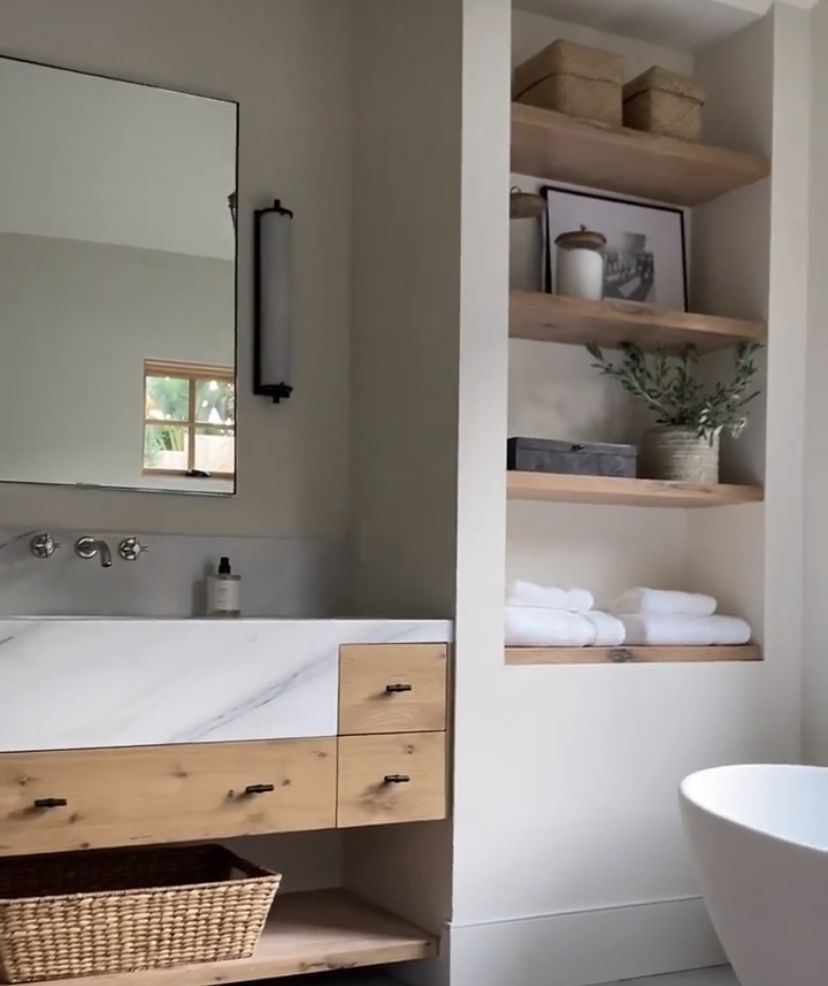
Floor space quickly disappears when bulky cabinetry dominates small bathrooms. Swapping out closed cupboards for floating shelves offers both storage and openness, keeping essentials at hand while allowing air and light to circulate. Wall-mounted shelving eliminates the need for heavy furniture pieces, instantly giving the room a lighter footprint. Open designs can showcase rolled towels, woven baskets, or glass jars filled with toiletries, adding both function and aesthetic appeal. Materials such as wood, tempered glass, or metal brackets suit different décor styles, from farmhouse charm to modern minimalism. Positioning shelves above the toilet, beside the vanity, or even near the shower allows homeowners to use overlooked areas efficiently. To keep the look neat, group items by category and add matching containers for cohesion. Adjustable or tiered shelving can be tailored to different heights, accommodating taller bottles or decorative accents. Unlike cabinets, which often make a narrow bathroom feel closed in, floating shelves maintain clear sightlines, contributing to an airy effect. Installing them at staggered levels adds visual rhythm while maximizing wall utility. For renters, removable floating systems with adhesive brackets can offer the same advantage without permanent alterations. The result is a streamlined, uncluttered bathroom that feels larger and more intentional.
Corner or narrow shelving units — exploit odd corners for storage
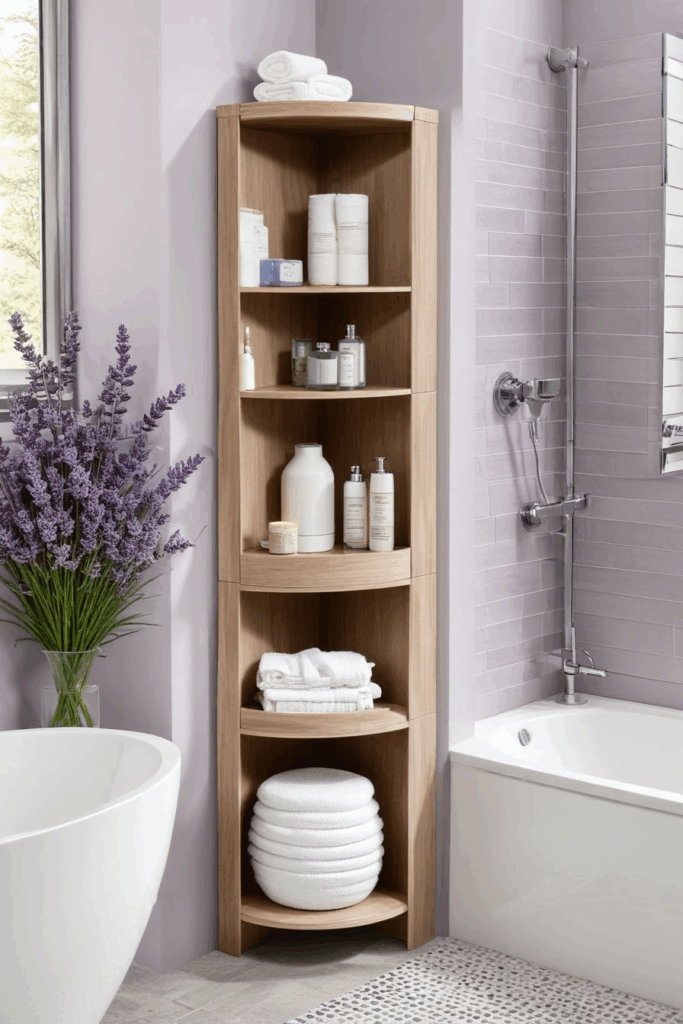
Underutilized corners often become wasted space in small bathrooms. Narrow shelving units or triangular corner shelves transform these awkward areas into valuable storage opportunities. By fitting snugly into tight angles, these units add vertical storage without obstructing movement. They’re particularly effective near the shower, next to the vanity, or even behind the door where every inch counts. Open shelving works well for towels, skincare products, or decorative plants, while enclosed units hide less attractive essentials. Tall, ladder-style corner shelves draw the eye upward, emphasizing height and reducing visual clutter at floor level. Slim rolling carts that tuck between the toilet and wall also qualify as narrow solutions, providing flexibility to move them as needed. Materials like bamboo, metal, or acrylic adapt easily to diverse décor styles, from rustic to contemporary. For a uniform look, coordinate shelving color with wall paint or tile tones. This prevents corners from becoming focal distractions while still adding functionality. The biggest benefit lies in reclaiming neglected areas without shrinking usable floor space. Small bathrooms thrive on clever storage that feels integrated rather than added on, and corner shelving offers precisely that balance. It’s a cost-effective strategy that maximizes square footage while maintaining visual harmony.
Skirted sink or under-sink curtain — hides plumbing + adds hidden storage
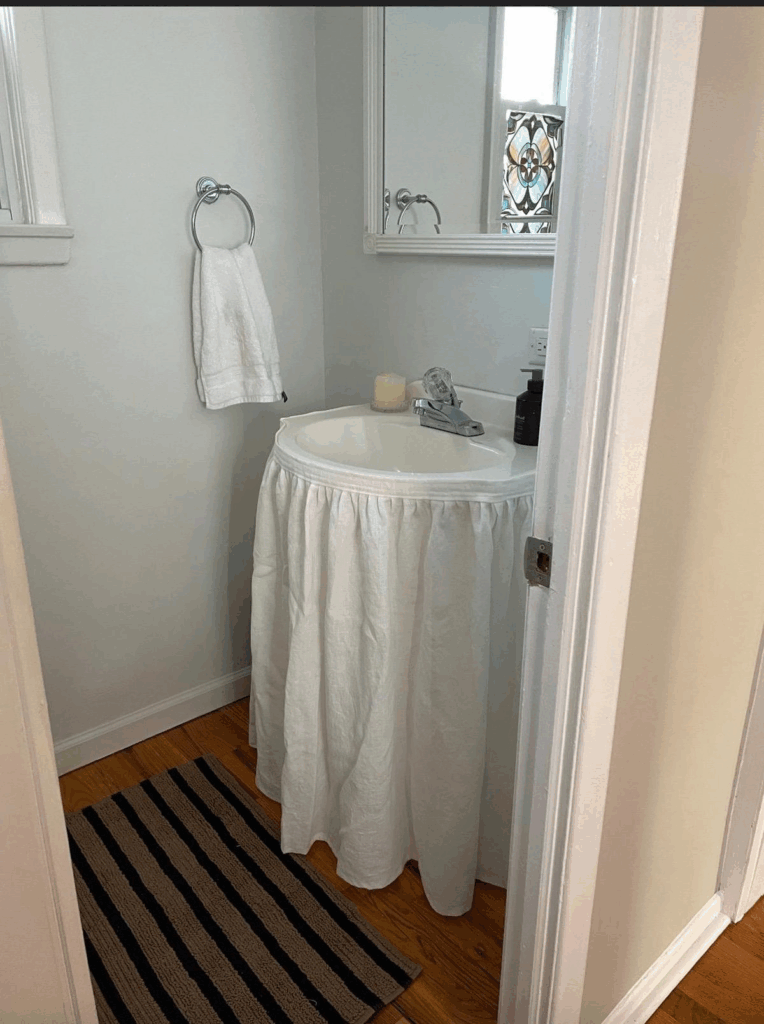
Pedestal sinks and wall-mounted basins often leave plumbing exposed, which not only disrupts the bathroom’s design but also wastes potential storage beneath. Installing a skirted sink or a tailored under-sink curtain solves both issues elegantly. Fabric panels, chosen to complement the room’s color scheme, conceal unsightly pipes and create an instant storage nook for baskets, bins, or small shelving units. This hidden zone becomes ideal for stowing cleaning supplies, extra towels, or even personal care products. Unlike rigid cabinetry, fabric offers flexibility—items of varying sizes can easily fit behind the curtain without awkward rearrangements. Patterned or textured fabrics also double as decorative accents, adding charm while maintaining practicality. For those preferring a more refined finish, skirted sinks with built-in panels provide a permanent alternative to detachable fabric. Both approaches maintain airflow, preventing moisture buildup that can occur with enclosed cabinetry. This hack works especially well in vintage or cottage-style bathrooms where textiles naturally fit into the aesthetic. Budget-conscious homeowners also appreciate the affordability compared to custom vanity installations. Overall, concealing the under-sink area transforms wasted space into hidden storage while improving the bathroom’s visual flow. It’s an approachable and stylish solution for compact layouts needing extra function.
Mirrored walls or mirrored cabinetry — bounce light, make it feel deeper

Mirrors have long been recognized as powerful tools for amplifying light and expanding the perception of space. Extending reflective surfaces across one or more bathroom walls magnifies this effect, creating the illusion of depth in even the smallest layouts. Mirrored cabinetry provides a practical variation, offering concealed storage behind reflective panels while maintaining the open look. Placing mirrors opposite windows or light fixtures maximizes brightness by bouncing light throughout the room. Frameless designs maintain a seamless appearance, while decorative frames can enhance particular styles such as industrial, rustic, or glam. For bathrooms with limited natural light, mirrored walls counterbalance shadows and prevent corners from appearing closed in. Larger sheets of mirror minimize grout lines or breaks in continuity, which further stretches the sense of width and height. Careful cleaning and maintenance are key to avoiding smudges, but modern coatings help resist streaking. By integrating mirrors into cabinetry, homeowners combine function and illusion, keeping daily essentials hidden while expanding visual boundaries. This dual-purpose strategy is particularly effective in powder rooms or narrow layouts where square footage is at a premium. The end result is a bathroom that feels brighter, more open, and thoughtfully designed without major renovations.
Wall-mounted faucets / floating vanity — opens floor zone
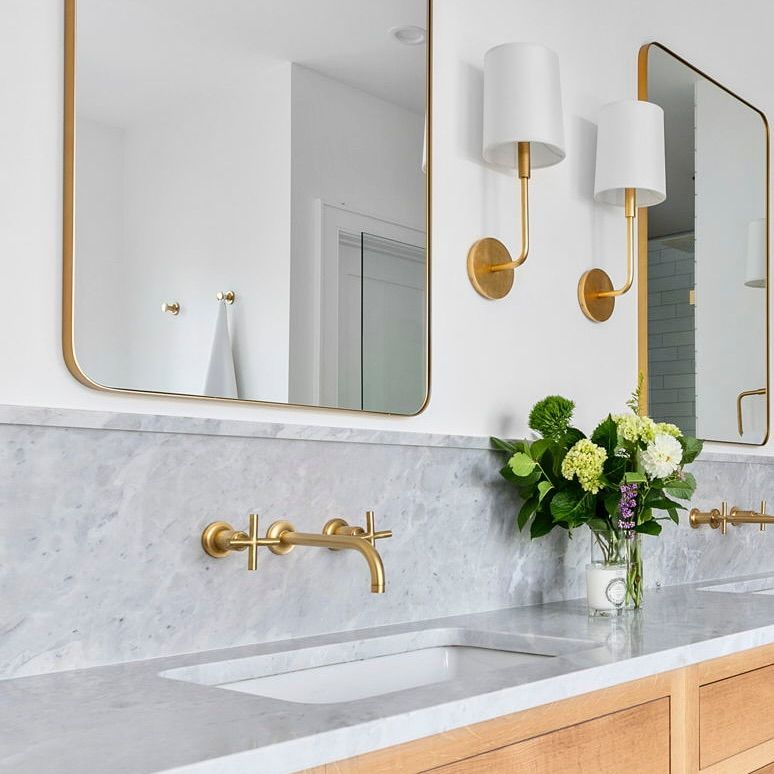
Plumbing placement significantly influences how spacious a bathroom feels. Wall-mounted faucets paired with a floating vanity remove bulky obstructions at floor level, instantly opening visual pathways. This setup allows light to flow beneath the vanity, giving the illusion of a larger footprint. The absence of legs or pedestals simplifies cleaning, making it easier to maintain hygiene in compact spaces. Storage drawers or shelves can still be integrated within the vanity, keeping essentials organized without crowding the floor. Wall-mounted faucets free up countertop space, leaving more room for accessories, soap dispensers, or decorative touches. Their streamlined silhouette suits both modern and transitional designs, while practical benefits like easier reach enhance daily use. Selecting finishes such as matte black, brushed nickel, or polished brass allows homeowners to align the setup with their chosen aesthetic. In particularly tight bathrooms, this combination prevents the room from feeling overwhelmed by heavy cabinetry or sink bases. Additionally, keeping the floor clear provides flexibility to add small stools, baskets, or even under-lighting for ambiance. Together, wall-mounted faucets and floating vanities strike an expert balance of functionality and elegance, offering a refined yet space-saving solution that maximizes comfort in small bathroom layouts.
Recessed niches & in-wall storage — blend functionality without protruding elements

Walls often hide unused depth that can be repurposed for smart storage. Recessed niches carved into shower stalls, near sinks, or beside toilets create dedicated zones for essentials without encroaching into floor area. By eliminating protruding shelves or caddies, these niches preserve clean sightlines and prevent accidental bumps in tight spaces. Waterproofing and tiling ensure durability while blending seamlessly with surrounding surfaces. In showers, they hold bottles and grooming tools neatly, avoiding the clutter of corner racks. Above sinks, recessed cubbies can accommodate daily necessities like toothbrushes or small jars, keeping counters free from mess. Some homeowners even integrate recessed medicine cabinets with mirrored doors for dual functionality. The streamlined look aligns with both contemporary and minimalist designs, though decorative tile inlays can add character in more traditional settings. In-wall storage is particularly valuable in narrow bathrooms where projecting cabinetry would overwhelm the layout. Installation may require professional help, but the payoff in usability and aesthetics is substantial. By taking advantage of unused wall cavities, homeowners gain hidden storage that feels built-in rather than added on. This approach combines subtle design with practical efficiency, making it one of the most highly recommended hacks for small bathroom optimization.
Sliding or pocket doors — avoid door swing intrusions

Traditional hinged doors demand clearance, often intruding into precious bathroom space. Replacing them with sliding or pocket doors instantly resolves this issue, freeing up square footage otherwise lost to door swing. Pocket doors disappear neatly into the wall cavity, while barn-style sliders glide along exterior tracks, offering flexible design options. Both solutions allow furniture or fixtures to be placed closer to entrances without obstruction. For especially narrow bathrooms, this change makes a dramatic difference in movement flow. Glass sliding doors also work well for shower enclosures, maintaining sightlines and reducing visual barriers. Homeowners can customize finishes, from rustic wood panels to sleek frosted glass, ensuring the door complements the existing décor. Installation may require structural adjustments, particularly with pocket systems, but the spatial payoff justifies the effort. Accessibility improves too, as sliding doors are easier for children or individuals with mobility challenges to maneuver. They also enhance privacy without compromising on design. By eliminating the problem of door clearance, this hack not only maximizes usable floor area but also contributes to a cleaner, more open layout. It’s a practical upgrade that instantly modernizes small bathrooms while improving both function and aesthetics.
Vertical ladder towel racks / heated rails — utilize vertical space
Towels take up surprising amounts of room, and traditional bars or bulky shelves quickly crowd small bathrooms. Vertical ladder racks or heated rails offer a smarter alternative by directing storage upward instead of outward. These slim, wall-leaning or mounted units make excellent use of vertical real estate while keeping towels neatly accessible. Ladder-style racks provide multiple rungs for stacking, ideal for families or guest bathrooms. Heated versions add the luxury of warm, dry towels while reducing moisture buildup, which helps prevent mildew in humid environments. Placement beside the shower or bathtub ensures convenience without cluttering central areas. Available in finishes like matte black, chrome, or wood, these racks suit diverse décor styles. Their open framework maintains a light appearance, avoiding the visual heaviness of cabinets. For added organization, baskets or hooks can be clipped onto rungs, further extending functionality. Unlike conventional bars that limit you to one or two towels, vertical systems handle multiple layers without overwhelming the room. They’re also renter-friendly, with freestanding models requiring no permanent installation. By redirecting storage vertically, ladder racks and heated rails offer both practicality and sophistication, ensuring small bathrooms remain functional while preserving valuable floor space.
Clear or frameless glass shower partitions — maintain open sightlines
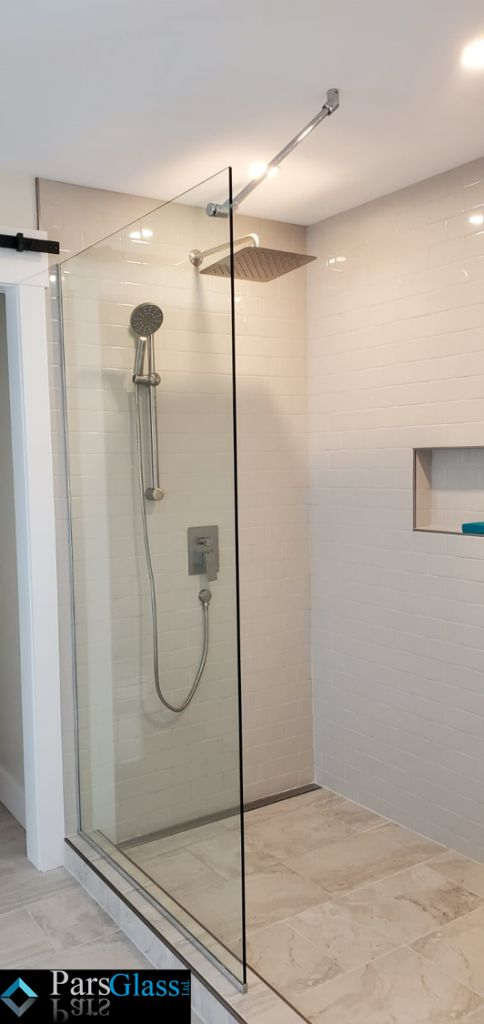
Opaque shower curtains or bulky framed enclosures often chop small bathrooms into confined zones. Switching to clear or frameless glass partitions maintains continuous sightlines, making the entire space feel more cohesive and open. Transparent panels allow light to flow freely, reducing shadows and dark corners. Frameless designs, with minimal hardware, lend a sleek, uninterrupted look that complements modern or minimalist aesthetics. In tighter layouts, this approach avoids the visual weight of metal frames or patterned curtains, which can make the room appear smaller. Glass partitions are also durable and easy to clean with proper coatings that resist water spots and soap scum. They provide a sense of luxury while serving the practical role of containing water. Sliding glass doors or pivoting panels offer flexibility in different floor plans, maximizing usability without consuming extra clearance. For homeowners seeking privacy, frosted or textured glass offers a middle ground—still allowing light transmission while providing discretion. Overall, frameless partitions transform a cramped bathroom into an airy retreat, offering both elegance and function. It’s a designer-approved strategy that ensures small spaces remain inviting rather than boxed in, making it one of the most impactful upgrades available.
Compact fixtures & narrow profiles — choose slim toilets, vanities, etc.
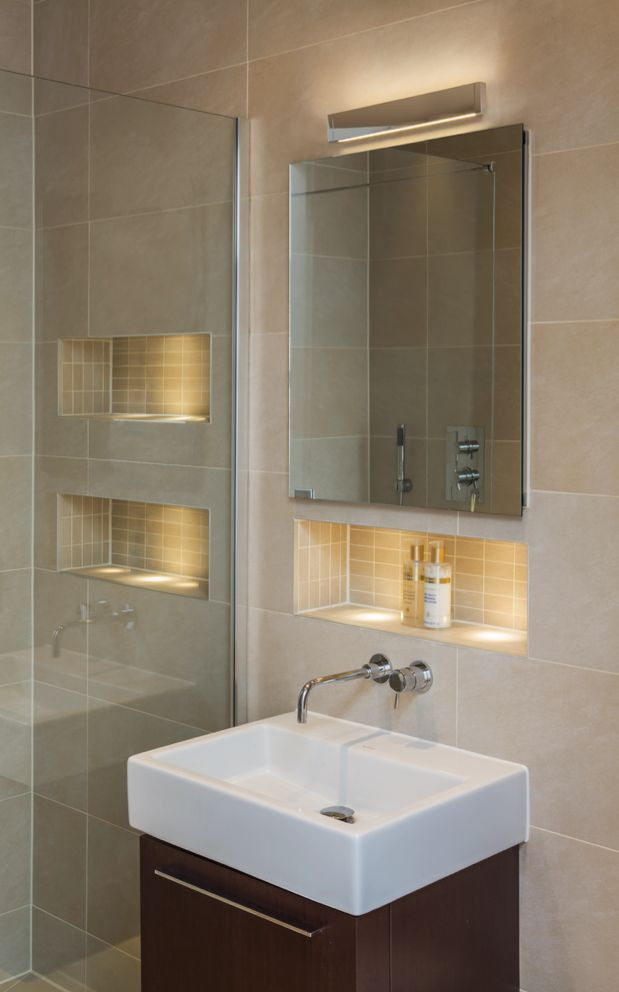
Fixture dimensions have a profound effect on bathroom usability. Opting for slim-profile toilets, narrow vanities, and reduced-depth sinks frees up circulation space without sacrificing function. Manufacturers now offer a wide variety of compact designs specifically for small bathrooms, including wall-hung toilets, pedestal sinks, and space-saving corner vanities. These pieces reduce bulk while maintaining necessary utility, ensuring movement is not restricted in tight layouts. Slim storage towers or shallow-depth cabinets keep essentials nearby without extending too far into the room. Floating options enhance the feeling of openness by leaving the floor exposed, while rounded corners prevent accidental bumps in narrow passages. Even bathtubs come in smaller dimensions, perfect for compact apartments or secondary bathrooms. Coordinating multiple slim fixtures ensures harmony, preventing one oversized piece from overwhelming the design. Finishes and colors can be tailored to complement larger elements, maintaining balance throughout the space. Though smaller in size, these fixtures are engineered for durability and comfort, proving that efficiency doesn’t require compromise. Investing in compact profiles transforms bathrooms into highly functional yet visually lighter environments. It’s a practical decision that maximizes floor area, improves comfort, and keeps the design consistent across all elements.
Light color grout & large tiles — reduces visual clutter / fewer grout lines

Tile selection significantly impacts how spacious a bathroom feels. Larger format tiles minimize the number of grout lines, creating a cleaner, less fragmented appearance. Pairing them with light-colored grout amplifies this effect by blending seams into the background, producing a continuous surface that feels expansive. This combination works particularly well on both floors and walls, where visual clutter can easily overwhelm small layouts. Neutral hues like beige, ivory, or soft gray reflect light and add subtle brightness, further contributing to the illusion of space. Glossy finishes intensify reflectivity, though matte surfaces are preferred for slip resistance in wet zones. Designers often recommend extending large tiles up to the ceiling or across entire shower walls for maximum impact. Maintenance becomes easier as well, since fewer grout lines mean less opportunity for discoloration or mold buildup. For homeowners seeking style variety, patterned large tiles can add interest without breaking continuity. The key lies in maintaining tonal harmony, ensuring grout does not contrast heavily with tile color. Ultimately, this strategy delivers both function and visual refinement, turning a modest bathroom into a streamlined environment that feels larger, cleaner, and more inviting.