
Limited square footage at the entrance often creates daily frustration, yet thoughtful planning can turn tight layouts into efficient, polished spaces. Narrow entryways benefit from smart vertical storage, light-enhancing finishes, and streamlined furniture that preserves clear walkways. Strategic lighting, mirrors, and wall-mounted solutions help improve circulation while reducing visual clutter. These design choices support smoother routines, safer movement, and a stronger first impression for guests. Homeowners facing awkward proportions or hallway-style entries will find practical guidance here, focusing on realistic upgrades that maximize function, enhance flow, and align with current interior design standards without overwhelming the space.
One-Wall Function Rule
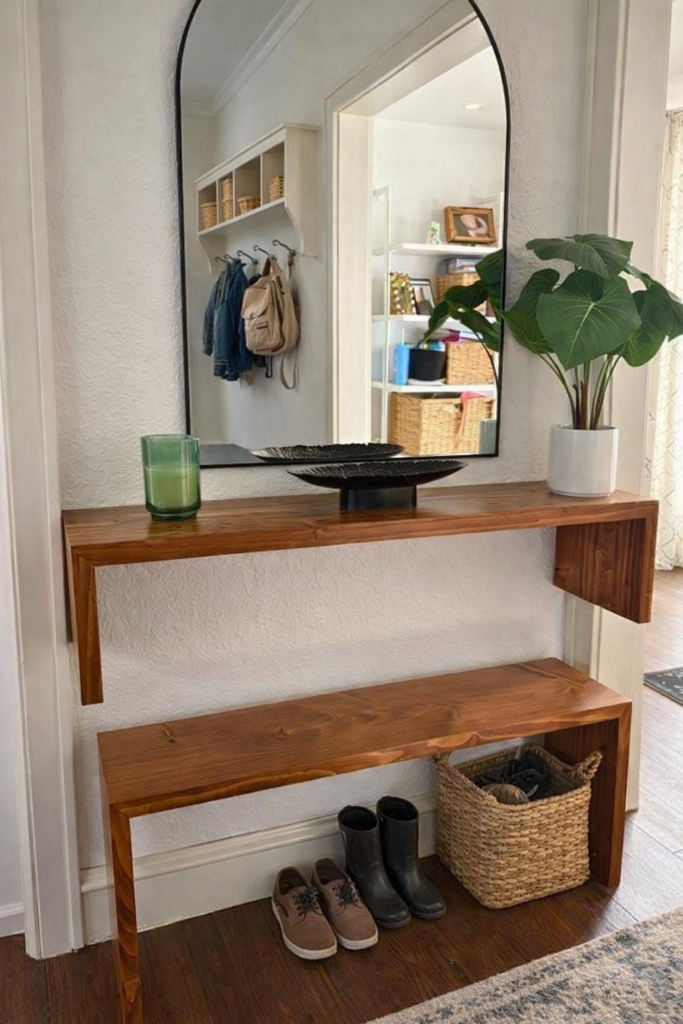
Limiting activity to a single wall prevents narrow entryways from feeling congested or visually chaotic. When coats, shoes, keys, and bags are all assigned to one continuous surface, circulation remains uninterrupted and daily movement feels natural. This approach works especially well in apartments, townhomes, and older houses where hall width cannot be altered. A single functional wall also simplifies decision-making, since every essential item has a predictable location. Storage elements such as hooks, mirrors, shelves, and trays should align horizontally or vertically on that wall only, leaving the opposite side clean and unobstructed. This creates a visual pause that makes the entry feel wider than it actually is. Concentrating functions also improves lighting efficiency because one focused zone can be evenly illuminated without harsh shadows. From a maintenance perspective, cleaning becomes faster since clutter does not migrate across multiple surfaces. The rule supports long-term organization habits because excess items become immediately noticeable. For households with children or frequent guests, this clarity reduces bottlenecks during peak hours. Designers often rely on this principle to maintain balance, ensuring the entryway remains transitional rather than overloaded. A disciplined one-wall setup delivers order, safety, and calm while preserving precious square footage.
Ultra-Slim Depth Furniture Only

Furniture depth determines whether a narrow entryway feels passable or restrictive. Pieces measuring under twelve inches maintain comfortable clearance while still offering practical storage. Slim console tables, shallow shoe cabinets, and wall-mounted drawers provide function without intruding into walking space. Selecting reduced-depth furniture also improves safety by minimizing sharp corners and accidental bumps, especially in high-traffic homes. Visual weight matters as much as physical size, so designs with open bases or floating mounts appear lighter and less imposing. Materials like metal frames, thin wood panels, or acrylic surfaces reinforce this effect. Ultra-slim furniture supports accessibility standards by preserving clear pathways, which is essential for households with strollers or mobility aids. Another advantage lies in adaptability; these pieces fit older homes with uneven walls or tight door clearances. Storage capacity remains adequate when items are curated and rotated seasonally. Designers frequently specify narrow-depth units in urban residences because they balance storage needs with spatial discipline. Over time, this strategy prevents the gradual creep of bulky furnishings that shrink usable space. Choosing furniture by depth first, rather than appearance alone, ensures the entryway remains functional, breathable, and easy to navigate daily.
Vertical Storage Stack Strategy

Wall height often goes unused in narrow entryways, despite offering significant storage potential. Stacking storage vertically shifts focus upward, reducing floor congestion and preserving walkability. Tall cabinets, column shelving, or aligned hooks draw the eye higher, creating an illusion of added width and height. This strategy works best when elements are evenly spaced and visually aligned to avoid clutter. Vertical organization allows categories to be separated logically, with daily essentials at arm’s reach and seasonal items placed higher. Weight distribution is important; heavier items should remain lower for safety and ease of access. Using closed storage near the top minimizes dust buildup and visual noise. Consistent finishes across the vertical stack help unify the composition, preventing it from feeling piecemeal. This method also supports long-term organization because vertical limits naturally cap how much can be stored. Lighting can be directed upward to highlight height rather than narrowing the corridor. Many professional layouts rely on vertical stacking to compensate for limited square footage without sacrificing utility. When executed carefully, vertical storage transforms overlooked wall space into an efficient, visually balanced solution that keeps narrow entryways orderly and comfortable.
Full-Height Mirror to Stretch Width
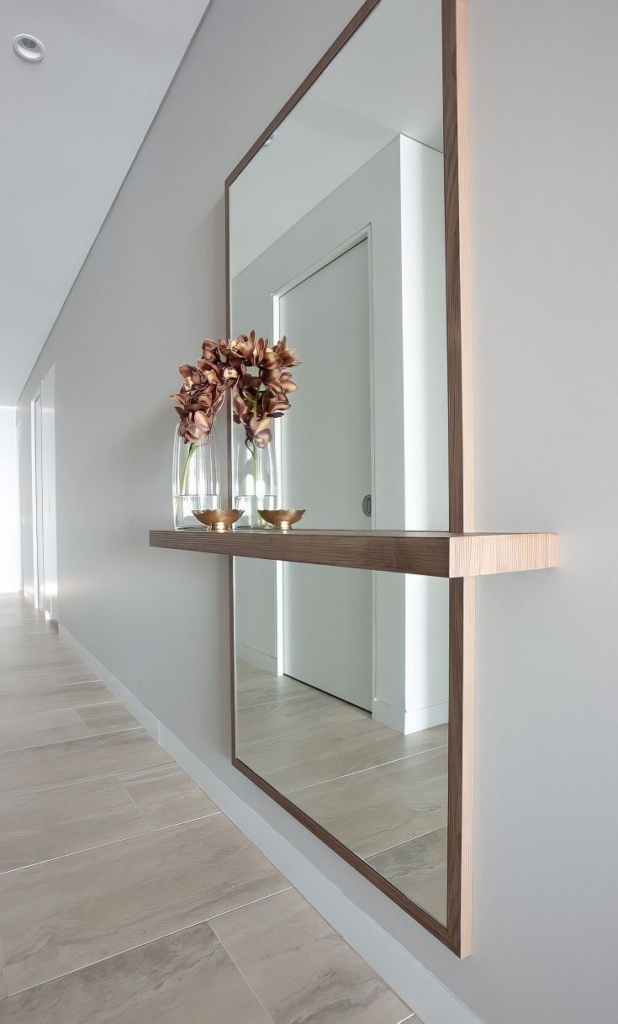
A mirror extending from floor to near ceiling dramatically alters spatial perception in narrow entryways. By reflecting both light and adjacent surfaces, it visually doubles width without structural changes. Full-height placement works better than small mirrors because it captures continuous lines rather than fragmented reflections. Positioning the mirror along the longest wall amplifies depth and reduces tunnel-like effects. This technique also enhances lighting efficiency, as natural and artificial light bounce further into the space. Frameless or thin-framed designs maintain clean edges and prevent visual interruption. Safety considerations matter, so tempered or shatter-resistant glass is recommended for high-traffic areas. Beyond aesthetics, a tall mirror serves practical daily routines, allowing full outfit checks before leaving home. Designers often specify this solution in rental properties because it delivers impact without permanent modification. Maintenance remains simple, requiring only routine cleaning to preserve clarity. Over time, the mirror helps the entryway feel consistently open regardless of seasonal decor changes. Using a full-height mirror is a proven spatial tool that balances function, brightness, and perceived width in even the tightest layouts.
Flush Wall Hooks Instead of Racks

Protruding racks consume valuable clearance in narrow entryways, often creating obstacles rather than solutions. Flush wall hooks solve this problem by keeping storage close to the surface. When properly spaced, they hold coats, bags, and accessories without extending into walking paths. This choice improves safety and reduces visual clutter, especially in homes with frequent foot traffic. Low-profile hooks blend into the wall, allowing the entryway to feel streamlined and intentional. Materials such as metal, wood pegs, or recessed hardware offer durability while maintaining minimal depth. Installation height can be staggered to accommodate different users, including children, without adding bulk. Flush hooks also encourage selective storage, discouraging overloading that leads to mess. From a design standpoint, they support symmetry and alignment, which helps narrow spaces feel organized. Cleaning becomes easier since there are fewer surfaces for dust accumulation. Professionals favor flush solutions in compact layouts because they deliver function without sacrificing openness. Over time, replacing bulky racks with wall-hugging hooks preserves circulation space and maintains a calm, efficient entry experience.
Floating Drop Zone Shelf
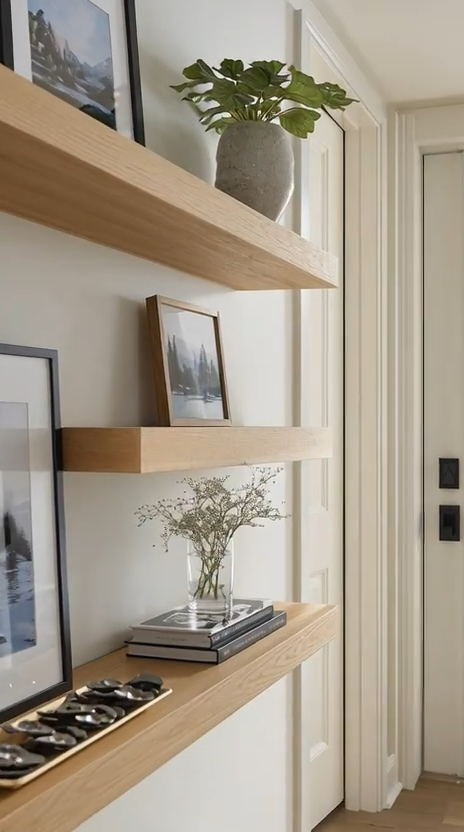
Daily essentials often accumulate near the entry, creating clutter when no defined landing spot exists. A floating drop zone shelf addresses this by offering a designated surface without consuming floor space. Mounted at a comfortable reach, it holds keys, wallets, mail, and small accessories in one predictable location. Floating construction keeps the area beneath clear, preserving visual openness and ease of movement. Selecting a narrow shelf depth prevents accidental bumps while still providing adequate surface area. Integrated lips or shallow trays reduce the risk of items sliding off. This solution supports consistent habits, making it easier to maintain order during busy routines. Materials like wood, metal, or stone can be chosen to complement adjacent finishes without overwhelming the space. Lighting above or below the shelf improves visibility and reinforces its role as a functional zone. Designers often pair floating shelves with mirrors or hooks to form a cohesive entry system. Over time, this simple addition reduces misplaced items and entryway chaos. A well-positioned floating drop zone shelf delivers organization, convenience, and spatial efficiency in narrow layouts.
Runner That Pulls the Eye Forward
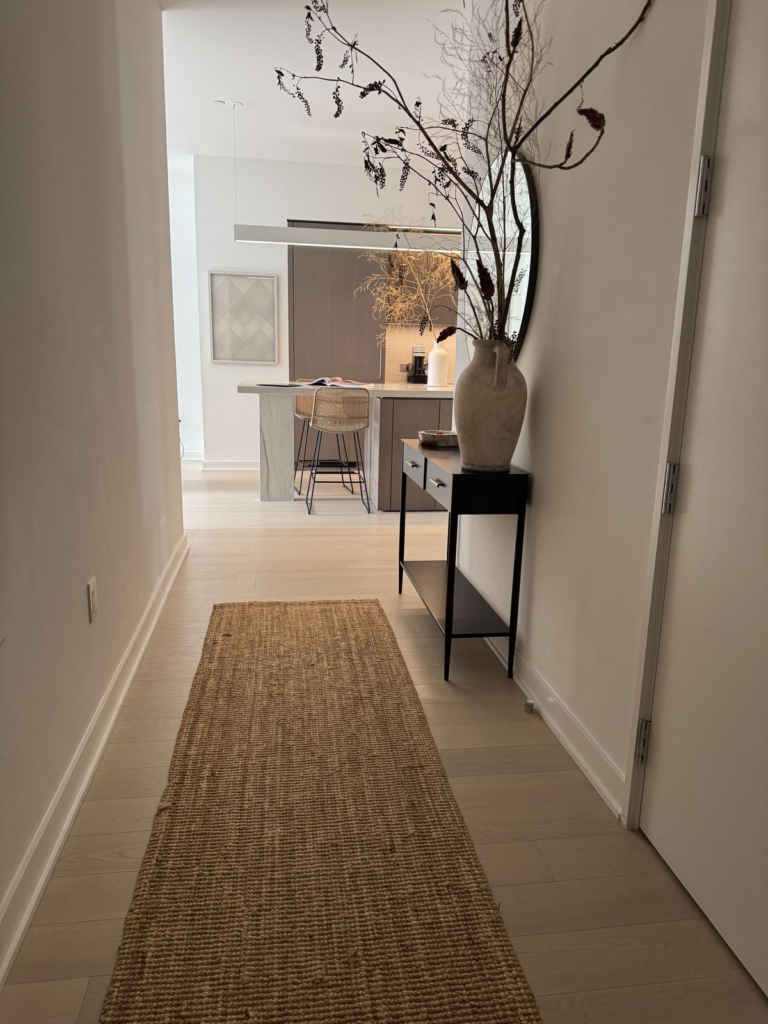
Floor treatments influence how narrow entryways are perceived, and a runner plays a critical role. A long, uninterrupted runner visually guides the eye forward, emphasizing length rather than width. This directional effect reduces the cramped feeling often associated with tight corridors. Choosing a pattern with linear elements or subtle stripes enhances this illusion without overwhelming the space. Proper sizing is essential; the runner should leave a consistent margin of exposed flooring on both sides to avoid crowding. Low-pile materials improve safety and ease of cleaning, especially in high-use areas. Color selection matters, with mid-tone or slightly lighter hues helping reflect light. Runners also protect flooring from wear, extending surface longevity. Securing the rug with non-slip backing prevents shifting and tripping hazards. Designers frequently rely on this technique to unify long entryways and guide movement naturally toward the interior. Seasonal swaps allow visual refresh without structural changes. When thoughtfully chosen, a runner transforms the entry from a narrow pass-through into a visually directed, comfortable transition space.
Tone-on-Tone Wall Color Expansion
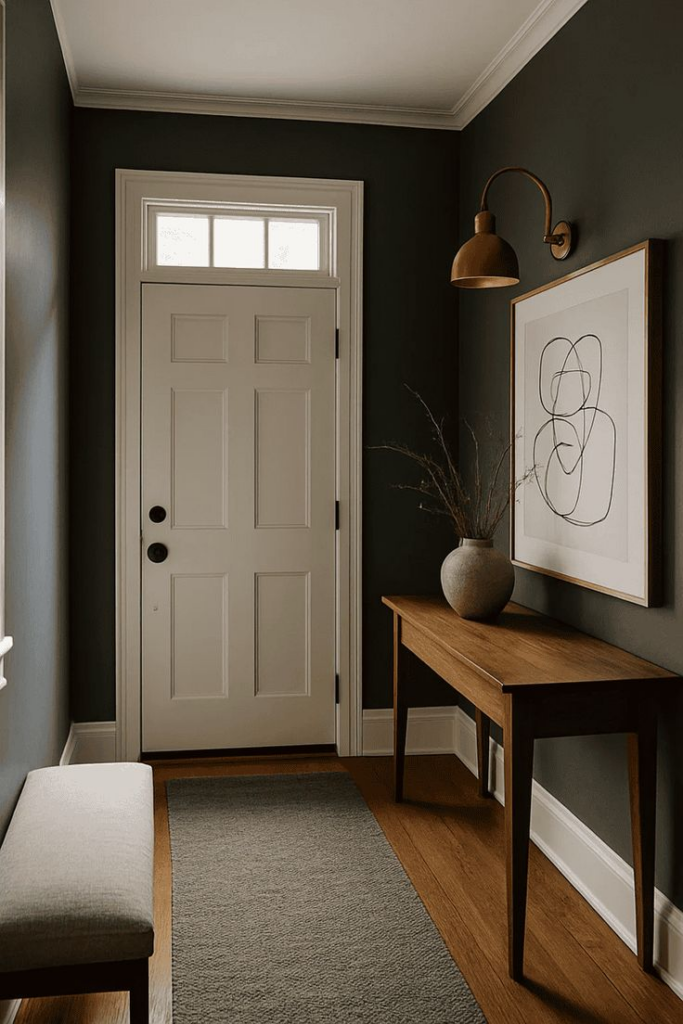
Color continuity influences spatial perception more than contrast in narrow entryways. Using tone-on-tone shades along walls reduces visual breaks, allowing the space to feel broader and calmer. Subtle variations within the same color family add depth without segmenting the corridor. This approach works especially well in areas with limited natural light, as harsh contrasts can exaggerate narrowness. Matte or eggshell finishes minimize glare while maintaining softness. Extending the same hue across trim and adjacent surfaces further strengthens cohesion. Designers often recommend lighter mid-tones rather than stark white to avoid a sterile appearance. Tone layering also provides flexibility for decor changes, as accessories blend more seamlessly. Maintenance benefits arise since minor scuffs are less noticeable within a consistent palette. Over time, the entryway retains a unified appearance even as functional elements evolve. This strategy supports visual expansion without relying on mirrors or structural adjustments. Carefully applied tone-on-tone color schemes offer a reliable way to make narrow entryways feel balanced, spacious, and welcoming.
Ceiling-Focused Lighting Placement
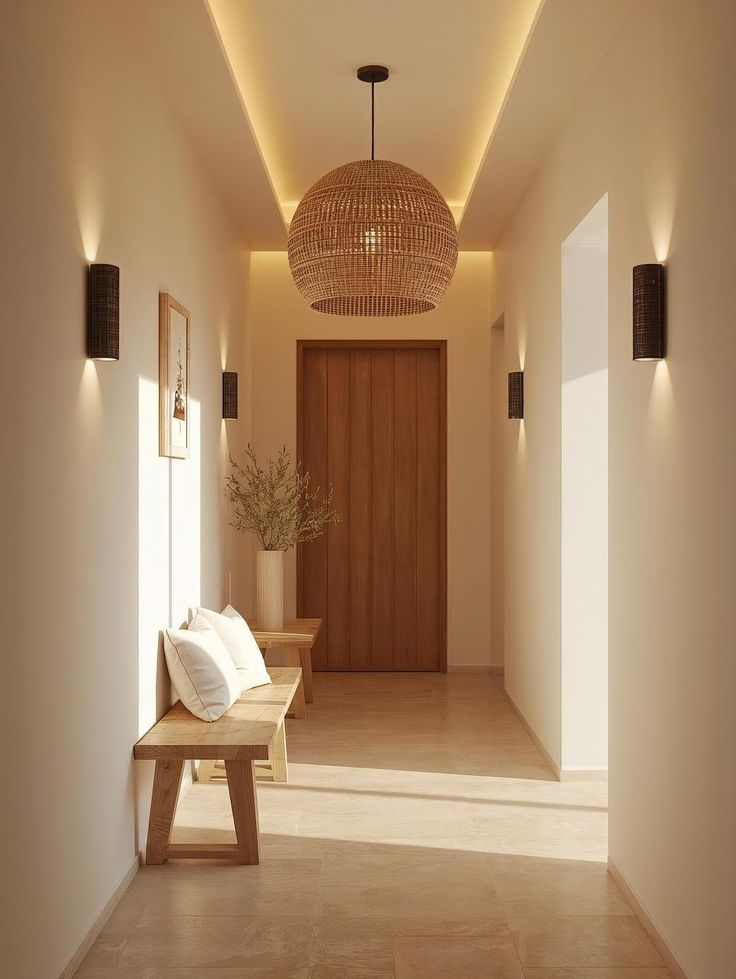
Lighting placement can either compress or open a narrow entryway. Fixtures that direct attention upward draw focus away from limited width. Ceiling-mounted lights, uplights, or wall washers illuminate vertical surfaces, enhancing perceived height. This technique prevents shadows at shoulder level, which often make corridors feel tighter. Even distribution is essential to avoid dark zones that interrupt flow. Recessed fixtures work well in low ceilings, while slim surface-mounted options suit older homes. Warm-neutral color temperatures maintain comfort without yellowing finishes. Proper spacing ensures consistent brightness along the entire path. Lighting controls such as dimmers allow adjustment for different times of day. Designers often favor ceiling-focused illumination because it integrates seamlessly without occupying floor or wall space. Maintenance access should be considered to ensure longevity and ease of bulb replacement. Over time, this approach improves safety, clarity, and visual openness. Thoughtful ceiling-focused lighting reshapes narrow entryways into brighter, more breathable transitional spaces.
Hidden Shoe Storage Along One Side

Shoes create visual clutter quickly, especially in narrow entryways. Concealed storage along one side keeps footwear accessible while maintaining a clean appearance. Slim cabinets, pull-out drawers, or tilt-out compartments hide shoes without encroaching on walking space. Positioning storage along a single wall preserves symmetry and circulation. Ventilation features prevent odor buildup and protect materials. Choosing finishes that match wall tones allows storage to blend seamlessly. Capacity planning is important; limiting slots encourages regular rotation and prevents overcrowding. Designers often specify hidden systems to maintain a calm first impression upon entry. Installation height can vary, with lower compartments supporting daily use and upper sections storing seasonal pairs. This solution supports hygiene by keeping shoes off the floor and contained. Over time, concealed storage simplifies cleaning and reduces tripping hazards. Hidden shoe storage offers a disciplined, space-conscious approach that aligns functionality with visual order in narrow entryways.
Lean-Perch Seating Alternative
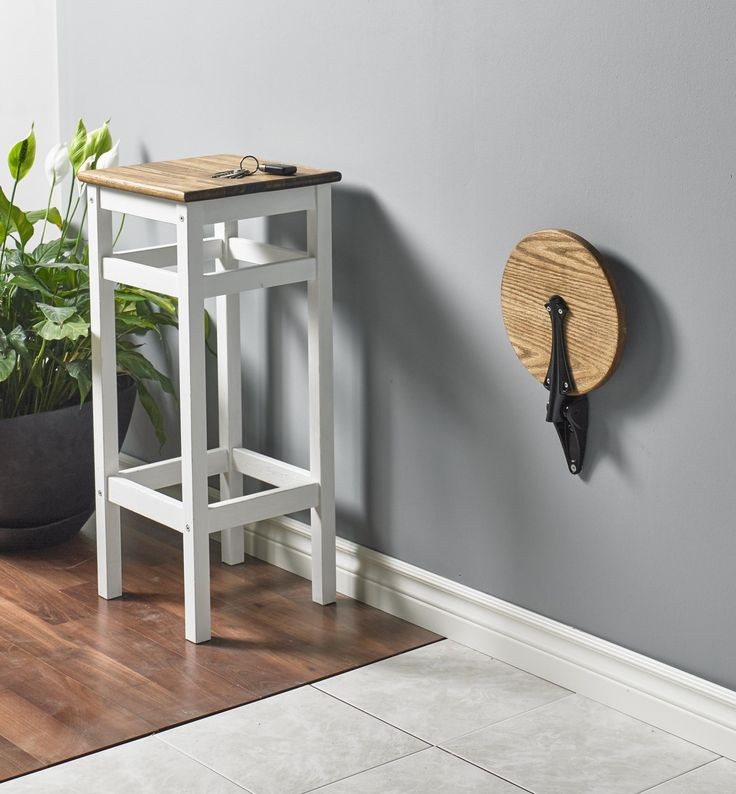
Traditional benches often overwhelm narrow entryways by consuming depth and circulation space. A lean-perch seating option offers support without bulk. Designed for brief pauses, it allows users to rest or adjust footwear without fully sitting. Slim profiles keep pathways clear while still providing comfort. Materials such as wood slats, upholstered panels, or molded surfaces can be mounted securely to the wall. Height placement matters, ensuring ergonomic support without interfering with movement. This alternative suits small households and urban living where space efficiency is critical. Visual lightness helps maintain openness, especially when paired with floating elements. Designers favor lean-perch seating for its versatility and minimal footprint. It also discourages clutter accumulation that benches often invite. Maintenance remains simple due to reduced surface area. Over time, this solution balances convenience and spatial discipline. Lean-perch seating delivers practical support while respecting the constraints of narrow entryway design.
Door Swing Awareness Layout
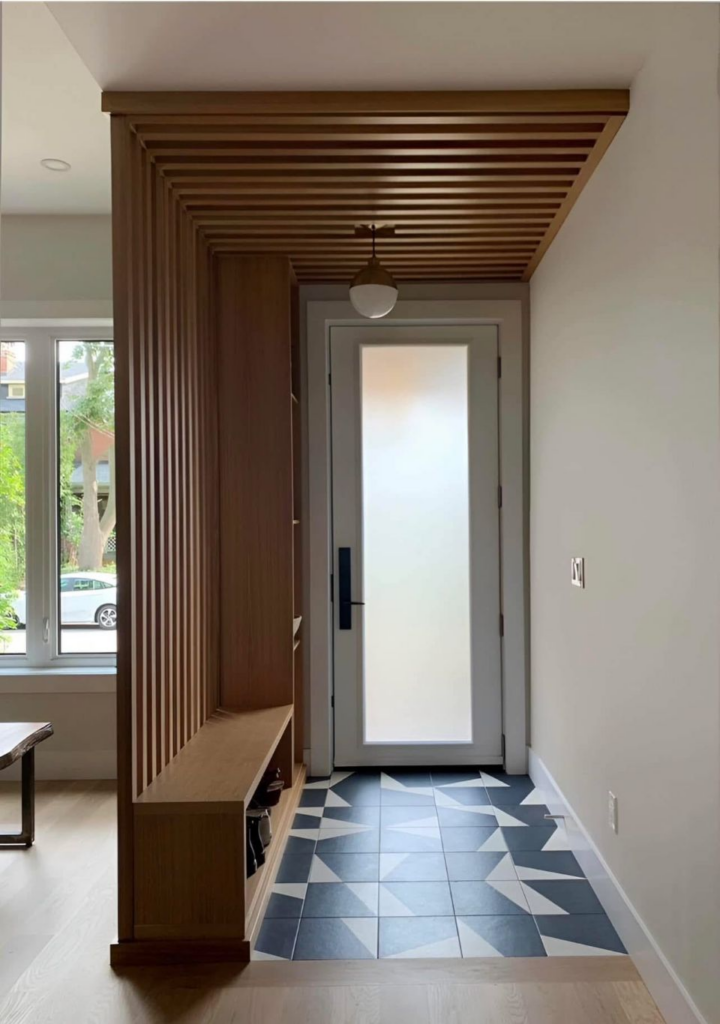
Door movement plays a critical role in narrow entryway planning. Ignoring swing direction often results in blocked pathways and damaged finishes. Mapping door arcs ensures furniture and storage remain clear of movement zones. Hinged doors require sufficient clearance, while sliding or pocket doors reduce spatial conflict. Awareness of swing direction also improves safety by preventing sudden obstructions. Designers frequently adjust layouts to align storage along non-conflicting walls. Hardware selection matters, as protruding handles can further limit clearance. Visualizing door movement during planning avoids costly adjustments later. Lighting placement should account for door shadows to maintain consistent illumination. Over time, a swing-aware layout preserves functionality as usage patterns evolve. This approach supports smoother daily transitions and reduces wear on doors and walls. Door swing awareness ensures narrow entryways remain practical, durable, and frustration-free through thoughtful spatial coordination.