
Vertical storage solutions play a decisive role in maintaining order at a home’s entrance. Floor-to-ceiling storage in entryways maximizes underused wall height, reduces visual clutter, and creates seamless organization for shoes, coats, and daily essentials. When designed correctly, full-height cabinetry and built-ins improve traffic flow while making compact foyers feel structured rather than crowded. Smart layouts also support hidden storage, closed-door systems, and integrated seating. This guide focuses on practical floor-to-ceiling entryway storage ideas that balance capacity, accessibility, and design cohesion, helping homeowners achieve efficient, polished entry spaces without sacrificing style or functionality.
Full-Height Closed Cabinets
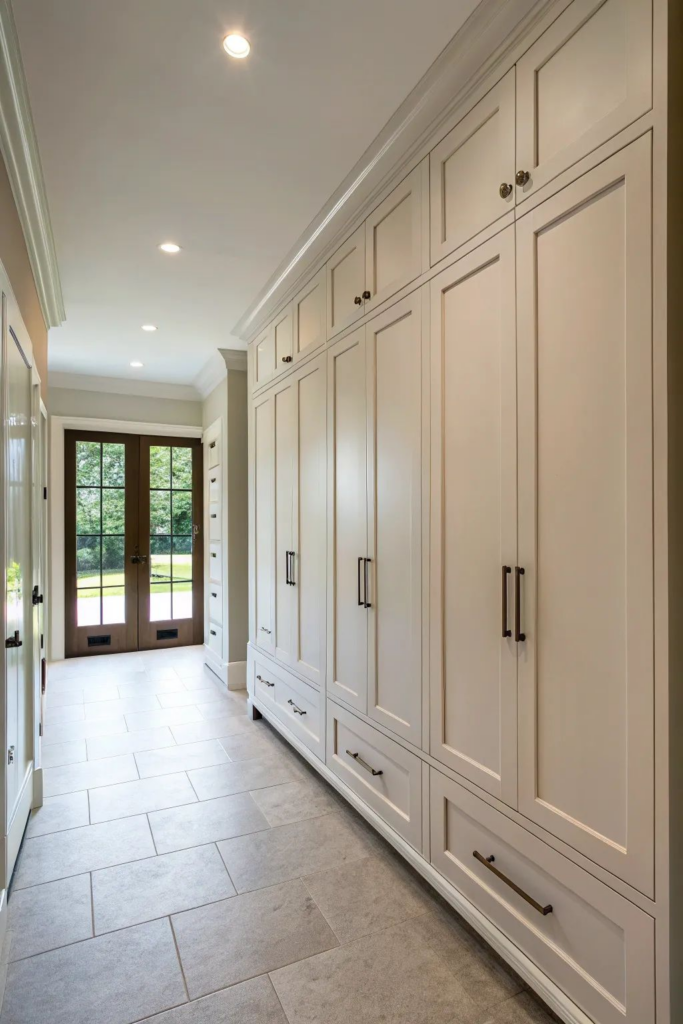
Practical entryways benefit from storage that conceals everyday items while maintaining visual calm. Full-height closed cabinets create a clean architectural surface that hides shoes, bags, seasonal gear, and cleaning supplies behind uniform doors. Extending cabinetry to the ceiling eliminates wasted space and prevents dust buildup on top, making the entry easier to maintain long term. This approach works especially well in homes that value minimalism or want the entry to feel like a natural extension of adjacent living areas. Interior shelving can be customized with adjustable shelves, deep compartments, and vertical dividers to accommodate boots, backpacks, and umbrellas efficiently. Soft-close hinges and push-latch hardware keep the exterior streamlined while improving daily usability. Matte finishes, wood veneers, or painted panels allow the cabinets to blend seamlessly with wall color or millwork details. Closed storage also reduces visual noise, which is critical in narrow or high-traffic foyers where clutter quickly feels overwhelming. For families, labeled interior zones help maintain organization without exposing mess. Thoughtfully planned lighting, such as recessed ceiling fixtures or integrated toe-kick lights, ensures the area remains functional even with doors closed. Full-height cabinetry offers a long-term solution that balances storage capacity, order, and a refined first impression for the home.
Floor-to-Ceiling Open Cubby Wall

Visual accessibility defines the appeal of an open cubby wall that stretches from floor to ceiling. This configuration turns the entryway into an organized display zone where every item has a visible, intentional place. Open cubbies encourage consistent habits, making it easier for household members to return shoes, bags, and accessories to the same spot daily. Vertical repetition helps draw the eye upward, making even compact entries feel taller and more structured. Cubby dimensions can vary to accommodate footwear, baskets, helmets, or decorative storage boxes without appearing chaotic. Using consistent materials and finishes keeps the wall cohesive, while subtle variations add interest. Natural wood tones, painted MDF, or laminate panels all work well depending on durability needs. Incorporating a few closed bins within the grid helps manage smaller items without disrupting the open concept. Open storage also improves airflow, reducing odor buildup from shoes and damp accessories. Proper spacing ensures circulation paths remain clear, especially in busy households. Wall-mounted lighting or nearby windows enhance visibility and keep the space inviting. A full-height cubby wall suits casual, family-oriented homes that prioritize function, clarity, and quick access while still maintaining a well-organized entry that feels intentional rather than cluttered.
Built-In Vertical Shoe Towers
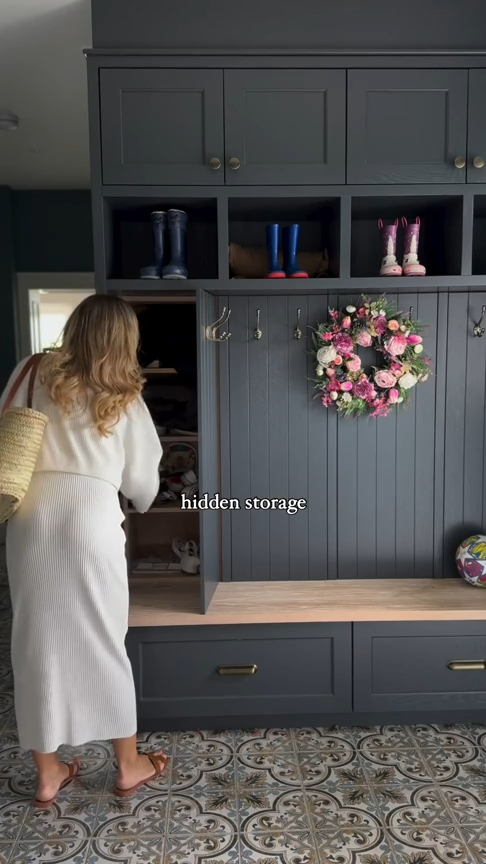
Efficiency improves dramatically when footwear storage shifts from horizontal sprawl to vertical organization. Built-in shoe towers maximize height by stacking narrow shelves from floor to ceiling, allowing dozens of pairs to fit within a slim footprint. This solution works particularly well in entryways with limited width but generous ceiling height. Angled or adjustable shelves improve visibility, making it easier to locate specific pairs quickly. Vertical shoe storage also supports better hygiene by separating footwear and promoting airflow between shelves. Enclosed or semi-open designs can be tailored based on visual preference and dust concerns. Integrating pull-out trays or rotating mechanisms further enhances accessibility without requiring extra clearance. Durable finishes are essential, especially in households with daily outdoor use, ensuring surfaces withstand moisture and dirt. Shoe towers can be recessed into walls or framed as part of a larger storage system to maintain a built-in look. Adding a small bench nearby improves usability for putting shoes on and off without disrupting the vertical layout. This approach keeps floors clear, reduces clutter, and creates a sense of order immediately upon entry. For shoe-heavy households, vertical towers offer a practical, space-conscious strategy that balances capacity, organization, and everyday convenience.
Slim Pantry-Style Pull-Outs

Space efficiency becomes critical in narrow entryways where traditional cabinetry feels bulky. Slim pantry-style pull-outs solve this challenge by fitting high-capacity storage into tight vertical gaps. These tall, narrow units glide outward smoothly, revealing organized shelves ideal for shoes, scarves, cleaning supplies, or grab-and-go essentials. Full-height designs ensure no vertical space is wasted, while pull-out functionality keeps items easily accessible without blocking walkways. Interior configurations can include wire baskets, adjustable shelves, or specialized hooks depending on storage needs. Because contents remain hidden when closed, the entry maintains a clean, uncluttered appearance. Pull-outs integrate seamlessly beside doors, next to closets, or between larger cabinet sections, making them highly adaptable. Soft-close hardware improves durability and prevents slamming in high-traffic zones. Finishes can match surrounding cabinetry for a cohesive look or contrast subtly for visual interest. This storage style is particularly effective in apartments or townhomes where every inch matters. Proper planning ensures weight distribution remains balanced even when fully loaded. Slim pull-out storage offers a smart alternative to bulky furniture, delivering vertical capacity, ease of access, and a streamlined aesthetic that supports organized daily routines without overwhelming the entryway.
Wall-to-Wall Coat Closets

Orderly entries rely heavily on managing outerwear efficiently, especially in climates with seasonal layering. Wall-to-wall coat closets provide comprehensive coverage, transforming an entire entry wall into concealed storage. Extending the closet system from floor to ceiling ensures coats, jackets, and accessories remain organized without encroaching on walking space. Interior layouts can combine double hanging rods, tall compartments for long coats, and overhead shelves for hats or luggage. Closed doors keep visual clutter hidden, maintaining a polished appearance even during busy mornings. Sliding or pocket doors work well in tight entries, while hinged doors suit wider foyers. Integrating lighting inside the closet improves visibility and usability. Durable interior finishes protect walls from wear caused by heavy garments and bags. This approach also supports seasonal rotation, allowing off-season items to move upward while daily-use pieces remain accessible. Wall-to-wall closets help reduce overflow into living spaces, preserving the entry as a functional buffer zone. Custom sizing ensures alignment with ceiling height and architectural details. For households needing reliable, high-capacity storage, a full-width coat closet offers a long-term solution that prioritizes organization, cleanliness, and a composed first impression.
Ceiling-High Locker Systems

Structured organization defines the appeal of locker-style storage that reaches the ceiling. Ceiling-high locker systems divide the entryway into vertical compartments, often assigned per household member, creating clear ownership and reducing daily clutter. Each locker can include hooks, shelves, and closed sections for shoes, bags, and personal items. Extending lockers upward increases capacity while reinforcing a strong vertical rhythm that visually anchors the space. Durable materials such as laminate or sealed wood ensure longevity in high-traffic areas. Closed upper sections store infrequently used items, while lower zones handle daily essentials. Locker systems work particularly well for families with children, as individual compartments encourage accountability and routine. Integrated benches at the base improve functionality without interrupting vertical continuity. Ventilated doors or open sections help manage airflow and moisture. Uniform finishes maintain visual consistency, preventing the system from feeling busy. Thoughtful spacing ensures doors open comfortably without blocking circulation paths. Ceiling-high lockers transform the entry into a highly organized, user-specific zone that supports efficiency while maintaining a clean, intentional aesthetic suitable for modern family living.
Integrated Bench and Tall Storage Combo

Comfort and storage work best when combined into a single, cohesive entry solution. An integrated bench paired with tall storage creates a balanced layout that supports both seating and vertical organization. The bench provides a convenient spot for putting on shoes, while the surrounding full-height cabinets or open units handle coats, footwear, and accessories. This arrangement anchors the entry visually and functionally, making it easier to manage daily transitions. Tall storage on either side or above the bench maximizes ceiling height without sacrificing comfort. Drawers beneath the seat offer discreet storage for frequently used items. Cushioned tops improve usability while maintaining a tailored appearance. Materials can be coordinated across bench and cabinetry for a unified look. This combination suits both compact and spacious entryways by consolidating multiple functions into one zone. Proper proportions ensure the bench feels inviting rather than squeezed between storage walls. Integrated lighting enhances usability and highlights the built-in design. This approach delivers efficiency, comfort, and visual order, making it ideal for households seeking a practical yet polished entryway solution.
Hidden Storage Behind Paneling

Discretion defines the value of storage concealed behind architectural paneling. Hidden storage systems allow entryways to maintain a seamless wall appearance while concealing cabinets, closets, or shelving behind flush panels. Floor-to-ceiling paneling ensures visual continuity and prevents storage from dominating the space. Touch-latch or push-to-open mechanisms eliminate visible hardware, reinforcing a minimalist aesthetic. Behind the panels, storage layouts can be highly functional, accommodating coats, shoes, cleaning tools, or utility items. This solution works well in design-forward homes where the entry needs to feel calm and uncluttered. Panel finishes can match wall treatments or millwork elsewhere in the home, creating cohesion. Vertical alignment is critical to avoid revealing seams or breaks that compromise the illusion. Proper planning ensures doors open smoothly without interfering with circulation. Hidden storage supports long-term organization by allowing generous capacity without visual overload. For entryways that double as transition spaces into living areas, concealed storage offers a refined balance between practicality and architectural elegance.
Tall Mirror Cabinets

Functionality increases when storage and reflection are combined within a single vertical element. Tall mirror cabinets extend from floor to ceiling, offering concealed storage while visually expanding the entryway. The mirrored surface reflects light, making narrow or dim entries feel brighter and more spacious. Inside, adjustable shelves accommodate accessories, shoes, or small personal items without occupying floor space. Full-height designs eliminate visual breaks, creating a streamlined appearance. Soft-close doors improve durability and daily comfort. Mirror cabinets also serve practical needs, allowing quick outfit checks before leaving the home. Framed or frameless options adapt to different interior styles. Interior lighting enhances visibility and usability. This solution is particularly effective in compact entries where adding both storage and a mirror separately would feel crowded. Tall mirror cabinets deliver dual functionality without sacrificing aesthetics, making them a smart choice for modern, space-conscious entryway design.
Upper-Only Storage Walls

Strategic placement of storage can preserve openness while increasing capacity. Upper-only storage walls concentrate cabinetry above eye level, keeping floors and lower walls visually light. Floor-to-ceiling designs begin above a defined datum, such as a bench or console, allowing circulation to remain unobstructed. This approach suits entryways where maintaining openness is a priority. Upper cabinets handle seasonal or less frequently used items, while lower zones remain flexible. Consistent alignment with ceiling height ensures a built-in appearance. Lift-up or hinged doors provide easy access without encroaching on walking space. Finishes that match wall color help storage blend seamlessly. Upper-only systems reduce clutter visibility while maximizing vertical potential. This configuration balances storage needs with spatial clarity, making it ideal for smaller entries or minimalist interiors.
Custom Millwork Storage Walls

Precision and personalization distinguish custom millwork storage walls. Designed specifically for the entry’s dimensions, these systems utilize floor-to-ceiling space efficiently while aligning with architectural details. Millwork allows seamless integration of shelves, cabinets, hooks, and niches into a unified composition. Material choices range from natural wood to painted finishes, supporting varied interior styles. Custom sizing eliminates gaps and awkward transitions common with modular units. Storage layouts can be tailored to household routines, ensuring every item has a designated place. Built-in lighting enhances both function and visual depth. Full-height millwork creates a cohesive, permanent feel that elevates the entry beyond standard furniture solutions. This approach supports long-term organization and adds architectural value to the home.
Storage Wrapped Around Door Frames

Spatial efficiency improves when storage extends beyond flat walls to include door surrounds. Wrapping storage around door frames uses often-overlooked vertical space, creating floor-to-ceiling capacity without reducing circulation. Cabinets or shelves above and beside doors integrate seamlessly, framing openings while adding functionality. This technique works well in compact entryways where wall space is limited. Proper alignment ensures doors operate freely without visual crowding. Matching finishes maintain cohesion with surrounding storage. Upper compartments handle infrequently used items, while side sections manage daily essentials. Door-wrapped storage maximizes every inch, delivering a smart, built-in solution that enhances organization without altering the entry’s footprint.