
Greenery at the entrance instantly improves mood, air quality, and visual balance, making plants one of the most effective entryway upgrades. Well-chosen entryway plants soften hard surfaces, guide movement, and create a welcoming transition from outdoors to indoors. Factors such as natural light, traffic flow, pet safety, and maintenance level play a key role in plant selection. From low-light tolerant indoor plants to statement floor planters and compact shelf options, the right choices enhance both style and function. This guide focuses on practical, design-forward plant ideas that suit real homes, helping readers achieve a fresh, organized, and inviting entry space with ease.
Low-Light Survivor Plant Zone

Entryways often lack direct sunlight, yet greenery can still thrive when the right plants and placement logic are used. This zone focuses on species proven to tolerate shade, inconsistent light, and temperature shifts common near doors. Snake plants, ZZ plants, cast iron plants, and pothos perform reliably because they store moisture and photosynthesize efficiently in low illumination. Placement should stay within visual range of ambient light rather than complete darkness, such as near sidelights or translucent glass panels. Drainage remains critical; low-light plants suffer more from overwatering than neglect, so pots with drainage holes or self-watering inserts work best. Neutral-toned planters help foliage stand out without competing visually in tight spaces. Avoid crowding multiple plants together, as airflow reduces mold risk in dim areas. This setup suits apartment foyers, shaded townhomes, and north-facing entrances where décor options feel limited. Using one or two dependable plants prevents constant replacement and keeps maintenance predictable. With consistent watering intervals and occasional leaf cleaning, these plants maintain structure and color year-round. The result is a calm, reliable green presence that adds life without demanding sunlight, making it practical for real-world entryway conditions.
Statement Floor Plant Anchor
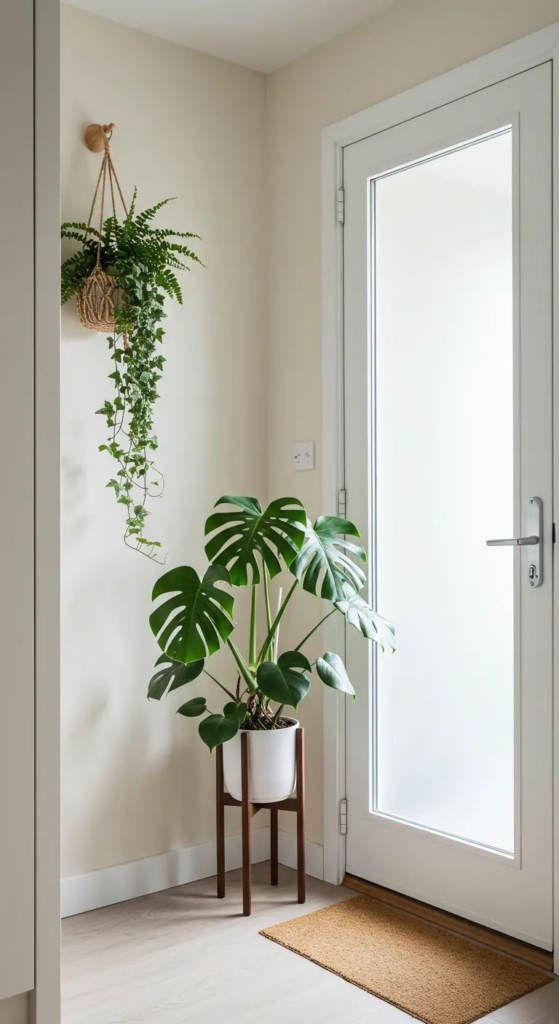
An entryway benefits from a visual focal point that grounds the space immediately upon arrival. A large floor plant achieves this by acting as a natural anchor, guiding movement and balancing surrounding furniture. Fiddle leaf figs, rubber plants, and large dracaenas work well due to their upright growth and bold leaf scale. Placement near a wall corner or beside a console prevents obstruction while still commanding attention. The planter should carry visual weight through material or color, such as matte ceramic, concrete, or woven fiber. Scale matters; undersized plants disappear, while oversized ones disrupt flow. Aim for foliage that reaches chest or shoulder height to frame the space without overwhelming it. This approach also reduces the need for excess wall décor, simplifying design decisions. Maintenance remains manageable when one primary plant receives focused care instead of several smaller ones. Regular rotation ensures even growth, especially near partial light sources. As a result, the entry feels intentional and welcoming, with greenery serving as both décor and spatial organizer rather than a decorative afterthought.
Slim Vertical Plant Stand Strategy

Narrow entryways demand solutions that preserve walking clearance while still introducing greenery. Vertical plant stands answer this need by stacking plants upward instead of outward. Slim metal or wood frames with staggered shelves allow multiple plants without visual clutter. Trailing plants like pothos, philodendron, or scindapsus soften the vertical lines, while compact upright plants add structure. The stand should sit flush against a wall to avoid narrowing the passage. Neutral finishes blend seamlessly, while black or brass accents suit modern interiors. Weight distribution matters; heavier pots belong on lower tiers to maintain stability. This method works particularly well in apartments where floor space is limited but ceiling height is available. Watering becomes efficient when saucers or liners are built in, preventing spills near doorways. With thoughtful selection, the stand becomes a living feature wall that draws the eye upward, making the entry feel taller and more open. It provides variety without clutter, proving that limited square footage doesn’t require sacrificing plant presence or style.
Hanging Plant to Clear Floor Space
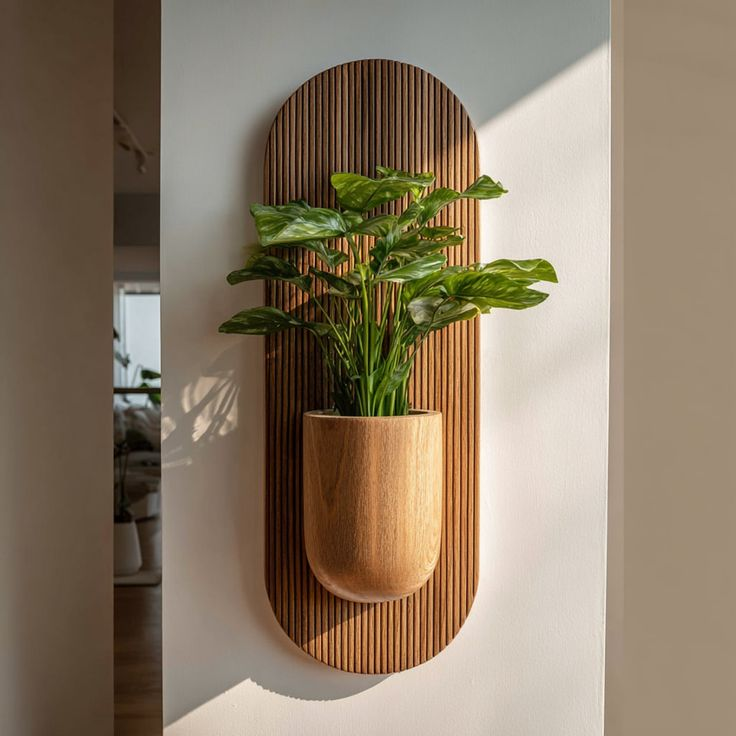
Floor congestion is a common issue in compact entryways, making suspended greenery a practical alternative. Hanging plants introduce softness while keeping pathways unobstructed. Ceiling hooks or wall-mounted brackets positioned near natural light sources work best. Trailing plants such as pothos, heartleaf philodendron, and spider plants adapt well to hanging conditions and tolerate irregular watering. Proper anchoring is essential, especially near doors where vibration occurs. Lightweight planters reduce strain on hardware and ceilings. Height should allow clear headroom while keeping foliage visible at eye level. This setup also reduces the risk of pets or children disturbing plants. Occasional trimming keeps growth controlled and prevents tangling near door handles or lighting fixtures. Using matching hangers maintains visual order, especially in minimalist spaces. Hanging greenery introduces movement and texture without consuming valuable floor area, making it ideal for narrow foyers. The result feels airy and intentional, balancing function and design in spaces where every inch matters.
Intentional Plant Pairing Setup

Pairing plants intentionally adds depth and polish to an entryway without overcrowding. This approach relies on contrast in height, leaf shape, and texture rather than sheer quantity. A common pairing includes one upright plant, such as a snake plant, alongside a trailing or rounded companion like pothos or peperomia. Both should share similar light and watering needs to simplify care. Placement works best on a console, bench end, or floor corner where the pair reads as a single design element. Using matching or complementary planters reinforces cohesion. Avoid pairing plants with competing growth habits or drastically different maintenance requirements. This strategy suits homeowners who want a curated look without managing multiple plants. Rotating positions occasionally ensures even light exposure. The pairing method adds visual interest while staying controlled and tidy. When done thoughtfully, two well-chosen plants can have more impact than several mismatched ones, making the entryway feel styled rather than improvised.
Plant and Mirror Combo Effect

Mirrors amplify light and space, making them powerful partners for entryway plants. Placing greenery near a mirror doubles visual impact by reflecting foliage and creating depth. This combination works especially well in darker or narrow entrances. Tall plants beside full-length mirrors add height, while tabletop plants beneath wall mirrors soften hard edges. Reflection increases perceived brightness, helping plants appear fuller and more vibrant. Careful positioning avoids direct drafts from doors or vents. Mirrors with simple frames keep attention on the greenery rather than competing with it. This setup also enhances first impressions, making the entry feel open and intentional. Regular leaf cleaning matters more here, as dust becomes more noticeable in reflections. When balanced correctly, the plant-and-mirror pairing turns a functional entry into a visually expansive moment that feels thoughtfully composed without additional décor layers.
Hard-to-Kill Plant Selection Rule

Reliability matters most in entryways due to fluctuating temperatures, inconsistent light, and irregular watering. Focusing on resilient plant varieties prevents frequent replacements and frustration. Snake plants, ZZ plants, cast iron plants, and aglaonema tolerate neglect while maintaining structure. These plants resist pests and adapt well to indoor conditions. Selecting medium-sized specimens reduces shock during relocation. Planters with drainage prevent root rot, the most common failure point. Grouping plants with similar needs simplifies maintenance routines. This rule suits busy households or rental properties where plant care consistency varies. Occasional dusting and monthly inspection keep plants healthy without demanding schedules. By prioritizing durability over trend-driven choices, the entryway remains green year-round with minimal effort. This approach delivers long-term success rather than short-lived visual appeal.
Plant as Privacy Softener
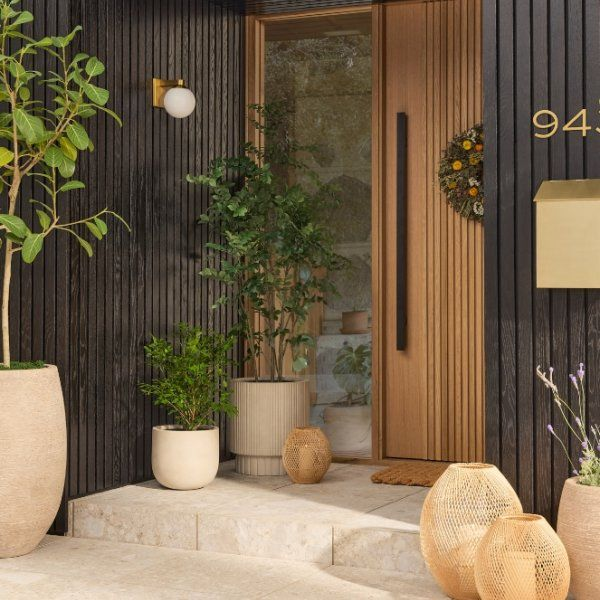
Entryways that open directly into living spaces often lack visual separation. Strategic plant placement provides a gentle privacy buffer without blocking light. Tall, narrow plants like bamboo palm or dracaena create a soft boundary while maintaining airflow. Positioning near sightlines rather than door centers keeps movement natural. This method works well in open-plan homes or apartments. Plants soften transitions between public and private zones, making interiors feel calmer upon entry. Regular pruning maintains shape and prevents overgrowth. Using weighted planters ensures stability in high-traffic areas. This solution balances openness and discretion without installing permanent dividers. The result feels natural, flexible, and visually inviting rather than closed off.
Narrow Console Plant Styling

Console tables offer valuable surface space for greenery when styled thoughtfully. One medium plant paired with a smaller accent prevents clutter while adding life. Upright plants balance lamps or mirrors, while compact plants soften edges. Height variation creates visual rhythm without overwhelming the console. Planters should align with console width to maintain proportion. Avoid trailing plants that interfere with storage or daily use. This styling suits entryways that require both function and décor. Keeping plant choices simple ensures easy maintenance and a polished look. With restraint, console plants enhance the entry without sacrificing usability.
Tall Planter Entry Boundary

Defining an entry boundary without walls helps maintain openness while giving structure to a home’s threshold. Tall planters perform this role effectively by marking transition zones through height and mass. Placing a planter near the door frame, stair edge, or open living area subtly directs foot traffic while visually anchoring the entry. Upright plants such as dracaena, bamboo palm, or ficus elastica suit this use because they grow vertically without excessive spread. Planter material matters; heavier ceramic, stone, or concrete bases prevent tipping in high-traffic areas. Scale should relate to ceiling height, with taller rooms benefiting from planters that reach mid-chest or higher. This setup works especially well in open-concept homes where traditional walls feel restrictive. Spacing remains important, leaving enough clearance for door swing and movement. Occasional rotation ensures even light exposure, while minimal pruning maintains a clean silhouette. Used correctly, a tall planter establishes a clear visual boundary that feels natural, flexible, and far less permanent than built-in partitions, while still giving the entry its own defined presence. This approach supports better flow, reduces visual clutter, and allows layout changes later without construction, making it ideal for renters and homeowners who value adaptable, low-commitment design solutions long term.
Pet- and Kid-Safe Plant Choices

Safety-conscious plant styling allows entryways to stay welcoming without introducing avoidable risks for families. Homes with children or pets benefit from selecting non-toxic, resilient plant varieties that tolerate occasional contact. Spider plants, areca palms, parlor palms, calatheas, and ponytail palms remain popular because they pose minimal ingestion risk and handle indoor conditions well. Placement still matters; setting plants slightly elevated or tucked into corners reduces accidental pulling or tipping. Avoid sharp-edged foliage, spines, or heavy top-heavy planters that could fall if bumped. Using wide, stable containers adds another layer of protection in busy households. Entryways often experience bursts of activity, so durability becomes just as important as safety. Regular inspections help catch chewed leaves, loose soil, or leaning pots early. This approach works well for households that want greenery without constant monitoring or stress. With thoughtful plant choices and secure placement, the entry remains calm, attractive, and functional while supporting a safer environment for both children and animals. Selecting safe plants also prevents emergency vet visits or health concerns, offering peace of mind daily. Balanced choices allow design goals and household safety needs to coexist naturally without sacrificing style, freshness, or long-term practicality for modern family-focused entryway spaces everywhere today.
Seasonally Swappable Plant Spot

Seasonally Swappable Plant Spot is a flexible styling idea that keeps interiors fresh without permanent changes. The concept centers on a dedicated nook—near a window, entry console, or empty corner—designed to rotate plants as seasons shift. In spring, light-loving herbs, pothos, or flowering bulbs bring renewal and gentle fragrance. Summer favors statement foliage like monstera, fiddle leaf fig, or palms that thrive in brighter days and add cooling greenery. As autumn arrives, warmer-toned planters paired with snake plants or rubber trees introduce structure and lower maintenance. Winter swaps lean into hardy evergreens, trailing ivy, or dried botanicals for texture when light is scarce.
Consistency comes from the setup, not the plants. Use a neutral planter palette, a movable stand, and a discreet saucer system to prevent mess during changes. Keep care simple by grouping plants with similar water and light needs. This rotating approach supports healthier growth while aligning décor with seasonal moods. Beyond aesthetics, it encourages mindful plant care, reduces burnout from struggling species, and lets homeowners experiment without commitment. A seasonally swappable plant spot turns greenery into an evolving accent that feels intentional, timely, and easy to maintain year-round.