
First impressions begin the moment the front door opens, making the entryway one of the most influential areas in a home. This space sets expectations for style, organization, and overall flow, yet it is often overlooked in favor of larger rooms. Thoughtful entryway design improves functionality, supports daily routines, and creates a welcoming transition between outdoors and interiors. Smart furniture choices, lighting, storage, and decor details help maximize both visual impact and practicality. These ideas focus on adaptable solutions for homes of all sizes, offering clear guidance for creating an entryway that feels intentional, inviting, and seamlessly connected.
Slim Console With Hidden Storage

Narrow entry zones benefit most from furniture that performs more than one task without adding visual bulk. A slim console designed with concealed drawers or lift-top compartments keeps daily essentials close while preserving a clean sightline from the door inward. Keys, mail, chargers, and sunglasses stay out of view, preventing surface clutter that quickly overwhelms small spaces. Prioritizing shallow depth ensures smooth circulation, especially in tight hallways or apartment entries. Finishes with subtle grain or matte lacquer reduce glare and wear, making the piece practical for frequent use. Internal dividers or soft-close drawers improve organization and longevity, reinforcing long-term functionality. Pairing the console with a restrained decor approach maintains balance while allowing the storage feature to work quietly in the background. Wall-mounted versions further enhance floor visibility, helping the entry feel larger and more intentional. When styled with only one or two essential objects, the console becomes a reliable anchor rather than a dumping ground. This approach supports efficient routines, visual order, and durability—key qualities homeowners seek when upgrading an entryway that must handle constant transitions without sacrificing style or daily convenience for every household member.
Oversized Vertical Mirror
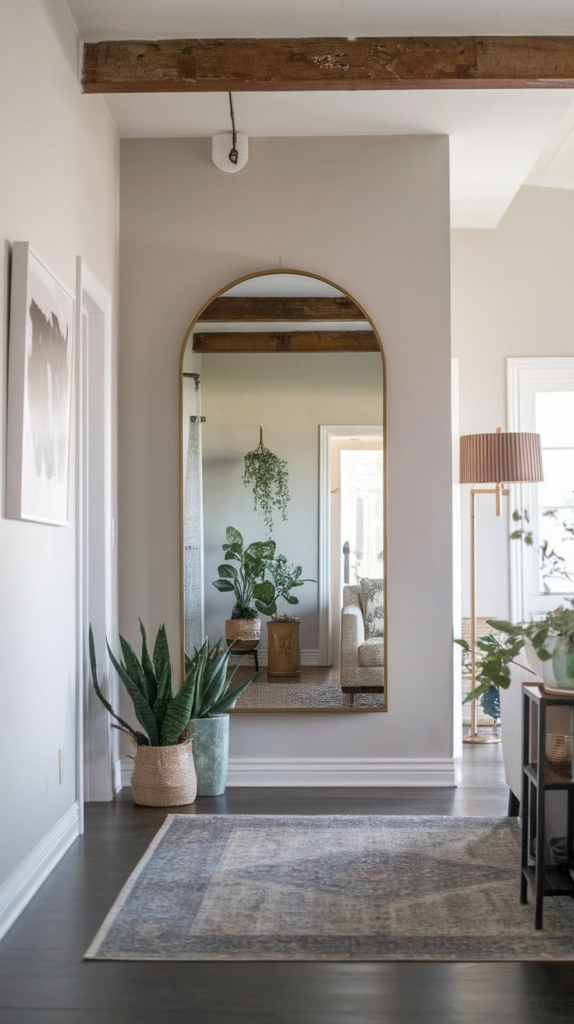
Vertical proportion plays a critical role in shaping first impressions at the door. A tall mirror instantly extends perceived height, making compact or narrow entryways feel more open and balanced. Placed opposite a light source or near the door, it reflects brightness deeper into the space, reducing shadows that can make an entry feel compressed. Slim frames or minimal edges keep attention on scale rather than ornamentation, ensuring versatility across design styles. Positioning the mirror so it captures a full-body view adds everyday practicality, especially in homes where last-minute checks happen at the exit. Leaning styles offer flexibility for renters, while wall-mounted options provide stability in high-traffic households. The vertical emphasis also draws the eye upward, subtly correcting low ceilings or awkward wall proportions. Choosing high-quality glass prevents distortion and supports long-term clarity. When paired with a restrained console or simple hook system, the mirror becomes a functional focal point rather than decorative excess. This solution improves light flow, spatial perception, and daily usability without requiring structural changes or significant square footage adjustments.
Statement Wall Panel or Molding

Architectural detail brings depth and permanence to an entryway without relying on furnishings. Wall paneling or decorative molding introduces structure that elevates plain surfaces and frames the space with intention. Applied consistently, it creates visual rhythm while protecting walls from scuffs common near doors. Shallow-profile designs suit smaller entries, offering texture without narrowing walkways. Painted finishes allow easy coordination with existing color schemes and simplify maintenance over time. Vertical panel lines subtly increase perceived height, while grid or picture-frame styles provide balance and order. This approach works especially well in transitional zones where furniture must remain minimal. Once installed, the wall itself carries the design weight, reducing the need for excess decor. Durable materials such as MDF or solid wood ensure longevity and crisp edges. Proper spacing and alignment are essential to avoid visual clutter. When executed thoughtfully, wall detailing enhances resale appeal, adds character, and creates a polished first impression that feels intentional rather than overstyled, all while maintaining a practical, low-maintenance entry environment.
Drop-Zone Tray System
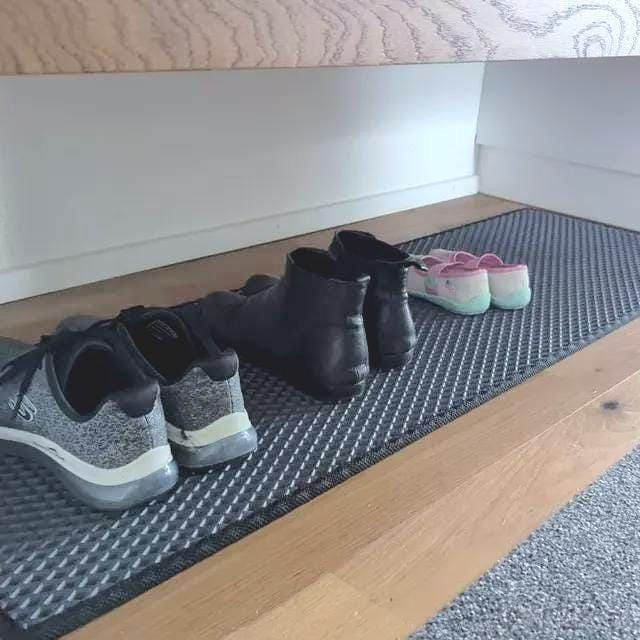
Daily routines improve when small items have a clearly defined home near the door. A tray-based drop zone provides instant organization for essentials that otherwise scatter across surfaces. Wallets, keys, earbuds, and mail remain contained, reducing visual noise and saving time during departures. Selecting trays with raised edges prevents items from slipping, while durable materials withstand repeated use. Grouping multiple trays by function adds structure without requiring drawers or cabinets. Placement matters; positioning the system at natural reach height encourages consistent use. Neutral finishes blend seamlessly with most entry setups, allowing the system to support rather than dominate the design. This solution works equally well on consoles, shelves, or wall-mounted ledges. Limiting contents to true essentials preserves order and prevents overflow. Over time, this simple system reinforces habits that keep the entry tidy with minimal effort. By offering a predictable landing spot, a tray setup reduces clutter buildup and supports smoother transitions in and out of the home, especially for busy households managing multiple schedules.
Soft Runner With Texture

Floor coverage shapes both comfort and flow in an entryway. A textured runner defines the path from door to interior while protecting high-traffic flooring from wear. Subtle texture adds grip underfoot, improving safety during wet or cold seasons. Lengthwise placement visually elongates narrow spaces, guiding movement inward with intention. Low-pile or flatwoven constructions simplify cleaning and resist matting over time. Neutral tones maintain versatility, while tonal variation adds depth without visual noise. Proper sizing prevents awkward breaks that can disrupt circulation. Using a quality rug pad improves stability and extends the runner’s lifespan. This element also introduces warmth, balancing hard surfaces commonly found near entrances. When coordinated with surrounding finishes, the runner ties the entry to adjacent rooms, supporting continuity. Regular rotation ensures even wear, preserving appearance. This approach delivers comfort, protection, and subtle style, making the entry feel considered and welcoming without relying on heavy decor or frequent maintenance demands.
Single Sculptural Light Fixture

Lighting establishes mood and function the moment the door opens. A single sculptural fixture provides focused illumination while acting as a visual anchor overhead. Clean lines or organic forms draw attention upward, helping balance compact layouts. Selecting warm light temperature improves comfort and skin tone accuracy, especially in spaces used for quick checks before leaving. Dimmable options add flexibility, adapting to different times of day. Proper scale is essential; the fixture should complement ceiling height without overwhelming the space. Flush or semi-flush styles suit lower ceilings, while pendants work well in taller entries. Quality materials ensure durability in an area exposed to frequent use. Positioned centrally, the fixture distributes light evenly, reducing harsh shadows. This approach minimizes the need for multiple light sources, keeping the design streamlined. A thoughtfully chosen statement light enhances both practicality and visual clarity, reinforcing a cohesive entryway that feels intentional, functional, and welcoming from the first step inside.
Closed Shoe Cabinet Hack
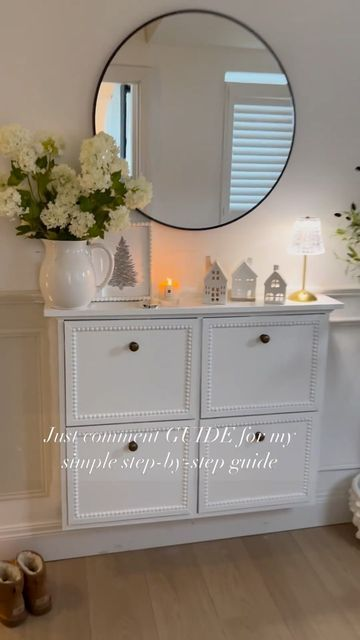
Footwear storage often determines whether an entry feels orderly or chaotic. A closed shoe cabinet conceals visual clutter while protecting shoes from dust and damage. Slim-profile designs fit tight spaces without obstructing walkways. Ventilated fronts or angled compartments promote airflow, reducing odor buildup. Positioning the cabinet near the door encourages immediate use, preventing shoes from spreading into adjacent rooms. Interior adjustability accommodates different shoe types, improving long-term usefulness. Finishes that match wall color help the cabinet recede visually, maintaining a calm backdrop. Top surfaces can double as a small landing area when kept minimal. Wall-mounted versions simplify floor cleaning and enhance perceived space. This solution balances hygiene, organization, and aesthetics, especially in households with frequent foot traffic. By keeping footwear contained, the entry remains easier to maintain and more welcoming, supporting daily routines without requiring constant tidying or oversized storage units that overwhelm the space.
Tone-on-Tone Color Palette

Cohesion starts with color discipline. A tone-on-tone palette uses variations of a single hue to create depth without contrast overload. This strategy simplifies decision-making while delivering a refined, unified appearance. Subtle shifts in shade across walls, trim, and furnishings add interest without fragmenting the space. Lighter values improve brightness, while slightly deeper tones ground the entry. This approach works particularly well in small areas, where too many colors can feel busy. Consistency allows textures and forms to stand out, adding dimension organically. Durable paint finishes support longevity in high-touch zones. When extended into adjacent rooms, the palette reinforces continuity throughout the home. Accent elements remain purposeful rather than decorative filler. This method supports calm, order, and visual clarity, making the entry feel intentional and easy to maintain. Homeowners benefit from a space that feels cohesive, adaptable, and timeless, without relying on trend-driven color statements that date quickly.
Floating Shelf Styling
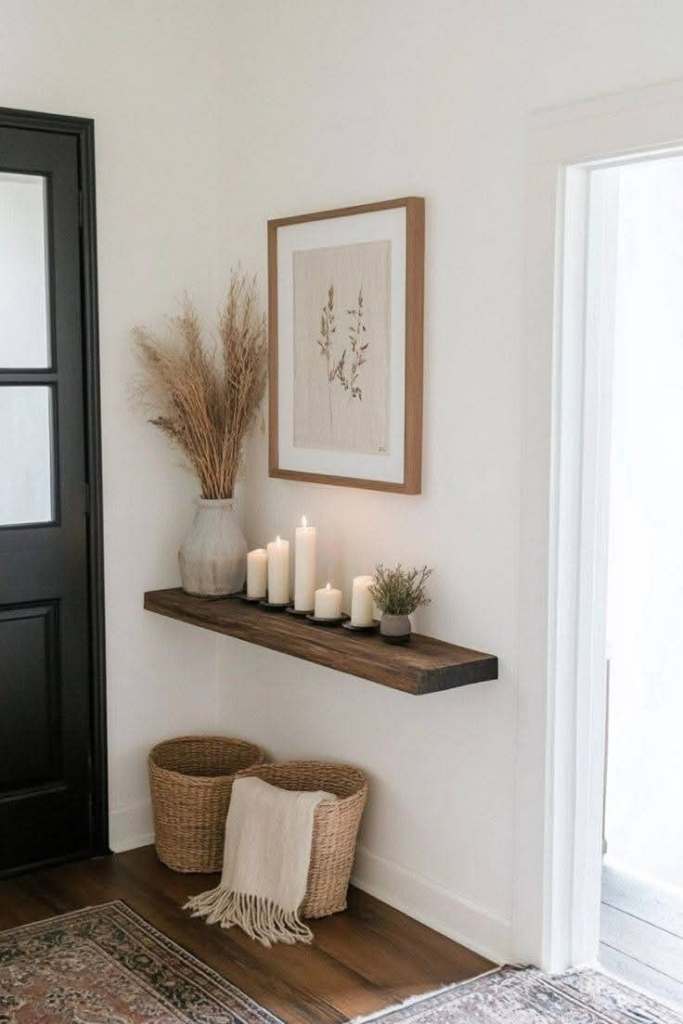
Wall-mounted shelving offers storage without sacrificing floor space. A floating shelf in the entry provides a controlled surface for essentials while maintaining an open feel. Proper installation ensures stability for daily use. Shallow depth prevents overloading and keeps items within easy reach. Styling restraint is key; limiting contents to a few functional objects preserves order. Materials that match nearby finishes help the shelf blend seamlessly. This solution works well above benches or beneath mirrors, creating layered utility. Height placement should align with natural reach to encourage consistent use. Rounded edges improve safety in narrow corridors. Regular editing prevents clutter creep over time. By lifting storage off the floor, the entry feels lighter and more navigable. This approach supports organization, flexibility, and visual balance, offering a practical alternative to bulky furniture in compact or high-traffic entryways.
Tall Plant or Branch Display

Vertical greenery introduces life and scale at the threshold. A tall plant or branch arrangement draws the eye upward, softening architectural lines and adding natural texture. Selecting hardy species ensures longevity in varying light conditions. Floor placement in unused corners maximizes impact without obstructing movement. Simple containers keep focus on form rather than ornament. This element improves air quality perception and adds warmth to hard-surfaced entries. Faux options offer consistency where light is limited, requiring minimal upkeep. Height variation balances low furniture and anchors the space visually. Regular maintenance preserves appearance and prevents debris. When proportioned correctly, a vertical plant becomes a calming focal point that enhances first impressions. This addition connects the entry to nature, supporting a welcoming atmosphere while remaining practical for busy households seeking low-effort, high-impact solutions.
Art at Eye-Level Only

Artwork placement influences how an entry feels upon arrival. Positioning art strictly at eye level ensures comfortable viewing and prevents visual clutter. This guideline creates order, especially in narrow spaces where scattered frames can overwhelm. Selecting one or two meaningful pieces maintains focus and clarity. Consistent alignment reinforces structure and professionalism in the layout. Lightweight frames simplify installation and adjustments. Neutral mats allow artwork to stand out without competing with surrounding elements. Avoiding oversized groupings preserves breathing room. This approach prioritizes quality over quantity, making each piece intentional. Proper lighting enhances visibility without glare. Over time, restrained art placement keeps the entry feeling curated rather than crowded. This strategy supports visual balance, easy navigation, and a composed first impression that feels deliberate and refined.
Scented Entry Moment

Scent shapes memory and perception instantly. Introducing a subtle fragrance near the entry establishes a welcoming tone before any visual details register. Consistency matters; selecting one signature scent avoids sensory overload. Placement on a console or shelf keeps the source accessible yet unobtrusive. Natural oils or quality diffusers provide steady release without harsh intensity. Seasonal adjustments maintain freshness while preserving continuity. Avoiding overly strong notes ensures comfort for guests and residents alike. This element works quietly in the background, enhancing atmosphere without visual impact. Regular maintenance prevents scent fatigue or buildup. When thoughtfully chosen, fragrance reinforces cleanliness and care, contributing to a polished first impression. This small detail completes the entry experience, supporting comfort and emotional connection as people transition in and out of the home daily.