
Color choice at the front of a home sets expectations before a single step moves inside. Entryway hues influence mood, brightness, and perceived space while linking exterior style to interior design. Strategic palettes can make narrow foyers feel open, dark corridors feel welcoming, and high-traffic zones feel intentional rather than overlooked. From warm neutrals and modern greiges to moody accents and light-reflective shades, smart color decisions solve real layout challenges. This guide breaks down reliable entryway color ideas that balance durability, lighting conditions, and design harmony for confident, mistake-free results backed by practical insight and current interior design standards today.
Warm Neutral Base
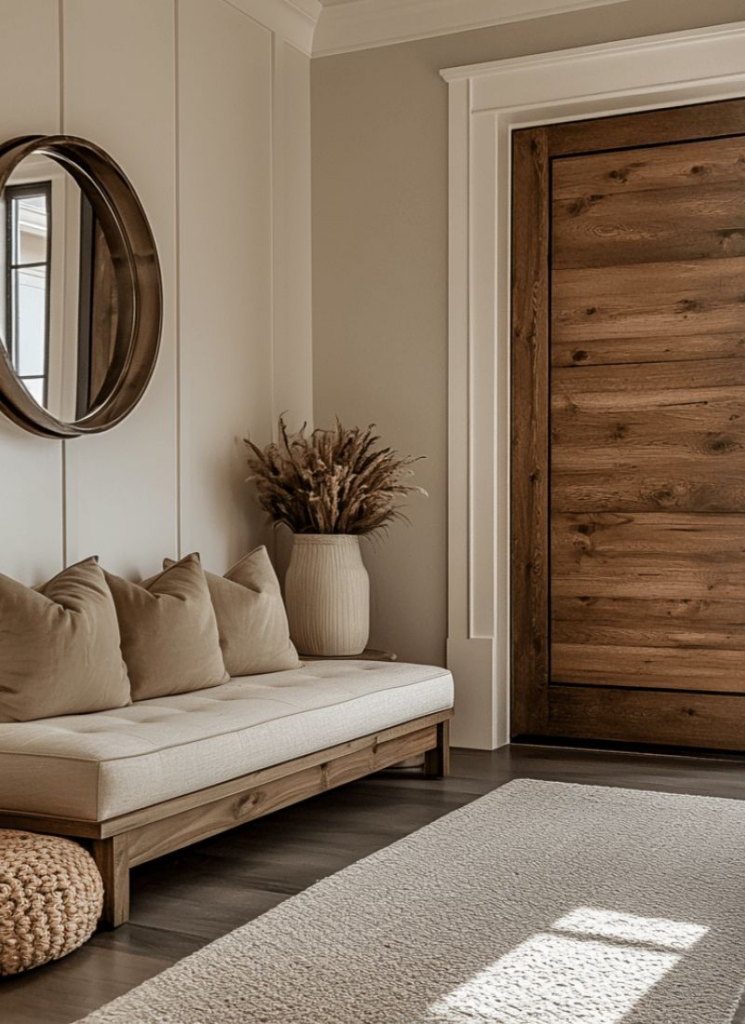
Neutral-toned entryways rely on balance, and this approach works especially well where flexibility matters. Warm neutrals create a welcoming visual foundation that adapts easily to changing décor, seasonal accents, and lighting conditions. Shades drawn from sand, oat, and light stone soften the transition between outdoors and interior living spaces without overwhelming the senses. These tones reflect light gently, making smaller or narrow entryways feel more open while avoiding the starkness of cooler palettes. Wood consoles, woven baskets, and ceramic accessories naturally complement this base, reinforcing an inviting first impression. Warm neutrals also reduce visual clutter by allowing architectural features, mirrors, or artwork to stand out subtly rather than compete. This color direction pairs seamlessly with brass, black, or brushed nickel hardware, offering long-term design longevity. For homes with open layouts, a warm neutral entry ensures smooth flow into adjacent rooms, preventing abrupt color shifts. Maintenance remains simple, as scuffs and everyday wear blend more discreetly. Overall, this choice delivers reliability, comfort, and versatility, making it a dependable solution for homeowners seeking an effortless yet polished entryway appearance that remains relevant over time.
Soft Greige Entryway
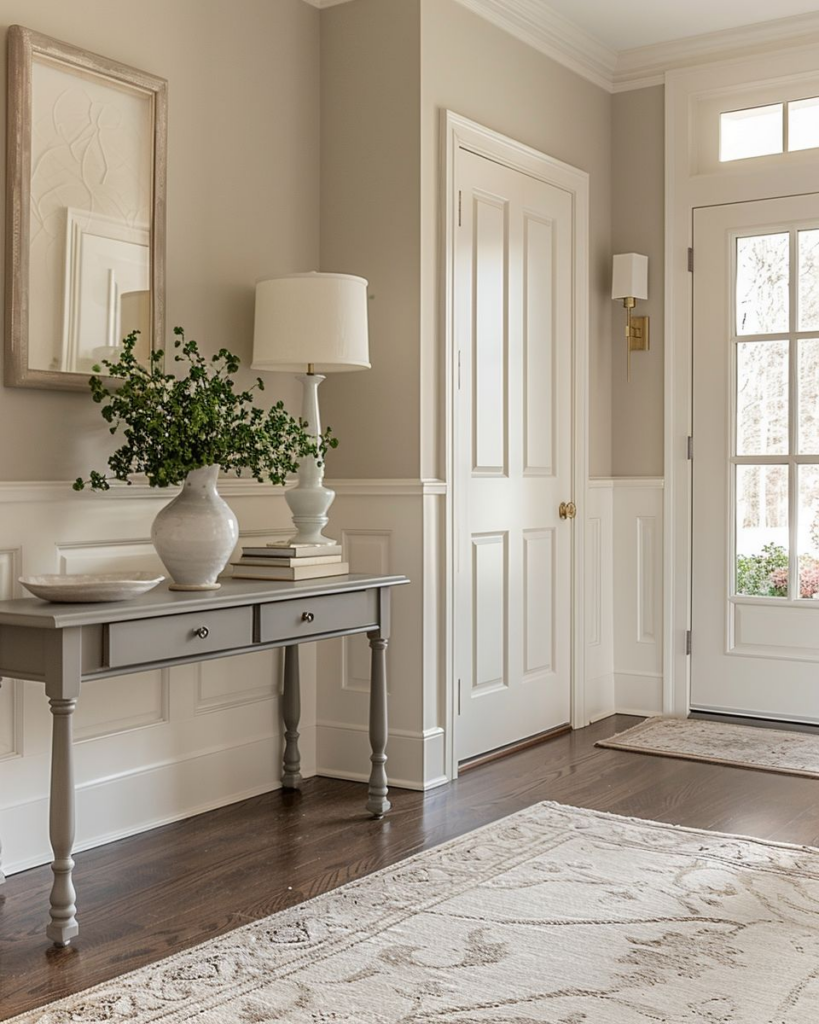
Blending beige warmth with gentle gray undertones produces an entryway color that feels both modern and approachable. Greige works particularly well in transitional homes where neither cool nor warm palettes dominate. This shade adapts effortlessly to natural and artificial lighting, shifting subtly throughout the day without appearing flat. Entryways finished in greige feel grounded, calming visual noise while maintaining enough depth to avoid looking washed out. The tone pairs effectively with light wood floors, matte black accents, and textured textiles, creating a cohesive look that feels intentional rather than styled. Greige also provides an ideal backdrop for statement mirrors, wall hooks, or console styling, allowing decorative elements to shine without overpowering the space. In high-traffic areas, this color proves forgiving, disguising marks better than stark whites while maintaining a clean appearance. Homes with limited entryway separation benefit from greige’s neutral adaptability, as it transitions smoothly into adjoining living spaces. Overall, this option offers understated elegance and practicality, appealing to homeowners who want a refined entryway that feels current, welcoming, and easy to maintain without frequent repainting or design overhauls.
Moody Charcoal Accent
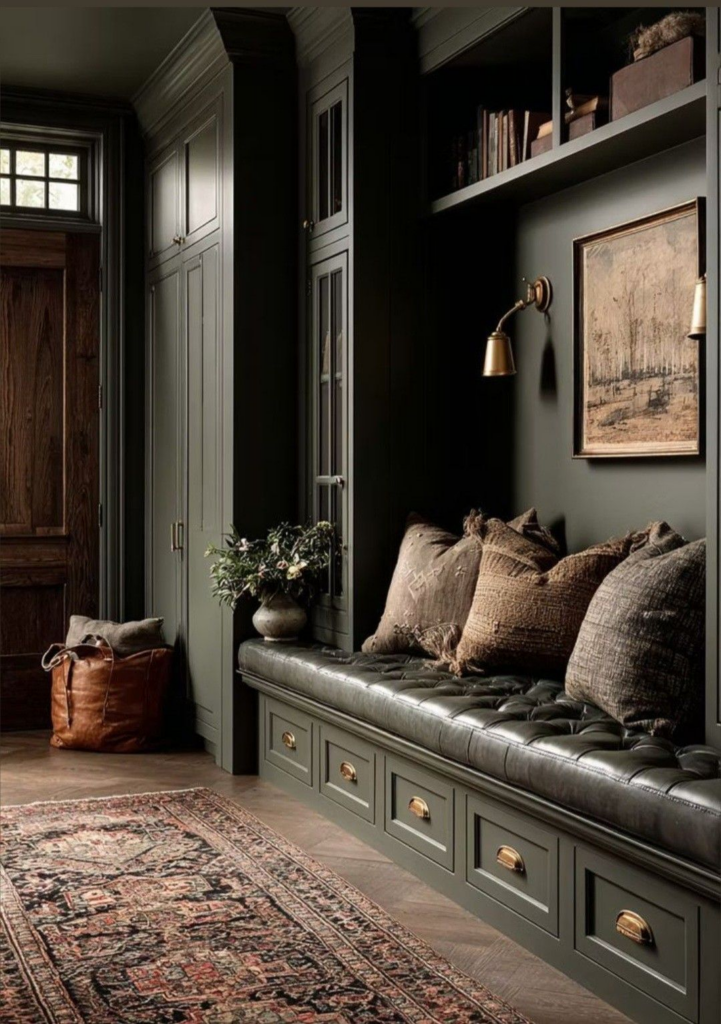
Depth and contrast define this entryway direction, offering immediate visual impact upon arrival. Charcoal introduces drama without resorting to harsh black, making it suitable for accent walls or architectural niches. When applied thoughtfully, this shade anchors the space, especially in entryways with ample light or lighter flooring. Charcoal pairs exceptionally well with warm metals, natural wood, and crisp white trim, creating a balanced composition rather than an enclosed feel. This tone enhances shadows and texture, highlighting paneling, wall molding, or statement artwork with sophistication. In open-plan homes, a charcoal accent helps visually define the entry zone, offering separation without physical barriers. Despite its bold presence, the color remains timeless and adaptable, avoiding trend-driven limitations. Proper lighting ensures the space feels intentional rather than heavy, with sconces or overhead fixtures softening the mood. For homeowners seeking a strong first impression, charcoal delivers confidence, structure, and character. It suits both contemporary and classic interiors, offering a refined solution for those wanting depth, contrast, and a memorable entryway aesthetic that feels curated rather than overwhelming.
Earthy Olive Green
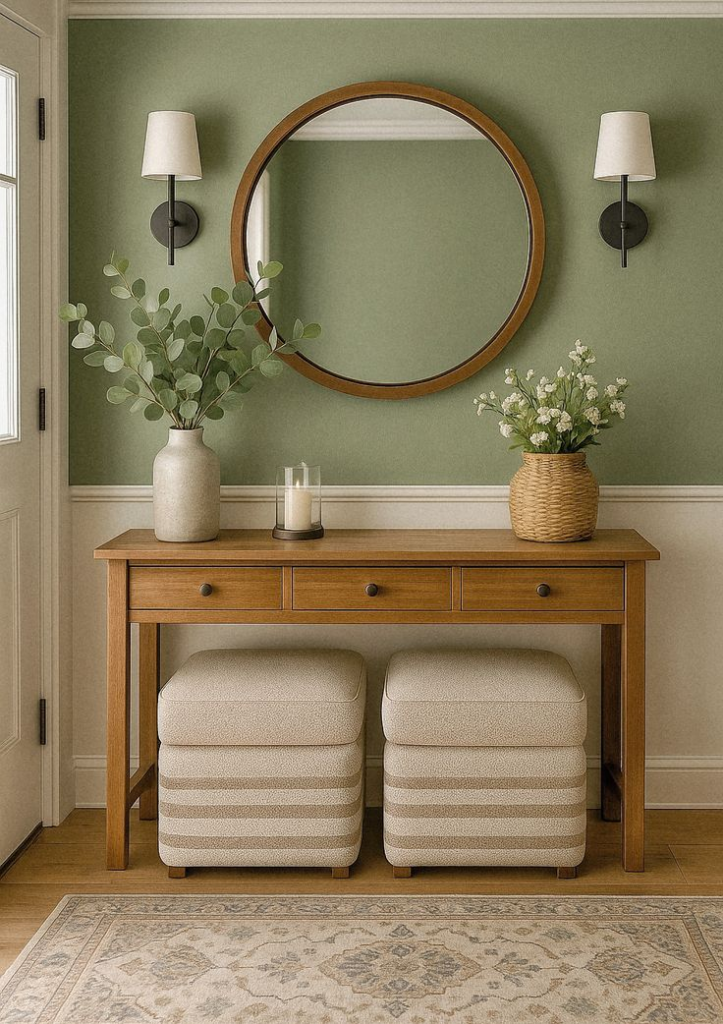
Natural inspiration drives the appeal of olive-toned entryways, grounding the space with organic warmth. This muted green introduces color without feeling overpowering, making it ideal for homeowners seeking subtle distinction. Olive harmonizes beautifully with wood finishes, stone textures, and woven materials, reinforcing a calm, nature-connected atmosphere. In entryways, this shade creates a soothing pause between outdoors and interior living, especially when paired with soft lighting. The color works equally well in modern and traditional homes, adapting through styling rather than requiring strict design rules. Darker olive variations add depth, while lighter interpretations maintain brightness in compact spaces. Decorative accents in clay, brass, or black enhance the richness of the tone without clashing. Olive also ages gracefully, remaining relevant as trends shift toward natural palettes. Practicality plays a role too, as this color conceals everyday wear better than pale neutrals. Overall, an olive entryway feels intentional, relaxed, and welcoming, offering personality while maintaining balance. It provides an excellent solution for those wanting color that feels timeless, grounded, and visually comforting.
Muted Blue-Gray
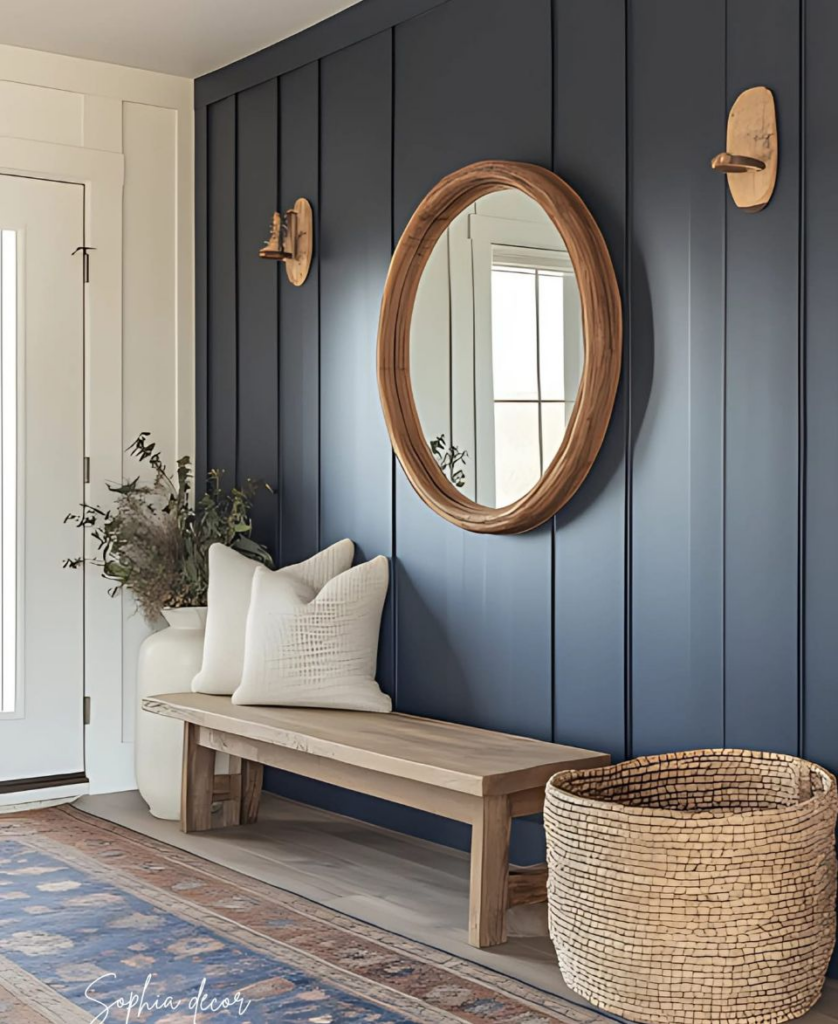
Subtle coolness defines this entryway choice, offering calm without sterility. Blue-gray tones soften traditional gray by introducing a gentle hint of color that feels refined rather than cold. This shade works especially well in homes with ample daylight, where it reflects light softly and maintains clarity throughout the day. In smaller entryways, muted blue-gray prevents visual heaviness while still adding depth. The tone complements white trim, brushed metals, and natural wood elements, creating a polished yet approachable environment. It also serves as a versatile backdrop for artwork, mirrors, or textured wall treatments. Unlike stronger blues, this variation remains neutral enough to transition seamlessly into adjoining spaces. Maintenance remains practical, as the color disguises minor scuffs better than crisp whites. Homeowners seeking balance between warmth and coolness often find this shade ideal. Overall, muted blue-gray delivers understated sophistication, visual calm, and flexibility, making it a reliable option for entryways that need to feel composed, welcoming, and visually cohesive without relying on bold color statements.
Creamy Off-White Walls
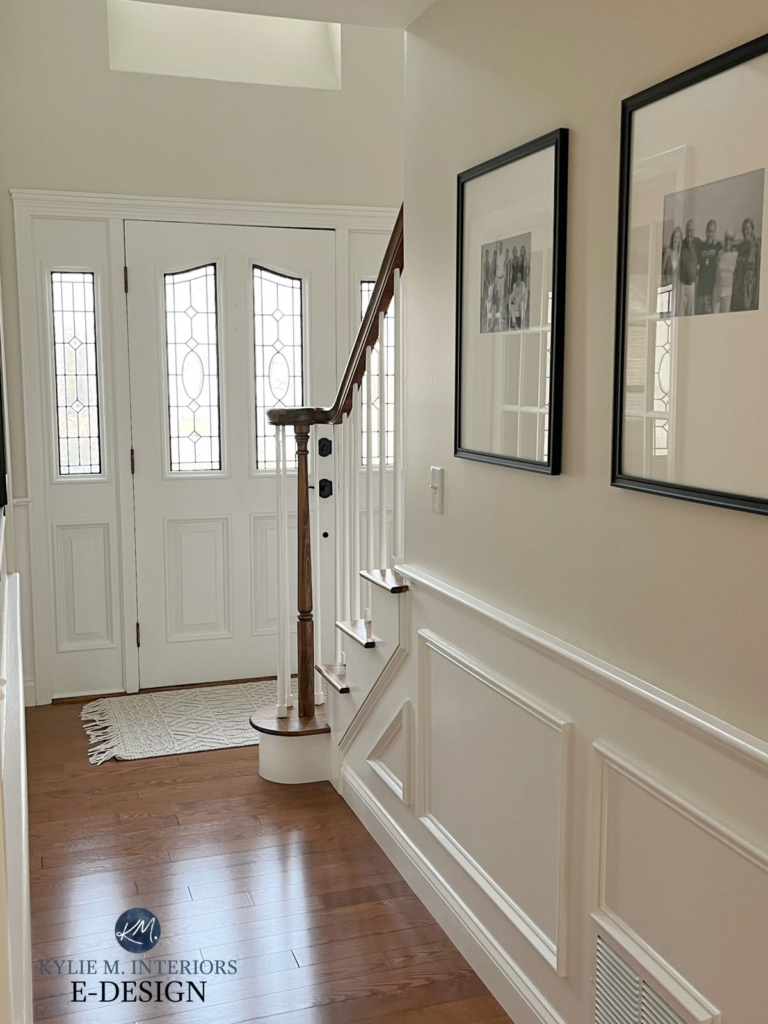
Warmth separates creamy off-white from stark white, offering softness without sacrificing brightness. This tone enhances natural light, making entryways feel open and inviting while avoiding the clinical appearance of cooler whites. Creamy off-white adapts well to various architectural styles, from modern to classic, acting as a neutral canvas for layered décor. Wood finishes appear richer against this backdrop, while black or brass hardware gains subtle contrast. In compact entryways, the color visually expands the space without appearing flat. It also provides flexibility for seasonal styling, allowing accessories and artwork to change without clashing. Creamy undertones prevent harsh shadows, creating a more flattering atmosphere throughout the day. Practical considerations matter as well, since this shade conceals wear more effectively than pure white. For homes with open layouts, creamy off-white ensures smooth visual flow between rooms. Overall, this option delivers timeless appeal, ease of styling, and brightness with warmth, making it a dependable choice for homeowners seeking clarity, softness, and long-term versatility in an entryway setting.
Dusty Taupe Tones
Balance between warmth and coolness defines dusty taupe, offering sophistication without severity. This understated shade introduces depth while remaining neutral enough to support varied décor styles. In entryways, taupe creates a composed, welcoming atmosphere that feels intentional rather than decorative. The muted nature of the color allows architectural details, mirrors, and lighting to stand out subtly. Taupe pairs well with stone flooring, warm woods, and metallic accents, reinforcing a cohesive and grounded look. This tone performs well in both natural and artificial light, maintaining consistency throughout the day. In high-traffic entryways, taupe proves forgiving, disguising marks and wear better than lighter neutrals. The color also transitions seamlessly into adjacent spaces, making it ideal for open-plan homes. Rather than following fleeting trends, dusty taupe offers longevity and adaptability. For homeowners seeking a polished entryway without dramatic contrast, this option delivers restraint, warmth, and reliability. It provides a refined solution that feels calm, structured, and effortlessly stylish while remaining practical for everyday living.
Deep Navy Statement
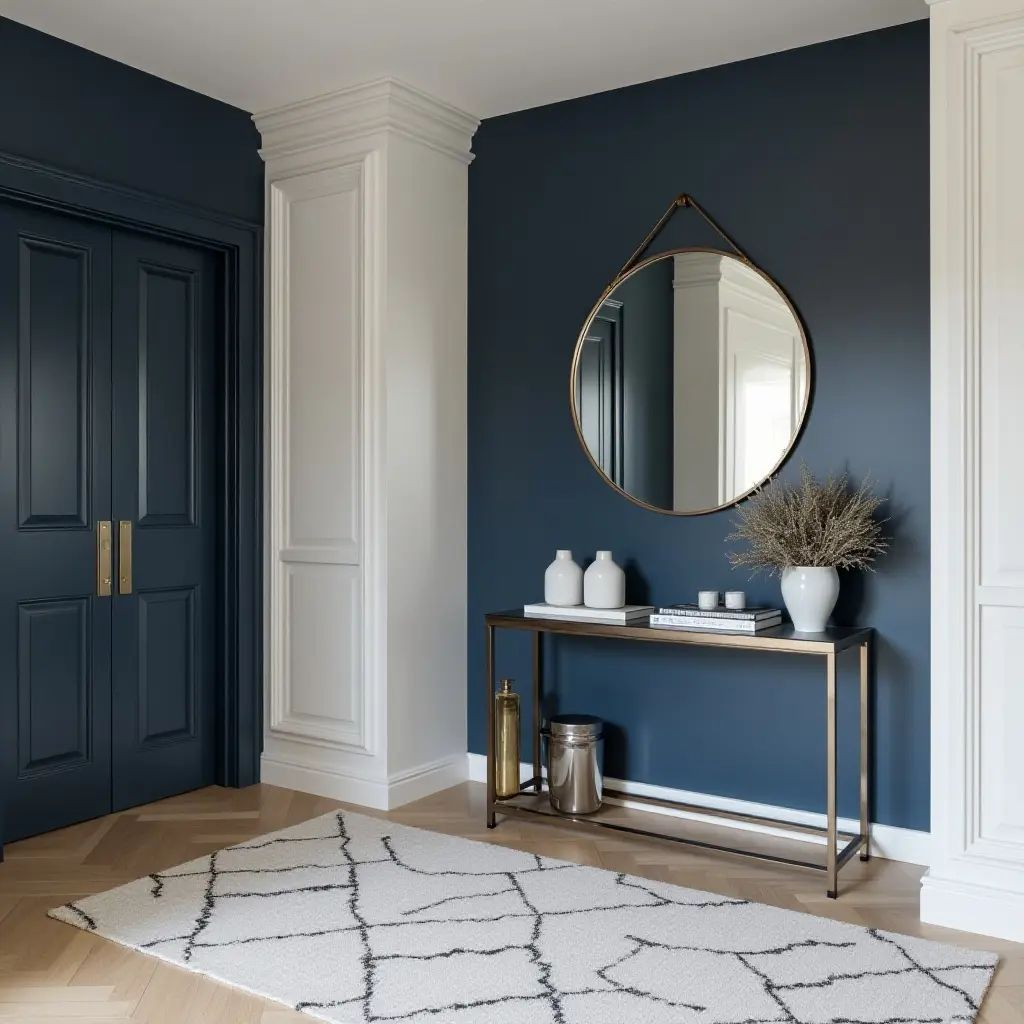
Rich saturation defines navy, offering authority and elegance in an entryway setting. When used strategically, this color creates a striking focal point without overwhelming the space. Navy works particularly well on accent walls, millwork, or paneled sections, adding depth and visual interest. Lighter flooring and trim prevent heaviness, maintaining balance and openness. This shade pairs beautifully with brass fixtures, warm wood tones, and crisp whites, creating a classic yet modern composition. In homes with defined entry zones, navy establishes separation while enhancing architectural presence. Lighting plays a crucial role, with layered sources ensuring the color feels intentional rather than dark. Navy also conveys durability, hiding scuffs and wear more effectively than pale tones. For homeowners seeking a confident first impression, this option delivers sophistication and structure. Overall, deep navy provides timeless appeal, strong character, and refined contrast, making it an excellent choice for entryways designed to feel curated, memorable, and visually grounded.
Sage Green Calm Entry
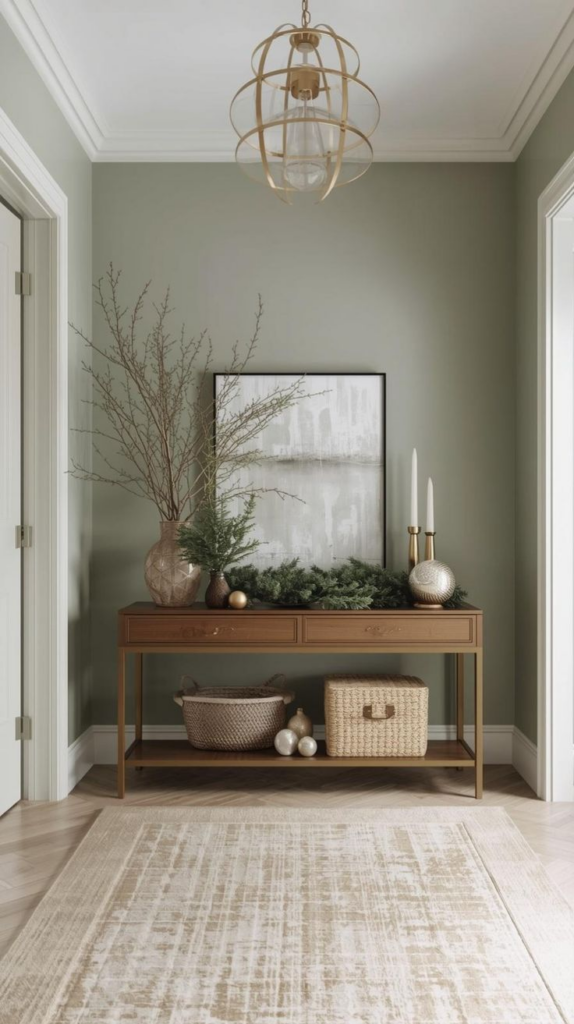
Muted green tones promote tranquility, and sage excels at creating a composed entryway environment. This shade introduces color gently, avoiding intensity while offering personality. Sage pairs naturally with light woods, woven textures, and neutral stone, reinforcing a relaxed, welcoming atmosphere. In entryways, the color softens transitions, making arrivals feel less abrupt and more intentional. It adapts well to both bright and low-light conditions, maintaining balance throughout the day. Decorative elements such as mirrors, ceramic vessels, or simple artwork appear more cohesive against this backdrop. Sage also aligns well with evolving design preferences that favor nature-inspired palettes. Practicality remains strong, as the color conceals everyday wear better than pale neutrals. For open layouts, sage transitions smoothly into living areas without visual disruption. Overall, this choice delivers calm, warmth, and versatility, making it ideal for homeowners who want an entryway that feels grounded, soothing, and subtly distinctive without appearing overly styled.
Clay-Inspired Beige
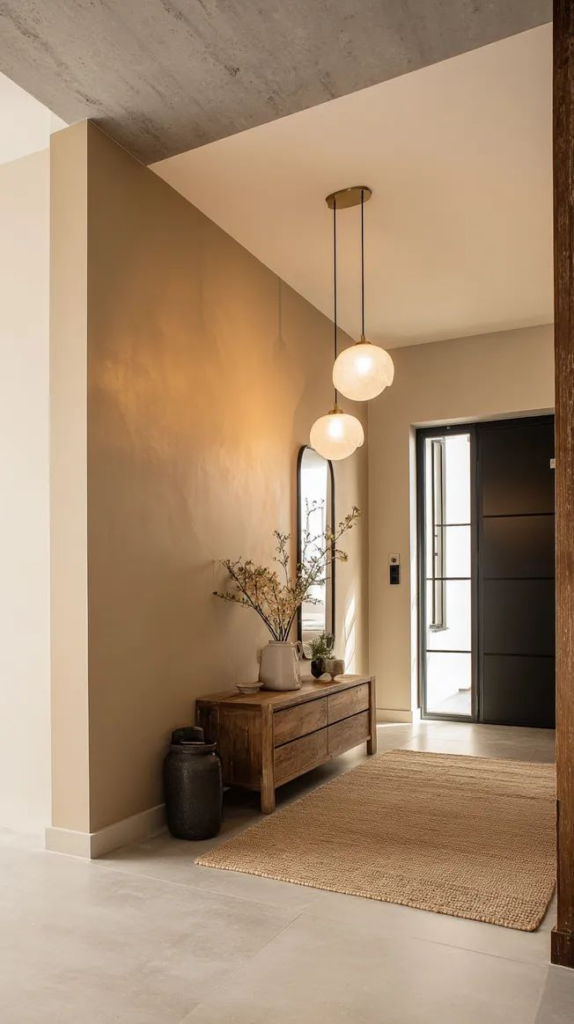
Earth-toned beige rooted in clay hues brings warmth and authenticity to an entryway. This color feels organic and grounded, creating an immediate sense of comfort. Clay-inspired beige works especially well in homes that emphasize natural materials, pairing effortlessly with terracotta, wood, and stone. The tone reflects light softly, preventing harsh contrast while maintaining depth. In entryways, this shade offers visual stability, anchoring the space without overpowering décor. It also supports layered textures, from woven rugs to sculptural accents, enhancing dimensionality. Unlike cooler neutrals, clay-based beige avoids sterility, making arrivals feel relaxed and inviting. The color performs consistently across lighting conditions and ages gracefully as trends shift. Maintenance remains manageable, with everyday marks blending naturally into the tone. For homeowners seeking warmth without heaviness, this option offers balance and longevity. Overall, clay-inspired beige delivers understated richness, practicality, and timeless appeal, making it a reliable solution for entryways designed to feel welcoming and grounded.
Soft Blush Undertone
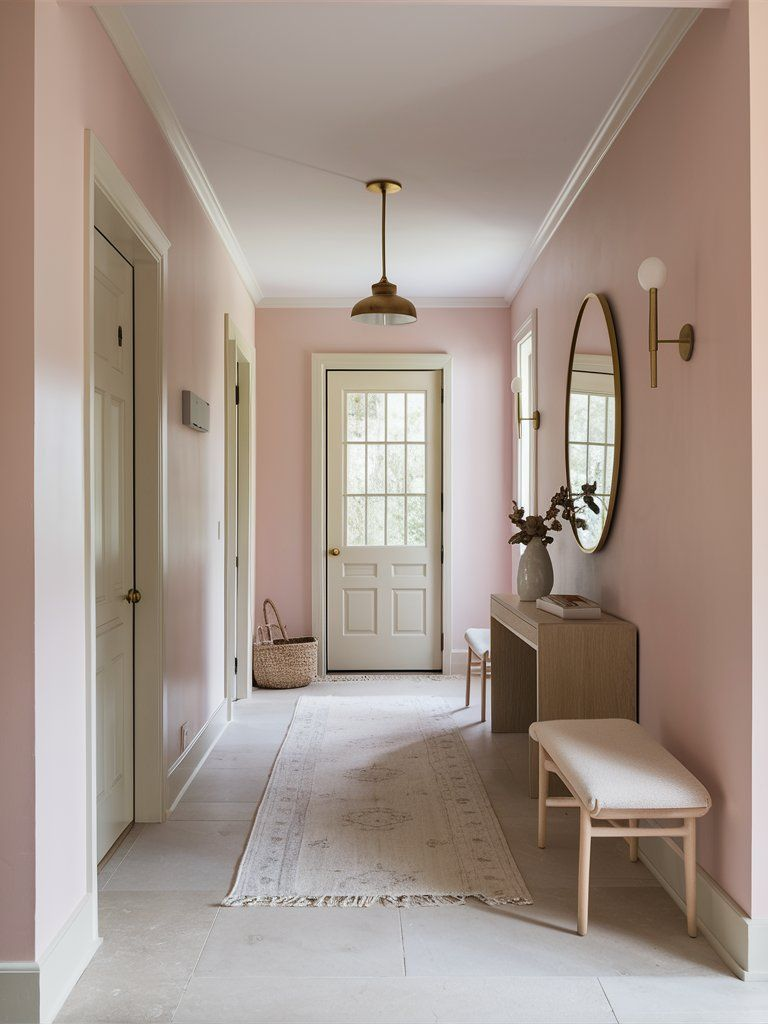
Subtle warmth defines blush-infused entryways, offering personality without overt color dominance. This tone introduces a gentle undertone that enhances light and softens architectural lines. In entry spaces, blush creates a welcoming, refined atmosphere that feels current yet restrained. The shade pairs beautifully with warm metals, light woods, and neutral textiles, maintaining balance rather than appearing decorative. When used thoughtfully, blush avoids overt femininity, presenting instead as a modern neutral with warmth. It reflects light well, making compact entryways feel brighter without starkness. Decorative accents gain softness against this backdrop, enhancing cohesion. The color also transitions smoothly into adjacent neutral spaces, supporting visual flow. Practical benefits include reduced visibility of minor wear compared to white. For homeowners seeking distinction without boldness, blush undertones offer a refined solution. Overall, this option delivers warmth, approachability, and subtle character, making it ideal for entryways that aim to feel inviting, polished, and quietly distinctive.
Classic Black Accent Wall
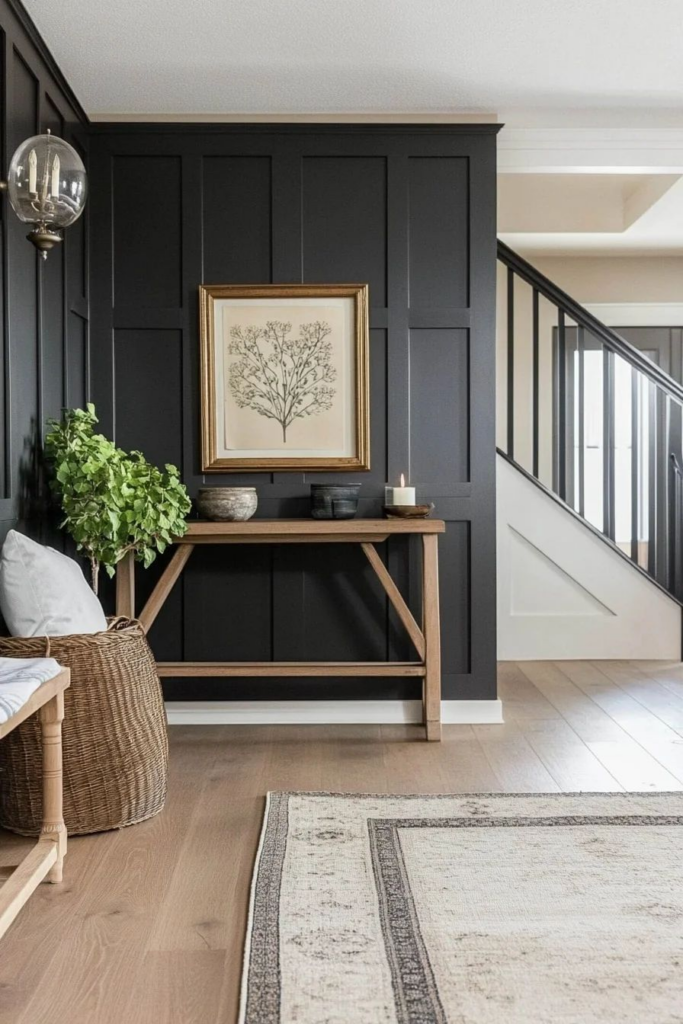
Strong contrast defines black accents, offering clarity and structure in an entryway. Used selectively, black introduces sophistication without overwhelming the space. Accent walls, door surrounds, or built-in features benefit from this approach, creating definition and visual focus. Black pairs effectively with light walls, warm wood floors, and metallic details, achieving balance through contrast. In entryways, this color establishes a strong first impression while maintaining elegance. Proper lighting ensures depth without heaviness, allowing textures and finishes to remain visible. Black also conceals wear exceptionally well, making it practical for high-traffic zones. Rather than following trends, this choice remains timeless, adapting to changing décor styles with ease. For open layouts, a black accent visually anchors the entry without physical separation. Overall, this option delivers confidence, durability, and refined contrast, making it suitable for homeowners seeking a bold yet enduring entryway statement that feels intentional and polished.