
Console tables often serve as visual anchors in entryways, hallways, and living spaces, yet they are frequently underutilized or poorly styled. Strategic styling improves balance, proportion, and everyday function without requiring major design changes. Object grouping, height variation, negative space, and material contrast all influence how polished the setup feels. When done correctly, console table styling supports storage needs while reinforcing the room’s overall aesthetic. This guide breaks down practical styling techniques that work across design styles, helping homeowners achieve a cohesive, intentional look that feels curated rather than cluttered, and easy to refresh over time.
Layered Thrifted Art Leaning Setup

Curated wall moments on console tables gain depth when artwork is leaned instead of mounted. This approach allows frames of varying sizes, finishes, and eras to overlap slightly, producing a collected look that feels intentional rather than staged. Start with one larger framed piece at the back to establish scale, then position smaller thrifted prints or sketches in front, offsetting heights for visual rhythm. Wood, brass, and distressed black frames work well together when united by a shared color family or theme. Keeping the art grounded against the wall prevents the console surface from feeling cluttered while still adding personality. This setup also offers flexibility, making seasonal refreshes or style updates quick and low effort. Leaning art avoids wall damage and works especially well in rentals or frequently updated spaces. Pair the artwork with one or two understated objects to prevent visual competition. The result is a console table styling solution that balances character and restraint, offering warmth without overwhelming the entryway or living space. Thoughtful spacing and consistent alignment ensure the arrangement reads as polished rather than accidental, supporting a refined yet relaxed interior aesthetic.
Neutral Runner as Table Base
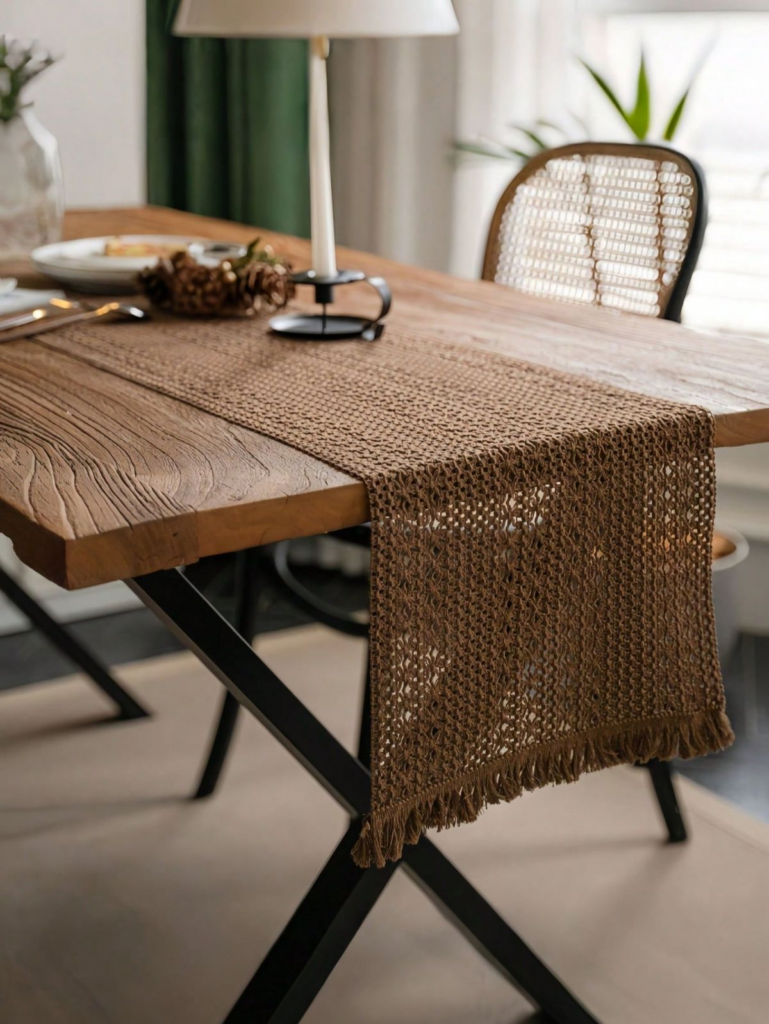
Textiles play a subtle but powerful role in console table styling, particularly when used as a foundational layer. A neutral fabric runner softens hard surfaces and visually anchors decorative objects, creating a sense of cohesion across the tabletop. Linen, cotton, or lightly textured woven runners in shades like ivory, flax, or warm gray work well across design styles. Draping the runner lengthwise helps guide the eye and visually elongates the console, which is especially useful in narrow entryways. Objects placed on top immediately feel more intentional, as the runner defines a clear styling zone. This technique also protects delicate wood or stone surfaces from scratches while adding warmth. Keeping the runner simple allows decorative items to stand out without competing patterns. Slight overhang at each end introduces relaxed structure, while precise centering maintains balance. When paired with natural materials such as ceramics or wood, the runner supports a layered look that feels grounded and livable. This base layer simplifies styling decisions and makes future updates easier, ensuring the console table remains polished with minimal effort.
Odd-Number Object Clustering
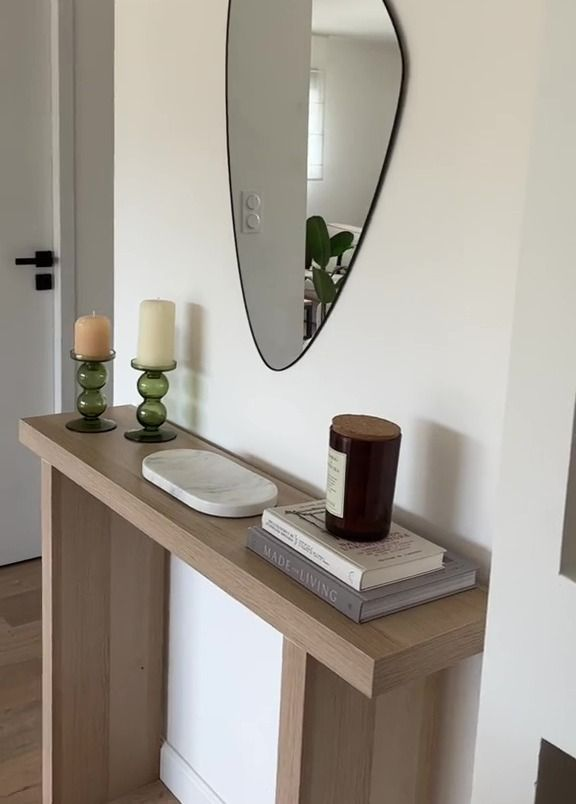
Visual balance on a console table often improves when objects are arranged in odd-number groupings. Sets of three or five create a more natural flow than symmetrical pairs, guiding the eye across the surface without feeling rigid. This method works across decor styles, from traditional to contemporary, and adapts easily to different object types. Group items that vary slightly in height and shape while maintaining a shared material or color tone. For example, a small sculpture, a medium vessel, and a taller accent piece can form a cohesive cluster without appearing staged. Spacing matters; objects should feel connected but not crowded. Leaving negative space around each grouping allows the arrangement to breathe. Odd-number clustering also simplifies styling decisions, reducing the temptation to overfill the table. This technique encourages thoughtful editing, which is essential for functional surfaces like console tables. When executed carefully, the result feels curated rather than decorative-heavy, supporting a clean and approachable look. It offers an easy way to achieve visual interest while maintaining order, making it ideal for both high-traffic entryways and quieter living areas.
Mini Lamp Swap with Warm Bulb

Lighting significantly influences how a console table is perceived, especially during evening hours. Replacing overhead reliance with a small-scale table lamp introduces warmth and depth at eye level. Compact lamps with ceramic, stone, or metal bases work well without overwhelming the surface. The bulb choice is critical; warm-temperature bulbs create a soft glow that enhances textures and reduces harsh shadows. This subtle lighting shift makes the console feel intentional rather than purely functional. Lamps also provide vertical variation, balancing lower decorative objects and preventing a flat appearance. Positioning the lamp slightly off-center maintains visual interest while preserving usability. Shades in neutral fabrics help diffuse light evenly, contributing to a calm atmosphere. Beyond aesthetics, this setup improves functionality by offering ambient lighting near entryways or hallways. A thoughtful lamp swap refreshes the entire vignette without requiring new decor pieces. This simple adjustment supports a layered lighting approach and reinforces a welcoming tone, proving that small changes can have an outsized impact on console table styling.
Low Bowl + Vertical Stem Combo
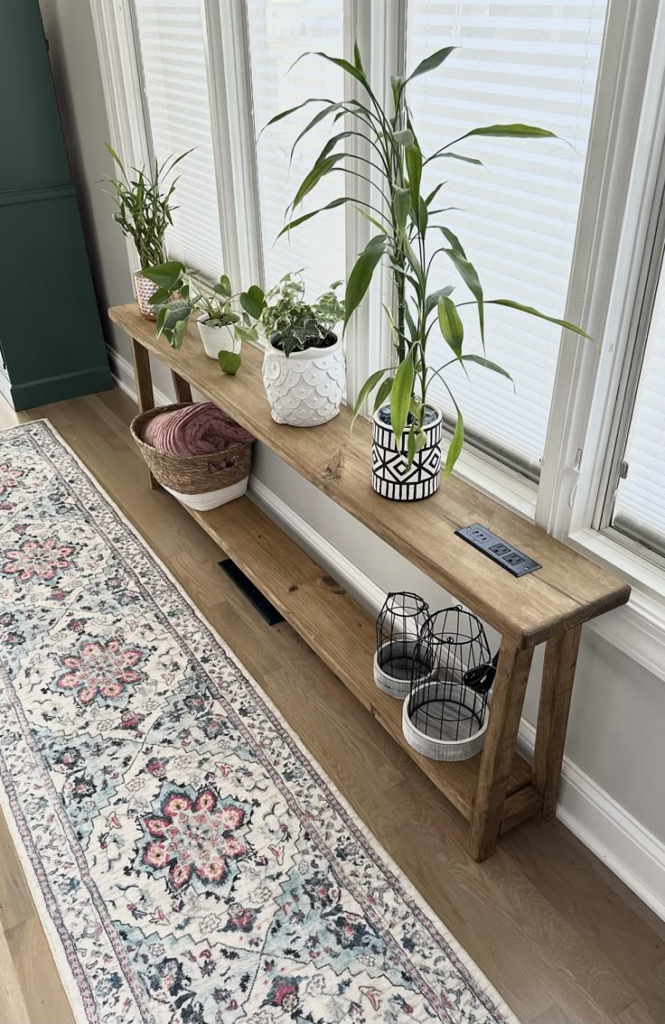
Balanced contrast is essential in console table arrangements, and pairing a low-profile bowl with a taller stem element achieves this effectively. The bowl grounds the setup, providing horizontal weight, while the vertical stem introduces height and movement. Ceramic, stone, or wooden bowls work well as anchors, especially when left partially empty or filled with minimal accents. The stem element, whether natural or faux, should feel sculptural rather than floral-heavy to maintain a refined look. This combination creates a clear focal point without cluttering the surface. Positioning the bowl slightly forward and the stem behind establishes depth and layering. Neutral tones ensure versatility across seasons, while organic shapes add softness. This pairing adapts easily to various console sizes, offering structure without rigidity. It also allows quick updates by swapping stems while keeping the base intact. The interplay of low and tall elements adds visual interest and supports a balanced composition, making this approach both practical and aesthetically reliable for everyday styling.
Books Turned Decorative Risers
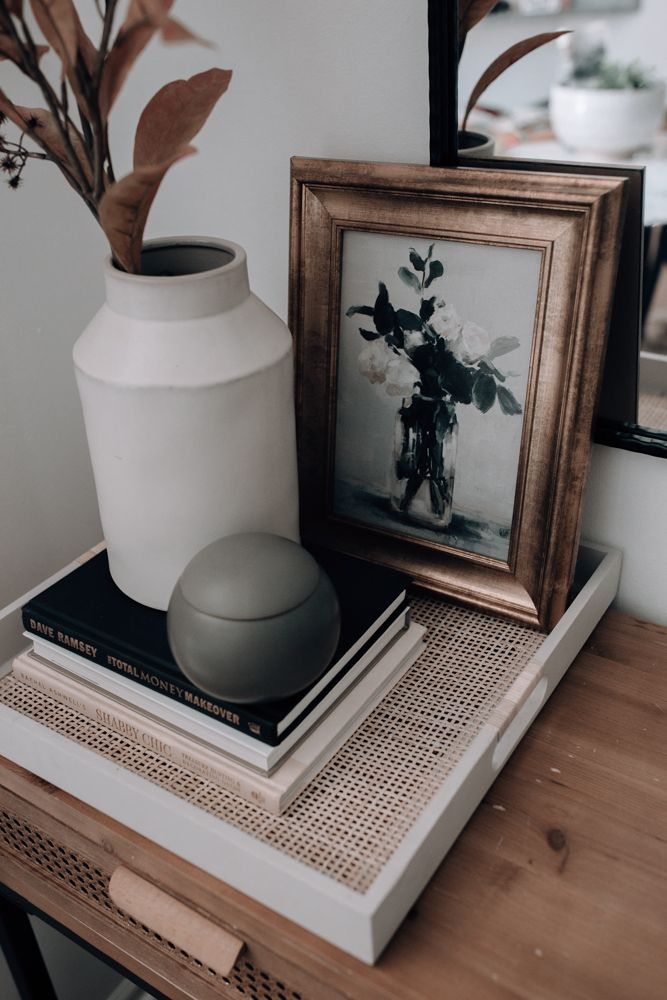
Books serve a dual purpose on console tables, offering both visual interest and functional elevation. Stacked books act as risers, lifting smaller objects to varying heights and preventing a flat arrangement. Hardcover books with neutral spines or cohesive color palettes integrate seamlessly into most interiors. Horizontal stacks work best, creating stable platforms for candles, small vessels, or sculptural accents. This method introduces intentional layering without adding extra decor pieces. Selecting books with subtle typography or textured covers enhances the tactile quality of the display. Height variation improves sightlines, especially when paired with taller elements elsewhere on the table. Keeping stacks limited to two or three books prevents visual heaviness. This approach also allows personalization through subject matter without overwhelming the aesthetic. Decorative risers help organize objects while maintaining an edited look. The result is a console table that feels thoughtful and composed, blending practicality with understated design.
Tray Styling to Hide Clutter
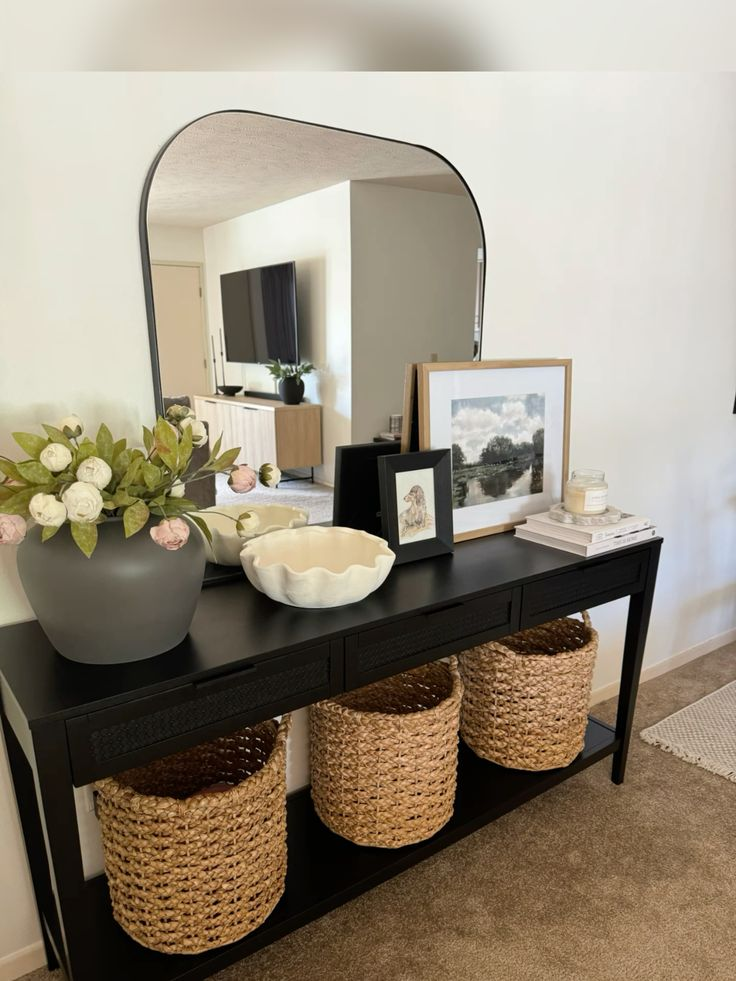
Functional console tables often collect everyday items, which can disrupt visual harmony. A tray offers a structured solution by containing clutter within defined boundaries. Materials such as wood, metal, or woven fibers complement different interior styles while adding texture. Placing keys, mail, or small accessories inside a tray keeps the surface tidy and intentional. The tray itself becomes a styling element, anchoring smaller items and preventing visual scatter. Rectangular trays suit longer consoles, while round options soften angular layouts. Keeping contents minimal ensures the tray enhances rather than dominates the arrangement. This method also simplifies daily routines, as essential items remain accessible yet organized. Positioning the tray alongside decorative elements maintains balance between form and function. Tray styling supports a clean, composed look that adapts well to high-traffic areas. It provides an efficient way to manage necessities without sacrificing design integrity, making it an essential console table strategy.
Mirror Leaned, Not Hung
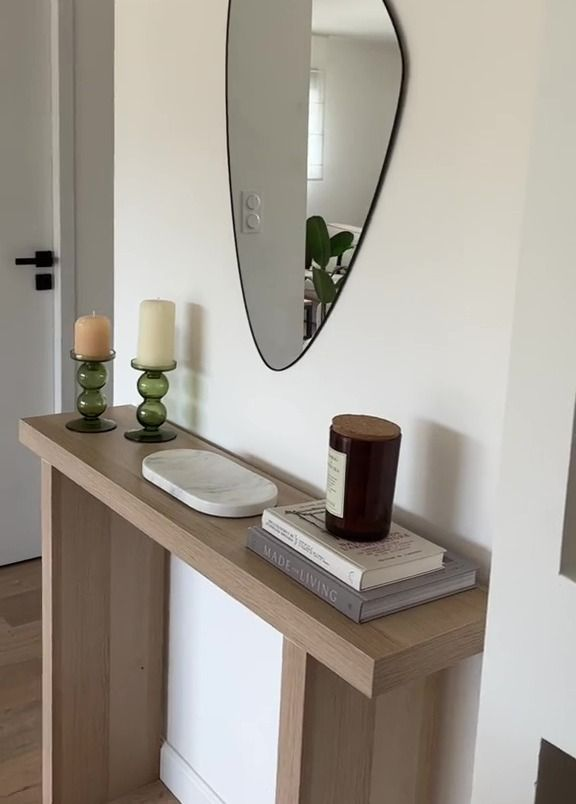
Leaning a mirror against the wall introduces reflective interest without committing to permanent installation. This technique works particularly well on console tables, where vertical elements help frame the display. A leaned mirror adds depth, reflecting light and making smaller spaces feel more open. Frames in wood, metal, or subtle finishes integrate easily across styles. Keeping the mirror slightly taller than surrounding objects establishes a visual anchor. Leaning rather than hanging allows flexibility, enabling quick repositioning or seasonal updates. This approach also reduces wall damage, making it suitable for rentals. Pairing the mirror with low-profile decor prevents obstruction of the reflective surface. The result is a relaxed yet polished arrangement that feels intentional. Mirrors leaned this way enhance brightness and create a layered backdrop for other elements. This styling choice balances practicality and aesthetics, offering a refined solution that adapts to changing decor needs.
Single Statement Branch or Faux Stem
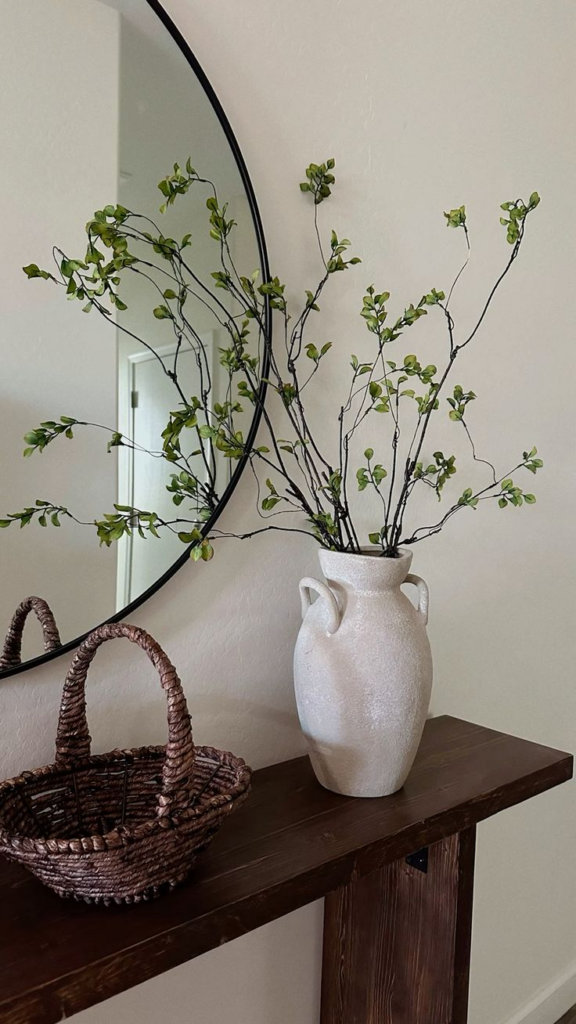
Organic elements bring life to console tables, especially when kept minimal. A single statement branch or faux stem introduces height and movement without overwhelming the surface. Selecting stems with clean lines and natural tones ensures longevity across seasons. Placed in a simple vessel, the stem becomes a sculptural accent rather than a floral arrangement. Height should be proportional to the console, creating presence without imbalance. This approach works well in entryways, adding softness while maintaining clarity. Faux options offer consistency and low maintenance, making them practical for busy households. Limiting the display to one stem prevents visual clutter and supports an edited aesthetic. This element pairs effectively with neutral decor and textured surfaces. The simplicity of a single branch reinforces a calm, composed look while adding subtle interest. It demonstrates how restraint can achieve impact in console table styling.
Textured Basket Tucked Under
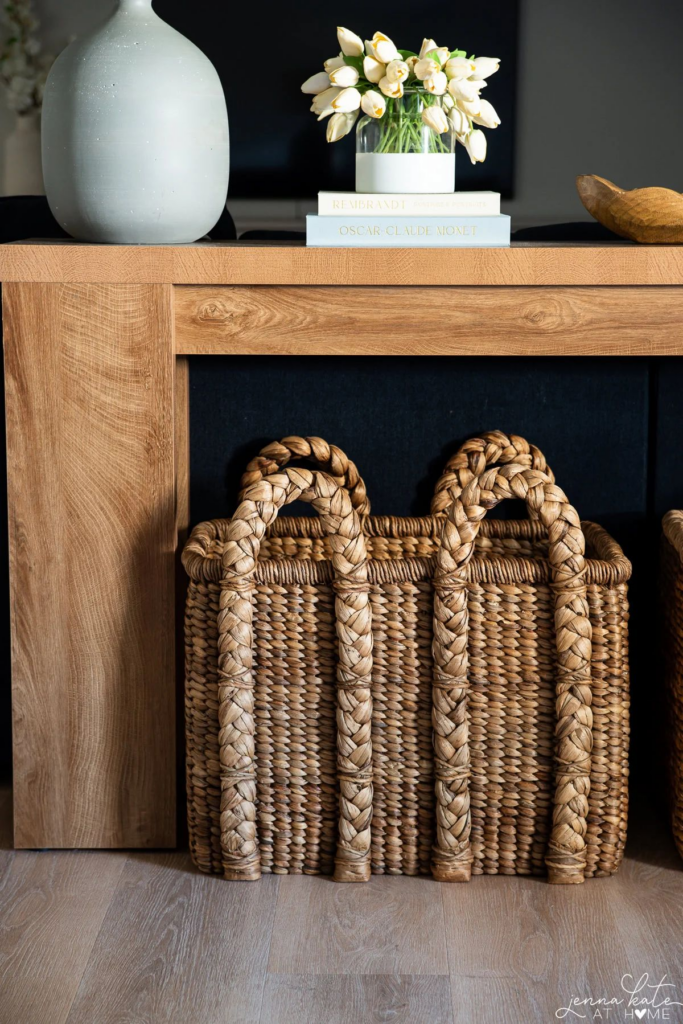
Under-console space often goes unused, yet it offers valuable storage and visual balance. A textured basket placed beneath the table adds warmth while providing a discreet place for shoes, scarves, or extra items. Natural materials such as seagrass, rattan, or woven fibers introduce texture without drawing attention away from the tabletop. Basket size should align with the console width, filling space without crowding. This addition grounds the furniture visually, preventing the console from appearing top-heavy. Neutral tones ensure versatility and cohesion with surrounding decor. Functional storage beneath the table supports organization in high-traffic areas. Keeping contents hidden maintains a clean look while enhancing practicality. This solution balances aesthetics and utility, reinforcing thoughtful design. A well-chosen basket completes the console vignette, contributing to a polished and purposeful entryway setup.
Monochrome Decor Color Lock
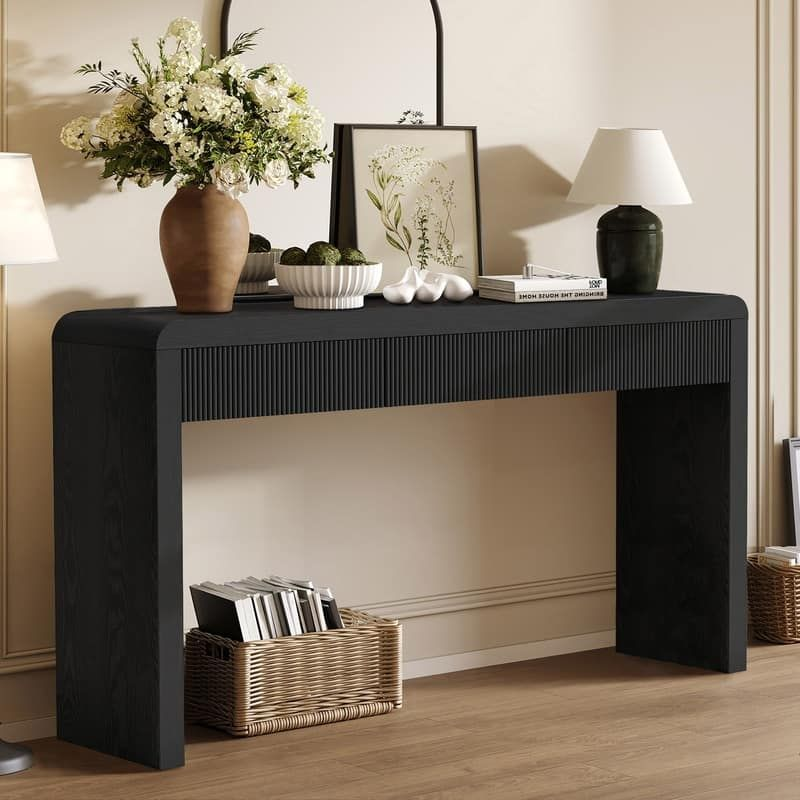
Limiting decor to a single color family creates a cohesive and calming console table display. A monochrome approach relies on variation in texture, shape, and finish rather than contrast. Using different shades within the same color prevents flatness while maintaining unity. This method simplifies styling decisions and reduces visual noise. Ceramics, books, and accents in coordinated tones feel intentional and refined. Subtle material differences add depth without disrupting harmony. This strategy works especially well in minimalist or contemporary interiors, where restraint is key. Maintaining a consistent palette also allows the console to complement surrounding spaces seamlessly. Occasional tonal shifts keep the arrangement dynamic. A monochrome decor lock supports a timeless look that adapts easily to evolving interiors. It delivers clarity and sophistication through thoughtful consistency rather than excess.
Seasonal Swap-in Accent Piece
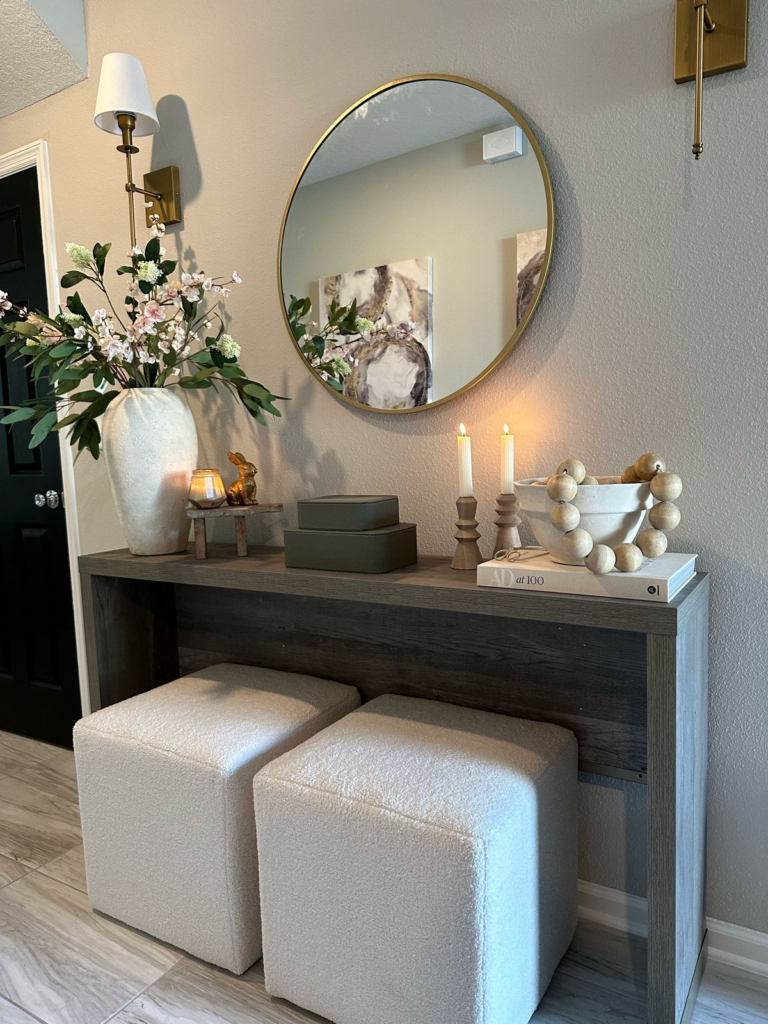
Refreshing a console table does not require a full redesign. Rotating a single accent piece seasonally keeps the display relevant and engaging. This could include a ceramic object, small artwork, or sculptural element that reflects the time of year through texture or tone. Keeping the base styling consistent ensures continuity while allowing subtle updates. This approach prevents clutter and reduces unnecessary purchases. Seasonal accents provide visual interest and signal change without overwhelming the space. Selecting pieces with timeless qualities ensures they remain usable year after year. Placement should feel intentional, replacing rather than adding to existing decor. This method supports flexibility and creativity while maintaining structure. A thoughtful swap refreshes the console table effortlessly, offering a practical way to keep interiors feeling current and considered.