
Earthy contrast at the entry creates comfort, order, and a welcoming first impression for living. Brown and cream palettes ground the space with warmth while maintaining brightness, making them ideal for high-traffic foyers and hallways. Natural wood finishes, soft neutrals, and layered textures support durability without visual heaviness. This pairing works across traditional, transitional, and modern homes, offering flexibility with lighting, flooring, and storage choices. Readers updating small or dated entries will appreciate guidance that prioritizes flow, organization, and lasting appeal. The ideas ahead focus on practical styling decisions that feel cohesive, low-maintenance, and inviting from the moment guests arrive.
Cream Walls with Brown Trim

Subtle contrast sets a refined foundation when pale wall surfaces are outlined with warm-toned edging. Cream walls reflect light effectively, keeping an entryway open and bright, while brown trim adds architectural definition that prevents the space from feeling flat. This pairing works particularly well in narrow or low-light entryways where visual balance matters. Brown trim around doors, baseboards, or ceiling lines grounds the softness of cream and introduces a sense of order. Natural wood stains, walnut finishes, or deep espresso tones complement cream without overpowering it. This approach also highlights craftsmanship, making millwork details more noticeable. From a practical standpoint, darker trim helps disguise scuffs and wear in high-traffic zones like entryways. The combination pairs easily with neutral flooring, woven runners, or leather accessories. Homeowners often favor this scheme because it adapts to traditional, transitional, and modern interiors alike. Cream walls with brown trim also provide flexibility for seasonal décor changes without clashing. When executed with consistent undertones, the result feels intentional, polished, and welcoming while maintaining long-term visual appeal.
Brown Wood Console with Cream Top
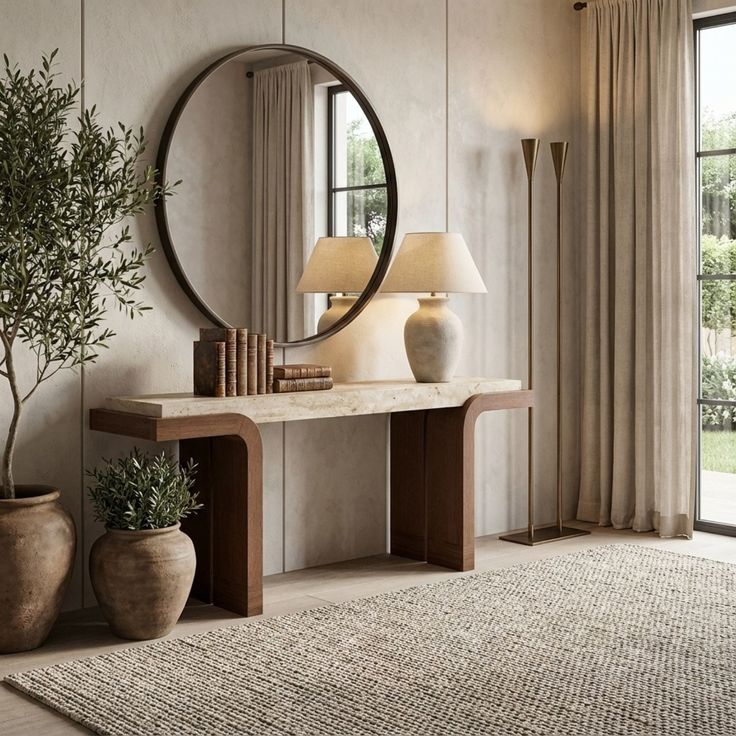
Furniture selection can define the tone of an entryway, and a console featuring a dark wood base with a light surface achieves both function and style. The brown wood structure offers durability and visual weight, anchoring the space near the entrance. A cream-colored top introduces contrast, preventing the piece from appearing heavy or bulky. This surface is ideal for daily essentials such as keys, mail, or decorative bowls, as lighter finishes make items easier to spot. From a design perspective, the two-tone effect reinforces a cohesive brown and cream palette without overwhelming the room. Wood grains add warmth and texture, while the cream top reflects light, enhancing brightness. Such consoles work well against cream walls or beneath mirrors, creating a balanced focal point. Storage drawers or lower shelves increase practicality, making the console suitable for busy households. This combination supports both aesthetic harmony and everyday usability, making it a reliable entryway solution.
Layered Cream Textiles on Brown Floors

Textiles play a critical role in softening hard surfaces, especially when darker flooring materials are involved. Brown floors, whether wood, tile, or laminate, provide a sturdy and grounded base, but they can feel visually heavy without contrast. Cream textiles introduce lightness and comfort, balancing the depth of the flooring. Area rugs, runners, or small accent mats in cream tones help define the entry path while protecting high-traffic zones. Layering different textures, such as flatweave rugs with plush throws on nearby benches, adds depth without clutter. Cream fabrics also highlight the natural richness of brown floors by contrast rather than competition. This approach suits both modern and classic homes, as neutral textiles remain timeless. Maintenance is practical as well, since removable rugs can be cleaned easily. Overall, the combination creates an inviting transition space that feels warm, intentional, and visually balanced from the moment guests enter.
Cream Arched Mirror with Brown Frame

Mirrors serve both decorative and functional purposes in entryways, and an arched design introduces subtle elegance. A cream-framed mirror softens the wall presence, while a brown outline or inner edge adds structure and contrast. The curved silhouette breaks up rigid lines often found in doors and cabinetry, making the space feel more fluid. Brown framing grounds the mirror visually, ensuring it complements other wood or leather elements nearby. This pairing enhances light distribution, reflecting both natural and artificial illumination to make the entryway feel larger. Placement above a console or bench maximizes usefulness for last-minute checks before heading out. The cream and brown palette keeps the mirror from dominating the room while still acting as a focal point. This design choice blends seamlessly with neutral interiors and offers long-term versatility as surrounding décor evolves.
Brown Slatted Wall Feature

Architectural wall treatments introduce depth, and slatted wood panels offer both texture and rhythm. Brown slats bring warmth and a sense of craftsmanship to an entryway, especially when contrasted against lighter surrounding walls. Vertical slats can visually heighten the space, while horizontal arrangements create width, depending on layout needs. This feature works well behind benches, hooks, or consoles, subtly defining zones without additional walls. Natural wood tones pair effortlessly with cream paint, maintaining a cohesive palette. Beyond aesthetics, slatted walls can conceal imperfections or wiring while allowing airflow. The repetitive pattern adds visual interest without relying on bold colors. Maintenance remains manageable with sealed wood finishes that resist dust buildup. A brown slatted wall feature delivers a refined yet approachable statement, making the entryway feel thoughtfully designed rather than purely utilitarian.
Cream Storage Bench with Wood Base
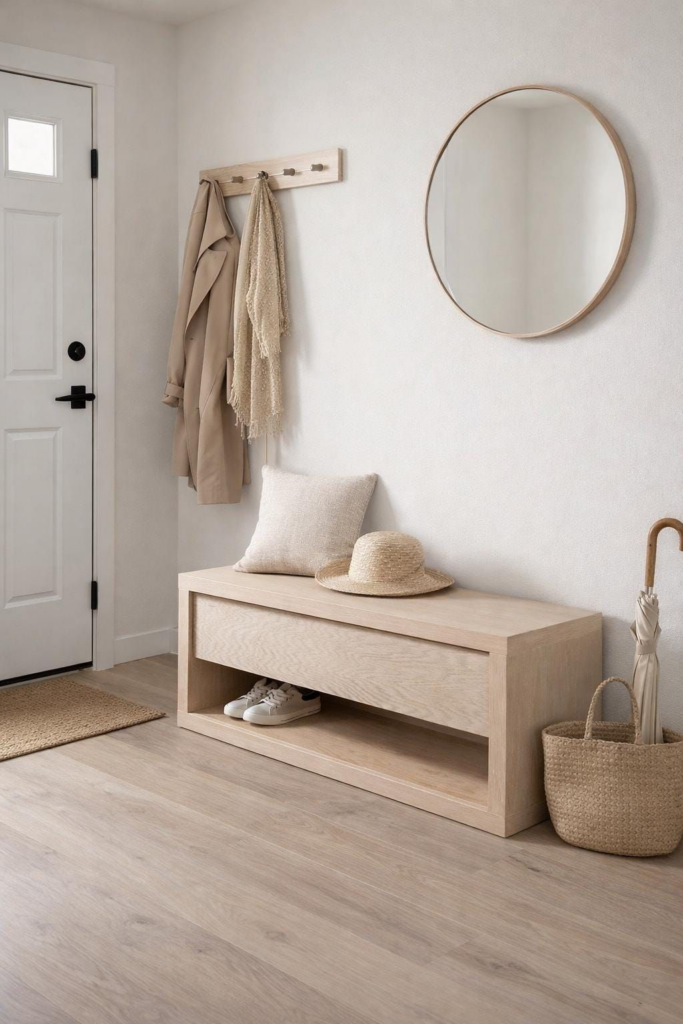
Seating combined with storage is especially valuable near entrances. A bench finished in soft cream upholstery or paint offers a light, welcoming appearance, while a brown wood base ensures durability. This contrast prevents the piece from blending into the background while maintaining visual harmony. Cream surfaces feel clean and inviting, encouraging use for tasks like putting on shoes. The wooden base anchors the bench, protecting it from wear caused by daily foot traffic. Hidden compartments or baskets beneath the seat keep clutter contained, supporting an organized entryway. This combination works well in small and large spaces alike, adapting to various layouts. The neutral palette allows the bench to pair easily with runners, wall hooks, or accent pillows. Functionality and style align here, making the cream storage bench with a wood base a practical yet polished solution.
Brown Ceramic Accent Decor
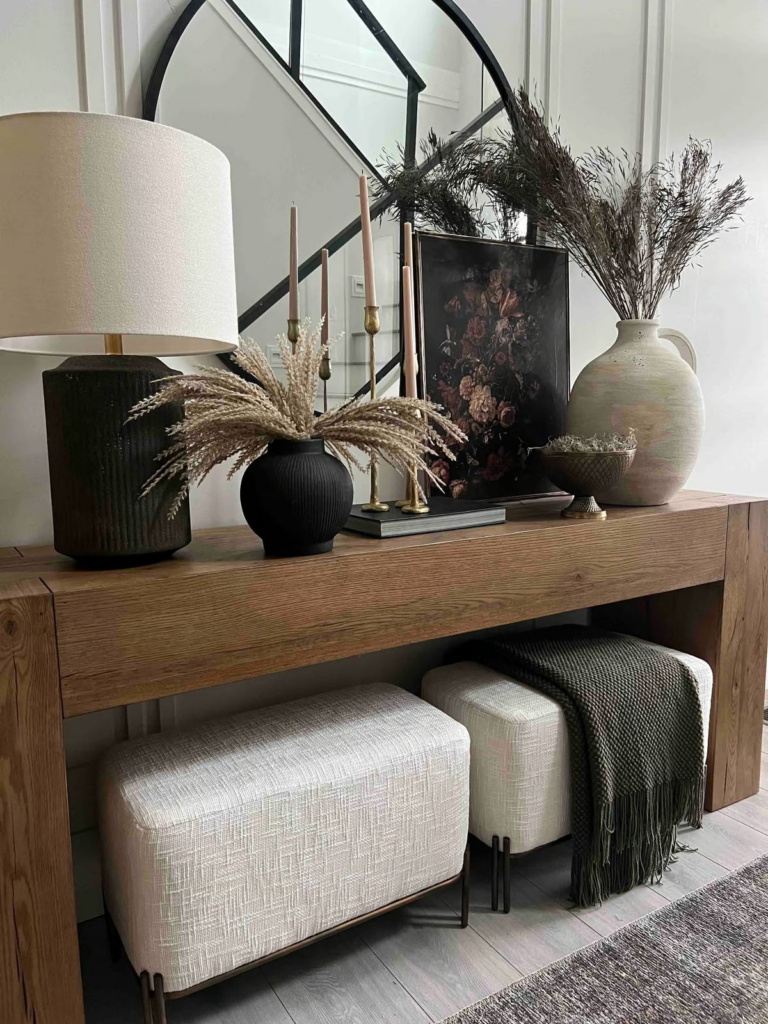
Decorative accents add personality without overwhelming limited entryway space. Brown ceramic pieces introduce earthy texture and subtle sheen, enhancing the warmth of a cream-based palette. Items such as vases, bowls, or sculptural objects work well on consoles or shelves. Ceramic finishes vary from matte to glazed, offering visual interest while remaining neutral. Brown tones ground lighter surroundings, preventing the space from feeling overly soft or washed out. These accents also complement natural materials like wood and woven textiles. From a practical angle, ceramic décor is durable and easy to maintain. Thoughtful placement ensures balance, using a few well-chosen pieces rather than excess ornamentation. Brown ceramic accents contribute to a cohesive, grounded look that feels curated and intentional without appearing staged.
Two-Tone Cream and Brown Paint Split
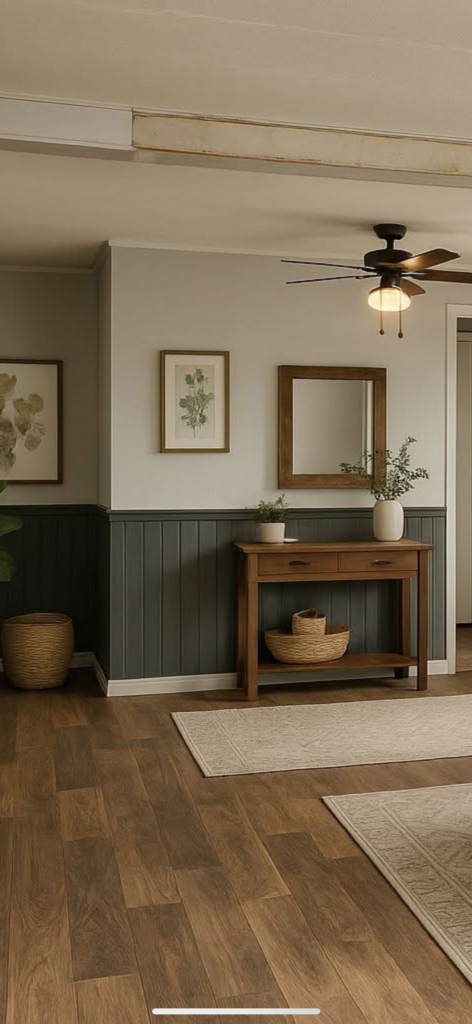
Paint can define spatial zones without physical barriers. A two-tone approach using cream and brown creates visual structure in an entryway. Typically, cream occupies the upper portion to reflect light, while brown anchors the lower section, adding depth. This split design protects walls from scuffs in high-traffic areas while maintaining brightness above eye level. Clean dividing lines, such as chair rails or subtle trim, enhance precision. The contrast introduces interest without relying on bold patterns. This method suits both compact and expansive entryways, offering flexibility in height proportions. Coordinating flooring and furniture with the lower brown tone ensures consistency. The result is a balanced, durable, and visually engaging entryway that feels thoughtfully planned.
Brown Leather Catch-All Trays
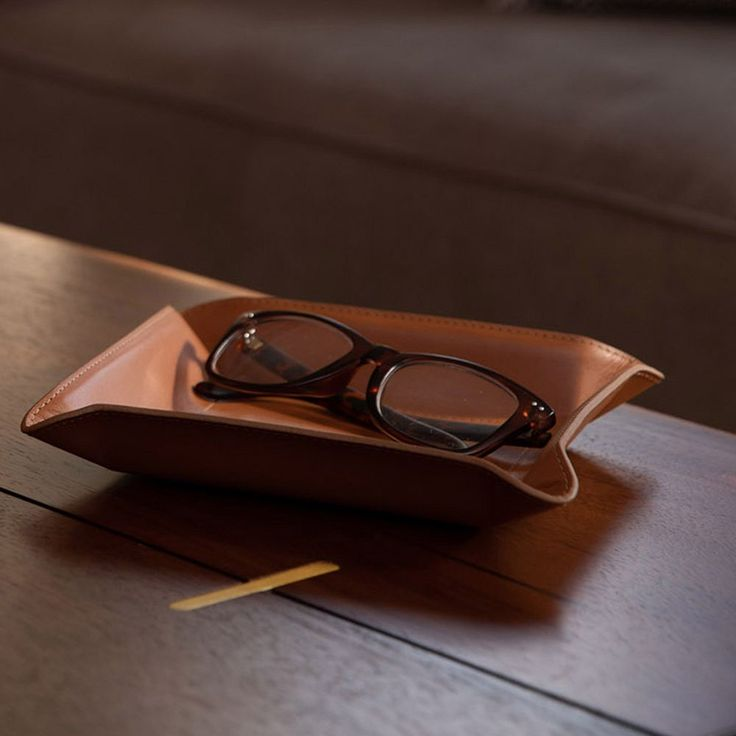
Small organizational tools can elevate daily routines. Leather catch-all trays in brown tones provide a designated spot for keys, wallets, and small accessories. The rich texture of leather contrasts beautifully with cream surfaces, adding tactile appeal. Brown leather develops character over time, making it both functional and visually pleasing. These trays work well on consoles or shelves, reducing clutter and improving efficiency. Their neutral color integrates seamlessly with wood, ceramic, or metal accents. From a design standpoint, leather introduces warmth without requiring large furniture pieces. Practicality meets style, as items remain accessible while the entryway stays tidy. Brown leather catch-all trays support an organized, refined first impression.
Cream Woven Runner with Brown Threads
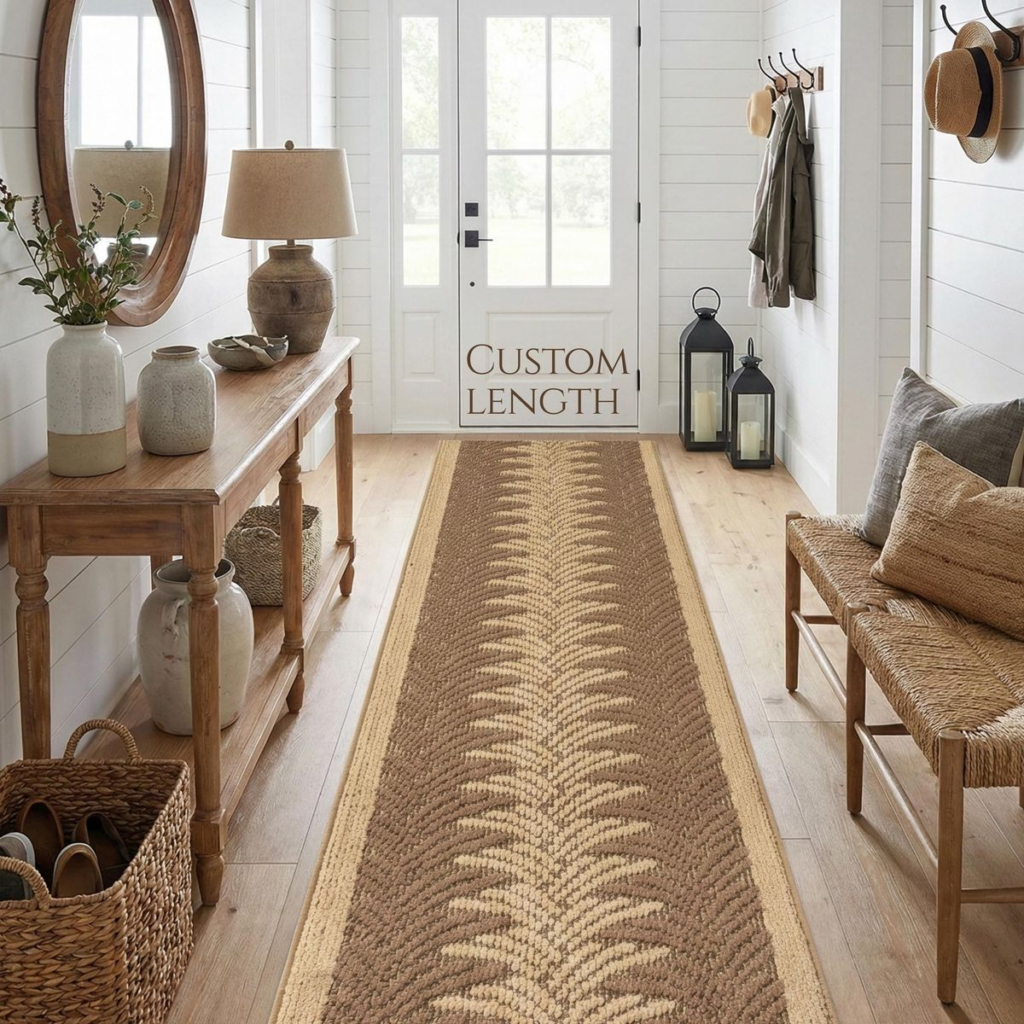
Floor coverings guide movement and define entry zones. A woven runner in cream tones brightens the space, while brown threads add subtle pattern and durability. This combination hides dirt more effectively than solid light rugs while maintaining a clean appearance. Woven textures introduce visual interest without overpowering surrounding décor. The brown detailing ties into wood furniture or trim, creating cohesion. Runners also protect flooring from wear, especially near doors. Proper sizing ensures smooth traffic flow and safety. This textile choice balances function and aesthetics, contributing to a welcoming, well-composed entryway environment.
Brown Wood Door with Cream Framing

The front door sets expectations for the interior. A brown wood door conveys warmth and solidity, while cream framing softens the transition into the home. This contrast highlights the door as a focal point without appearing heavy. Natural wood grain adds character, while cream trim reflects light into the entryway. This pairing suits various architectural styles, from traditional to contemporary. The lighter frame also emphasizes craftsmanship details around the doorway. Practical benefits include reduced visibility of wear on darker wood surfaces. Together, brown wood doors with cream framing establish a cohesive, inviting entrance that feels both secure and stylish.
Cream Wall Niche with Wood Accents
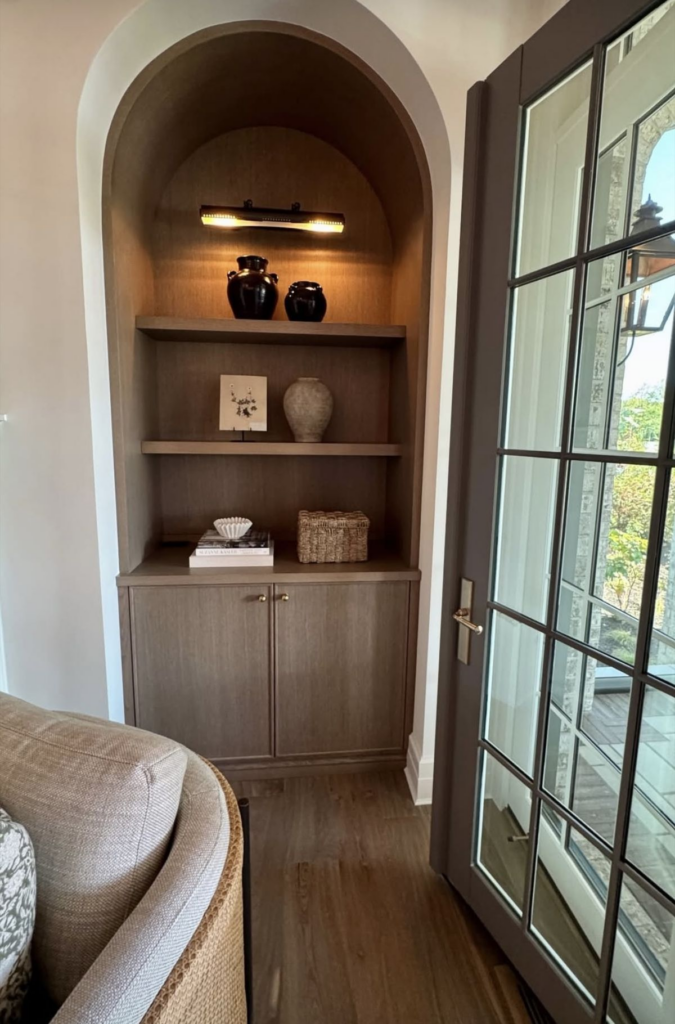
Built-in niches offer display opportunities without consuming floor space. Finished in cream tones, a wall niche blends seamlessly with surrounding walls while remaining visually distinct. Wood accents within the niche introduce warmth and contrast, drawing attention to displayed items. Shelving in brown wood highlights ceramics, plants, or decorative objects. This feature adds depth to otherwise flat walls and supports organized styling. Cream backgrounds keep the display light, preventing visual clutter. Wood detailing ensures continuity with other entryway elements. A well-designed niche enhances both storage and aesthetics, providing a subtle yet impactful design solution for brown and cream entryways.