
Warm tones, intricate tiles, and arched details bring an unmistakable allure to bathrooms influenced by Moroccan aesthetics. This design approach merges tradition and luxury, turning everyday routines into serene rituals. Homeowners seeking to elevate small or large spaces alike find Moroccan themes ideal for layering texture, geometry, and artistry with purpose. From mosaic zellige patterns to brass lanterns and ornate mirrors, every element adds cultural depth and warmth. As modern homes lean toward global and character-rich interiors, Moroccan-themed bathroom concepts stand out for their balance of opulence, comfort, and visual storytelling that instantly captivates and rejuvenates any space.
Zellige Tiles

Time-honored craftsmanship meets mesmerizing artistry through Zellige tiles, the heartbeat of Moroccan design. Each handmade tile carries natural imperfections that create depth, character, and a rich tapestry of color and texture. When used in a bathroom, these glossy, uneven tiles transform walls and backsplashes into a living mosaic of shimmering reflections. Their traditional glazing technique, often seen in hues of turquoise, ivory, and emerald, enhances the play of light, giving small or large bathrooms a sun-kissed vibrancy. The timeless pattern variations—whether geometric or floral—introduce visual rhythm without overpowering the space. Perfect for both minimalist and ornate interiors, Zellige tiles provide a tactile connection to Moroccan heritage while maintaining modern relevance. Their water-resistant quality makes them ideal for showers, vanities, and bathtub surrounds. Paired with brass fixtures or natural stone, they balance old-world charm with contemporary elegance. Whether you’re seeking a subtle accent or a full feature wall, Zellige tiles instantly evoke the soulful beauty of Marrakech’s riads. Their artisanal essence captures authenticity, transforming a standard bathroom into a serene oasis filled with texture, warmth, and cultural depth—proof that perfection lies in the irregular, and true style emerges from tradition refined over centuries.
Moorish Mirror
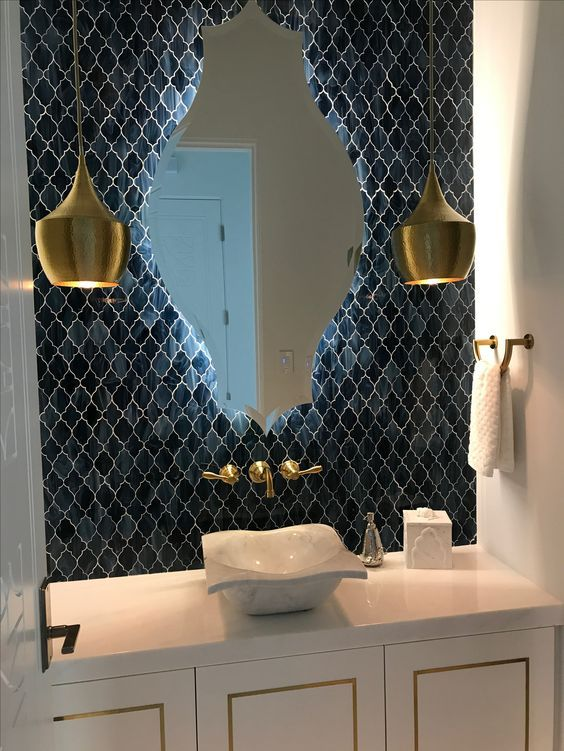
Ornate detailing and reflective beauty define the Moorish mirror, an essential statement piece in Moroccan-themed bathrooms. Known for their intricate arabesque frames, these mirrors celebrate centuries-old geometry and artistry that symbolize harmony and continuity. Crafted from carved wood, metal, or mother-of-pearl inlay, the patterns highlight the grandeur of Moorish architecture—arches, stars, and floral motifs that catch light from every angle. Placing such a mirror above a sink or vanity transforms the space into a focal point of elegance and cultural refinement. The reflective surface also amplifies brightness, especially when paired with ambient lantern lighting, enhancing the bathroom’s depth and dimension. Antique brass or silver finishes add a regal patina, blending perfectly with marble counters, tadelakt walls, or Zellige tilework. The mirror’s frame not only decorates but narrates—a visual tale of North African craftsmanship that has transcended generations. Beyond aesthetics, its symbolic geometry represents unity and infinite symmetry, grounding the room with spiritual calm. When combined with other Moroccan accents, the Moorish mirror acts as both a functional object and an art piece, seamlessly merging practicality with timeless allure. Its presence ensures the bathroom radiates with old-world sophistication, offering a daily reflection steeped in artistry and cultural legacy.
Brass Lanterns
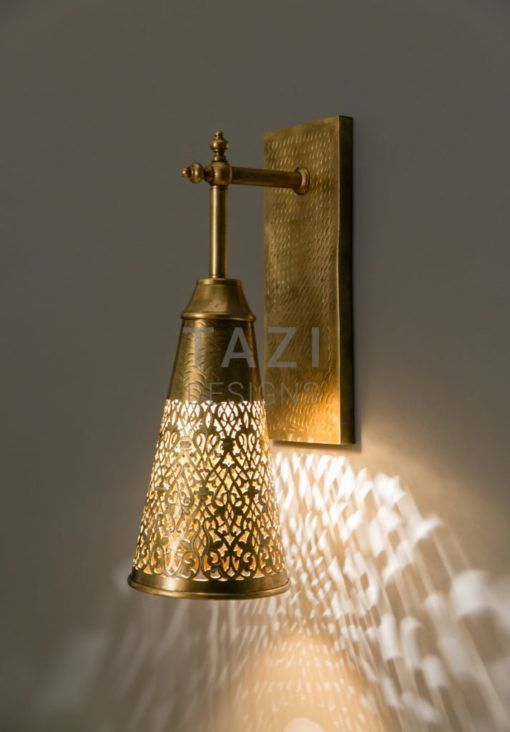
Golden luminescence fills Moroccan bathrooms with unparalleled warmth through the magic of brass lanterns. Their pierced metalwork casts delicate shadows across tiled walls, creating an enchanting interplay of light and texture. Each lantern, handcrafted by skilled artisans, embodies the intricate lattice patterns that define Moroccan design—geometric precision meeting organic rhythm. Whether suspended from the ceiling or placed beside the vanity, these lanterns transform ordinary lighting into an ambient experience reminiscent of Marrakech’s medina nights. The soft glow enhances natural hues, complementing earthy tones, ochre walls, or deep blue tiles. Brass ages gracefully, developing a patina that deepens the atmosphere with vintage character. When used alongside mirrored accents or polished copper, it adds dimensional contrast that feels luxurious yet grounded. Ideal for both traditional and modern settings, these lanterns pair effortlessly with contemporary fixtures without losing their cultural essence. For added drama, cluster multiple lanterns at varying heights to amplify their mosaic-like projections. Beyond illumination, they convey emotion—invoking serenity, intimacy, and history. The craftsmanship behind each perforation tells a silent story of heritage and passion, turning lighting into an art form. In Moroccan-inspired bathrooms, brass lanterns are not mere decor; they are the soul of ambiance and timeless design.
Cement Tile Floor
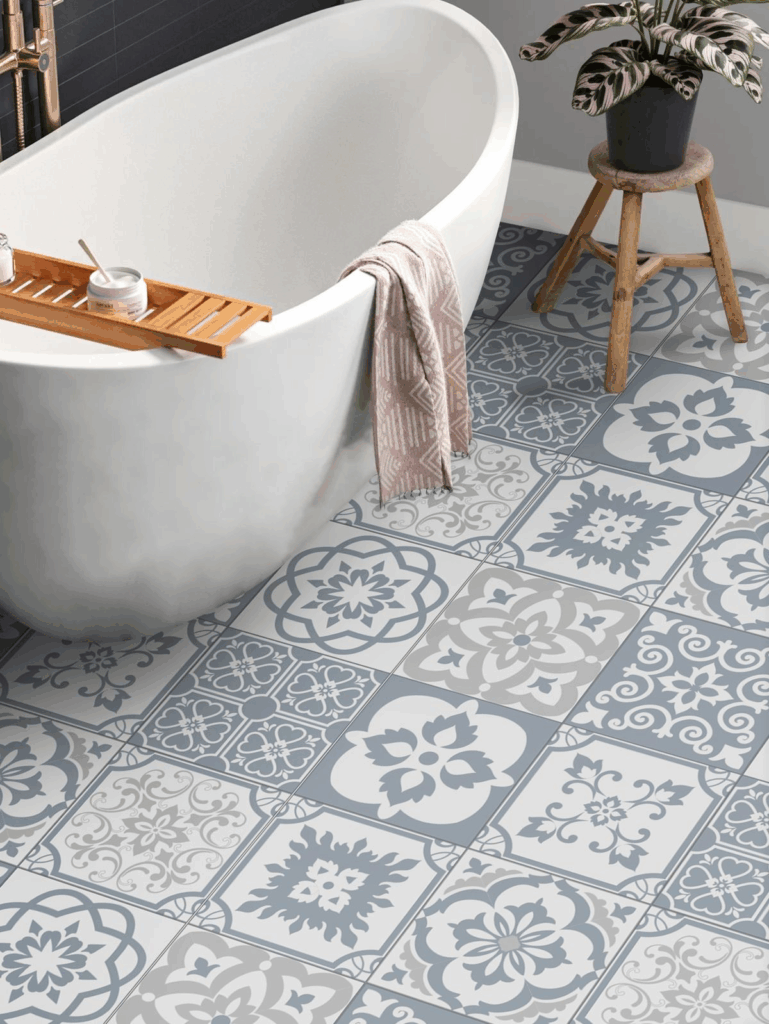
Enduring elegance meets artisanal strength in Moroccan cement tile floors—where every step feels steeped in history. These hand-poured tiles, known for their matte finish and geometric patterns, have long adorned riads and hammams across North Africa. In a Moroccan-themed bathroom, they ground the space with authentic character, offering both visual intrigue and functional durability. The bold motifs—stars, arabesques, and interlocking lines—bring movement to the floor, guiding the eye naturally through the space. Unlike mass-produced alternatives, cement tiles carry subtle variations in tone and texture that add warmth and individuality. Their composition of natural pigments and cement makes them eco-friendly, while their ability to retain coolness underfoot enhances comfort in humid conditions. Whether paired with crisp white plaster, brass fixtures, or rustic wood vanities, cement tile floors balance modern sensibility with old-world allure. Maintenance is straightforward—sealed properly, they resist moisture beautifully, making them ideal for wet areas like shower floors. The play of pattern beneath soft lantern light elevates even the simplest bathroom into a luxurious retreat. Combining form and function, cement tiles embody Moroccan craftsmanship at its finest, merging durability with artistry to create a foundation that tells stories with every color and curve.
Plaster Sink

Subtle texture and organic form define the allure of a Moroccan plaster sink, where natural materials meet artisanal craftsmanship. Traditionally made using lime-based tadelakt plaster, these sinks offer a silky, waterproof surface with soft, undulating lines that reflect centuries of Moroccan bathing culture. Unlike conventional porcelain, plaster sinks exude warmth and depth, their hand-polished finish radiating a gentle sheen reminiscent of Marrakech’s spa-like hammams. The smooth, seamless curves complement Zellige tile walls or cement flooring, creating visual harmony rooted in simplicity. Their sculptural presence feels simultaneously rustic and refined, lending authenticity to contemporary settings. Customizable shapes—from rounded basins to elongated troughs—allow designers to integrate them effortlessly into any layout. When paired with brass or copper fixtures, the sink’s muted tone enhances the room’s earthy palette, reinforcing the Moroccan aesthetic’s balance between nature and artistry. The material’s natural waterproofing and eco-friendliness make it practical as well as beautiful. Over time, tadelakt develops a patina that deepens its charm, echoing the timeless elegance of desert architecture. More than a utility piece, a plaster sink becomes the focal point of understated luxury, inviting touch and reflecting the soul of Moroccan craftsmanship—where serenity, sustainability, and beauty coexist seamlessly.
Blue Pattern Splashback
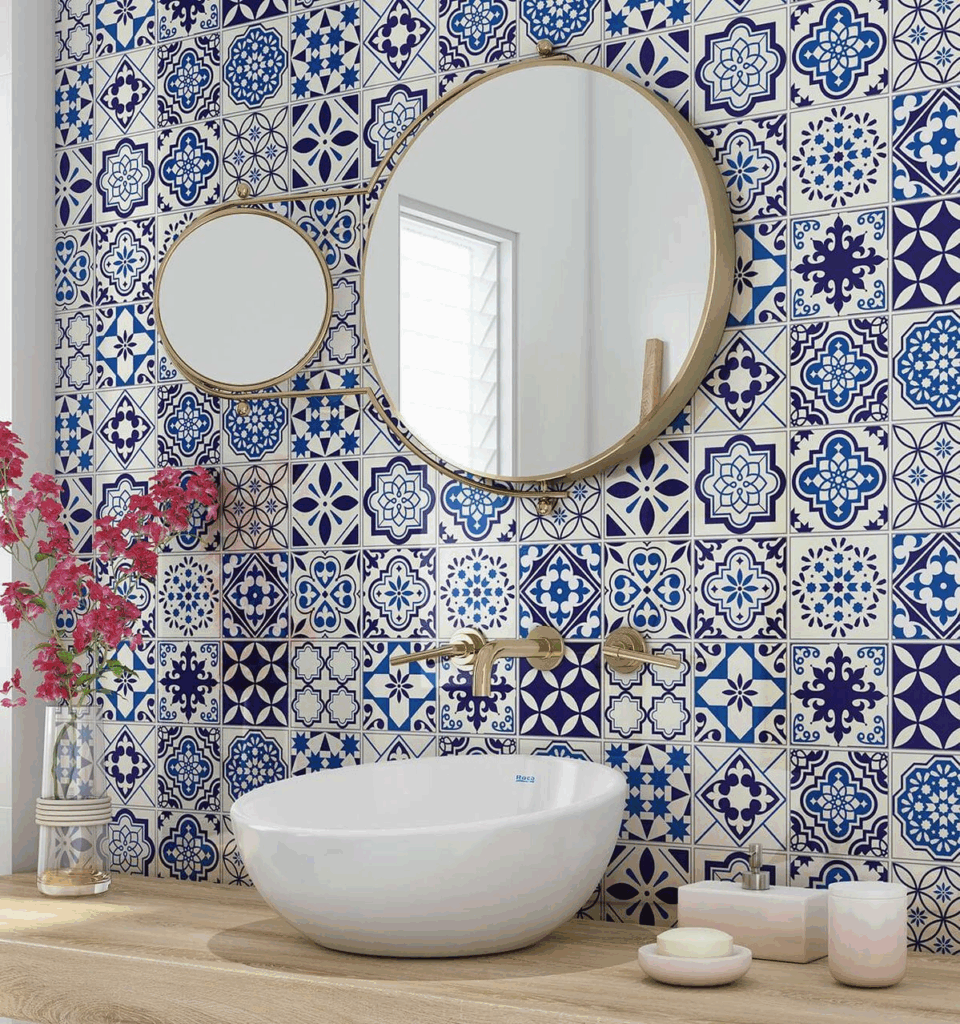
Cool Mediterranean tones find their voice in Moroccan bathrooms through blue-patterned splashbacks that echo the country’s coastal and desert landscapes. Shades of azure, indigo, and teal weave intricate geometric and floral patterns across the wall, offering both vibrancy and tranquility. Hand-painted or mosaic-style, these splashbacks become instant conversation pieces—capturing the spirit of traditional Moroccan artistry while blending effortlessly into modern interiors. Positioned behind sinks or tubs, they reflect light beautifully, adding depth to even compact spaces. The patterns often draw from zellige designs, featuring symmetrical arrangements that symbolize unity and order. Their glossy finish complements natural materials like marble, plaster, or wood, striking a perfect balance between opulence and simplicity. A blue-patterned splashback not only protects walls from water but also enriches the space with color psychology—blue promotes calmness, clarity, and emotional balance. Paired with brass fixtures, it delivers a striking contrast that feels luxurious yet inviting. Whether in bold mosaic mosaics or delicate hand-painted tiles, this element channels coastal serenity while maintaining Moroccan authenticity. The result is a bathroom that feels like a tranquil retreat, where artistry meets functionality and each tile tells a story of ocean winds, cultural fusion, and timeless design heritage.
Tadelakt Shower
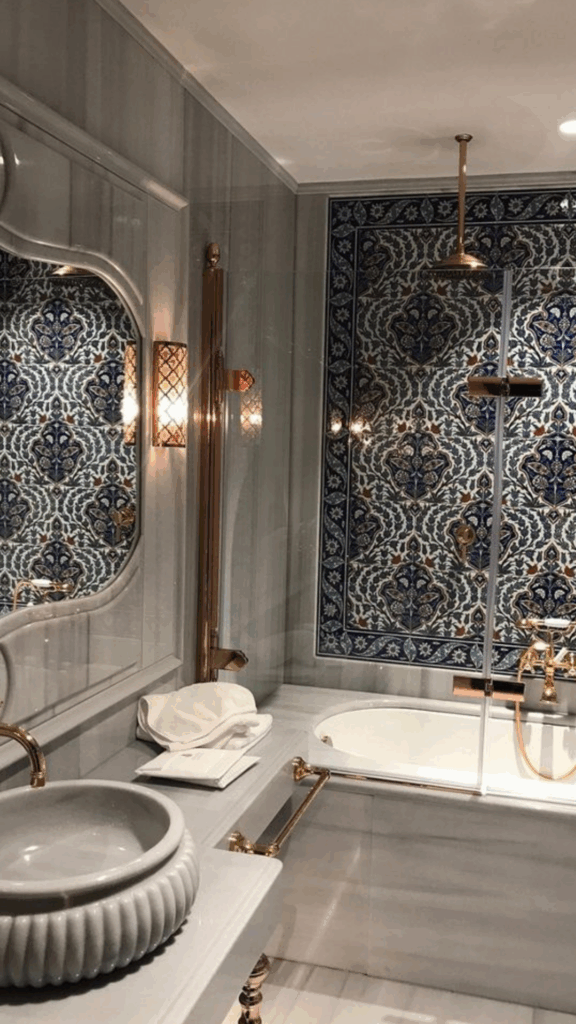
Smooth, luminous, and sensually tactile—tadelakt showers redefine luxury through ancient Moroccan plasterwork. Derived from natural lime plaster and polished with olive soap, tadelakt creates a seamless, waterproof surface that glows with understated elegance. Its origin in traditional hammams ensures both practicality and beauty, offering walls that breathe while repelling moisture. The subtle sheen evokes the feeling of stone polished by desert winds, giving the bathroom a serene, spa-like quality. Unlike tiles with grout lines, tadelakt’s continuous surface enhances visual flow, expanding the perception of space. Shades of soft sand, smoky grey, or deep terracotta evoke the earthy palette of Moroccan architecture. Its organic texture pairs harmoniously with brass fixtures, carved wood accents, and natural lighting. The craftsmanship required to apply tadelakt ensures every surface is unique—each movement of the artisan’s hand adds depth and individuality. Beyond aesthetics, it’s eco-friendly and long-lasting, making it ideal for sustainable design enthusiasts. When candlelight reflects off its surface, the shower transforms into a sanctuary of calm and indulgence. A tadelakt shower doesn’t merely serve function—it celebrates Moroccan mastery in merging artistry with durability, offering an atmosphere that feels ancient yet entirely timeless, turning everyday rituals into moments of quiet luxury.
Copper Sink
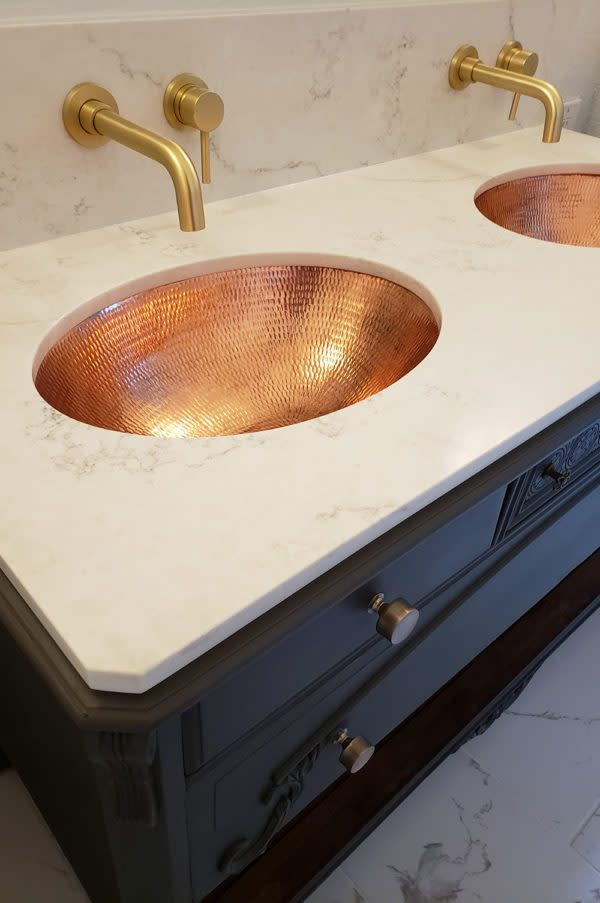
Lustrous warmth radiates from a Moroccan bathroom anchored by a handcrafted copper sink. Its hammered texture and glowing finish capture centuries of metalworking tradition rooted in Fez and Marrakech. Each basin reflects light differently, shifting from burnished gold to deep rose as the day changes—creating a living, evolving focal point. Copper’s natural antimicrobial properties make it as practical as it is beautiful, ideal for humid spaces. When set against tadelakt walls or patterned tiles, its radiant surface creates visual contrast that embodies Moroccan opulence. Artisans shape each sink by hand, ensuring no two pieces are identical. Over time, the material develops a rich patina, deepening its character and authenticity. Paired with brass or blackened-iron fixtures, it balances rustic charm with refined luxury. Copper sinks harmonize especially well with earthen hues, wooden vanities, and ambient lantern lighting, evoking the warmth of desert sunsets. Functionally, the metal’s durability ensures longevity, while its artistic appeal elevates even minimalist spaces. This timeless element blends heritage with modern sensibility, reminding homeowners that true design beauty lies in materials that age gracefully. Within Moroccan-themed bathrooms, the copper sink becomes a statement of craftsmanship and soul—where art, history, and daily life converge effortlessly.
Ochre Walls
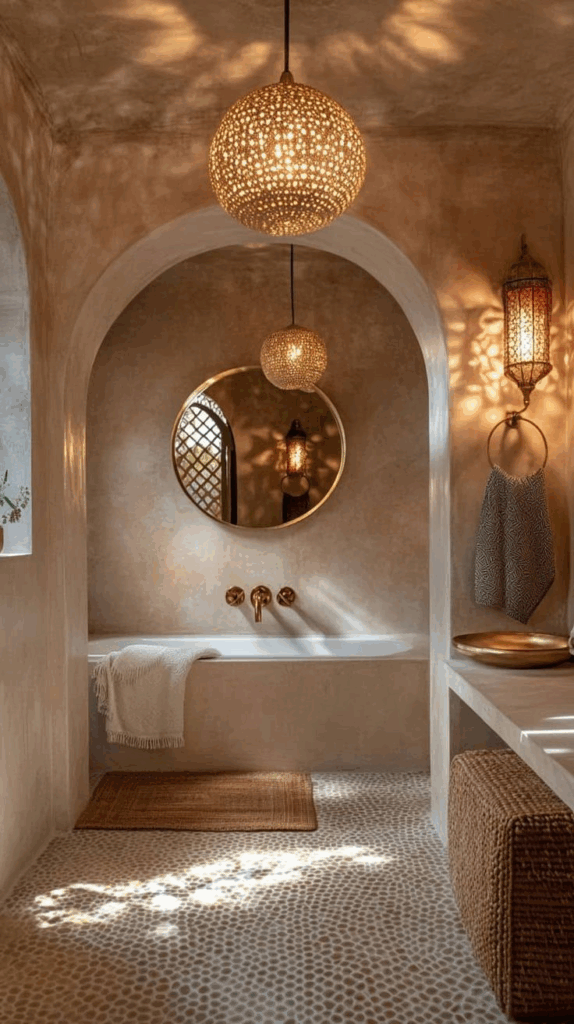
Sun-drenched ochre walls bring the essence of Moroccan landscapes indoors, infusing bathrooms with warmth and serenity. The earthy hue mirrors the desert sands of Marrakech and the clay tones of ancient medinas, creating a soothing backdrop that feels both grounding and luxurious. When applied using limewash or tadelakt plaster, the finish achieves subtle tonal variations that add dimension and authenticity. Ochre harmonizes effortlessly with metallic accents like brass lanterns or copper basins, while enhancing the vibrancy of blue and green tilework. Its natural pigment evokes sunlight, offering an inviting glow that flatters skin tones—perfect for personal spaces. The matte texture absorbs and diffuses light, fostering a calm, spa-like atmosphere. In modern applications, ochre pairs beautifully with minimalist fixtures or bohemian accessories, maintaining the Moroccan aesthetic without overwhelming the senses. Beyond aesthetics, the color holds symbolic meaning—representing vitality, comfort, and the enduring spirit of Moroccan craftsmanship. Used on feature walls or throughout the room, it ties together contrasting materials like terracotta, marble, and wood. The result is a timeless palette that bridges tradition and modernity. Ochre walls serve as the soul of Moroccan bathrooms—simple yet expressive, embodying warmth, cultural depth, and effortless elegance that feels eternally welcoming.
Moorish Window Grille
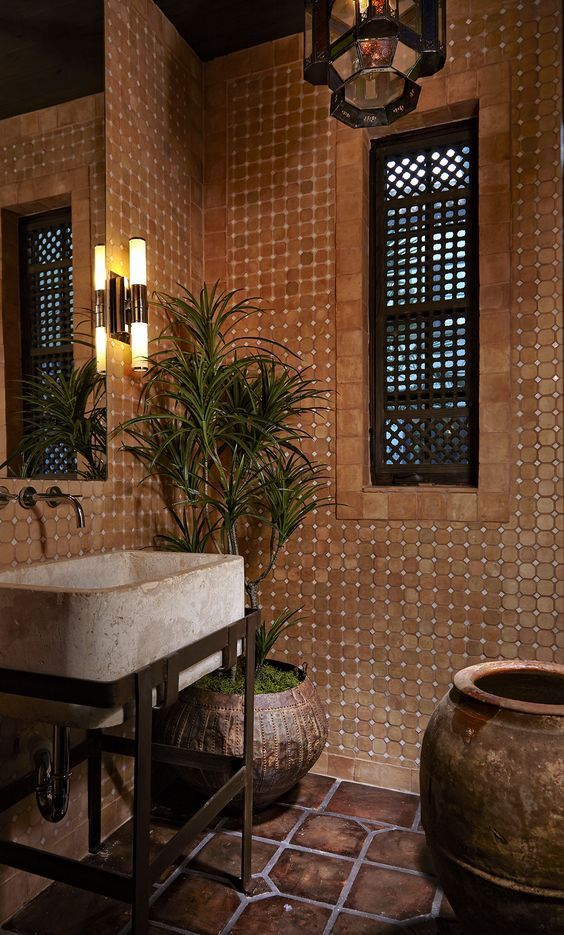
Intricate latticework transforms ordinary windows into architectural art through Moorish grilles, a defining element of Moroccan design. Crafted from wrought iron or carved wood, these ornate patterns draw inspiration from Islamic geometry, emphasizing symmetry and repetition that symbolize unity and protection. In Moroccan-themed bathrooms, window grilles serve dual purposes—providing privacy while allowing light to filter through in mesmerizing patterns. Sunlight dancing across walls and tiles creates ever-changing shadow plays that enrich the space with texture and mood. Whether finished in matte black, antique bronze, or whitewash, these grilles complement a variety of palettes—from cool blues to earthen tones. Their craftsmanship echoes centuries-old traditions, where artisans meticulously shaped metal into delicate curves and interlocking motifs. Beyond aesthetics, they improve ventilation, maintaining a refreshing environment ideal for humid bathrooms. When paired with stained glass or patterned tiles, they evoke the romance of Moroccan riads and desert courtyards. Even in modern settings, a Moorish grille adds a touch of old-world charm and spiritual symbolism, grounding the design in authenticity. Its artistic interplay of shadow, pattern, and light ensures that every morning ritual feels illuminated by culture and beauty, blending practicality with poetic craftsmanship in perfect harmony.
Terracotta Tub
Earthen beauty takes center stage with terracotta tubs, embodying Moroccan authenticity through material and form. Handcrafted from natural clay and sealed for durability, these tubs exude a raw, sculptural presence reminiscent of ancient hammams. Their warm, reddish-brown hue anchors the space in organic tranquility, harmonizing effortlessly with plaster walls, brass fixtures, and woven textures. Terracotta’s natural heat-retention properties make every bath a soothing ritual, enveloping the bather in gentle warmth. Unlike sleek porcelain, its porous surface radiates character and history, evolving gracefully over time. Each curve and contour reflects the artisan’s hand, turning the tub into both a functional feature and an art installation. When surrounded by lantern light or beneath a tadelakt dome, it creates an atmosphere of timeless indulgence—evoking the sensory pleasures of Moroccan spa culture. Terracotta also complements neutral and vibrant color schemes alike, bridging rustic and refined aesthetics. Environmentally friendly and naturally sourced, it embodies sustainability without sacrificing luxury. In a Moroccan-themed bathroom, a terracotta tub becomes the heart of the sanctuary—a place where elemental beauty, comfort, and tradition intertwine. It’s more than a vessel for bathing; it’s a celebration of craftsmanship, nature, and the art of slow living in true Moroccan spirit.
Green Accent Tiles

Verdant tones breathe vitality into Moroccan bathrooms through green accent tiles that embody harmony and renewal. From emerald zellige to mint-hued mosaics, these tiles capture the lush contrast of oasis landscapes against arid sands. Their glossy surfaces shimmer under warm lighting, introducing freshness and balance to the design. When applied as borders, niches, or feature walls, green tiles create rhythm without overwhelming the eye. The color’s cultural resonance in Moroccan art—symbolizing growth and peace—adds depth and meaning to the aesthetic. Pairing them with brass fixtures, ochre walls, or terracotta elements results in a palette that feels grounded yet vibrant. The handcrafted nature of zellige ensures each tile reflects light uniquely, producing subtle variations that enrich the overall texture. Green accent tiles work beautifully alongside neutral tones, offering a calming visual anchor that suits both traditional and modern settings. Whether framing a mirror, outlining a shower, or forming an intricate mosaic, they infuse the space with organic energy. Beyond beauty, their glazed finish ensures durability and moisture resistance—perfect for daily use. By embracing these verdant details, Moroccan bathrooms achieve perfect equilibrium between color and calm, blending centuries of artistic tradition with contemporary sophistication in every gleaming tile.