
Natural serenity meets timeless charm in bathrooms styled with a green and white palette, where freshness and heritage coexist effortlessly. This traditional approach highlights balance—pairing crisp white fixtures with soothing green hues for a refined yet inviting atmosphere. From vintage tiles and wainscoting to brass accents and botanical touches, every element enhances warmth and character. Homeowners value this color combination for its enduring appeal and versatility, perfectly suited for both classic and countryside homes. The green and white traditional bathroom remains a celebrated design choice that evokes calm, elegance, and enduring sophistication in modern living spaces
Sage Wainscot
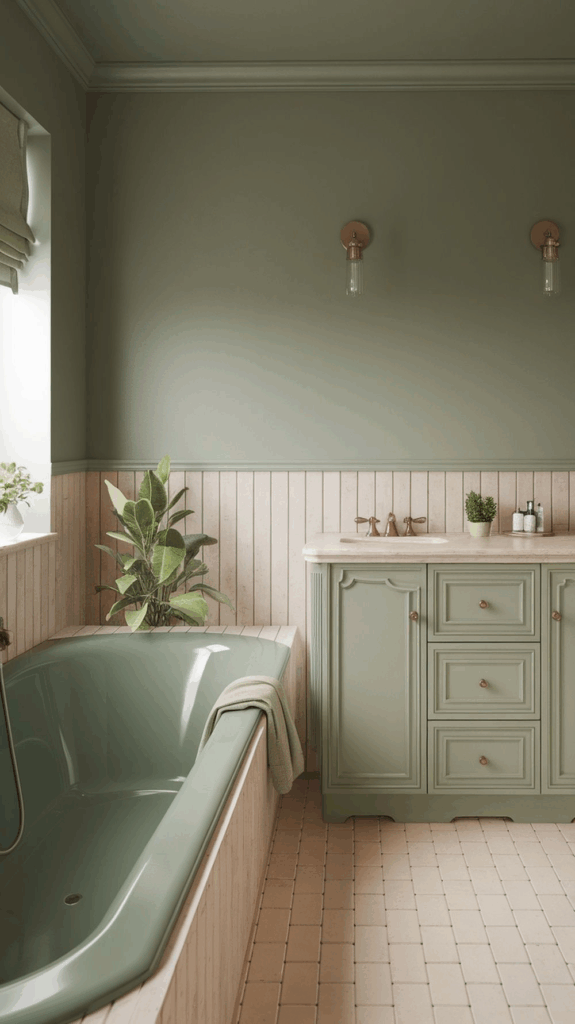
Subtle heritage tones bring a grounded calm to bathroom interiors through sage wainscoting. This gentle green hue introduces a sense of refinement while maintaining a soothing natural balance. Its muted character pairs seamlessly with marble countertops, vintage brass fixtures, and porcelain basins, offering a timeless yet refreshing aesthetic. Sage wainscot panels work exceptionally well in traditional layouts, defining lower walls with depth and distinction. When combined with crisp white upper walls or neutral tiles, it enhances spatial light and creates visual contrast without overpowering the decor. Homeowners favor sage for its restorative undertones that echo garden serenity. Textured wood or moisture-resistant MDF panels finished in semi-matte sage paint ensure durability in humid environments. For finishing touches, complement the wainscot with botanical prints, linen curtains, and brushed nickel lighting. Whether used in a powder room or full bathroom, this color treatment delivers elegance that endures trends. A final touch of warm lighting accentuates its green-gray complexity, resulting in a space that feels both refined and restful. Sage wainscotting bridges old-world craftsmanship with modern tranquility, setting the foundation for a classic green-and-white traditional bathroom theme.
Emerald Half-Wall
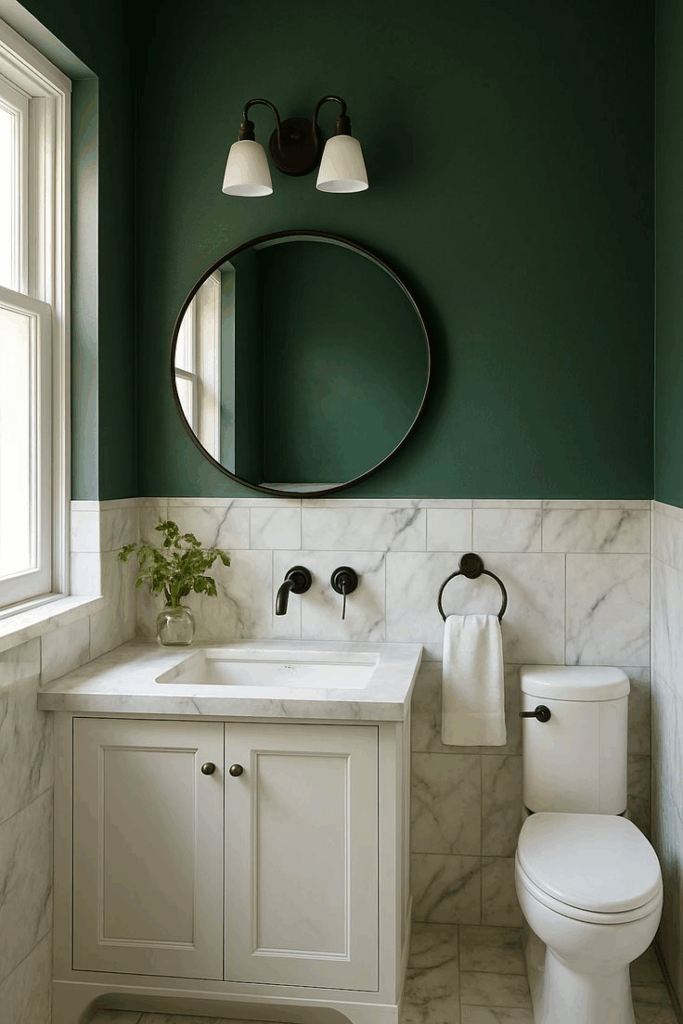
Dramatic jewel tones command attention when introduced through an emerald-painted half-wall. This design technique creates a striking midpoint visual while preserving openness and airiness in the upper section. Emerald green, with its luxurious vibrancy, brings richness reminiscent of English garden estates and art deco elegance. It pairs gracefully with white subway tiles, marble counters, or clawfoot tubs, exuding both opulence and restraint. The deep saturation adds character to compact bathrooms without overwhelming, especially when balanced by light-toned flooring or soft drapery. High-quality enamel paint or tile finishes in emerald ensure moisture resistance and easy cleaning—essential for longevity. Pairing it with gold-framed mirrors, crystal sconces, or intricate molding elevates the aesthetic to boutique-hotel sophistication. For texture contrast, wainscoted or beadboard panels below the color divide can subtly define the structure. The emerald half-wall approach harmonizes tradition with a bold flourish, offering the perfect anchor for white cabinetry or classic fixtures. It’s particularly effective in spaces seeking a regal tone that remains fresh and approachable. This palette showcases the power of contrast, transforming simple bathrooms into luxurious, green-and-white havens that celebrate timeless color harmony and artisanal detail.
Mint Vanity
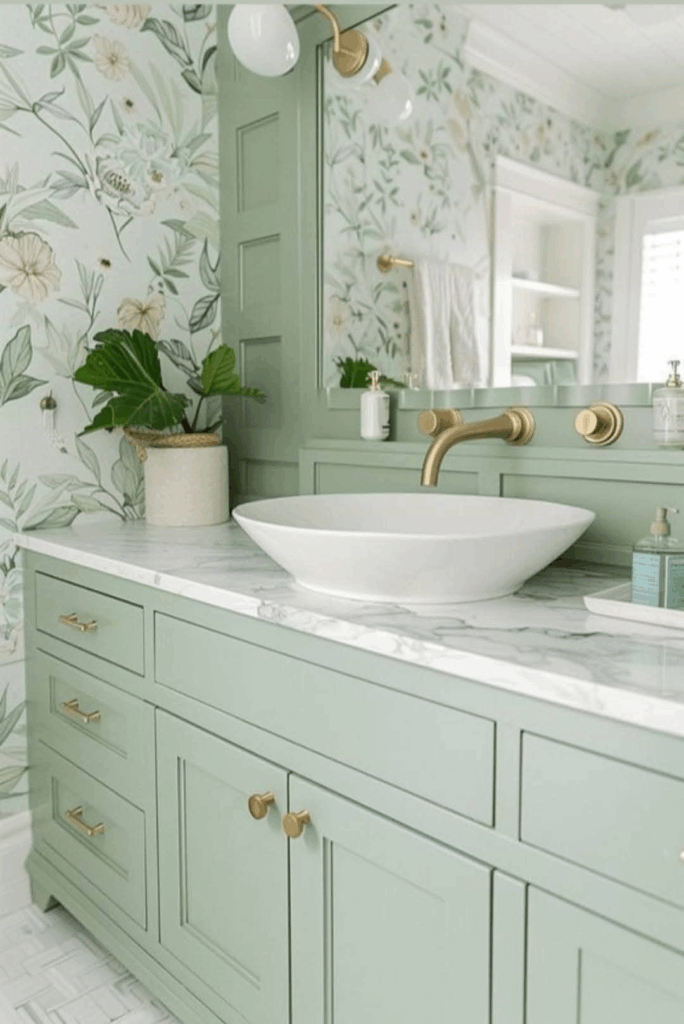
Refreshing and understated, a mint-toned vanity injects crisp charm into traditional bathroom design. The color’s cool undertone conveys cleanliness and calm, ideal for morning routines or spa-inspired spaces. When framed by white beadboard or pale marble countertops, mint cabinetry delivers instant visual clarity without overpowering surrounding decor. Brass or matte black hardware introduces an elegant counterbalance, highlighting the vanity’s craftsmanship. Mint works beautifully in small or sunlit bathrooms, amplifying natural light and creating a sense of openness. Durable lacquer or powder finishes preserve its pastel vibrancy despite humidity, ensuring a lasting appeal. Pairing with soft-gray grout lines, patterned floor tiles, or rattan accents enhances its organic freshness. The tone evokes nostalgia reminiscent of 1950s washroom chic yet adapts easily to contemporary needs. For homeowners seeking approachable color without commitment to bold greens, mint provides versatility that aligns with both modern and traditional sensibilities. A framed mirror and frosted globe sconces complete the picture, tying together vintage warmth and contemporary restraint. This shade proves that subtlety can redefine sophistication, breathing personality into everyday bathroom rituals. The mint vanity remains a timeless statement in green-and-white traditional bathroom design—balanced, cheerful, and beautifully serene.
Olive Accent Line
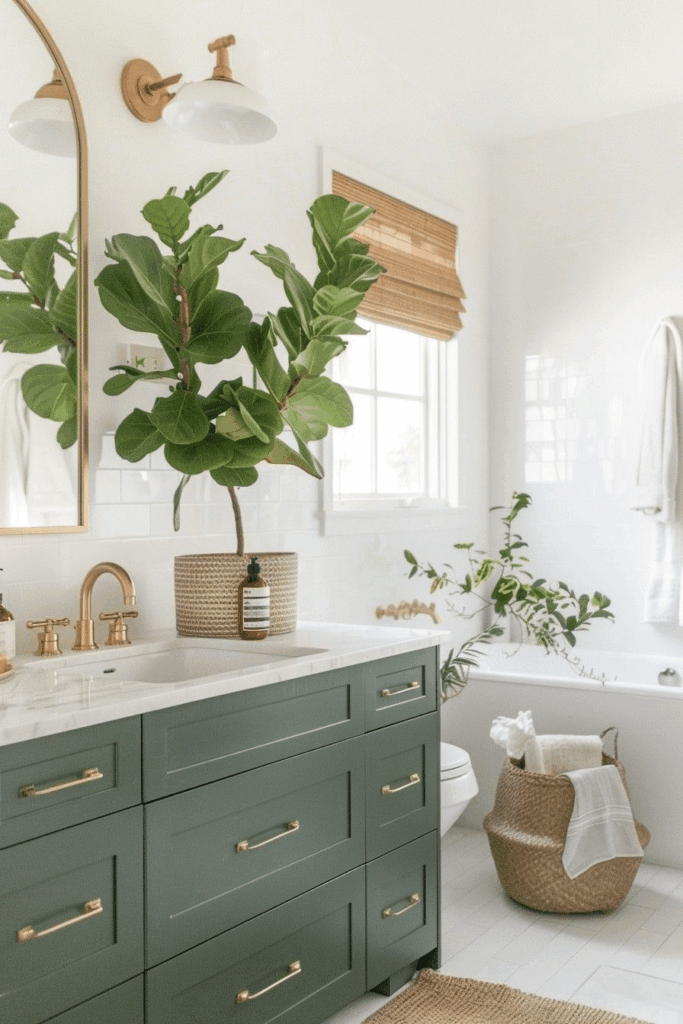
Refined restraint defines the olive accent line—an understated detail that adds tailored sophistication to bathroom interiors. Running along tiles, wainscot tops, or mirrors, this gentle stripe anchors the palette with earthy continuity. Olive’s muted depth pairs effortlessly with off-white marble, bone ceramics, and brushed bronze fixtures, delivering a cohesive yet organic feel. Its subtlety lies in its ability to draw the eye without commanding attention, making it ideal for both classic and transitional spaces. Hand-painted trims or glazed tile borders in olive provide craftsmanship appeal that complements neutral backdrops. In a green-and-white traditional setting, it bridges tones seamlessly—linking brighter greens with natural finishes like oak or limestone. Lighting plays a key role: warm illumination enhances olive’s golden undertones, adding richness to every surface it borders. When used sparingly, this hue prevents monotony and introduces a bespoke designer touch often found in heritage bathrooms. Olive’s quiet strength transforms functional detailing into aesthetic punctuation. Whether defining a tile perimeter or outlining wainscot edges, it celebrates architectural precision with natural elegance. The olive accent line proves that detail-driven colorwork can elevate even the most minimalist traditional bathrooms into timeless expressions of harmony and balance.
Green Check Floor

Classic geometry meets countryside charm through a green check floor pattern. Alternating tiles in forest and cream hues evoke nostalgia reminiscent of vintage European washrooms, while maintaining a fresh, adaptable appeal. The pattern’s symmetry instantly establishes rhythm and character in traditional bathrooms, grounding the space with visual order. Durable porcelain or ceramic tiles with matte finishes prevent slipperiness and ensure longevity in moisture-prone zones. Green check flooring pairs beautifully with white shiplap walls, clawfoot tubs, and polished brass fixtures, creating a timeless farmhouse-inspired ambiance. Subtle grout contrasts can emphasize the pattern, lending the illusion of a larger, more structured area. For harmony, balance bold floors with understated wall treatments—soft mint or ivory hues work best. When complemented with natural wood elements or woven baskets, the checkered motif softens into relaxed elegance. The combination of heritage pattern and nature-inspired color redefines traditional bathroom flooring, merging practicality with artistry. Its durability ensures enduring charm, while its versatility allows easy pairing across styles—from English country to early-American revival. Green check floors stand as both functional foundation and design statement, bringing warmth, texture, and continuity to any green-and-white traditional bathroom setting.
Forest Cabinetry
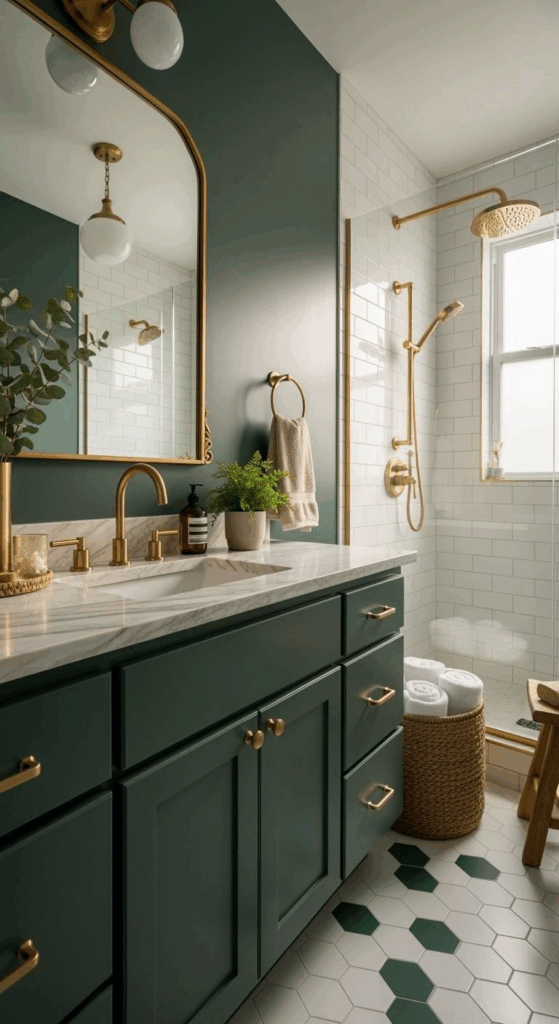
Deeply rooted in natural inspiration, forest-green cabinetry delivers timeless gravitas to traditional bathrooms. Its rich tone conjures woodland depth, balancing luxurious ambiance with grounded authenticity. When paired with crisp white walls or marble countertops, the contrast enhances visual dimension, creating a sophisticated focal point. Forest green cabinetry also introduces warmth through its organic hue, blending seamlessly with brass knobs, limestone flooring, or oak-framed mirrors. Satin or semi-gloss finishes add a subtle reflective quality, ensuring light dispersal without diminishing depth. Built-in shelving or under-sink drawers in this shade convey both functionality and artistry. For a cohesive look, carry the tone into minor accents like door frames or wainscot borders. The color’s endurance lies in its adaptability—it complements both traditional and transitional decor with equal elegance. When combined with gold or antique silver finishes, it channels vintage grandeur. Soft ambient lighting enhances its richness, creating a cozy yet refined environment. Forest-green cabinetry provides permanence, reflecting nature’s calm while showcasing craftsmanship. In a green-and-white traditional bathroom, this element anchors design balance, delivering durability, serenity, and understated luxury that resonates with classic interior sensibilities.
Pistachio Walls
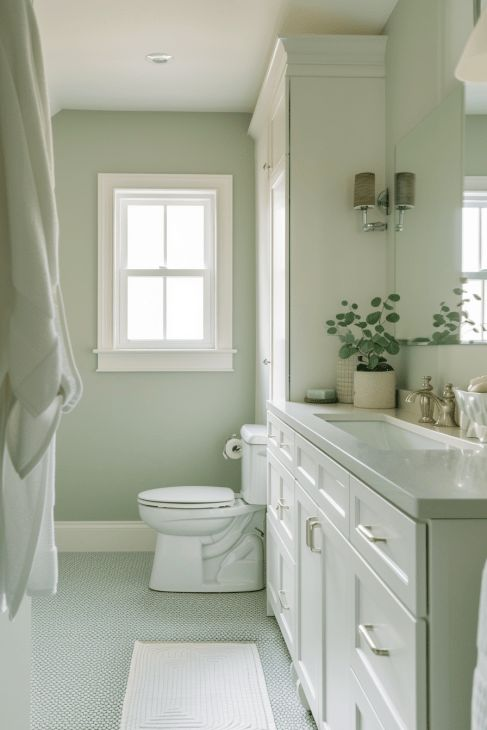
Refreshing yet understated, pistachio walls lend warmth and subtle vibrancy to traditional bathrooms. The hue bridges mint’s coolness and olive’s earthiness, offering a naturally balanced tone that brightens while soothing. It works beautifully with white beadboard, marble tiles, and vintage chrome fixtures, preserving lightness without sacrificing depth. Matte or eggshell finishes maintain an inviting softness ideal for intimate spaces. Pistachio’s gentle energy enhances morning light, making it a favorite for smaller or windowless bathrooms seeking an airy quality. Paired with wicker baskets, linen drapery, or rattan accessories, the color adds organic cohesion. Trimmed with white crown molding or subway-tile backsplashes, pistachio walls feel timeless and tailored. The hue’s versatility extends across seasons—it remains cheerful in spring and serene in winter. Its understated charm aligns perfectly with traditional design principles where balance and comfort take precedence. Pistachio walls transform everyday routines into tranquil moments, merging classic sensibility with contemporary freshness. In a green-and-white traditional bathroom scheme, they serve as the ideal backdrop—uplifting, adaptable, and effortlessly elegant, reinforcing the timeless connection between nature and refined interior living.
Mint Tile Shower
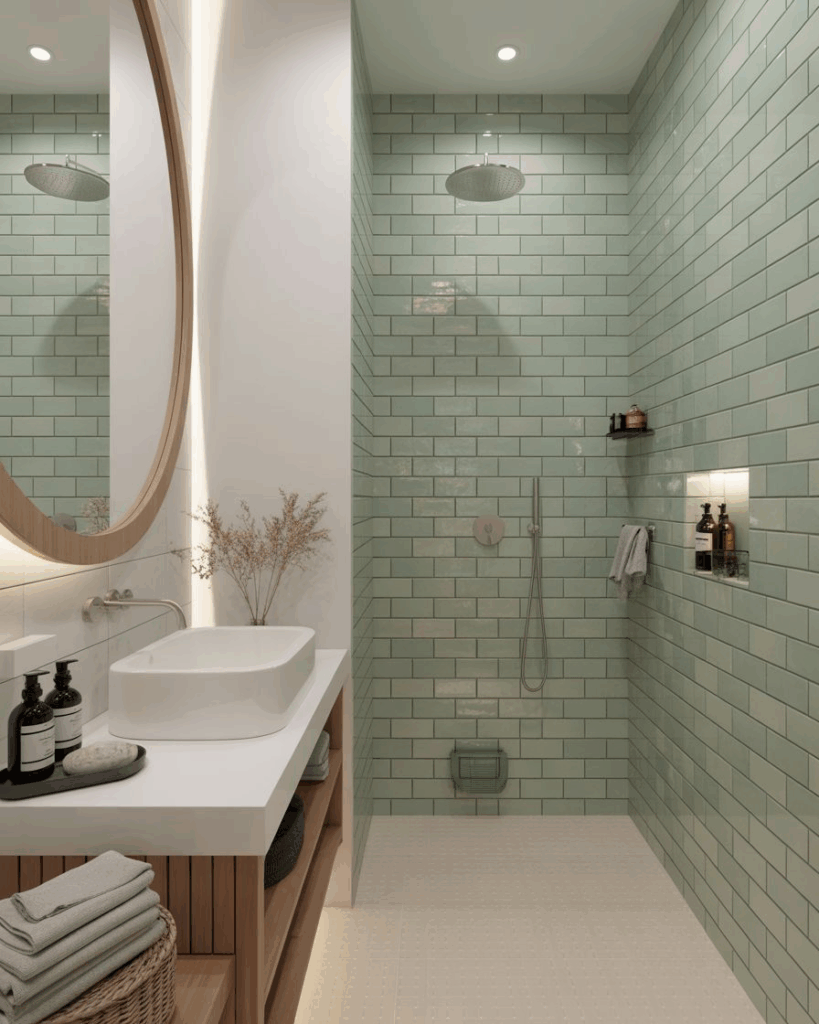
Subdued elegance defines a shower clad in mint tiles, where freshness meets timeless craftsmanship. The color’s gentle hue reflects natural light beautifully, amplifying spaciousness while preserving calm. Gloss or zellige-inspired finishes introduce tactile texture that catches illumination with soft brilliance. Mint tile showers integrate effortlessly within white or neutral bathroom settings, maintaining balance between rejuvenation and relaxation. The hue’s versatility complements both chrome and brass fixtures, making it adaptable across traditional aesthetics. Pattern layouts—such as stacked or herringbone—offer subtle movement without visual clutter. Durable porcelain or ceramic tiles ensure long-term moisture protection while remaining low maintenance. Mint’s cool undertone creates a spa-like environment, ideal for morning refreshment or evening unwinding. Glass partitions highlight its tone continuity, emphasizing purity in form and function. Accent niches with white grout or marble ledges enhance visual layering, adding sophistication to simplicity. This color choice transforms routine bathing into an experience grounded in serenity and refinement. In green-and-white traditional bathrooms, mint tile showers bridge nostalgic character with contemporary polish, embodying a design language that values both comfort and aesthetic permanence.
Green Trim Details

Fine detailing distinguishes a bathroom’s personality, and green trim serves as a defining accent within classic decor. Whether framing mirrors, outlining windows, or bordering wainscoting, these subtle strokes of color create architectural rhythm. Muted greens—like sage, olive, or moss—introduce harmony without overpowering the dominant whites often present in traditional bathrooms. The trim acts as a connective element, guiding the eye and enhancing proportions. Painted moldings in semi-gloss finishes withstand moisture while adding depth through reflected light. Pairing green trims with porcelain sinks, brass fittings, and marble floors fosters timeless cohesion. Even narrow trims around cabinetry or wall edges can transform plain walls into structured elegance. Green detailing also echoes the garden-inspired origins of traditional interior color palettes. The restrained application ensures longevity and adaptability, complementing seasonal decor changes effortlessly. Soft lighting accentuates these lines, turning subtle contrasts into a hallmark of craftsmanship. In a green-and-white traditional bathroom, trim details embody understated luxury—proof that refined precision often holds the greatest aesthetic power. These finishing touches tie the entire design together with quiet confidence and enduring grace.
Kelly Green Wall
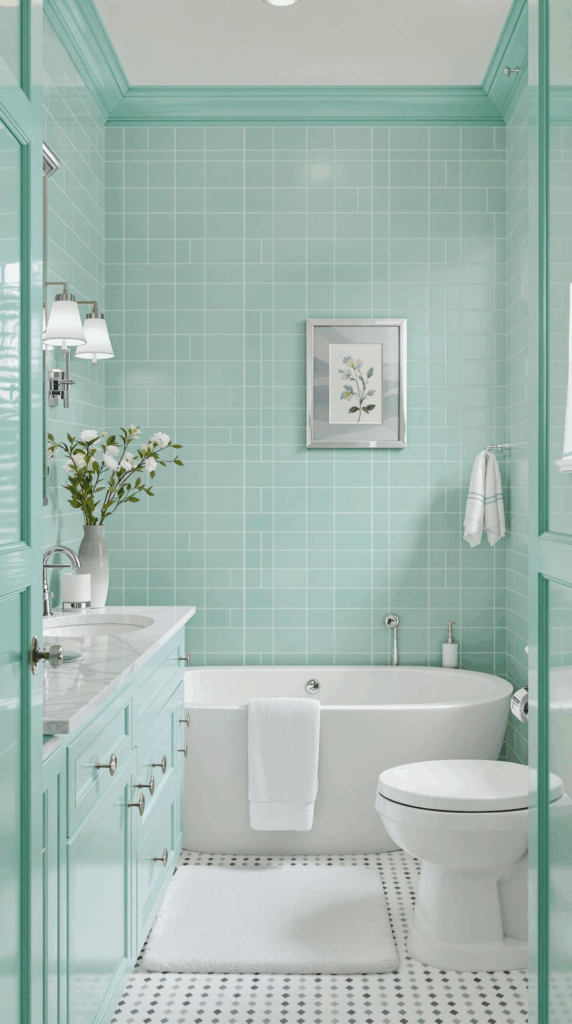
yet controlled, a Kelly green wall infuses character into a bathroom rooted in tradition. This bold hue radiates vitality, bringing modern vibrance to classic architectural forms. When balanced with white wainscoting or marble detailing, it creates a crisp, structured look that commands visual attention without chaos. Kelly green’s saturated tone pairs remarkably well with polished nickel or unlacquered brass hardware, offering balance between contemporary energy and old-world charm. Semi-gloss finishes keep the shade luminous yet refined, resisting moisture while reflecting natural light. The wall becomes a statement backdrop for pedestal sinks, clawfoot tubs, or framed mirrors. To soften intensity, introduce linen curtains, woven baskets, or ivory towels that mellow contrast. Kelly green suits both grand and compact spaces—its clarity uplifts the atmosphere, suggesting freshness and confidence. For traditional settings, it redefines color through disciplined execution rather than excess. Complementary artwork or gold sconces further enhance the balance of vibrancy and sophistication. In green-and-white bathroom design, the Kelly green wall embodies bold tradition—revitalizing classic frameworks with youthful spirit while maintaining the composure and balance that timeless interiors demand.
Celadon Walls

Whisper-soft celadon brings serenity to traditional bathroom environments through its delicate blue-green undertones. This refined shade evokes porcelain artistry and ancient Asian influences, harmonizing beautifully with white tile and polished marble. Celadon’s tranquil presence transforms bathrooms into restful retreats, subtly reflecting light for an airy, spa-like atmosphere. The tone pairs elegantly with silver faucets, linen textures, and light wood elements, maintaining sophistication while promoting calm. Its versatility lies in neutrality—it reads as both color and backdrop, complementing bolder accents like deep-green vanities or patterned flooring. Matte finishes keep reflections subdued, reinforcing softness and visual comfort. Celadon walls perform exceptionally in natural daylight, enhancing spaciousness without overwhelming. Trimmed in crisp white molding, they express restraint and craftsmanship. This color invites a contemplative mood, aligning seamlessly with traditional aesthetics that value proportion and balance. Paired with botanical prints or frosted glass sconces, it bridges nature’s freshness with timeless refinement. In green-and-white traditional bathroom design, celadon offers subtle luxury—refreshing, balanced, and eternally graceful—proving that true elegance lies in nuance, not excess.
Moss Green Ceiling

Unexpected yet sophisticated, a moss-green ceiling adds depth and intimacy to a traditional bathroom. This natural tone draws inspiration from forest canopies, creating a cocooning effect that contrasts beautifully with crisp white walls or marble surfaces. By directing warmth overhead, it alters perception of scale—making tall spaces feel grounded and cozy without appearing enclosed. Matte or satin finishes absorb light gently, preventing glare and maintaining restful ambiance. Moss pairs seamlessly with antique gold light fixtures, bronze mirrors, and classic pedestal basins, offering earthy richness that feels timeless. In green-and-white themes, it unifies lower wall tones and upper detailing, enhancing overall harmony. When paired with beadboard walls or subway-tile surrounds, the ceiling color anchors the palette while emphasizing vertical architecture. Task and ambient lighting should remain warm to complement the hue’s organic depth. The result is a bathroom that feels enveloping yet sophisticated, balancing traditional craftsmanship with natural tranquility. Moss-green ceilings demonstrate how color placement above eye level can redefine atmosphere, introducing heritage charm with a touch of artistry. This treatment transforms ordinary bathrooms into serene sanctuaries rooted in elegance, warmth, and timeless natural beauty.