
Outdoor kitchens have quickly become a must-have feature for homeowners who love entertaining and dining al fresco. With the right layout and materials, even modest patios can be transformed into fully functional cooking zones. From built-in grills and wood-fired ovens to weatherproof countertops and compact storage solutions, well-planned outdoor kitchen setups enhance convenience and boost property value. As outdoor living continues to trend, investing in a patio kitchen offers lasting benefits. This guide highlights space-efficient, stylish, and durable outdoor patio kitchen ideas tailored for different needs—ideal for anyone ready to make their backyard the heart of weekend gatherings and summer meals.
Modular Stone Grill Island with Hidden Storage Drawers
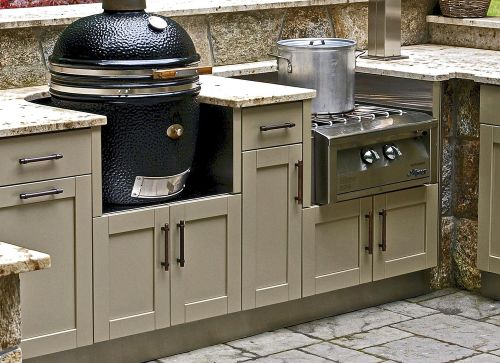
Stone-based grilling setups don’t just promise durability—they deliver refined functionality when paired with hidden drawers that blend into the overall structure. Beneath the main grill surface, deep sliding compartments store tongs, charcoal bags, and prep tools discreetly. These drawers often come with stainless steel fronts for easy cleaning and weather resistance, while the stone exterior provides visual continuity across the island. A built-in countertop made of granite or concrete completes the grilling zone, offering generous space for slicing, seasoning, and staging.
Modular layouts allow homeowners to expand their kitchen zones over time or configure them to fit awkward patio footprints. Whether placed along a wall or freestanding, these islands integrate seamlessly with other backyard elements like dining tables or fire pits. Thoughtfully arranged drawers reduce the clutter of countertop utensils, eliminating the need for plastic bins or standalone storage carts. Lighting can be embedded beneath the overhang for nighttime grilling, while open shelving above the drawers can house frequently used spices or sauces. Outdoor kitchen lovers often choose this layout for its combination of rugged appeal and high efficiency, especially in entertaining spaces where hidden storage becomes essential for keeping surfaces clean and organized throughout grilling sessions and gatherings.
L-Shaped Counter with Built-In Cooler and Prep Sink
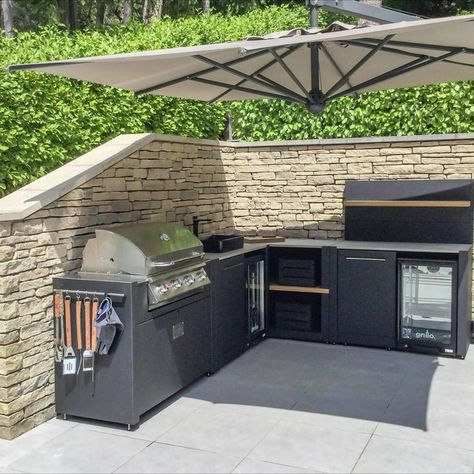
Hosting becomes second nature when everything—from cold drinks to fresh produce—has a dedicated zone within reach. An L-shaped counter creates natural separation between cooking and socializing areas, while the addition of a prep sink eliminates back-and-forth trips to the indoor kitchen. The built-in cooler, often tucked below the short arm of the “L,” keeps beverages chilled and ready without needing a bulky outdoor fridge. Stainless steel, weatherproof cabinetry beneath offers storage for cleaning supplies, dishware, or grilling gear.
Homeowners love how this configuration hugs corners or patio perimeters, freeing up central space for outdoor dining or lounge zones. The extended countertop allows for multiple workstations—ideal for prepping ingredients on one side and serving snacks or cocktails on the other. Faucet setups with detachable heads and built-in drainage systems simplify clean-up, even after large meals. LED strip lights installed under the counter overhang can provide evening ambiance without overpowering the space.
Durable materials such as stone veneer, porcelain tile, or sealed concrete elevate the surface’s resilience to weather and stains. Whether built as a DIY weekend project or by a professional contractor, this setup proves especially valuable in multifunctional patios where every inch must serve a distinct purpose.
Fold-Up Bar Shelf Attached to Fence or Wall

Space-saving solutions make even the smallest patios functional and stylish. A fold-up bar shelf, mounted directly to a fence or exterior wall, offers a compact prep and serving surface that disappears when not in use. When lowered, it becomes a sturdy counter for drinks, snacks, or quick grilling prep. Support brackets lock into place securely, often in powder-coated metal or treated wood for weather resistance.
Ideal for urban balconies, narrow patios, or side-yard kitchens, this option makes outdoor entertaining more flexible. Paired with collapsible bar stools or standing height, the shelf becomes an instant bistro zone without taking up floor area. Hooks mounted above or beside the shelf can hold grilling tools, bottle openers, or small hanging planters for visual interest.
Materials like cedar, acacia, or composite decking ensure the shelf stands up to sun and rain, while wall-mounted cup holders or spice racks add smart functionality. A thin shelf lip or raised edge keeps items from sliding off in breezy conditions. This approach works beautifully for those who grill casually and want to maximize their setup without committing to a full outdoor kitchen. When folded, it blends right into the wall—sleek, useful, and highly efficient for limited spaces.
Pizza Oven Nook with Firewood Cubby and Accent Lighting

Outdoor kitchens gain instant charm when a dedicated pizza oven nook becomes the centerpiece. Built into a stucco or stone alcove, the oven anchors the area while remaining both functional and decorative. Below, a neatly stacked firewood cubby adds rustic appeal and ensures quick access to fuel during long cooking sessions. Warm-toned LED accent lighting beneath the archway or above the woodpile enhances nighttime ambiance without overpowering the fire’s natural glow.
This layout is perfect for slow-cooked artisan pizzas, baked breads, or cast-iron dishes. Chimneys or smoke vents integrated into the upper structure ensure safety and proper airflow. Granite or concrete countertops beside the oven serve as pizza assembly zones, with hooks nearby for peels, mitts, and scrapers. Firebrick interiors retain heat for consistent baking, while the exterior finishes can match the surrounding patio design.
The combination of stonework, lighting, and visible firewood delivers a cozy, inviting feel that makes the space ideal for both casual dinners and weekend gatherings. Placement near dining zones keeps the flow efficient—from oven to table. For families or entertainers who love rustic flavors and atmospheric charm, this type of setup provides a memorable outdoor cooking experience that goes far beyond the grill.
Compact Patio Kitchenette Using Cinderblock and Butcher Block Top
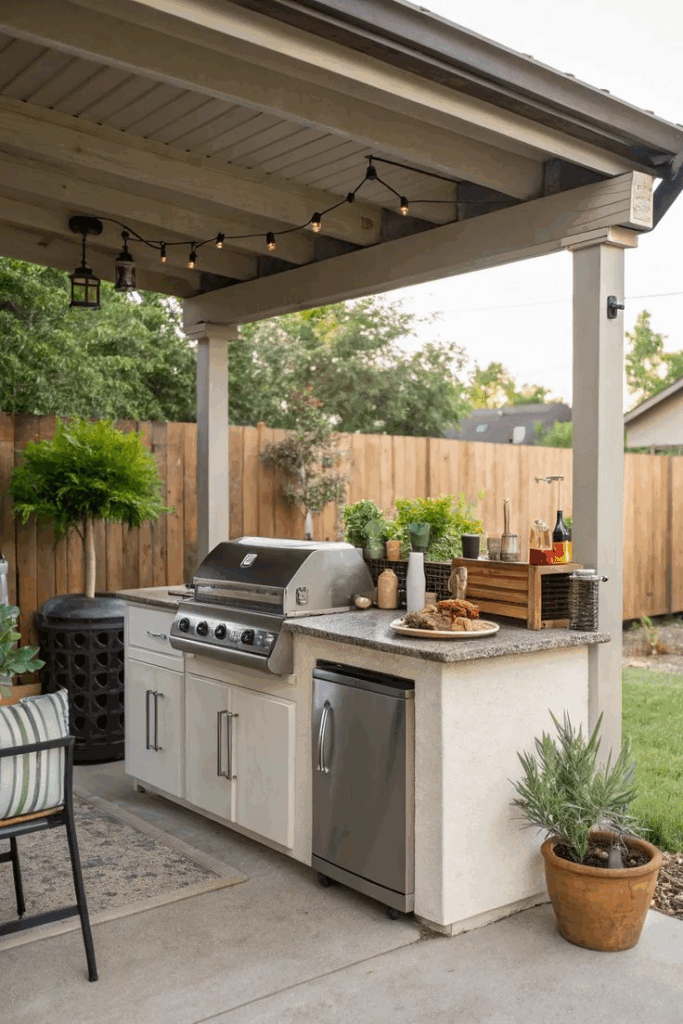
Durability and simplicity come together in a kitchenette crafted from stacked cinderblocks and topped with thick butcher block. This affordable, low-maintenance option works beautifully for smaller patios or renters seeking semi-permanent solutions. The cinderblocks form the base structure—no cutting or fancy tools required—while the wooden countertop adds warmth and usability for food prep, serving, or staging.
The open design allows for flexible shelving below, ideal for storing charcoal, utensils, or dish bins. Weather-sealed butcher block resists moisture and stains, and cinderblocks provide excellent heat resistance around portable grills or hot plates. A clear sealer or outdoor-safe finish prevents wood warping and extends longevity through the seasons.
Above the countertop, a mounted metal bar or pegboard can hold spatulas, tongs, or a magnetic knife strip. This setup allows you to build only what you need—perhaps a single surface and a vertical frame—or expand into an L-shape or U-shape depending on available space. It’s also easy to disassemble and repurpose the materials elsewhere.
Whether for everyday use or spontaneous weekend barbecues, this design delivers big functionality without high costs or complex installation. With the right care and organization, it becomes a practical yet charming focal point for budget-conscious outdoor kitchens.
Pergola-Covered Kitchen Zone with Hanging Utensil Rack
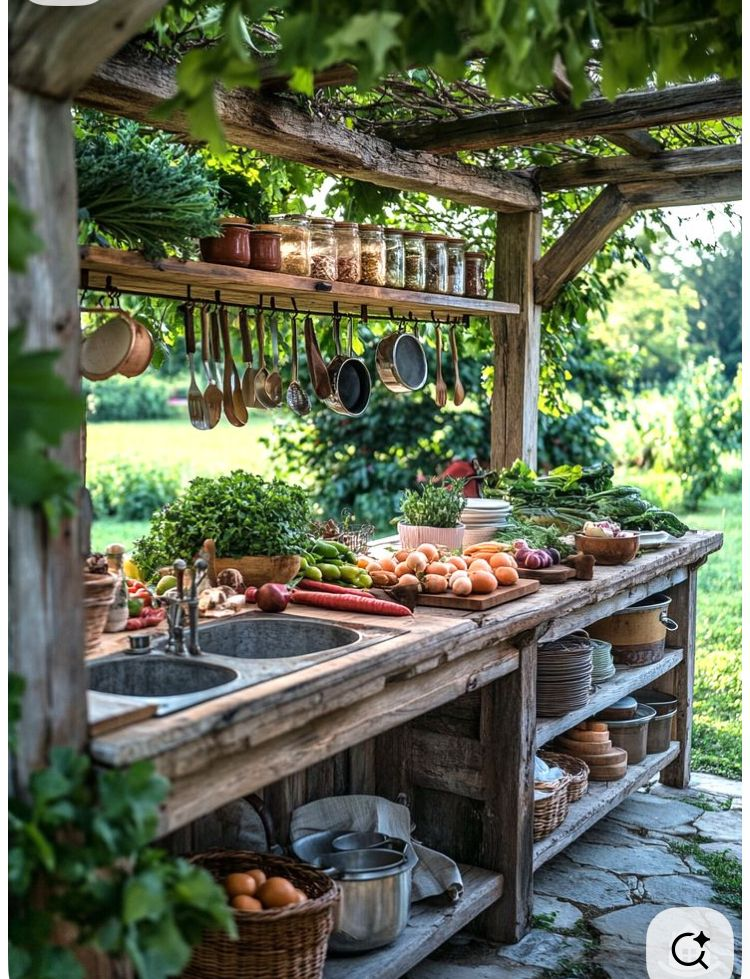
Sheltered cooking areas gain structure and style with a pergola overhead. Besides shielding the space from intense sun, a pergola also offers an ideal frame for suspending lighting and utensil racks. A simple metal or wood rack can hang from the crossbeams, keeping tongs, spatulas, and grill brushes organized and within arm’s reach. This eliminates clutter on countertops and helps streamline outdoor cooking.
The structure can be painted, stained, or left natural, depending on the design scheme. String lights, Edison bulbs, or pendant lamps suspended from the rafters provide ambient evening glow. Underneath, the kitchen zone often includes a built-in grill, prep counter, and under-counter storage framed with brick, stone, or metal panels.
Shelving integrated into the pergola posts makes use of vertical space for plants, spice jars, or decorative elements. The pergola’s open-air design ensures ventilation while still providing a sense of enclosure that defines the kitchen space clearly within the larger patio.
Weather-treated materials and careful anchoring keep everything stable year-round. This approach appeals to serious grillers who want both function and comfort outdoors. It also brings cohesive structure to the overall layout, bridging the kitchen with adjacent dining or lounging areas.
Roll-Out Cart Station for Grilling and Serving

Flexibility takes center stage with a roll-out cart station designed for grilling and serving. Unlike fixed countertops, this mobile setup adjusts to your needs—rolling out for barbecue duty, then tucking away once the meal’s done. Heavy-duty caster wheels with locking mechanisms ensure stability during use, while stainless steel or weather-treated wood frames stand up to outdoor conditions.
The cart typically includes a flat prep surface, bottom shelving for condiments or trays, and side hooks for grill tools. Some models offer a top-tier butcher block or fold-out extensions for extra space. It’s especially useful for small patios or for entertainers who need mobile zones near seating or poolside areas.
Under-counter storage may feature removable bins or slide-out drawers, ideal for organizing utensils, towels, or extra plates. A towel bar or bottle opener mounted on the side adds utility without bulk. After meals, the cart can be easily wheeled into a shed or under a covered area to prolong its lifespan.
Whether supporting a freestanding grill, hosting a drink station, or acting as a prep counter, the roll-out design caters to ever-changing layouts. For outdoor spaces where versatility matters as much as aesthetics, this movable kitchen piece offers freedom without sacrificing function.
Dual-Zone Counter: One for Prep, One for Serving Guests
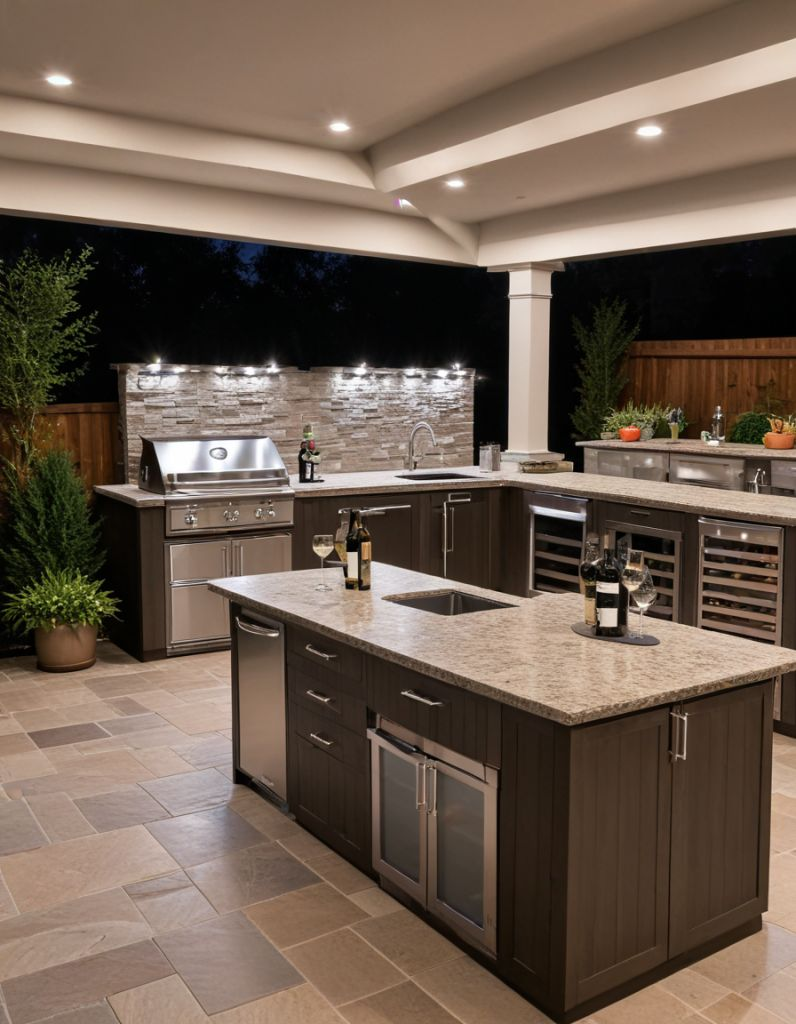
Dividing tasks between zones streamlines outdoor cooking, and a dual-surface counter makes that possible with clear separation between food prep and guest service. This setup ensures raw ingredients, cutting boards, and tools stay on one side, while finished dishes and drinks move seamlessly to the serving area. A raised bar ledge can visually separate the zones while still allowing interaction between host and guests.
Durable countertop materials like granite, porcelain tile, or treated concrete resist heat and spills. The prep zone often includes a sink, cutting surface, and trash pullout, while the serving side may be outfitted with barstools or wine racks. Built-in lighting along the under-counter edge enhances nighttime usability without creating glare.
This layout supports smoother workflow, reducing cross-contamination and congestion during busy gatherings. It’s especially useful during grill-intensive meals or cocktail hours, where efficiency and presentation go hand-in-hand. Storage drawers or shelves below can be divided accordingly—utensils and cutting boards in one, drinkware and napkins in the other.
Whether arranged along a wall or forming a peninsula, this counter format brings intentional design to backyard kitchens. The thoughtful split ensures both function and hospitality shine without compromising one for the other.
Pull-Out Trash and Recycle System Under the Countertop
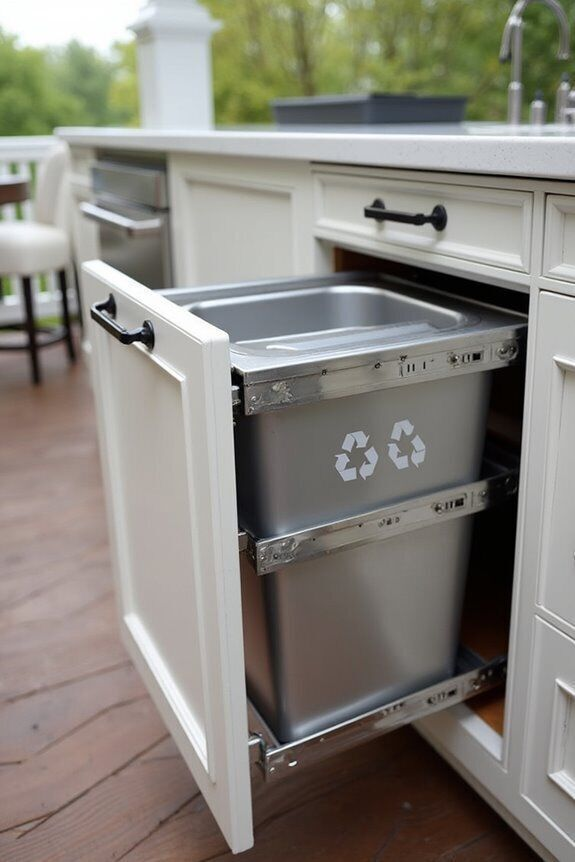
Cleanliness becomes effortless when trash and recycling bins are hidden but accessible. A pull-out system beneath the outdoor countertop offers a sleek solution that keeps messes contained and odors out of sight. Built into a weatherproof cabinet or drawer, the dual-bin setup glides out smoothly on heavy-duty tracks.
Each compartment typically holds standard-size bags, with lids or foot pedals for hygienic use. Some setups include ventilated panels or odor filters to control airflow, ideal during summer grilling sessions. Positioned directly beneath prep zones, these bins simplify waste disposal during cooking and cleanup.
Outdoor-rated cabinetry—often stainless steel or marine-grade polymer—ensures resistance to rain, humidity, and heat. The pull-out mechanism may be soft-close for smoother operation and noise reduction. Labels or color-coded liners help guests sort waste correctly without confusion.
This solution reduces visual clutter and prevents the need for freestanding trash cans, which can detract from an otherwise polished patio layout. It also pairs well with compost buckets or storage drawers, rounding out a full eco-conscious kitchen zone.
By keeping waste tucked out of sight and within easy reach, this feature boosts efficiency and sanitation, all while supporting a clean, streamlined aesthetic in outdoor entertaining spaces.
Corner Kitchen Setup with Tile Backsplash for Splash Protection

Unused patio corners become practical cooking stations with a corner kitchen configuration. This design tucks seamlessly into angled walls or fences, maximizing underutilized space without crowding the central patio. A durable tile backsplash behind the grill and sink protects the structure from grease, moisture, and heat, while also adding color or texture to the layout.
Materials like porcelain, glass, or stone tiles resist high temperatures and clean easily with a wipe-down. Patterned or mosaic styles can enhance visual appeal, while darker grout helps mask stains. Countertops in L-shaped or angled formats allow for both prep and plating zones without requiring a massive footprint.
Cabinets or open shelving beneath the counter provide storage for dishes, tools, or charcoal. Overhead lighting can be installed on wall mounts or pergola beams above the unit for night visibility. Often built into permanent block structures or framed with pressure-treated lumber, this setup feels custom without complex construction.
The corner design also supports airflow by keeping the grill area open and allows hosts to face guests while cooking. For patios where space and function need to work in harmony, this layout strikes the right balance between efficiency, protection, and visual cohesion.
Floating Shelf Wall for Spices, Decor, and Lighting

Vertical space earns its keep when a floating shelf wall becomes part of the patio kitchen design. Mounted against brick, wood, or cement surfaces, these open shelves offer accessible storage for spices, oils, and décor without cluttering the countertop. Weather-treated wood or powder-coated metal ensures durability across all seasons.
Each shelf can be arranged at varying heights for a layered, designer look. LED strip lights placed beneath provide accent lighting that doubles as functional task light for evening prep. Clear jars and labeled containers keep ingredients tidy while giving the wall a curated, intentional aesthetic.
For added style, mix in potted herbs, decorative bowls, or small lanterns between essentials. Spacing shelves to accommodate taller items like oil bottles or glass pitchers increases versatility. This setup is particularly useful when counter space is minimal or when the patio kitchen lines an exterior wall.
Anchor brackets should be corrosion-resistant and properly sealed to avoid rust, especially in humid climates. With minimal materials and a strong visual payoff, this shelving wall becomes both a design statement and a highly practical component of any outdoor cooking zone. It’s ideal for chefs who love a well-organized station and want every inch to pull double duty.
Deck-Level Kitchen with Pop-Up Shade and Folding Bar Stools
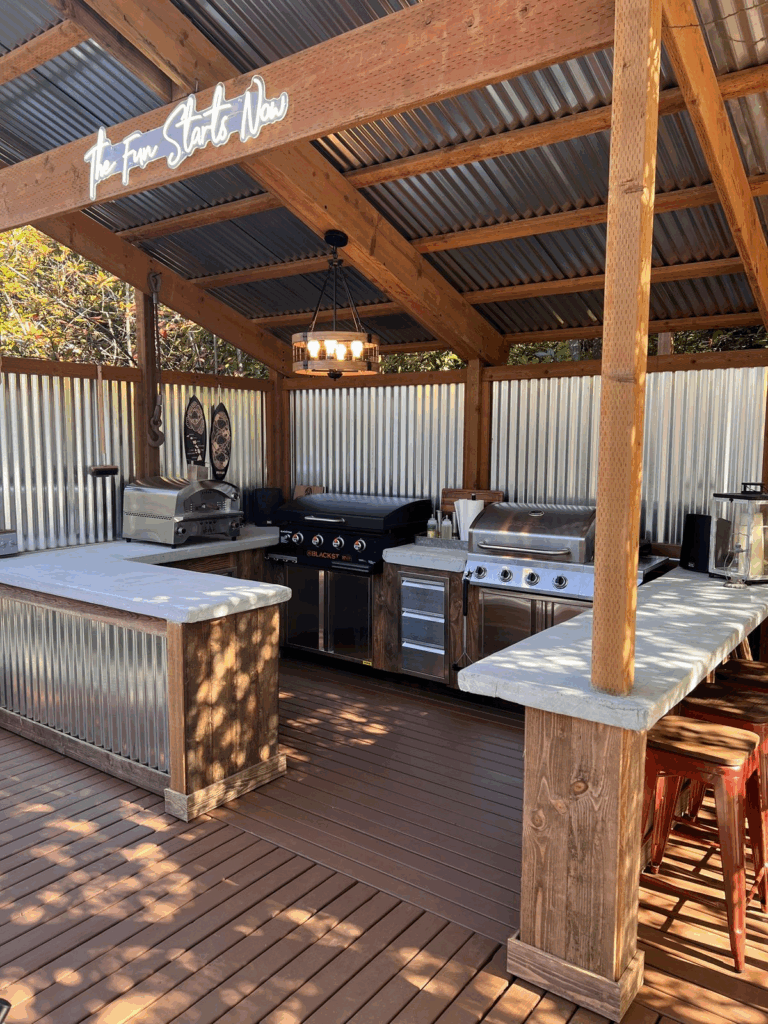
Low-profile kitchens situated at deck level keep everything streamlined and easy to access. A pop-up shade, mounted on a telescoping pole or retractable arm, ensures UV protection during prep or meals. When not needed, it stows neatly out of sight, keeping the patio looking tidy. This makes the space ready for both sunlit brunches and shaded grilling without permanent overhead structures.
Folding bar stools, typically made of resin, teak, or metal, tuck beneath a bar-height counter when not in use. This setup supports casual seating while maintaining a compact footprint. A narrow ledge on the outer edge of the counter serves as a mini dining or drink bar.
The deck surface integrates seamlessly with the kitchen base, often made of stone veneer, concrete panels, or wood-clad framing. Storage drawers, built-in coolers, or pull-out trays can be integrated into the base structure for added convenience.
This configuration is ideal for smaller decks or rooftops where height clearance matters. It offers flexibility without sacrificing essential features like shade and seating. The clean lines and concealed elements keep the entire space visually balanced while still functioning as a fully equipped outdoor kitchen zone.