
Japanese-inspired bathrooms embody harmony, simplicity, and mindfulness, turning everyday routines into tranquil experiences. Rooted in Zen philosophy, this design approach emphasizes natural materials, balanced proportions, and a soothing connection to nature. Clean lines, warm wood tones, and subtle lighting create an atmosphere that encourages calm and clarity. The best Japanese-inspired bathroom ideas focus on thoughtful layouts, soaking tubs, and organic textures that promote relaxation while maintaining modern functionality. Ideal for homeowners seeking serenity and minimalism, these concepts showcase how traditional Japanese aesthetics can redefine comfort, offering a peaceful retreat that nurtures both the body and the mind within any home.
Hinoki Soaking Tub

Stepping into a hinoki soaking tub feels like entering a tranquil retreat. Crafted from aromatic Japanese cypress, this traditional feature transforms bathing into a meditative ritual. The natural oils released by the wood emit a calming scent that purifies the air while the warm water soothes both body and mind. Hinoki tubs are designed for deep immersion, encouraging slow relaxation rather than hurried cleansing. Their minimalist profile fits effortlessly within modern or traditional settings, often paired with stone or bamboo accents for visual balance. To maintain authenticity, elevate the tub slightly on a wooden platform and position it near a window or garden view. This connection with nature enhances the sensory experience, embodying Japan’s philosophy of simplicity and harmony. Regular oiling preserves the wood’s golden hue and fragrance, ensuring longevity and timeless appeal. Whether in a spa-like master bath or a compact wellness corner, the hinoki soaking tub evokes a serene balance between craftsmanship and mindfulness. It’s not just a bathing fixture—it’s a statement of quiet luxury and thoughtful living.
Shoji Sliding Door
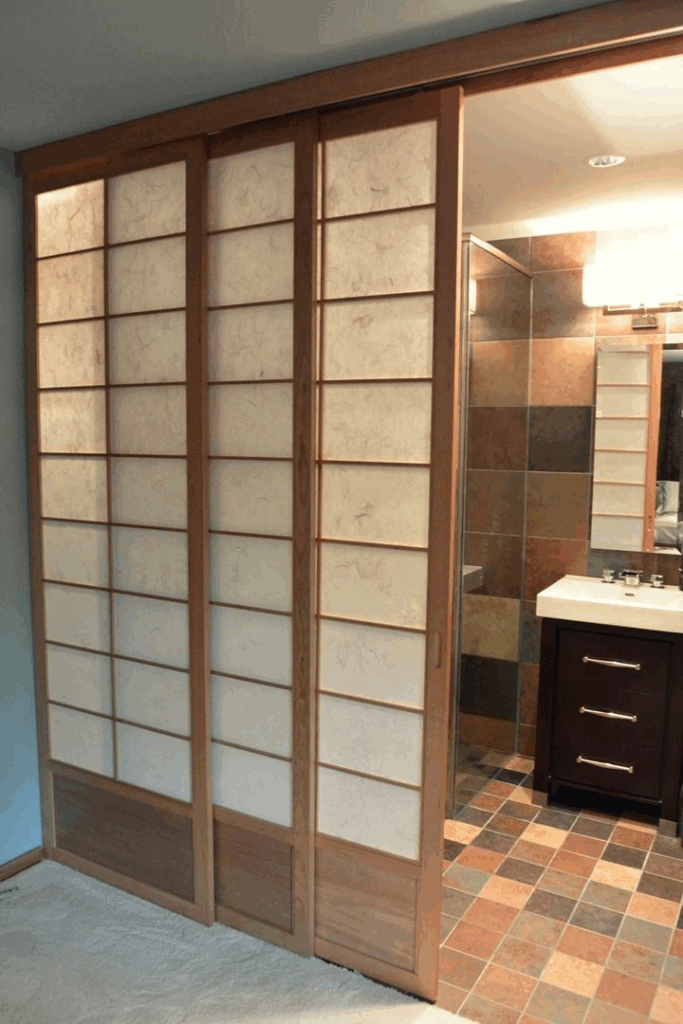
Translucent shoji doors lend a sense of serenity and balance to Japanese-inspired bathrooms. Constructed with a lightweight wooden lattice and rice paper panels, these doors diffuse natural light, creating a soft, peaceful glow. Their sliding mechanism conserves space, ideal for compact areas where swing doors would feel intrusive. Beyond function, they establish a gentle transition between private bathing zones and the rest of the home, reinforcing the concept of spatial harmony. Opt for sustainably sourced wood frames in pale tones like ash or maple to maintain authenticity. Frosted or laminated panels can substitute for traditional rice paper in humid conditions, preserving the look while enhancing durability. When paired with stone floors or bamboo mats, shoji doors complete the zen-like aesthetic, offering visual lightness and tactile warmth. Their quiet glide and subtle textures evoke calmness, turning daily routines into mindful moments. Integrating these doors not only defines space elegantly but also deepens the connection between light, material, and tranquility within the bathroom environment.
Wabi-Sabi Walls
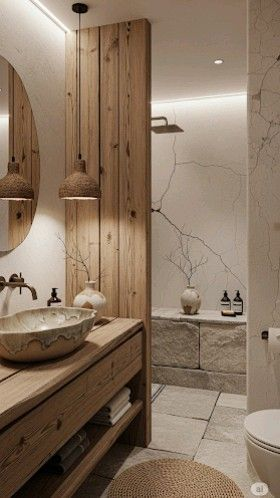
Imperfect textures and muted tones define the wabi-sabi philosophy, celebrating beauty in simplicity and imperfection. In a Japanese-inspired bathroom, plastered or limewash walls echo natural stone, creating a raw yet graceful atmosphere. Slight variations in finish and tone tell a story of authenticity and quiet aging, enhancing the room’s tactile appeal. Earthy neutrals like taupe, sand, and smoke gray keep the space grounded, while subtle brush strokes invite touch and warmth. To maintain balance, pair the textured surfaces with clean-lined fixtures and organic accents such as wooden stools or linen towels. Indirect lighting enhances the depth of the wall’s surface, allowing shadows to accentuate its organic beauty. This aesthetic doesn’t chase flawlessness; instead, it nurtures calm acceptance and timeless comfort. Every imperfection becomes a reminder of nature’s rhythm and the passage of time. Wabi-sabi walls redefine luxury—not through polish, but through peace, authenticity, and emotional resonance that connects the mind to the living environment.
Zen Garden Shower
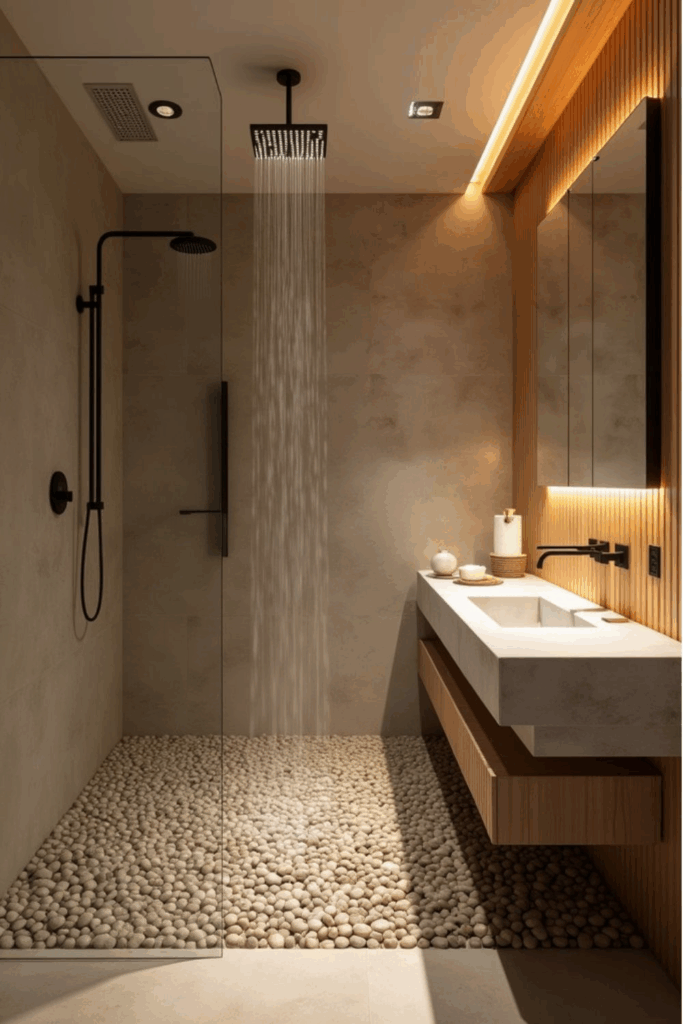
Merging bathing with nature’s calm essence, a zen garden shower transforms routine cleansing into meditation. Pebbled floors, moss-lined corners, and bamboo screens establish an atmosphere of stillness. The sound of water flowing over smooth stones mimics a garden stream, encouraging reflection and balance. Integrate natural materials like slate, cedar, and river rock for texture diversity, and position plants strategically to maintain harmony without crowding the space. A rainfall showerhead adds the sensory feel of gentle rain, promoting relaxation and grounding energy. Minimal décor ensures visual clarity, allowing each material’s natural form to stand out. Hidden lighting beneath the floor edge or behind stone panels softly highlights the organic contours. This design concept bridges the indoor-outdoor divide, letting water and greenery coexist effortlessly. By prioritizing simplicity and sensory awareness, a zen garden shower becomes a holistic escape where architecture and nature merge into a sanctuary for mind and spirit.
Stone Floor + Wood Bench
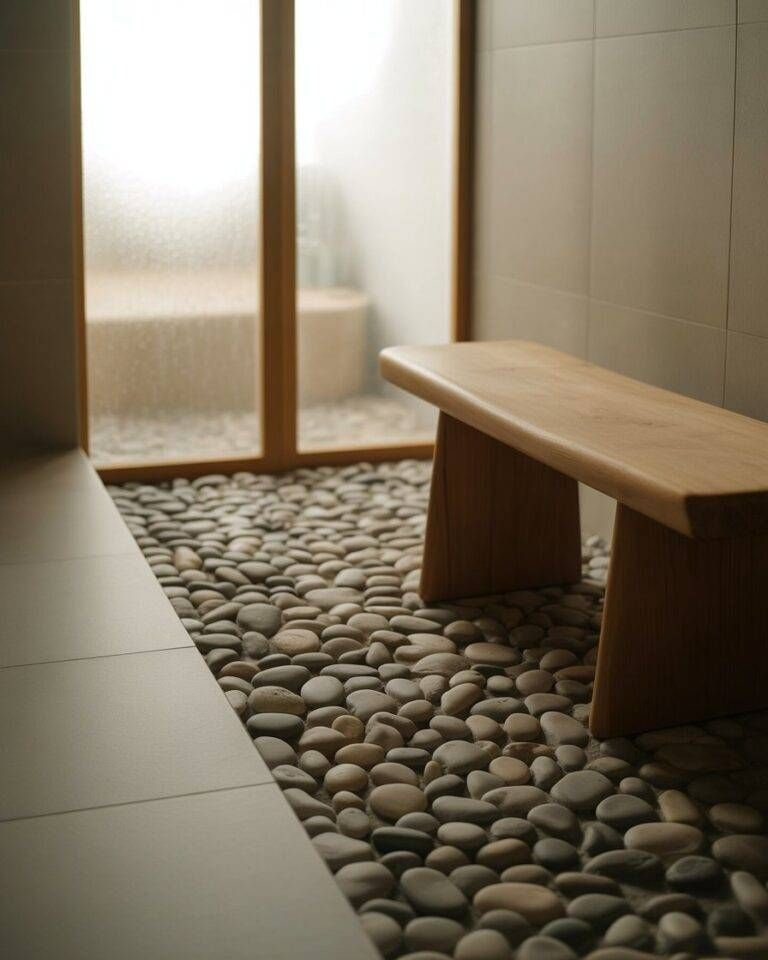
Natural materials define the heart of Japanese bathroom design, and the pairing of stone floors with a wood bench embodies this timeless duality. The cool durability of stone contrasts gently with the warmth of wood, forming a tactile balance that enhances comfort and visual harmony. River stones, slate, or basalt tiles offer a grounding surface, while a hinoki or teak bench provides seating for pre-bath rituals. This combination supports the bathing culture’s emphasis on preparation and mindfulness before immersion. The porous textures of both materials absorb light differently, creating a serene interplay of shadow and reflection. For a cohesive aesthetic, keep grout lines narrow and finishes matte. Positioning the bench near a shower zone or soaking tub encourages relaxation between cleansing stages. Regular oiling of wood preserves its natural luster, while sealed stone ensures longevity. Together, these elements bring subtle contrast and enduring tranquility, reflecting the perfect balance between nature’s roughness and crafted refinement.
Minimal Floating Vanity
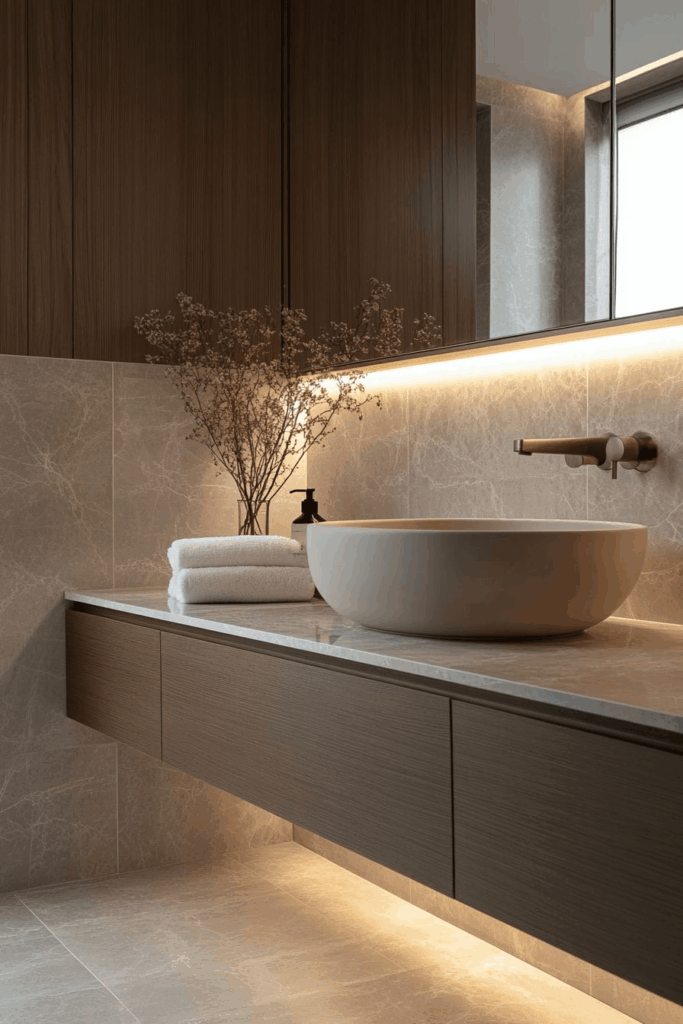
A floating vanity embodies the Japanese principle of visual lightness and spatial clarity. By lifting cabinetry off the floor, the design introduces airiness while simplifying cleaning routines. Smooth lines, flat-front drawers, and concealed handles keep the form understated yet functional. Materials like oak veneer, bamboo plywood, or matte lacquer harmonize with natural palettes found elsewhere in the bathroom. An integrated basin in white ceramic or stone complements the vanity’s simplicity, while wall-mounted faucets maintain the uncluttered look. Soft LED lighting beneath the vanity adds ambient warmth, subtly emphasizing the floating illusion. The absence of heavy ornamentation directs focus to function and proportion—key aspects of Japanese aesthetics. Every component serves a purpose, aligning with the philosophy of mindful design. The result is an uncluttered, calming vanity space that promotes stillness and order, turning daily rituals into quiet expressions of balance and refinement.
Seated Wash Area
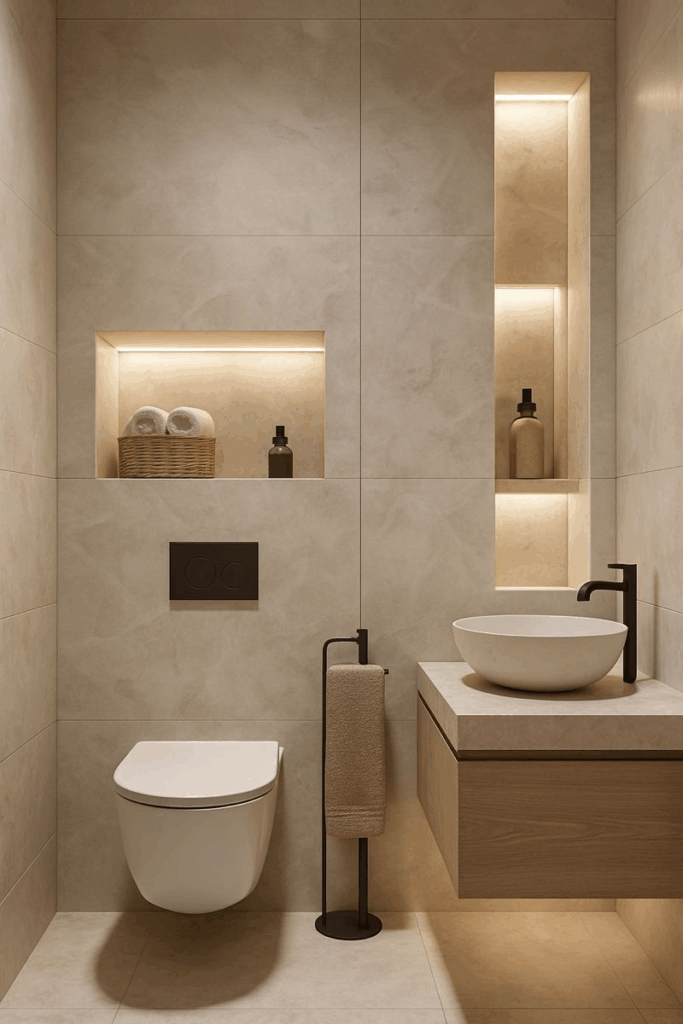
Rooted in Japan’s bathing tradition, the seated wash area reflects mindfulness and ritual. Before entering the soaking tub, one cleanses while seated on a low stool beside a hand-held shower or basin. This method encourages deliberate, unhurried movement and respect for the bathing process. The design typically features waterproof wood slats underfoot, ensuring proper drainage and a spa-like feel. A small bucket or ladle complements the setup, honoring its cultural origins. Modern adaptations often pair teak or hinoki wood with minimal fixtures for a refined appearance. The seated posture fosters comfort, especially in compact spaces, while also promoting water efficiency and ergonomic design. Adding a recessed shelf nearby for bath essentials keeps the layout functional yet serene. This configuration isn’t merely practical—it’s deeply symbolic, turning self-care into meditation. Integrating a seated wash area within a modern bathroom bridges centuries of Japanese tradition with contemporary wellness values centered on respect, stillness, and rejuvenation.
Neutral Earth Palette
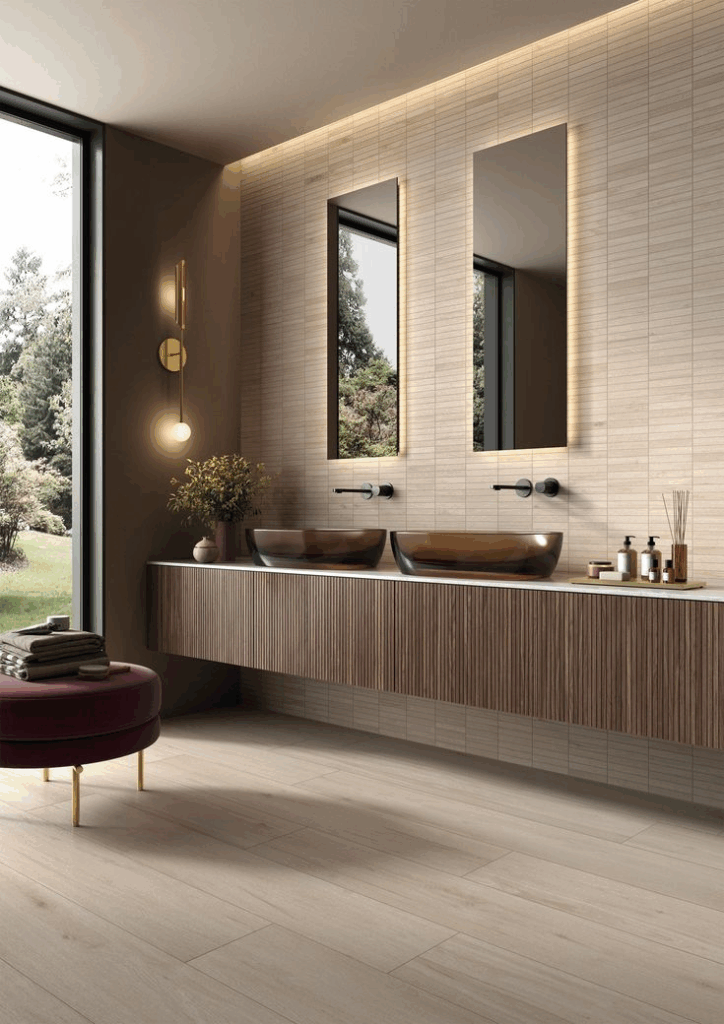
Grounded tones form the soul of Japanese-inspired interiors, and a neutral earth palette captures nature’s quiet energy. Shades of beige, sand, clay, and mushroom establish a soothing backdrop that invites calm. These hues reflect the muted landscapes of Japan—wooded hills, river stones, and misty mornings. When layered thoughtfully, they bring depth without visual noise. Use warm undertones for walls, cool stone greys for flooring, and soft cream for fixtures to maintain balance. Matte textures amplify the organic atmosphere, while subtle contrast between materials keeps the space from feeling flat. Natural fabrics like linen or cotton reinforce the sensory connection to the environment. The palette’s versatility allows integration with wood, stone, or ceramics effortlessly. Under soft lighting, every surface emits a tranquil warmth reminiscent of traditional ryokans. A neutral earth palette doesn’t demand attention—it restores equilibrium, nurturing both the visual and emotional senses for a truly restorative bathroom experience.
Indoor-Outdoor Bath
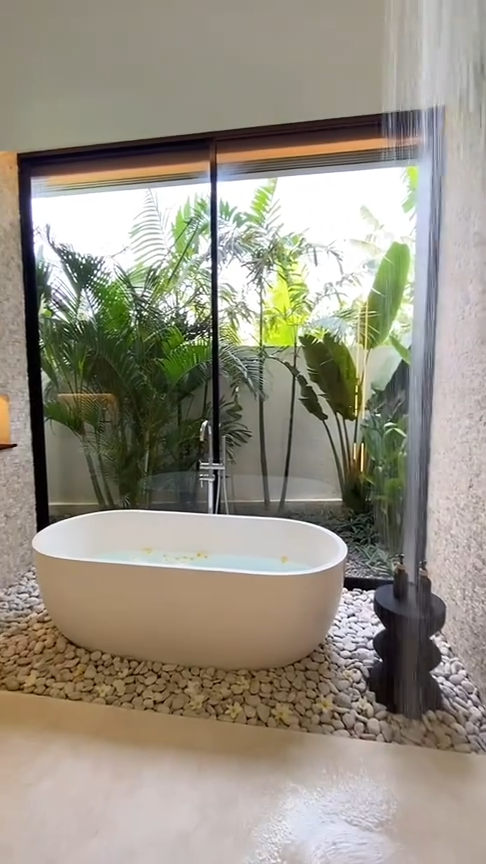
Blurring boundaries between architecture and nature, the indoor-outdoor bath epitomizes Japanese bathing culture. Large glass panels or sliding doors open to a private courtyard, letting fresh air and greenery surround the space. The transition is seamless yet intentional, maintaining privacy while inviting openness. Natural stone flooring continues outdoors, guiding the eye and fostering visual unity. A soaking tub positioned near the threshold allows bathers to feel connected to the elements without stepping outside. Plantings like bamboo, fern, or moss reinforce the organic serenity. Subtle lighting ensures usability after dusk without breaking the atmosphere. This design honors the Japanese notion of engawa—a threshold where interior meets exterior harmony. Every element works in quiet cooperation, merging structure with the landscape. The result is not just a bath but an immersive retreat where light, air, and material coexist in balance, promoting mindfulness through sensory simplicity and natural continuity.
Pebble Floor Shower
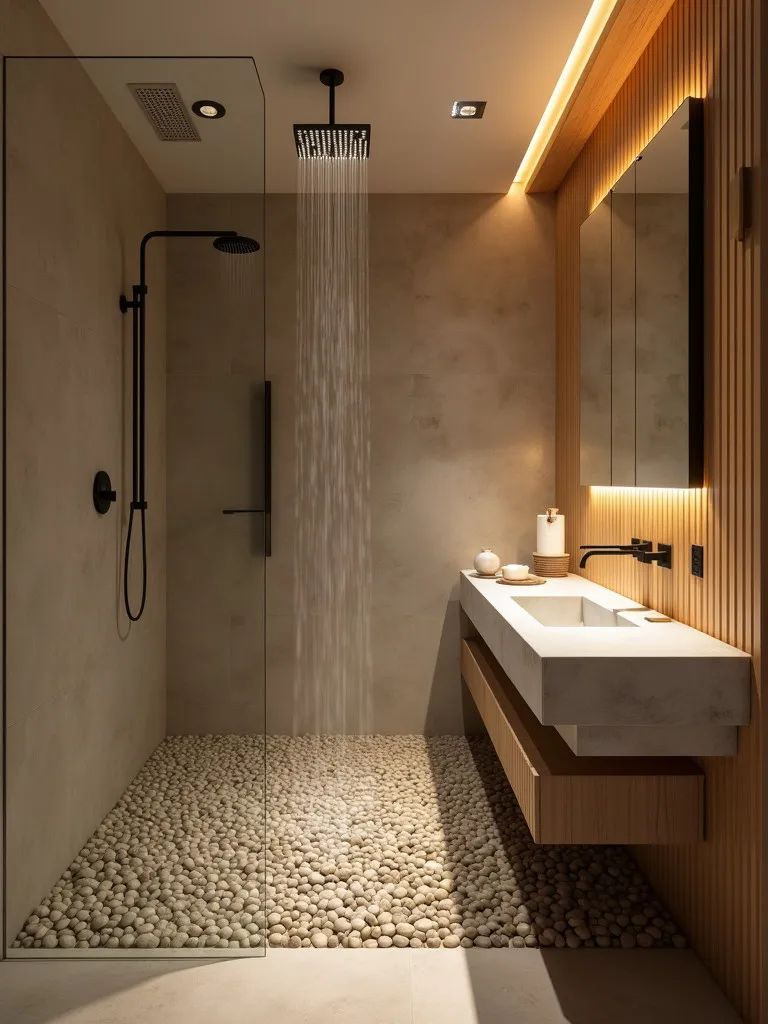
Tactile comfort defines the pebble floor shower, offering both beauty and function. Smooth river stones underfoot provide a natural massage effect while aiding drainage. Their varied tones—from ash to beige—enhance visual interest without overpowering the design. Grouted securely, the surface remains slip-resistant and soothing. Paired with wood or concrete walls, the organic flooring brings an earthy grounding to the bathing zone. A rainfall showerhead enhances the sensory appeal, mimicking a natural downpour over stone. Proper sealing preserves longevity while preventing mold growth in damp environments. The irregular textures invite barefoot comfort and connect bathers to nature’s raw simplicity. Lighting placed low along the base gently highlights the contours of the stones, amplifying the sense of calm. This timeless approach to flooring evokes the feel of outdoor onsen springs, blending durability, elegance, and mindful minimalism in every refreshing step.
Incense Wall Niche
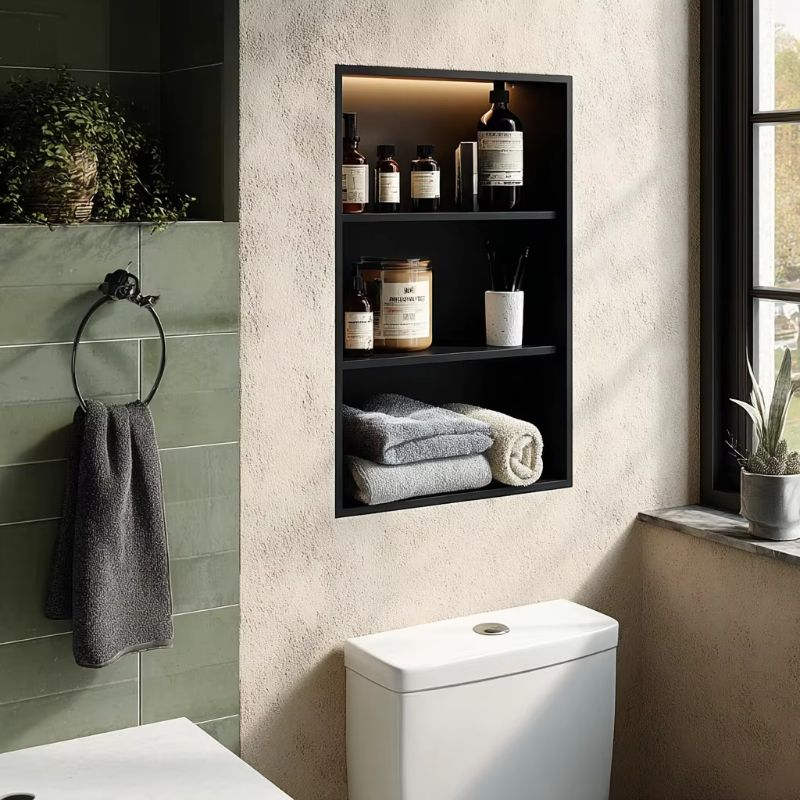
A small wall niche dedicated to incense introduces scent therapy into the Japanese-inspired bathroom. Subtly carved into plaster or stone, the niche serves both functional and aesthetic purposes. When lit, aromatic sticks release gentle fragrances like sandalwood, hinoki, or white tea, infusing calm throughout the space. The soft smoke curls upward, reinforcing the meditative tone of the environment. To enhance safety and longevity, line the niche with heat-resistant material and pair it with a small ceramic tray. Position it strategically near the soaking area or entrance for maximum aroma diffusion. Complementing minimalist interiors, the niche remains understated yet deeply sensory. Lighting it during evening baths enriches the experience with ritualistic calm. Beyond fragrance, it symbolizes mindfulness—an acknowledgment of presence and serenity. Every breath becomes part of the design narrative, merging scent, space, and soul in quiet unison.
Soft Lantern Lighting
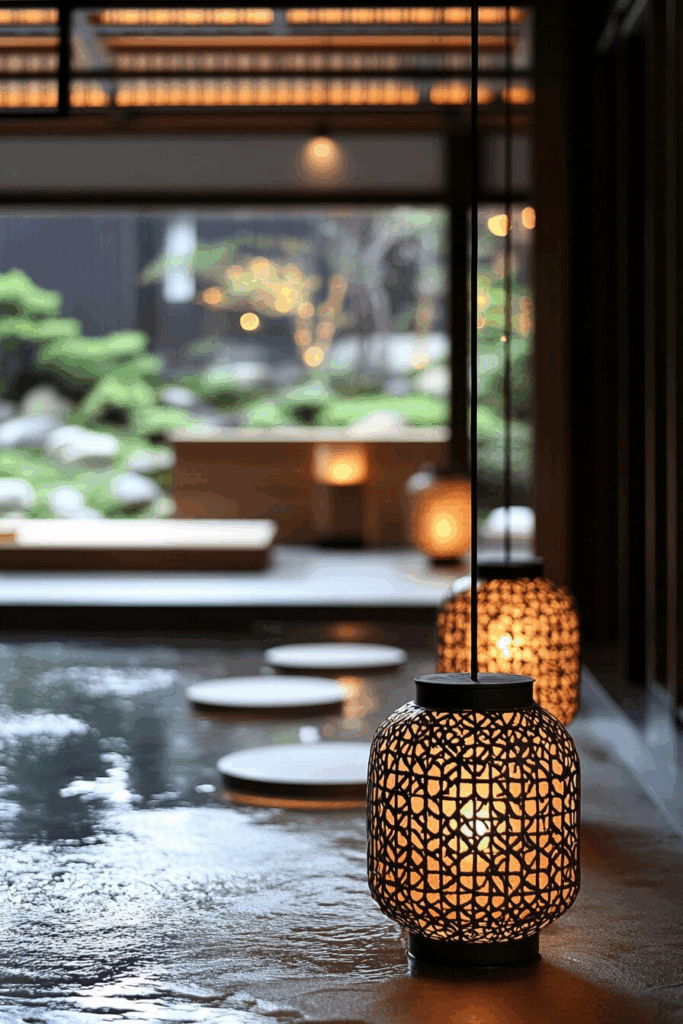
Ambient illumination completes the Japanese bathroom’s atmosphere, and lantern-style lighting offers the perfect balance of warmth and tranquility. Crafted from rice paper, frosted glass, or linen, these lanterns diffuse light into a soft, even glow that flatters natural materials. Suspended from wood beams or mounted on walls, they evoke the timeless charm of traditional ryokans. Warm white bulbs maintain authenticity, preventing harsh contrasts and preserving visual calm. Layered lighting, with small fixtures near mirrors and gentle overhead pendants, ensures practicality without breaking serenity. The diffused radiance enhances the tactile beauty of stone, wood, and plaster surfaces. Thoughtful placement creates gentle shadows that move subtly with steam, turning each bath into a cinematic moment of peace. Lantern lighting not only brightens but also soothes—guiding the senses toward relaxation and mindfulness. Within this glow, every element feels intentional, every corner alive with understated harmony and quiet luxury.