
Designing a hillside fire pit requires a balance of functionality, safety, and visual appeal to make the most of sloped terrain. A well-planned setup not only maximizes outdoor living space but also creates an inviting spot for gatherings year-round. From retaining walls to seating arrangements, the right approach can turn uneven ground into a stunning focal point. This guide highlights practical hillside fire pit ideas that help homeowners achieve comfort, style, and long-lasting value while enjoying their outdoor landscapes.
Terraced Stone Fire Pit Platform
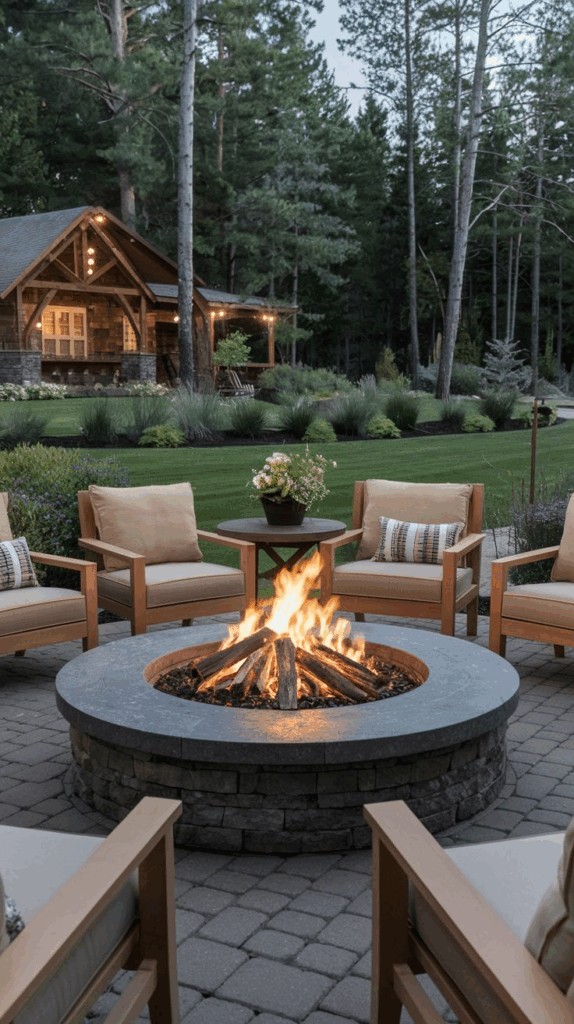
Layered stone terraces give hillside landscapes structure while also offering the perfect foundation for a fire pit. Building a terraced platform with locally sourced stone ensures durability, erosion control, and a natural look that blends seamlessly with the environment. The flat landing created by terracing provides stable footing for seating and circulation, which is critical on sloped terrain. For design, interlocking stone walls can retain soil while defining multiple seating levels, ensuring guests have varied perspectives of both the flames and the hillside view. This concept is especially effective on steep grades, where uneven ground would otherwise limit safe gathering areas. Gravel or decomposed granite between terraces improves drainage and keeps the setting low maintenance. Lighting installed within the stonework can highlight the fire pit after dark, guiding movement safely. Furniture choices may include stone benches for permanence or weatherproof chairs for flexibility. Terracing not only stabilizes the hill but also makes the fire pit area feel intentional and crafted rather than improvised. Homeowners benefit from both form and function, gaining an inviting outdoor retreat that works harmoniously with hillside challenges while showcasing the warmth of natural stone.
Retaining Wall Bench Fire Pit

Designing a fire pit into a retaining wall system allows homeowners to solve two challenges at once: managing a slope and creating comfortable built-in seating. Retaining walls carved into a hillside provide stability against soil erosion while forming a natural backdrop. By extending the top ledge of the wall into a bench seat, the fire pit area becomes practical and cohesive. Materials such as concrete block, natural stone, or modular wall units can be tailored to suit modern, rustic, or traditional settings. This approach ensures efficient use of hillside space, reducing the need for separate furniture while keeping the overall design unified. For added comfort, stone caps can be widened to accommodate cushions or backrests. Proper drainage behind the retaining wall is essential to maintain structural integrity, especially in regions with heavy rainfall. The fire pit can be centrally positioned in front of the wall, allowing guests to enjoy the warmth while the slope remains supported. Integrating low-voltage lighting beneath the bench enhances nighttime ambiance. This solution is ideal for smaller yards where every square foot matters, transforming a sloped backyard into a usable, multi-functional destination that is as stable as it is inviting.
Natural Rock Hearth Built into Hillside

Slopes covered with natural rock formations present an opportunity to integrate a fire pit directly into the landscape without heavy modification. Using large boulders already on-site, or strategically placing quarried stone, creates a hearth that feels as though it has always been part of the hill. This method minimizes excavation while offering excellent thermal properties—stones retain heat, radiating warmth long after the fire dies down. The hearth can be partially enclosed by rock walls that double as windbreaks and seating. When designed carefully, the rugged aesthetic enhances the fire pit’s authenticity, making it look native to the hillside rather than constructed. Drainage must be planned carefully, with gravel bases or hidden channels guiding rainwater away. For seating, flat-topped stones can be arranged around the pit, ensuring durability and continuity with the natural environment. Native plants such as grasses, succulents, or wildflowers may be planted nearby to soften the edges, blending the fire pit into the hillside ecosystem. This option appeals to homeowners who prefer minimal intervention, rustic charm, and durability without relying heavily on manufactured materials. The result is a hillside feature that complements natural topography while offering a timeless gathering space.
Sunken Fire Pit with Graded Steps

Carving a recessed fire pit into a hillside introduces both intimacy and functionality. Graded steps leading downward create a smooth transition from higher ground, eliminating the need for steep drop-offs. This design naturally shelters guests from wind, while the sunken layout retains warmth around the seating area. Stone, brick, or poured concrete can be used to line the pit, ensuring fire safety and longevity. Steps may be designed wide and shallow to double as informal seating, with lighting incorporated along edges for safe nighttime use. Drainage planning is critical: a gravel base or discreet channeling ensures rainwater does not collect within the recessed pit. The surrounding hillside can act as a natural amphitheater, making the fire the central focal point. With careful grading, the pit blends seamlessly into the slope, appearing both purposeful and integrated. This concept appeals to those seeking a modern yet cozy retreat that feels tucked away from the main yard. Beyond function, the tiered access encourages social flow, guiding people naturally toward the warmth. Done well, it transforms hillside constraints into a stylish and practical gathering zone that emphasizes comfort, safety, and aesthetic harmony.
Half-Pit Carved into Hillside with Seat Wall
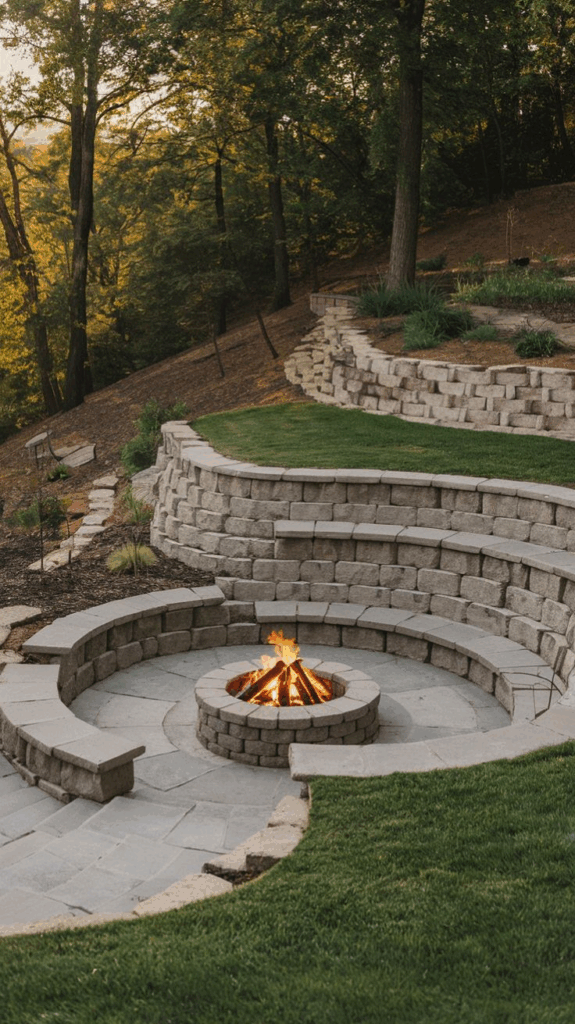
Sloping land can be transformed into a sheltered retreat by carving half of a fire pit into the hillside and pairing it with a built-in seat wall. This approach reduces excavation depth while still offering a partially recessed look. The seat wall, often made from stone or poured concrete, provides a sturdy backrest and helps retain soil. Guests benefit from a natural windbreak created by the hillside itself, while the wall defines boundaries and ensures seating remains durable over time. Adding cushions or timber tops can soften the look and increase comfort. Drainage planning is vital, as the half-carved design must redirect runoff away from the fire zone. To integrate seamlessly, the seat wall can be curved, following the natural contour of the hill, making the fire pit feel embedded rather than imposed. Lighting behind or within the wall enhances evening gatherings. This design is particularly effective on moderate slopes where full excavation is unnecessary, saving time and cost. Homeowners gain both stability and usability, with a hillside feature that combines fire pit charm with architectural strength. It balances practicality with aesthetics, providing a durable retreat that harmonizes with its surroundings.
Raised Fire Pit Patio Built Out from Hill

Extending a raised patio outward from a hillside creates a striking platform for a fire pit, blending functionality with panoramic views. Supported by retaining walls or reinforced foundations, this elevated surface levels uneven terrain and maximizes otherwise unusable slope. The fire pit can be centered for balance or offset to frame specific sightlines, such as sunsets or city lights. Materials like flagstone, pavers, or stamped concrete ensure stability while complementing outdoor aesthetics. Railings or low walls add safety without obstructing views, making the patio feel secure. For drainage, weep holes in retaining walls or gravel beds beneath the patio prevent water accumulation. Seating can be permanent—built into the wall—or flexible, with outdoor furniture arranged for gatherings. This concept expands living space outward, essentially creating a hillside deck fused with a fire feature. Beyond entertaining, the raised patio increases property value by turning challenging slopes into functional outdoor rooms. It’s ideal for homeowners seeking a dramatic yet practical solution that transforms difficult grades into vantage points for year-round enjoyment. The raised design elevates both comfort and perspective, making the fire pit not only a source of warmth but also a centerpiece of the landscape.
Fire Pit with Stone Stair Access

Terraced steps leading down a slope provide both charm and practicality when paired with a hillside fire pit. Stone stairs create a safe, durable pathway while visually anchoring the design within the natural grade. Each step can be broad and shallow, doubling as casual seating during larger gatherings. Using the same stone material for both stairs and pit walls ensures cohesion, while gravel or decomposed granite between treads promotes proper drainage. Handrails may be added for safety on steeper slopes without diminishing the rustic appeal. Strategically placed lighting beneath stair edges guides movement at night, creating an inviting approach. At the landing, the fire pit serves as the destination, framed by the hillside above and open space below. Plantings alongside the staircase soften the hardscape, blending natural and constructed elements. This approach is especially valuable for properties where steep terrain might otherwise discourage outdoor use. Instead of avoiding difficult grades, the stair-access fire pit turns the slope into an experience, with each step building anticipation before reaching the warmth of the fire. It combines accessibility with style, ensuring that even the most dramatic landscapes become functional, welcoming, and memorable gathering spaces.
Metal Bowl Fire Pit on Cut-Hillside Pad

Carving a flat pad into a hillside provides a sturdy foundation for a portable metal bowl fire pit, offering flexibility and low-maintenance design. Unlike built-in masonry pits, a metal bowl can be moved or replaced easily, making it suitable for homeowners seeking adaptability. The cut pad should be stabilized with compacted gravel or a concrete slab to prevent shifting over time. Surrounding the pad with low retaining walls or stone borders helps define the area and manage soil erosion. Choosing a durable fire bowl—steel, cast iron, or copper—ensures longevity, while accessories like spark screens or cooking grates expand functionality. Gravel or paver edging improves drainage and reduces mud after rain. Seating can remain casual, with Adirondack chairs, benches, or lightweight furniture that can be repositioned as needed. This design is particularly appealing for erosion-prone slopes, as the smaller footprint disturbs less soil while still offering a safe gathering space. By combining a cut-in terrace with a versatile fire bowl, homeowners enjoy the warmth of a fire pit without committing to permanent masonry. The result is a hillside retreat that balances durability, flexibility, and affordability while adapting to changing outdoor needs.
Circular Fire Pit with Gravel Pad & Drainage

Building a circular fire pit on a hillside requires careful attention to stability and water control. A gravel pad serves as both foundation and drainage layer, preventing water from pooling and undermining the pit’s structure. The circle design encourages equal seating around the flames, making it ideal for social gatherings. Retaining blocks, natural stone, or poured concrete can be used to define the pit’s perimeter, ensuring fire safety and durability. Surrounding gravel extends beyond the pit, creating a low-maintenance seating zone that resists weeds and mud. For slopes, the gravel pad may be cut into the hillside and bordered with a small retaining wall to maintain level ground. Drainage channels can discreetly divert runoff, ensuring longevity even in wet climates. Furniture choices may include Adirondack chairs, log stools, or built-in benches placed on the gravel surface for stability. The circular layout works with both rustic and contemporary landscapes, offering timeless appeal. Beyond functionality, the symmetry draws the eye naturally, turning the fire pit into a focal point within the hillside setting. This solution is practical, visually balanced, and adaptable to a wide range of backyard styles.
Sunset View Fire Pit Overlook

Slopes that face west offer a natural advantage for designing a fire pit overlook where guests can enjoy glowing skies at dusk. Building a level pad or raised terrace allows the fire pit to frame sweeping views, whether of mountains, valleys, or water. Materials such as stone, pavers, or stamped concrete provide a durable base, while safety railings or low walls ensure comfort on steep terrain. The fire pit itself may be circular or linear, depending on how the view is intended to be framed. Seating positioned outward lets guests enjoy both the warmth of the flames and the beauty of sunset vistas. Lighting along pathways ensures safe access even as the sun fades. To heighten the atmosphere, landscaping can be kept minimal—native grasses and shrubs that don’t obstruct views help preserve openness. This concept transforms a challenging slope into an elevated retreat where evenings naturally center around fire and horizon. Beyond relaxation, it enhances property value by turning hillside terrain into a dramatic stage for daily spectacle. The overlook combines nature’s beauty with functional design, offering a setting where firelight and sunset blend seamlessly into unforgettable outdoor experiences.
Fire Pit Nestled Among Native Plants on Hillside

Positioning a fire pit within plantings of native grasses, shrubs, and wildflowers allows a hillside retreat to feel harmonious with its environment. Instead of dominating the slope, the pit appears as though it naturally belongs within the landscape. Using local stone or subdued materials for the pit keeps focus on surrounding vegetation while ensuring durability. Gravel or decomposed granite paths woven between plantings provide access without disturbing the ecosystem. Seating may be minimal—stone benches or wooden chairs that complement the organic setting. Native plants not only reduce maintenance but also support pollinators and wildlife, reinforcing ecological benefits. Careful spacing ensures fire safety, with adequate clearance around the pit while still preserving a sense of immersion in greenery. Seasonal changes in foliage bring dynamic color and texture to the space, making it enjoyable year-round. This approach appeals to homeowners seeking a sustainable, low-impact solution that reflects the hillside’s natural character. Rather than reshaping the slope, the fire pit becomes part of the environment itself, inviting gatherings that celebrate both warmth and nature’s resilience.
Modular Fire Pit with Removable Components for Erosion Zones

Hillsides prone to erosion benefit from designs that allow flexibility and adjustment over time. A modular fire pit system, built with removable blocks, panels, or metal rings, ensures stability without permanent alteration to shifting terrain. This approach is especially practical in areas with heavy rains or loose soil, where rigid masonry might crack or shift. By placing the modular pit on a compacted gravel base, homeowners can maintain drainage and easily reconfigure or relocate components if erosion changes the slope. Lightweight concrete units, steel inserts, or prefabricated fire rings are ideal for this purpose. Seating can also be modular, with movable benches or chairs that adjust to evolving site conditions. Safety remains paramount, so ensuring the base is level and fire-resistant is key. Beyond practicality, the modular approach offers design flexibility, allowing seasonal changes or expansions for larger gatherings. This makes the concept appealing for families or properties where hillside terrain may evolve. Instead of battling erosion with permanent construction, homeowners adapt with an adjustable system that remains safe, functional, and attractive. It’s a problem-solving solution that balances hillside challenges with outdoor comfort, ensuring the fire pit stays usable for years to come.