
Indoor greenery has become a key element in modern bedroom decor, offering more than visual appeal. The right plants can improve indoor air quality, support better sleep, and create a calming atmosphere backed by biophilic design principles. From low-maintenance snake plants to air-purifying peace lilies and humidity-balancing ferns, selecting suitable bedroom plants depends on light levels, space, and care requirements. This guide highlights the best beautiful plants for bedrooms, practical styling ideas, and expert placement tips. Whether you prefer minimalist, boho, or luxury interiors, these plant ideas help you build a healthier, more relaxing sleep environment with confidence.
Hanging Pothos Corner Cascade
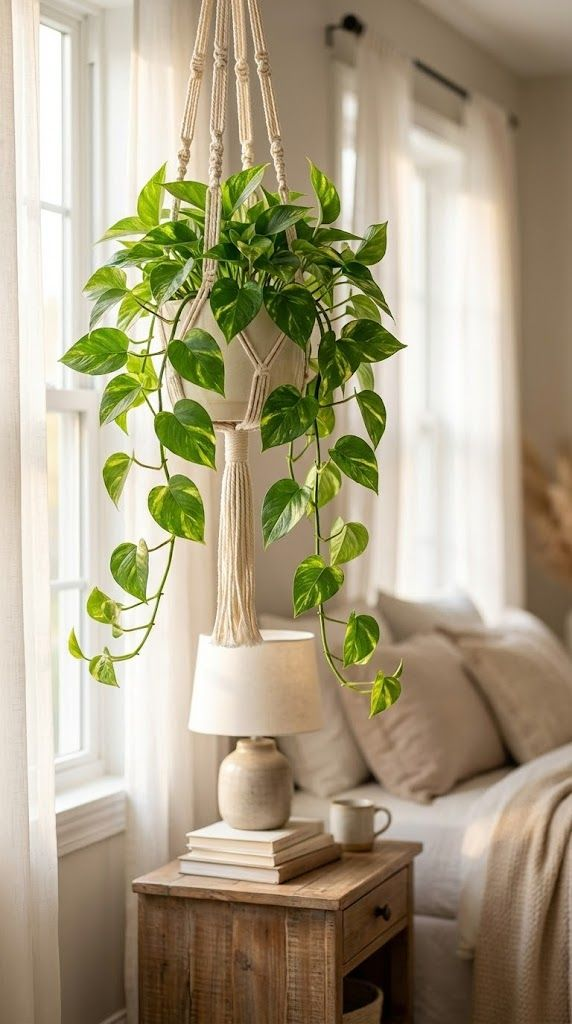
Trailing vines instantly energize an unused bedroom corner, and pothos remains one of the most reliable choices for this purpose. Its heart-shaped leaves spill gracefully from a ceiling hook or wall bracket, forming a natural cascade that softens sharp architectural lines. This low-maintenance houseplant tolerates moderate to low light, making it ideal for apartments with limited sun exposure. A well-draining potting mix and occasional watering when the top inch of soil feels dry will keep growth steady and vibrant. Golden pothos, marble queen, or neon varieties introduce subtle color variation without overwhelming a calm sleep environment. Placing the planter near indirect light encourages fuller foliage and longer trailing stems. Regular trimming promotes bushier growth and prevents legginess. Beyond aesthetics, pothos can help reduce airborne toxins in controlled indoor settings, contributing to fresher bedroom air. Lightweight hanging planters also free up floor space, which is especially helpful in small bedrooms. This arrangement works beautifully with neutral bedding, wood furniture, and layered textiles for a relaxed, organic feel that supports restful sleep.
Tall Fiddle Leaf Bedside Accent
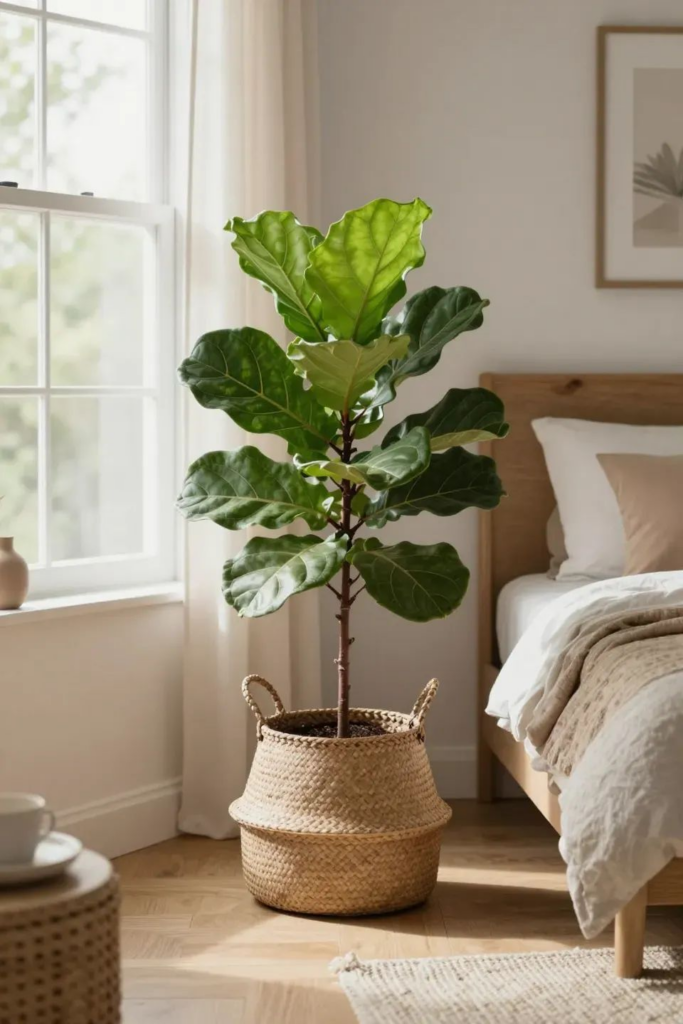
Graceful vertical lines beside the bed can dramatically shift a room’s proportions, and a fiddle leaf fig offers that architectural impact. Its broad, violin-shaped leaves introduce sculptural greenery that pairs well with contemporary or transitional bedroom styles. Placing a tall specimen in a sturdy floor pot near a window with bright, indirect sunlight supports healthy leaf development. Consistent watering—allowing the top layer of soil to dry between sessions—prevents root rot while maintaining lush foliage. Rotating the container every few weeks encourages even growth and balanced form. This statement plant complements upholstered headboards, neutral walls, and layered bedding without cluttering surfaces. A simple ceramic or matte black planter grounds the look while highlighting the tree’s bold silhouette. Occasional leaf dusting helps maximize light absorption and keeps the plant looking polished. With proper care, a fiddle leaf fig can become a long-term design anchor, adding height and visual interest to otherwise flat corners. Its structured presence brings a refined yet organic element into the bedroom, striking a balance between modern design and natural texture for a harmonious sleep environment.
Floating Shelf Succulent Display
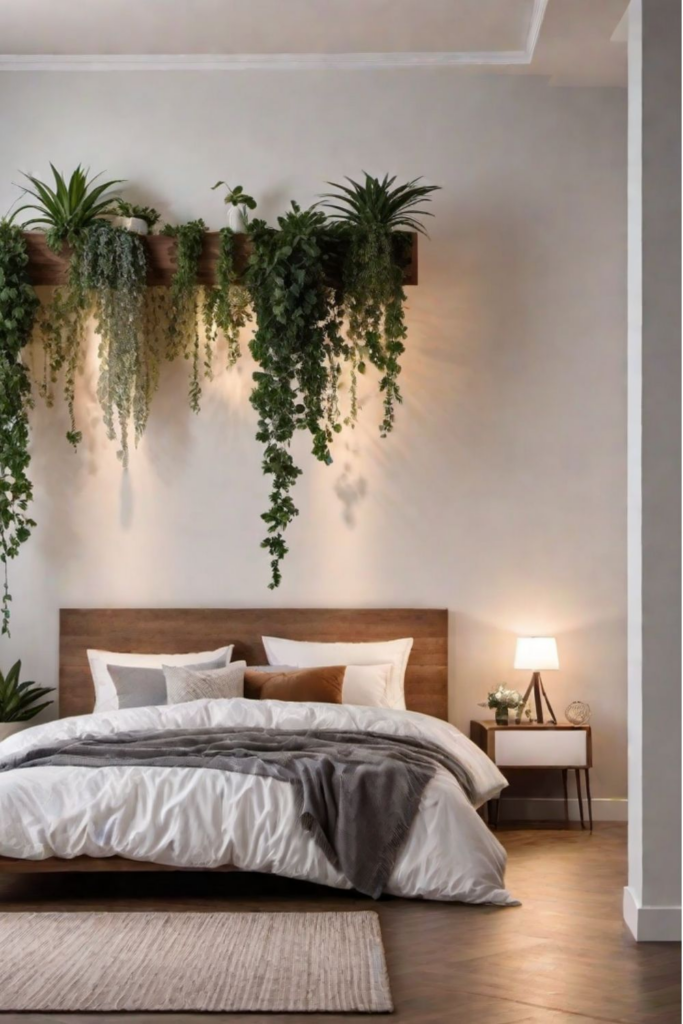
Wall-mounted shelving introduces greenery without sacrificing valuable floor area, and a curated succulent arrangement excels in this setting. Small rosettes such as echeveria, haworthia, and jade plants thrive in bright, indirect light and require minimal watering, making them practical for busy homeowners. Arranging varied shapes and subtle color tones across a floating wood or metal shelf creates visual rhythm while maintaining a clean aesthetic. Terracotta or ceramic pots with drainage holes help prevent overwatering, which is the most common issue with succulents. A cactus and succulent soil blend improves drainage and supports healthy root systems. Positioning the shelf near a window ensures adequate sunlight, while sheer curtains can diffuse harsh rays. This compact display pairs beautifully with framed art, books, or decorative objects, adding layered texture without overwhelming the room. Maintenance remains simple: occasional rotation for even light exposure and light watering every few weeks. The result feels organized and intentional, ideal for modern bedrooms that favor streamlined decor. This setup offers greenery, subtle color variation, and practical care requirements suited to contemporary lifestyles.
Snake Plant Minimalist Nightstand
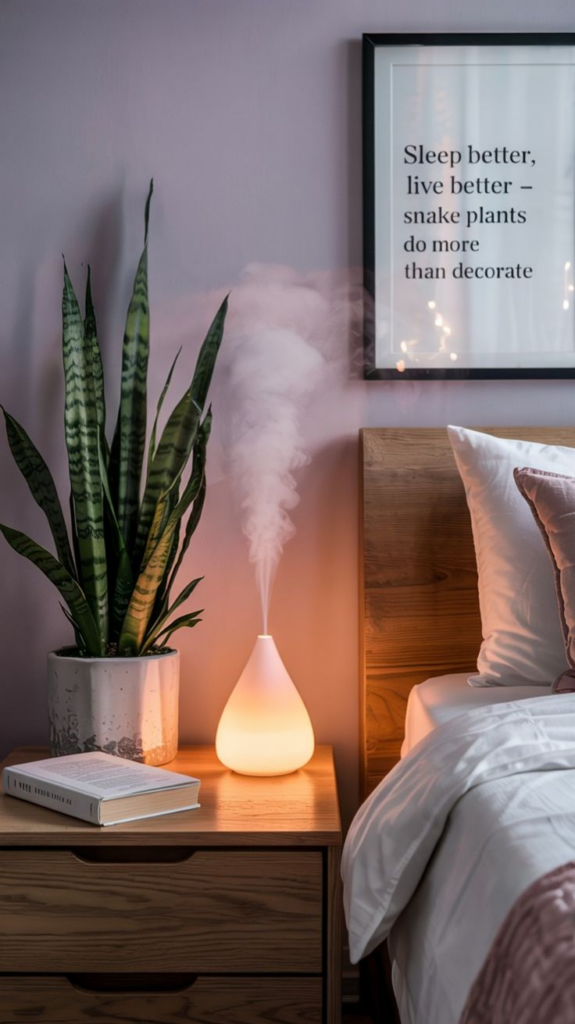
Structured foliage beside the bed introduces greenery without visual clutter, and snake plant remains one of the most dependable options. Its upright, sword-like leaves create strong vertical lines that complement streamlined bedroom decor. Thriving in low to bright indirect light, this hardy indoor plant adapts easily to varied lighting conditions. Watering every two to three weeks, allowing soil to dry completely between sessions, prevents overwatering and root rot. A well-draining cactus or succulent mix supports healthy growth and stability. Placing a medium-sized sansevieria in a ceramic or matte planter on a nightstand keeps surfaces neat while adding natural texture. This plant is frequently recommended for bedrooms because it releases oxygen at night through CAM photosynthesis, contributing to improved air quality in enclosed spaces. Minimal pruning is required, and occasional leaf wiping maintains its polished appearance. Its sculptural form pairs seamlessly with neutral bedding, wood accents, and soft lighting. For small bedrooms or minimalist interiors, this low-maintenance houseplant delivers visual impact, resilience, and long-term reliability without demanding constant attention or specialized care routines.
Monstera Statement Floor Pot
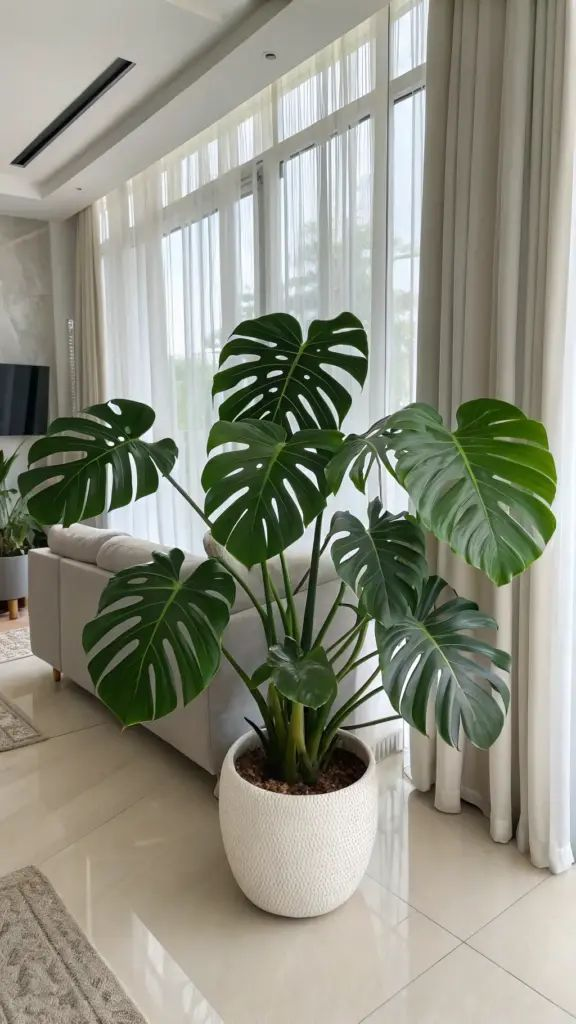
Large split leaves bring tropical character into a bedroom, and monstera deliciosa stands out as a dramatic focal point. Its iconic fenestrated foliage introduces bold texture while maintaining a relaxed, organic atmosphere. Positioning the plant in a spacious floor pot near bright, indirect sunlight encourages healthy leaf development and natural growth patterns. Consistent watering, allowing the top inch of soil to dry between sessions, supports strong roots while preventing excess moisture buildup. A moss pole can provide structural support as the plant matures, promoting upright growth and larger leaves. This arrangement works especially well in rooms with neutral palettes, natural wood furniture, and linen textiles. The wide leaves reflect light beautifully, softening the overall space without overpowering it. Occasional pruning keeps the shape balanced and manageable. Monstera also contributes to improved indoor air conditions under controlled environments. For bedrooms with ample floor space, this tropical plant adds depth, dimension, and visual interest, turning an empty corner into a lush design feature that feels both modern and welcoming.
Window Ledge Herb Collection
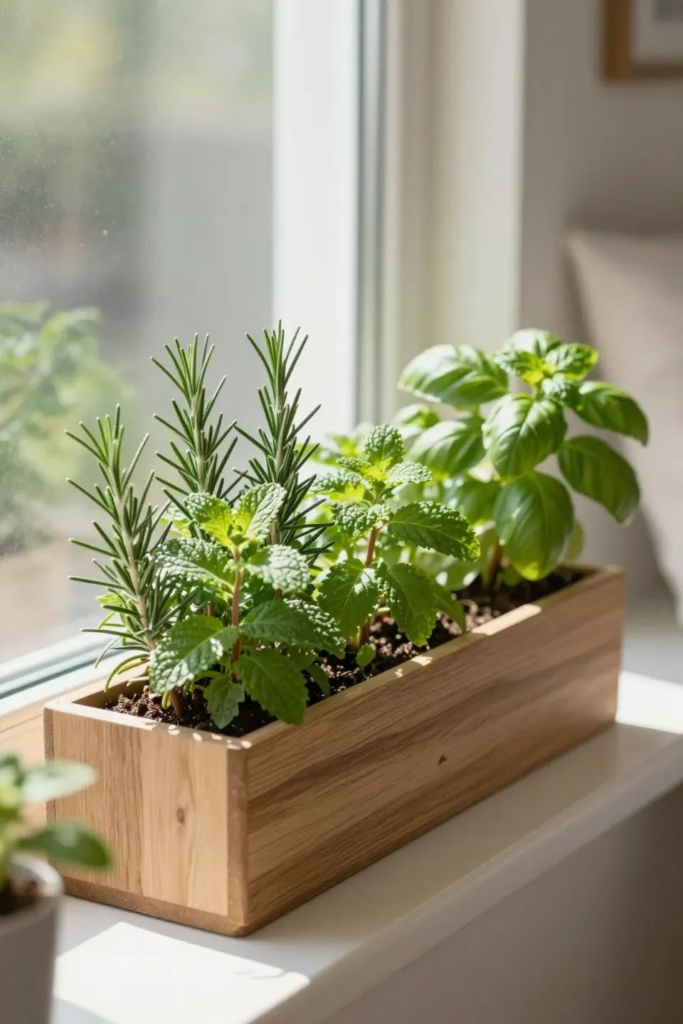
Morning light streaming through a bedroom window offers ideal conditions for a compact herb display. Basil, mint, rosemary, and thyme thrive in bright sunlight and can flourish when placed on a sturdy window ledge. Small pots with proper drainage prevent water accumulation while maintaining healthy root systems. Regular watering and occasional trimming encourage fresh growth and maintain a tidy appearance. This setup introduces subtle fragrance into the bedroom, enhancing the sensory experience without artificial scents. Terracotta or white ceramic containers maintain a clean aesthetic while supporting moisture control. Placing herbs where they receive at least four to six hours of sunlight daily ensures steady development. Beyond visual appeal, fresh herbs remain functional for culinary use, adding practicality to the arrangement. A uniform row of containers creates symmetry, while varied plant heights introduce depth. This collection suits compact bedrooms that receive generous daylight and pairs well with light curtains and natural wood finishes. Fresh greenery combined with gentle aroma contributes to a refreshing, balanced bedroom environment that feels both purposeful and serene.
Macramé Hanging Planter Pair
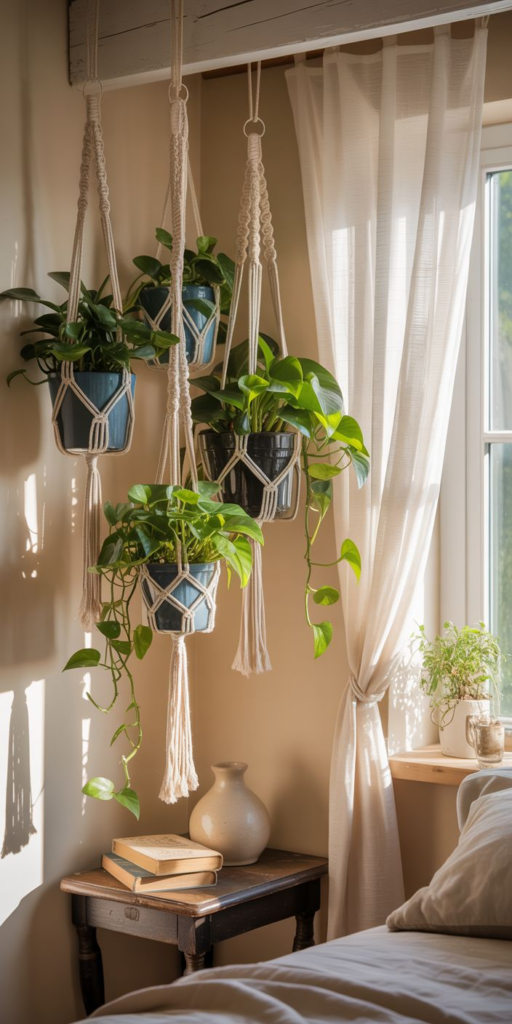
Textural contrast can elevate bedroom decor, and a pair of macramé hanging planters introduces handcrafted warmth. Cotton rope holders suspended from ceiling hooks create vertical movement while freeing surface space. Plants such as pothos, philodendron, or spider plant thrive in these elevated containers due to good air circulation and indirect light exposure. Selecting matching or complementary planters maintains visual balance on either side of a bed or reading corner. Neutral rope tones blend seamlessly with modern, bohemian, or transitional interiors. Proper drainage remains essential, so lightweight pots with saucers or liners prevent water damage. Watering frequency depends on plant type, but checking soil moisture before each session avoids overwatering. Hanging greenery softens empty wall areas and draws the eye upward, making ceilings appear higher. Occasional rotation ensures even growth and balanced foliage. This arrangement works particularly well in small bedrooms where floor space is limited. Combining natural fiber textures with vibrant greenery produces a layered, inviting atmosphere that feels relaxed yet curated, offering both aesthetic appeal and practical use of vertical space.
Olive Tree Soft Neutral Setup
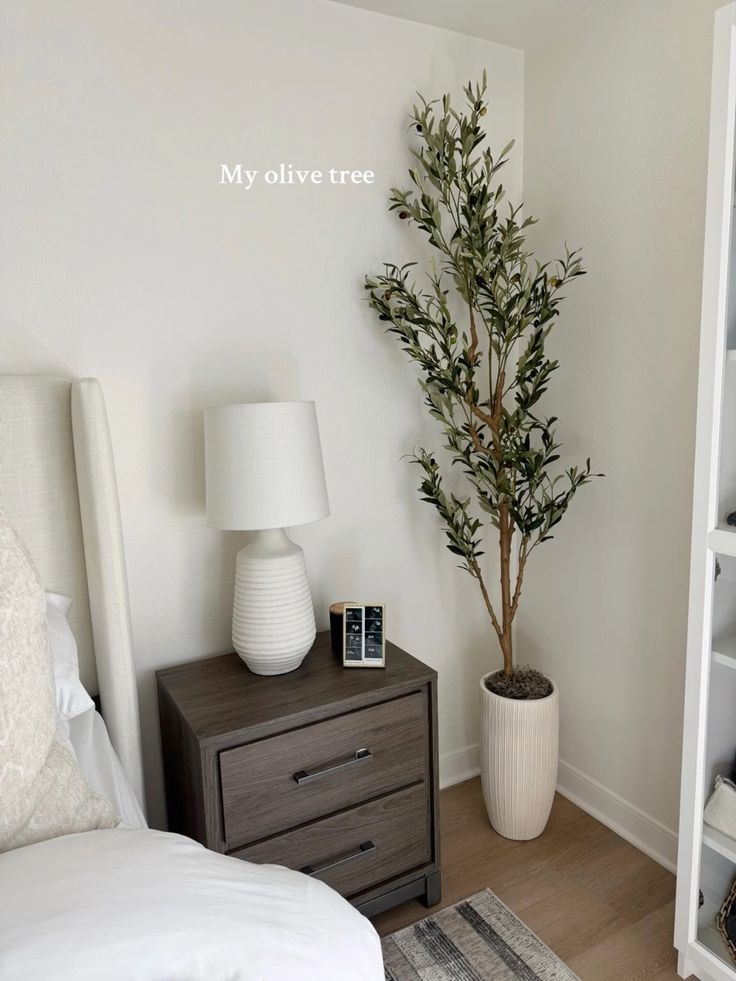
Subtle Mediterranean charm enters the bedroom through a compact olive tree placed in a neutral-toned planter. Silvery-green leaves provide understated color that complements beige, ivory, and taupe palettes. Positioning the tree near a bright window with ample sunlight supports healthy growth, as olive plants require several hours of direct light daily. A well-draining soil mix prevents excess moisture, and allowing the top layer to dry before watering reduces risk of root issues. This plant prefers stable temperatures and benefits from occasional pruning to maintain a tidy shape. The slender trunk and airy foliage create an elegant silhouette without overwhelming the space. Pairing the planter with linen bedding and wooden furniture enhances the natural aesthetic. Decorative gravel or top dressing can refine the overall presentation while helping regulate moisture. Although olive trees grow slowly indoors, they offer long-lasting visual appeal and durability when properly maintained. This refined greenery option suits bedrooms seeking a calm, earthy atmosphere anchored by timeless botanical elements and balanced, organic design choices.
Layered Plant Cluster Arrangement
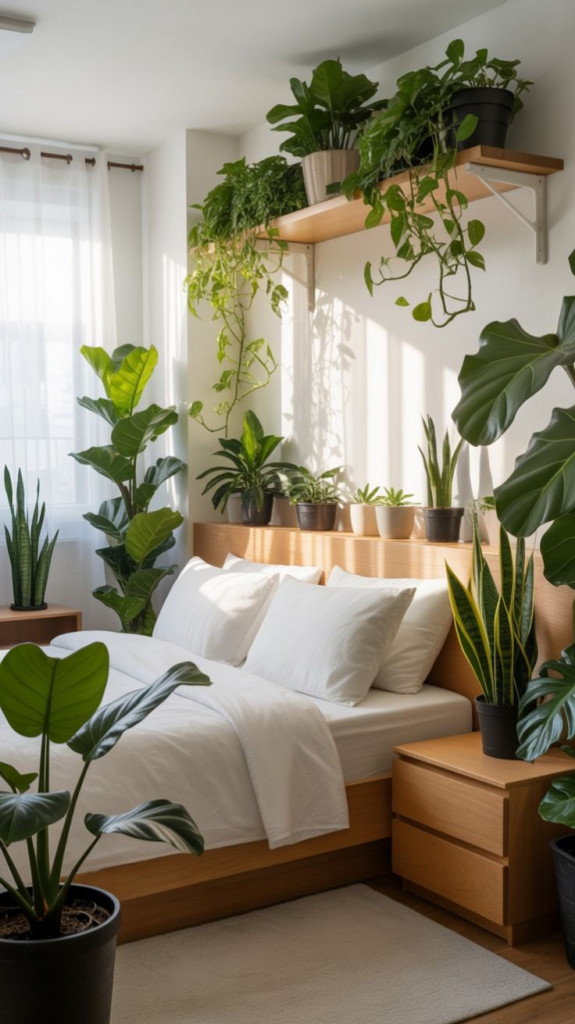
Grouping varied greenery at different heights introduces depth and dimension into a bedroom without overwhelming the layout. Combining a tall floor plant, a medium tabletop variety, and a trailing accent creates visual balance and natural flow. For example, pairing a rubber plant with a peace lily and cascading ivy delivers contrasting leaf shapes and textures. Positioning the tallest specimen near a wall corner anchors the arrangement, while smaller pots fill gaps and soften edges. Consistent pot finishes—such as matte ceramic or woven baskets—maintain cohesion across the display. Each plant should share similar light requirements to simplify care routines and prevent uneven growth. Rotating containers periodically ensures uniform light exposure. A well-draining soil mix and proper spacing between pots promote healthy airflow and reduce risk of pests. This clustered approach works particularly well in bedrooms with empty corners or beside dressers that need added warmth. By varying foliage size, tone, and structure, the composition feels intentional rather than random. The result delivers layered greenery that enhances relaxation, improves indoor ambiance, and creates a thoughtfully styled botanical focal point.
Wall-Mounted Mini Planter Grid
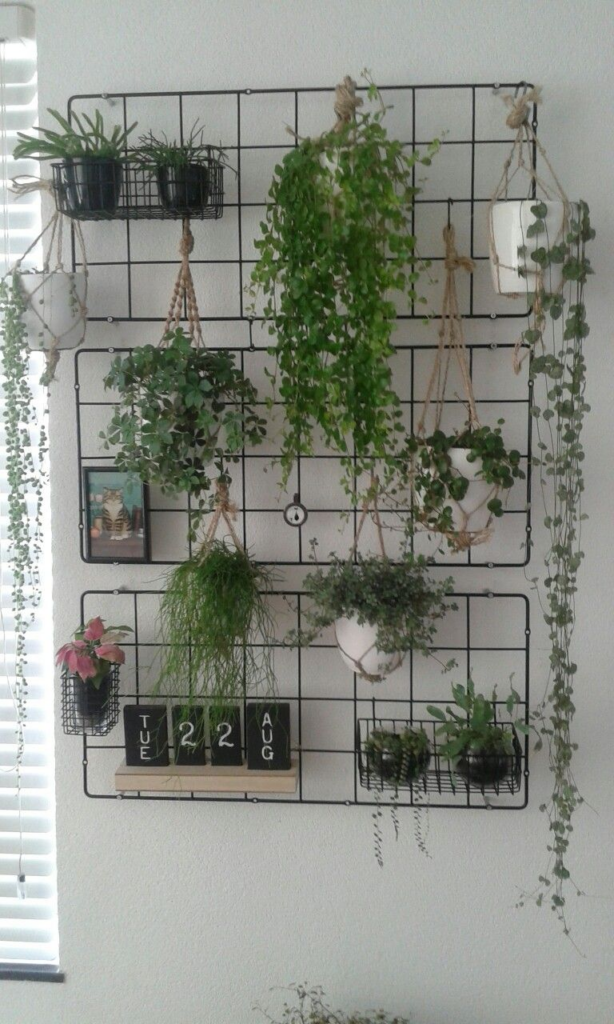
Geometric organization on a blank bedroom wall can transform unused vertical space into a living feature. Installing a structured grid of small wall-mounted planters allows multiple compact plants to thrive without consuming floor area. Succulents, air plants, and small ferns perform well in shallow containers with adequate drainage. Arranging planters in symmetrical rows maintains order, while alternating plant varieties introduces subtle visual contrast. Secure wall anchors ensure stability and protect surfaces from damage. Bright, indirect light supports healthy growth, especially when positioned near windows. Regular but controlled watering prevents soil oversaturation, particularly in smaller pots. This design approach suits modern and Scandinavian-style bedrooms that emphasize clean lines and efficiency. The repeated pattern creates a curated gallery effect while keeping greenery contained and manageable. Occasional pruning maintains neat outlines and balanced spacing within the grid. By converting a plain wall into a botanical installation, this setup adds dimension and natural texture without cluttering bedside tables or floors, making it ideal for compact or minimalist bedroom layouts seeking refined greenery solutions.
Bamboo Palm Cozy Reading Nook
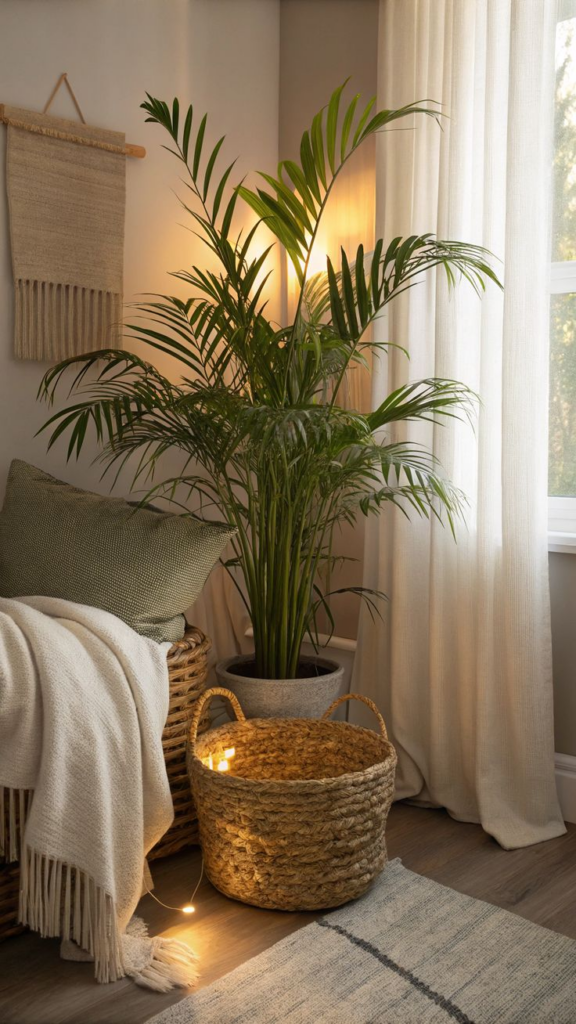
Lush fronds surrounding a bedroom reading chair introduce a calm, tropical atmosphere that encourages relaxation. Bamboo palm thrives in bright, indirect light and tolerates moderate indoor conditions, making it suitable for bedrooms with filtered sunlight. Placing the plant beside an accent chair or near a window creates a gentle privacy screen while softening harsh corners. Its feathery foliage filters light beautifully, casting subtle shadows that enhance the ambiance of a quiet nook. Consistent watering when the top layer of soil feels dry supports healthy growth, while a well-draining potting mix prevents excess moisture. This plant is known for its ability to help reduce indoor air pollutants under controlled conditions. Pairing the palm with a woven basket planter adds warmth and texture. Occasional leaf trimming keeps the silhouette tidy and prevents overcrowding. The vertical height draws attention upward, balancing low-profile furniture and layered textiles. For bedrooms that double as personal retreats, bamboo palm provides natural greenery, improved air freshness, and a visually soothing backdrop for reading, journaling, or winding down at the end of the day.
Glass Terrarium Dresser Accent
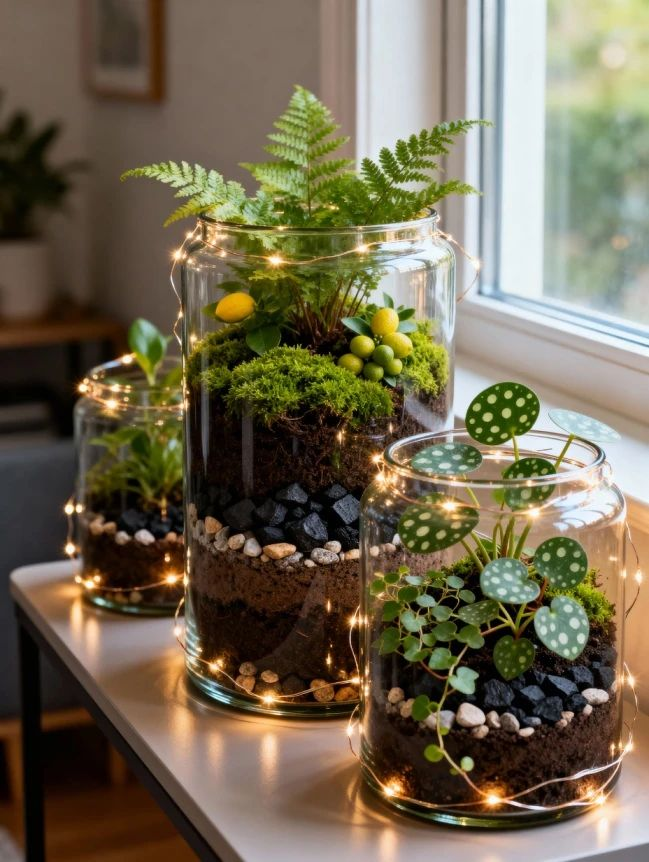
Transparent containers filled with miniature greenery offer a refined decorative touch on bedroom dressers. A glass terrarium housing moss, small ferns, or fittonia creates a self-contained ecosystem that thrives in indirect light. The clear structure allows full visibility of layered soil, pebbles, and plant textures, adding depth without bulk. Proper drainage layers, including activated charcoal and gravel, help regulate moisture and prevent mold growth. Light misting maintains humidity levels suitable for closed or partially open designs. This compact display works especially well in bedrooms with limited space yet strong natural light. Placing the terrarium near a window, away from direct sun, prevents overheating while supporting steady growth. Minimal maintenance makes it appealing for busy individuals seeking low-effort greenery. The clean lines of glass complement modern furniture finishes, while organic elements inside introduce natural contrast. A carefully arranged terrarium provides botanical interest, subtle color variation, and a calming visual focal point that enhances dresser styling without overwhelming the surrounding decor or disrupting the bedroom’s tranquil atmosphere.