
Vibrant blooms have the power to turn any outdoor space into a lively, inviting retreat. From layered borders to wildflower meadows, a thoughtfully arranged flower garden adds visual interest, attracts pollinators, and boosts curb appeal throughout the seasons. Whether you’re working with a small patch or a spacious yard, planning the right mix of colors, textures, and heights can transform plain backyards into blooming showcases. With low-maintenance options and climate-smart choices available, it’s easier than ever to design a floral layout that fits your space and schedule. Read on for creative backyard flower garden ideas that deliver lasting beauty and natural charm.
Cottage-Core Cutting Garden by Design
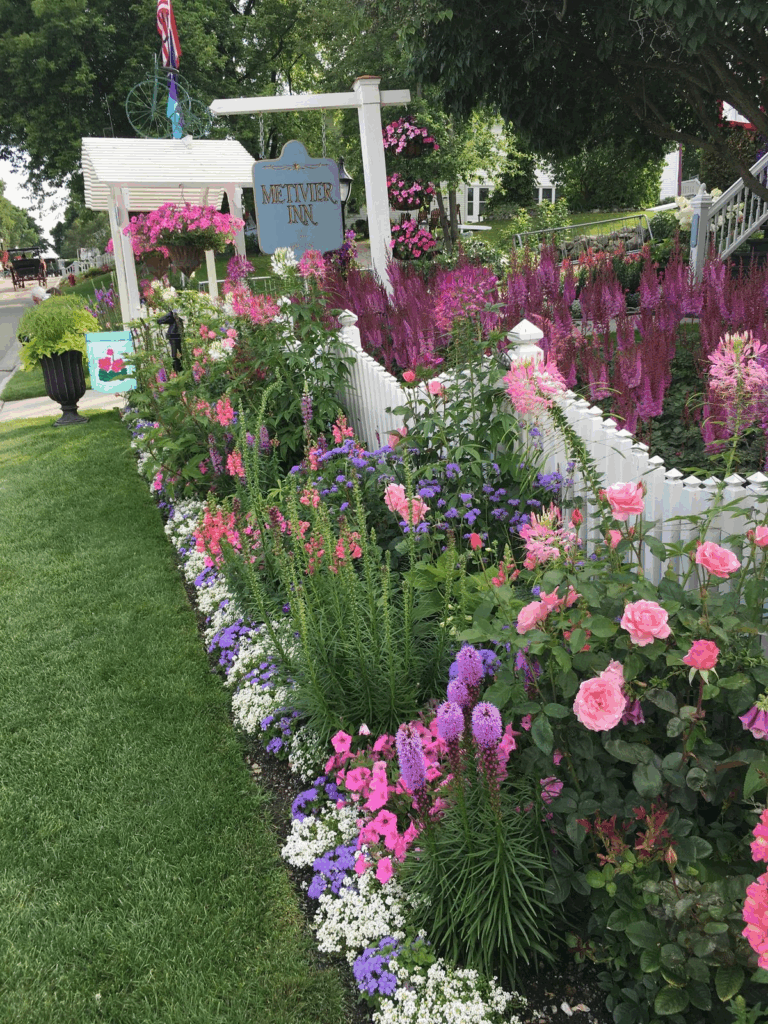
Woven paths between heirloom blooms give this backyard concept its soul. A thoughtful layout of seasonal flowers like zinnias, cosmos, and snapdragons ensures year-round cutting potential, blending beauty with purpose. Raised beds framed in reclaimed wood or painted fencing add to the nostalgic, storybook vibe, while small trellises draped in clematis or morning glories enhance the vertical element. Compact herbs such as lavender and sweet basil subtly perfume the air and provide additional foliage for floral arrangements. Paths lined with gravel or stepping stones create charming access for clipping, while galvanized pails or vintage crates act as on-hand bouquet stations. Succession planting strategies—rotating fast-growers like sweet peas with late-season dahlias—maximize productivity in a small footprint. Birds, bees, and butterflies find a haven here, making this setup functional and ecologically beneficial. Tucking in compost bins or decorative rain barrels keeps the design eco-aligned and self-sustaining. Classic white-picket accents or curved edging borders maintain the soft lines essential to cottage-core styling. This garden type thrives in full sun and benefits from consistent watering and deadheading for continuous bloom cycles. It’s not just about the flowers—it’s a lifestyle rooted in slow living and self-expression through nature’s palette.
Architectural Mixed-Metal Archways
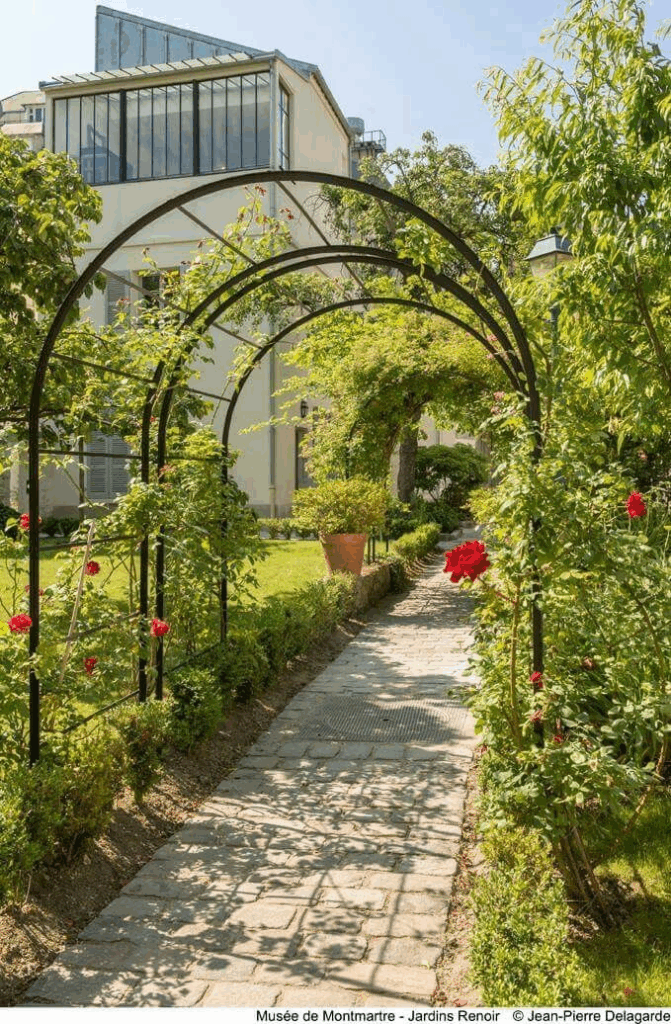
Steel and copper framing introduces sculptural interest while supporting flowering climbers with ease. These archways serve as both functional and artistic focal points in a well-balanced garden. Powder-coated finishes offer durability against weathering, while rusted patinas develop character over time. Clematis, wisteria, and climbing roses weave through open lattice panels, softening the hard edges with romantic flair. Ground-level plantings like salvia, bee balm, or yarrow blend effortlessly, providing pollinator appeal while visually anchoring the base. Strategically placing arches over gravel walkways or central garden nodes guides movement and creates immersive viewpoints. Nighttime drama can be enhanced with solar uplighting or hanging lanterns suspended from crossbars. A mix of vertical and horizontal rods allows for creativity—crisscross patterns, spirals, or domed frames add variety. When paired with ornamental grasses or large-flower perennials beneath, the look feels lush yet structured. These garden archways are particularly impactful in modern cottage, rustic-industrial, or transitional garden settings. While installation requires stable footing—typically concrete post anchors or steel base plates—they demand little maintenance beyond occasional pruning of climbers. This approach adds lasting architectural definition to backyard flower plots, giving both perennial and annual plantings a dramatic stage to shine.
Tapered Staggered Perennial Beds
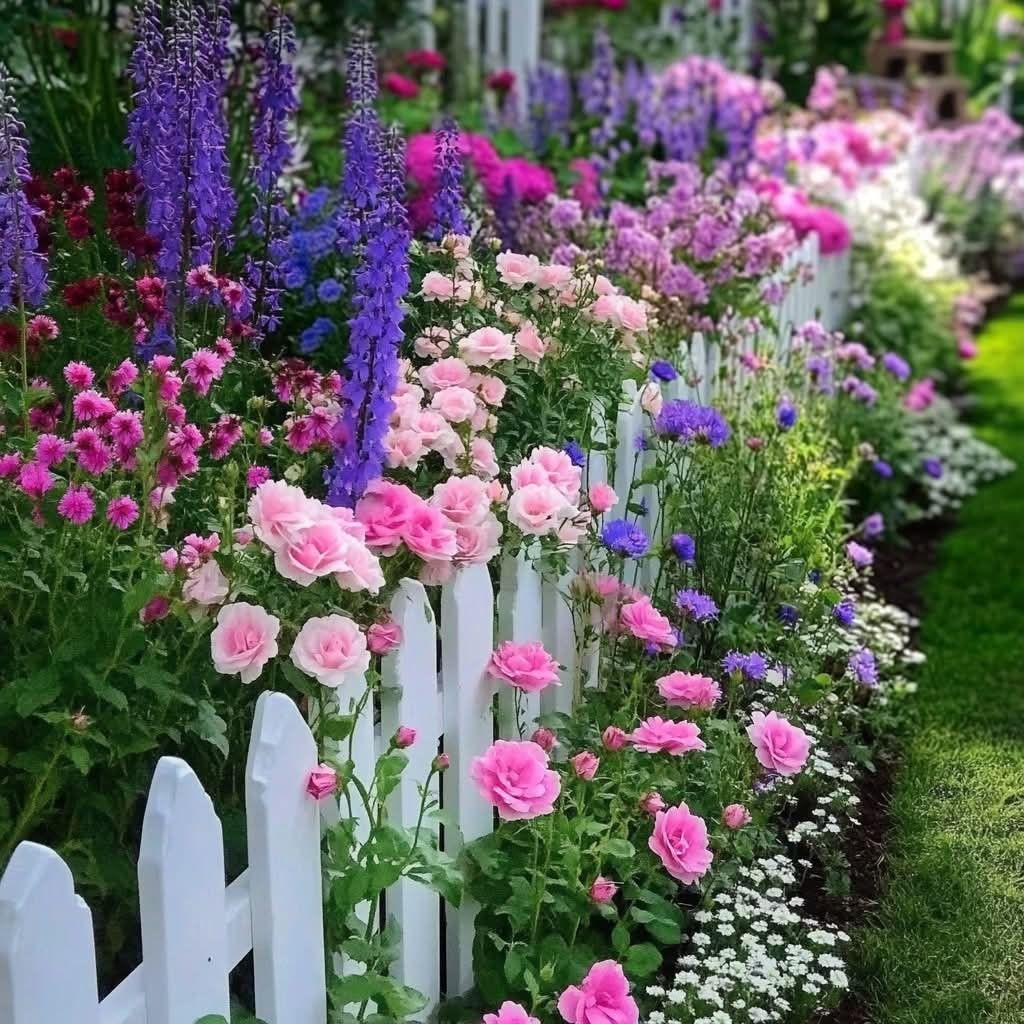
Gradual elevation shifts within planting zones naturally guide the eye upward, offering a layered tapestry of texture and color. Tall selections like hollyhocks or delphinium form the backbone at the rear, while mid-height echinacea and phlox nestle in front, tapering down to ground-hugging options like creeping thyme or alyssum. This staggered format isn’t purely aesthetic—it boosts plant health by improving airflow and sun access for all layers. Repeating certain blooms in rhythmic intervals enhances flow and cohesion. Planted against a solid backdrop such as a fence or garden wall, these beds double as privacy screens while supporting seasonal color play. Mulch-rich soil amended with compost anchors perennials through frost and heat, minimizing the need for replanting. Color planning is key—mixing warm hues like coral and yellow in sweeping bands creates movement, while cool purples and whites instill calm. Interspersion of ornamental grasses like fountain grass breaks up floral densities with soft motion. For tight plots, curved bed outlines rather than straight rows offer a more organic, space-efficient presentation. These tapered designs thrive in sunny to partial-shade locations and can be maintained with biannual pruning and division. They promise visual intrigue, easy maintenance, and long-term floral yield.
Naturalistic Native Wildflower Swath
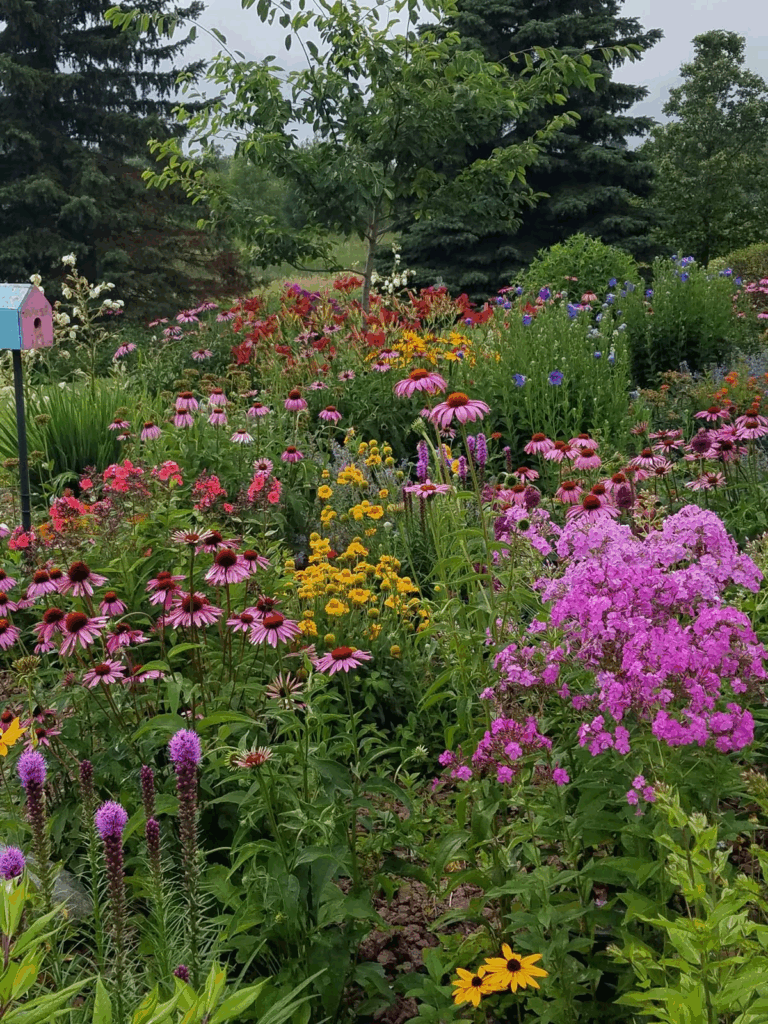
Sweeping drifts of native wildflowers bring ecological depth and visual poetry to any backyard. Instead of manicured precision, this style relies on nature’s own blueprint—clusters of rudbeckia, milkweed, blanket flower, and liatris are arranged in freeform patterns that echo natural meadow growth. These plantings invite bees, butterflies, and birds, creating a living, breathing habitat. Soil preparation is minimal—native flowers adapt well to local conditions and typically require less water, fewer fertilizers, and almost no pesticides. Adding a low mown border or gravel path helps contain the free-flowing nature, providing balance between cultivated and wild. Flowering times are staggered for seasonal interest, with early bloomers like columbine leading into mid-summer coreopsis and late-season goldenrod. Height variation ensures dynamic appeal—pair shorter coneflowers with towering ironweed or Joe-Pye weed for vertical energy. These swaths function beautifully along property lines, around open lawns, or as transitions into wooded zones. They also help reduce erosion on slopes and improve soil biodiversity. With occasional reseeding and invasive weed management, the setup practically maintains itself. This hands-off design feels intentional yet untamed—a celebration of local flora that reconnects the garden to its native roots while offering year-round color and low-maintenance appeal.
Biophilic Living Fence Screen
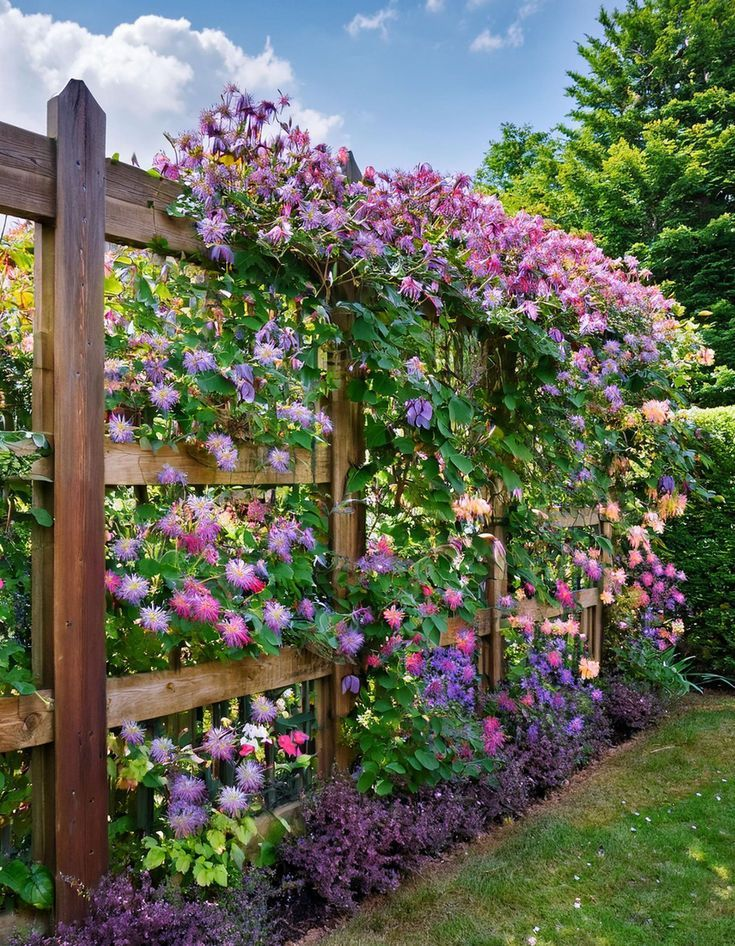
Privacy and pollination meet in a design that doubles as a natural boundary and flower-rich vertical haven. This living screen uses upright supports—trellises, lattice panels, or mesh grids—anchored into planter boxes or soil beds, hosting a curated blend of flowering vines and climbing edibles. Clematis, honeysuckle, and passionflower bring fragrance and color, while scarlet runner beans or nasturtiums offer seasonal edibility. The mix fosters habitat diversity, allowing pollinators and small birds to frequent the structure. Behind it all, dense fillers like flowering viburnum or lilac provide the bulk necessary for screening. Base layers of shade-tolerant blooms—like astilbe or ferns—extend the effect downward without blocking airflow. Regular pruning encourages lush growth without overtake. When constructed with bamboo, weathered wood, or recycled metal, the frame adds visual interest without disrupting the natural rhythm. Gardeners benefit from both aesthetic coverage and functional separation—perfect for defining outdoor rooms or hiding utility zones. These fences thrive in full sun to part-shade and can be trained seasonally for denser flowering patterns. A drip line irrigation setup ensures consistent moisture with minimal waste. Ultimately, the biophilic fence merges privacy and sustainability, building a low-impact floral barrier that breathes life into overlooked backyard perimeters.
Pollinator-Friendly Iris & Coreopsis Mix
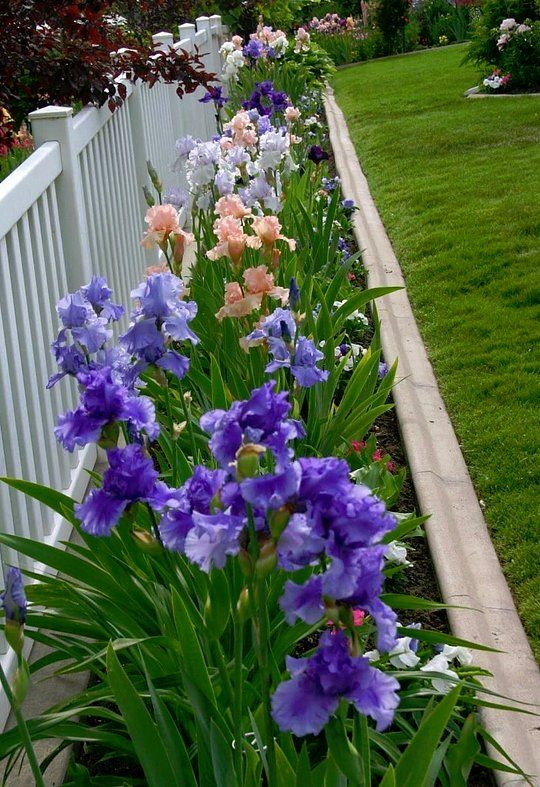
Late spring into summer sees a burst of movement and color when these two star species take center stage. Tall-bearded irises in lavender, blue, and white shades rise with drama, their frilled petals complementing the daisy-like simplicity of golden coreopsis below. The pairing isn’t just pleasing to the eye—it’s a nectar-rich magnet for bees, hoverflies, and butterflies. Both plants prefer full sun and well-draining soil, making them ideal companions in low-maintenance borders or central bed arrangements. Irises offer architectural foliage even after bloom, while coreopsis keeps flowering long into late summer with simple deadheading. Interplanting with lavender or salvia enhances the pollinator buffet, adding fragrance and continuity across bloom times. Gardeners should space each clump to prevent crowding and promote airflow, especially for irises which dislike wet crowns. Mulch lightly in spring, avoiding direct coverage on rhizomes, to retain moisture and suppress weeds. This duo thrives in formal edging layouts as well as freeform cottage designs. Their synergy lies in visual contrast and synchronized bloom cycles. When planted en masse, the mix creates a cheerful, buzzing ribbon of life that enlivens the garden without demanding much upkeep—perfect for sustainability-minded homeowners seeking both beauty and biodiversity.
Container Cascade Color Bursts
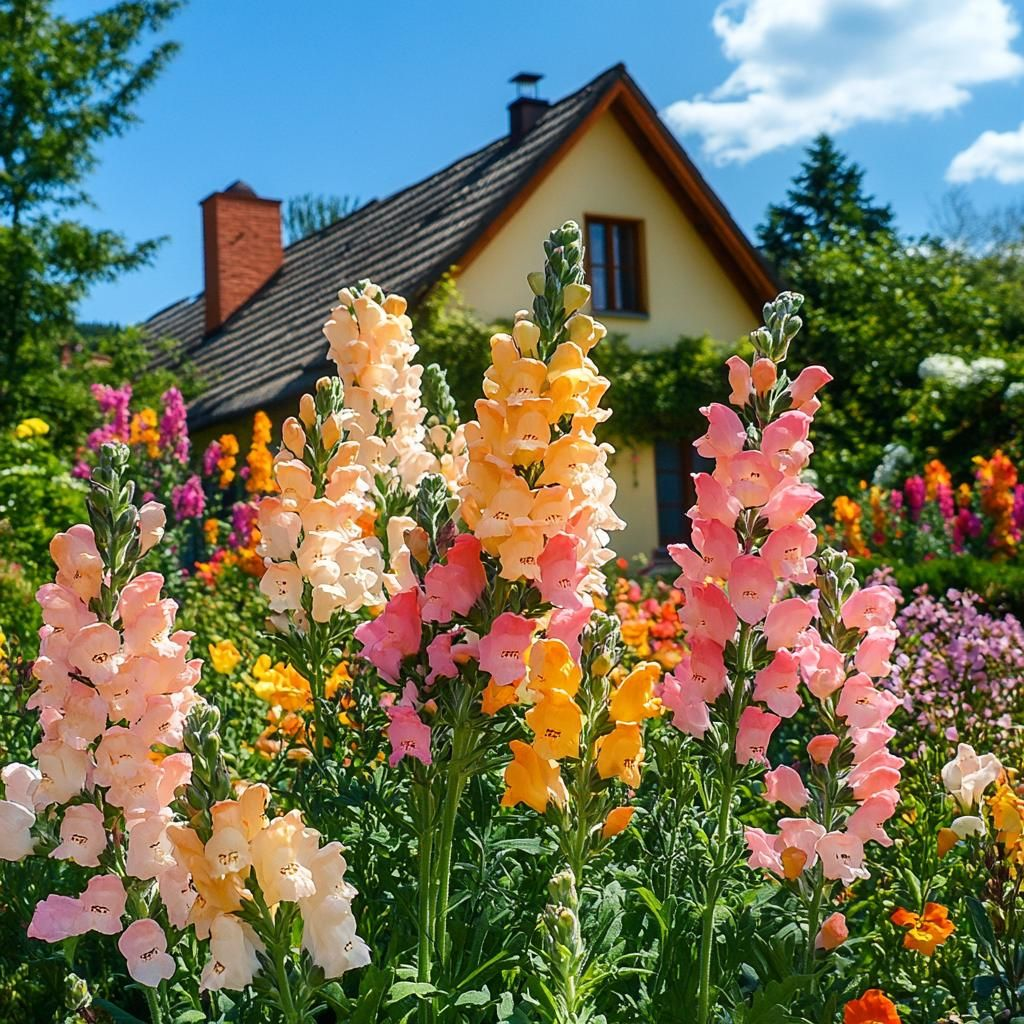
Layering heights and hues in a container-based setup offers flexibility and color saturation without permanent digging. The cascade method starts with taller centerpieces—such as geraniums, snapdragons, or ornamental millet—anchored by trailing bloomers like calibrachoa, lobelia, or sweet potato vine spilling over the edges. Pots of varying diameters and heights, arranged in staggered clusters, create a tiered waterfall of blossoms ideal for patios, balconies, or rental properties. Using containers in bright ceramic glazes, terra cotta, or galvanized metal adds even more visual variety. Quick-draining potting soil enriched with compost ensures healthy roots and robust flowering. Regular feeding every 10–14 days with a liquid bloom booster keeps the display vibrant. Choosing color palettes with intentional contrast—like purples against oranges or reds paired with chartreuse—elevates visual depth. Containers can be repositioned based on sunlight availability or rotated for even growth. Lightweight planters on stands or wheeled platforms offer easy access for watering and trimming. This method is also ideal for testing floral combinations before committing them to ground beds. It offers a practical, moveable solution for small-space gardeners wanting bold impact without a full-scale install. The result is a dynamic bloom display that evolves through the seasons with minimal long-term maintenance.
Budget Charming Small-Bed Clusters
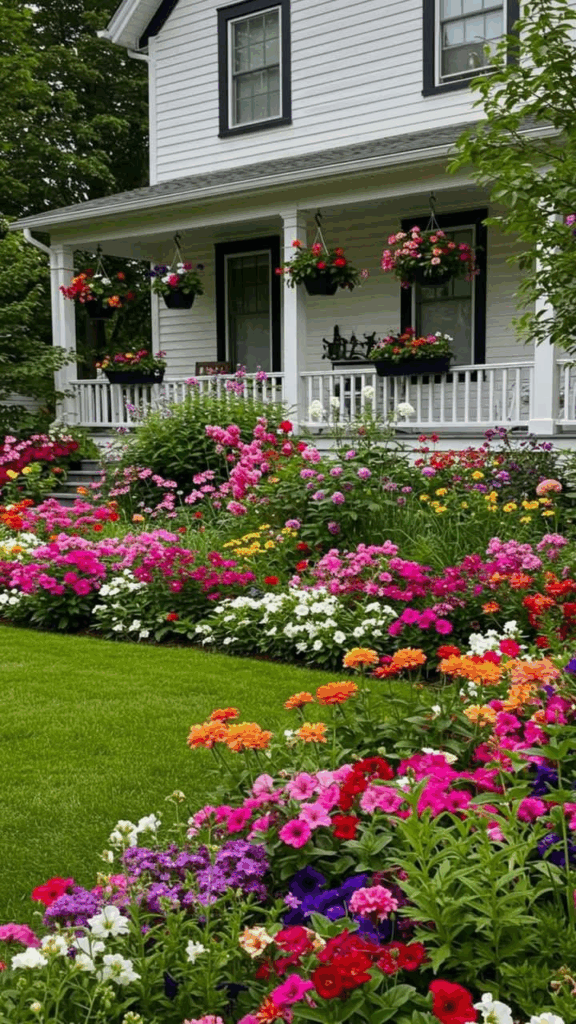
Working with limited space or resources doesn’t mean sacrificing visual charm. Small clustered beds—each no wider than a few feet—allow for focused, high-impact floral moments throughout the backyard. Strategically placing three to five of these micro-gardens at pathway intersections, corners, or lawn breakpoints creates rhythm and continuity. Perennials like black-eyed Susans, catmint, or daylilies offer repeat color year after year, while annuals like pansies or impatiens fill in seasonal gaps. Beds framed with natural stones, wooden edging, or repurposed bricks add low-cost definition. Soil should be loosened and amended with compost for improved drainage and fertility, ensuring healthy root systems in tight plots. Mulch layers suppress weeds while helping beds retain moisture. Choosing a consistent color theme—such as whites and pastels or fiery reds and oranges—creates unity even in separate zones. These clusters work well for beginner gardeners, requiring minimal upkeep and space while still offering substantial visual payoff. By dedicating each bed to a different bloom time, it’s possible to maintain color and interest from early spring through fall. This modular approach supports flexibility, allowing for easy expansion over time. It’s proof that even the smallest garden spaces can deliver seasonal joy and visual structure without straining the wallet.
Rainbow-Themed Vintage Urn Garden
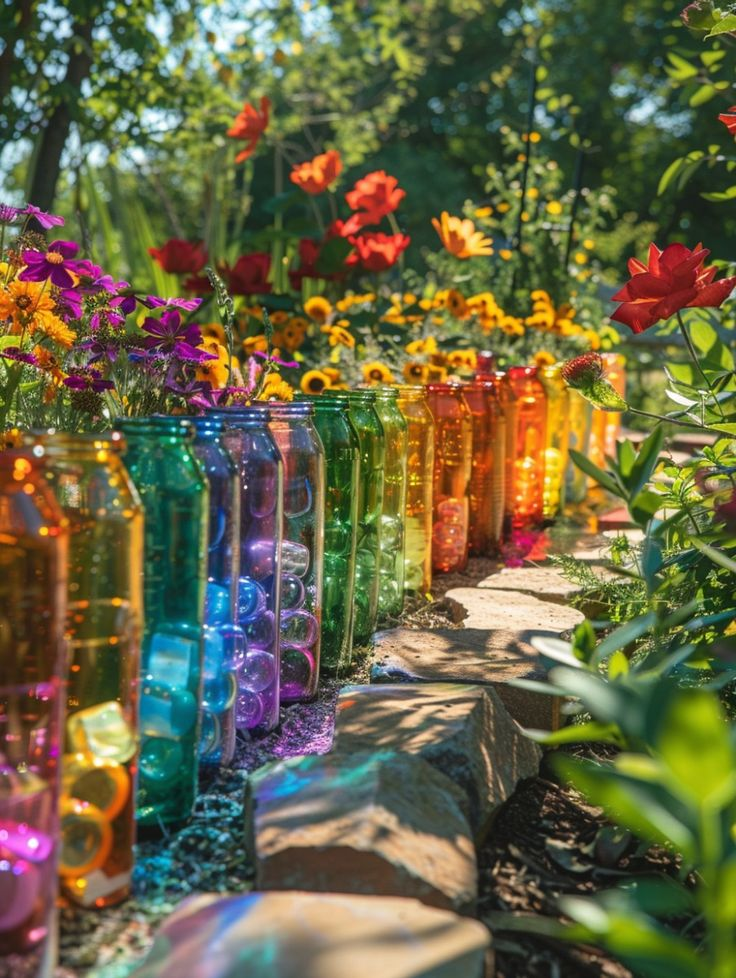
Color sequencing meets antique charm in a setup designed to turn any corner into a floral focal point. A collection of weathered urns—stone, ceramic, or cast iron—acts as the primary containers for a curated rainbow spectrum of flowers. Starting with reds (geraniums or celosia), progressing through oranges (marigolds), yellows (coreopsis), greens (coleus), blues (lobelia), and violets (petunias), each hue is assigned its own dedicated urn for maximum visual clarity. The arrangement can be linear along a fence, radial around a patio, or stacked vertically with urn pedestals to play with elevation. Soil within each urn is amended with compost and perlite for drainage, while a layer of gravel at the base prevents waterlogging. This setup thrives with full sun exposure and a consistent watering routine. Antique urns add timeless elegance, making the colors feel curated rather than chaotic. Integrating flowering herbs like chives or purple basil within the color sequence adds texture and functionality. Solar uplights beneath or behind each planter extend visibility into the evening hours. This playful yet artistic layout suits gardeners who love color coordination and vintage aesthetics alike. It’s compact, mobile, and delivers high visual return—all while celebrating the full spectrum of floral possibilities.
Hypertufa Succulent Terrain Planters
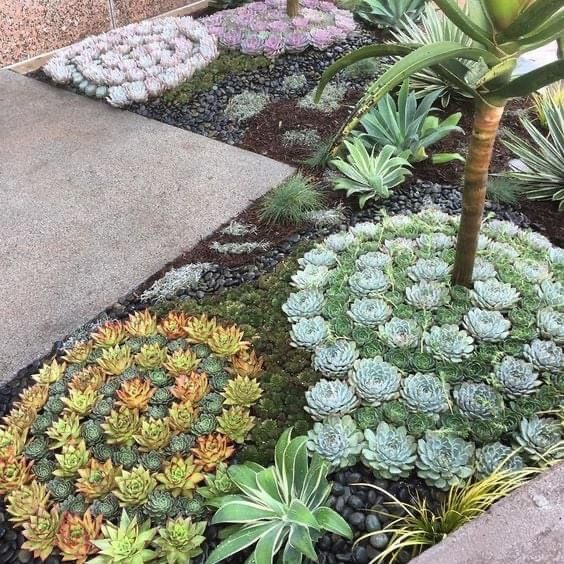
Natural-looking troughs made of hypertufa—an airy mix of cement, peat moss, and perlite—bring sculptural texture to backyard flower gardens while showcasing drought-tolerant blooms. These DIY-friendly containers mimic aged stone and are ideal for low-water plantings like sedum, echeveria, delosperma, and flowering sempervivum. Their porous structure ensures excellent drainage, which is essential for succulent health. Arranged in clusters at various heights, these planters create a terrain-like aesthetic that blends seamlessly with rock gardens or gravel paths. Mixing blooming succulents with miniature ornamental grasses or trailing portulaca adds floral interest without overwhelming the minimalist tone. Hypertufa forms can be molded into bowls, troughs, or irregular shapes, giving the space a handmade touch. A slight tilt in planter angle directs rainfall and shows off plant textures effectively. Since these planters are lightweight once cured, they’re easy to reposition seasonally. Full sun exposure is critical, and feeding once per season with a diluted low-nitrogen fertilizer supports sparse, healthy flowering. Their rugged, alpine feel pairs beautifully with native stone or dry creeks, and the mossy patina that develops over time enhances their natural look. Ideal for xeriscaped areas, these terrain planters deliver bloom and beauty with minimal upkeep and long-term resilience.
Front-Yard Edible Flower Frontage
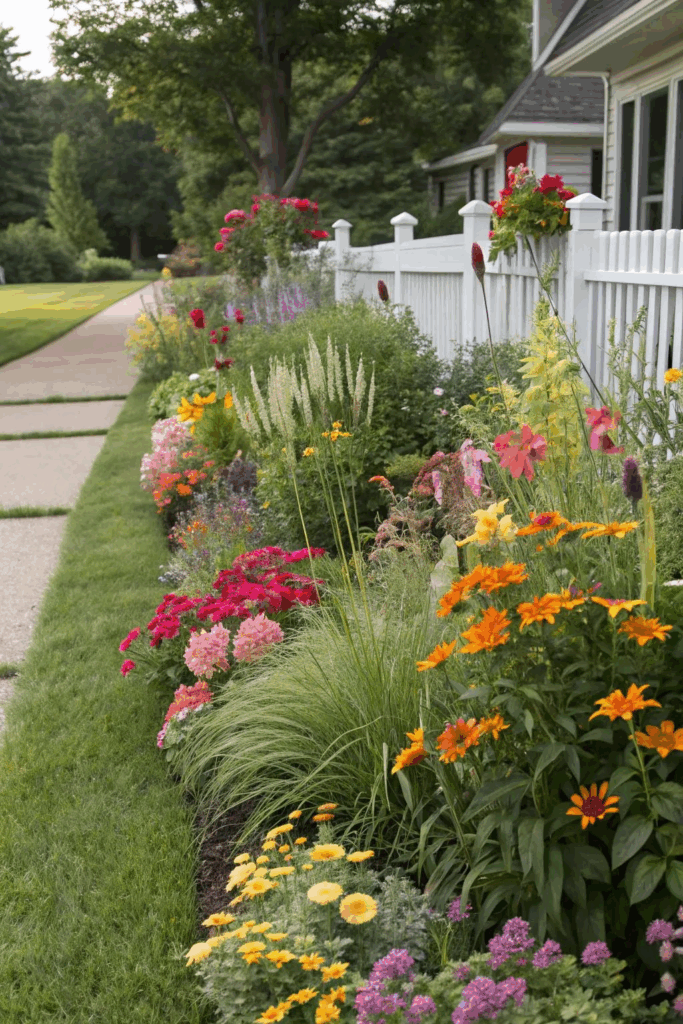
Functional beauty transforms the curb with a layout that blends ornamental color and culinary use. Edible flowers such as nasturtiums, calendula, violas, chive blossoms, and borage are arranged in a layered border along walkways or fence lines, offering visual interest and harvest potential. Taller blooms like sunflowers or amaranth form the backdrop, while midsize calendula and cosmos support pollinators and groundcover herbs like thyme or oregano weave along the front edge. Raised beds or keyhole-style cutouts within a lawn provide organized structure, while bark mulch pathways simplify access for harvesting. Avoid chemical treatments on these plants to keep them safe for the kitchen. Drip irrigation and compost-rich soil keep the flowers thriving without excess maintenance. This setup doubles as both a front-yard showcase and a floral pantry for salads, teas, or garnishes. Adding signage or painted markers can educate visitors and spark conversations. Perennials like lavender and echinacea ensure longevity, while reseeding annuals keep the display fresh. Such gardens are especially suitable for urban or HOA-bound spaces where food gardening must remain ornamental. With thoughtful planning, your front yard becomes a feast for the eyes—and the table—while supporting local biodiversity and encouraging sustainable living from the street view in.
Shade-Savvy Woodland Flower Bed
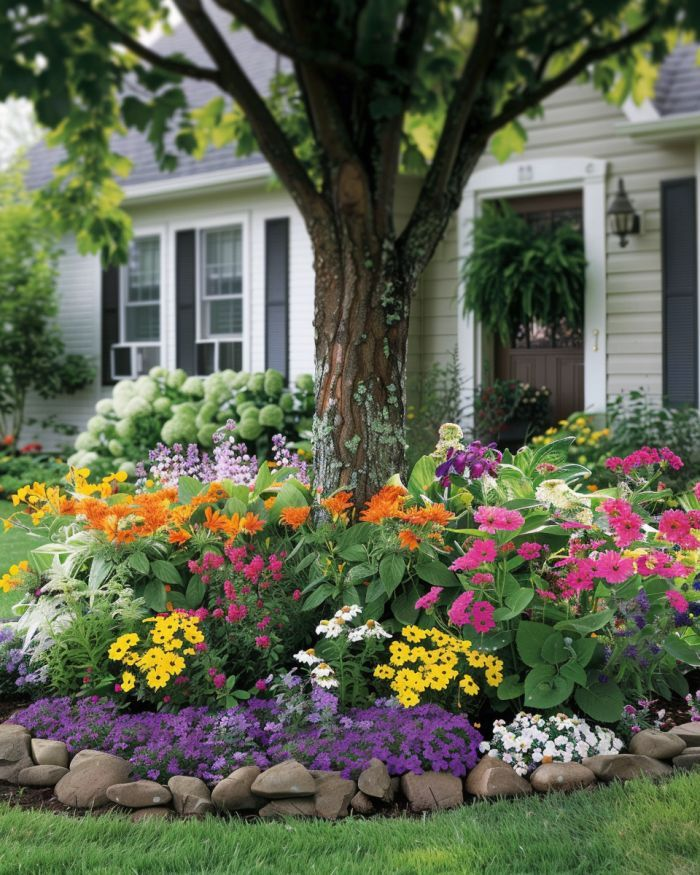
Filtered light beneath trees or along shaded fences sets the perfect stage for a woodland-inspired flower bed teeming with life. Varieties like astilbe, foxglove, bleeding heart, and hellebores thrive in dappled shade, producing vibrant blooms without needing full sun. Complementing these with foliage-forward plants such as hostas and ferns adds year-round structure and contrast. Wood-chip mulch pathways and mossy stepping stones fit the theme while helping regulate soil moisture. Soil should be rich in organic matter—amended with leaf mold or compost—to mimic the forest floor and support steady growth. This bed style particularly benefits from layered planting: taller spires in the rear, medium-height clusters in the middle, and sprawling groundcovers like ajuga or lamium along the front. Early spring bulbs like snowdrops or bluebells can provide early interest before the perennials wake. Regular watering is needed only during dry spells, making it a low-maintenance option. Nestling a weathered bench or stone sculpture in the corner completes the storybook scene. Whether as a quiet retreat or transitional zone between lawn and tree line, this flower bed delivers tranquility and beauty. It brings out the hidden potential of shaded areas often overlooked in traditional garden planning.
Dog-Friendly Resilient Flower Beds
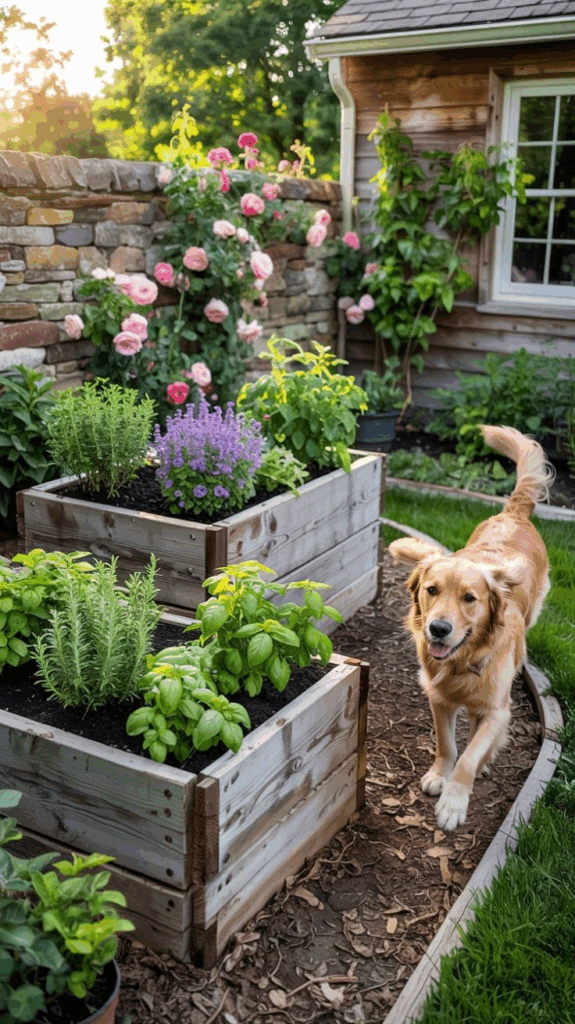
Pet owners seeking a balance between floral beauty and canine durability can rely on a strategic mix of non-toxic, tough-stemmed blooms. Varieties such as marigolds, snapdragons, sunflowers, and calendula hold up well to occasional paw traffic and rough play. These flowers not only provide long-lasting color but are also generally safe for dogs if lightly chewed or brushed against. Raised edging—constructed from bricks, untreated wood, or natural stone—offers a visual boundary that helps guide pets away from more delicate plantings without restricting their movement. Taller varieties like bee balm or yarrow form a resilient backdrop, while groundcovers such as creeping thyme tolerate light trampling and add aromatic appeal. Avoid planting anything toxic such as foxglove, lilies, or tulips. Opt instead for perennials that return each year and self-heal quickly after mild damage. Beds should be mulched with cedar chips or untreated bark, which are less likely to harbor fleas. A designated path or “dog zone” made of pea gravel or lawn pavers encourages four-legged friends to explore without crushing blossoms. This thoughtful layout supports playful pets and vibrant plants in harmony. It’s the perfect solution for homeowners wanting a beautiful backyard that’s welcoming to every family member—including the furry ones.
Mediterranean Drought-Tolerant Layout
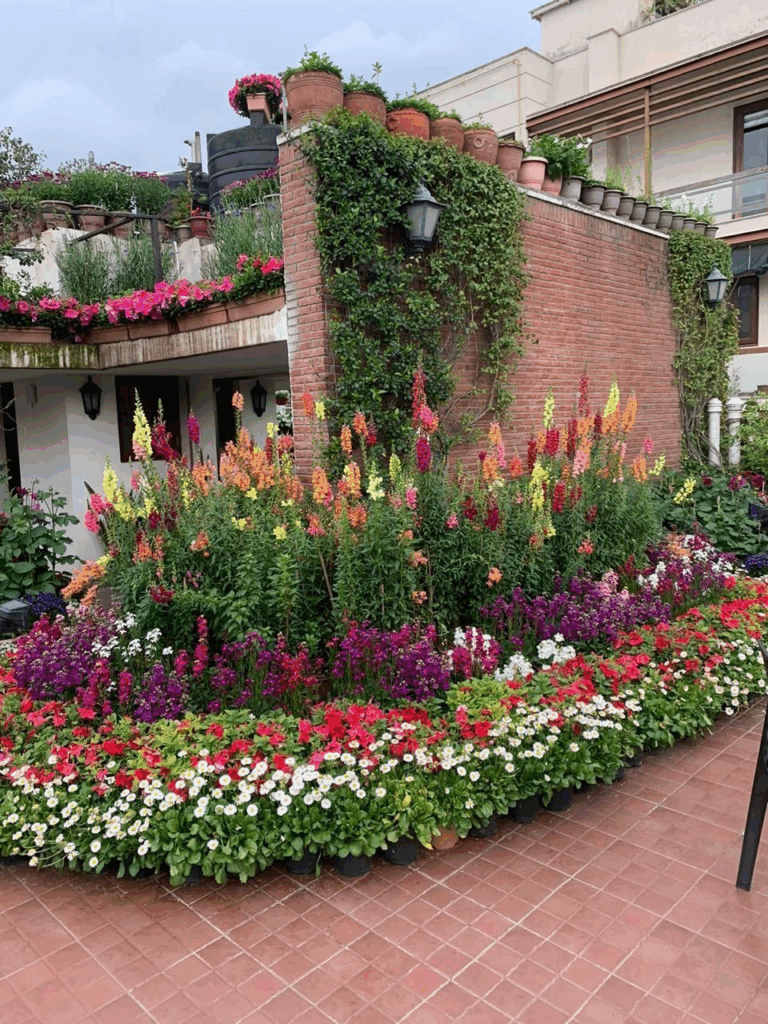
Sun-soaked spaces benefit from a Mediterranean-inspired floral palette designed for beauty and resilience. Blooms like lavender, verbena, gaura, and agapanthus offer lasting color with minimal water needs. These drought-tolerant selections thrive in gravel-rich soil and full sun, making them ideal for dry climates or water-restricted gardens. Beds are typically structured with low-growing rosettes in front, mid-height mounds in the middle, and spiky accents like Russian sage or red hot poker in the rear. Terracotta pots or stone edging maintain the regional aesthetic while aiding drainage and heat regulation. Mulching with gravel or crushed oyster shell keeps roots cool and discourages weeds. Silver-foliaged plants like lamb’s ear or artemisia complement the color scheme and reflect light, enhancing the garden’s glow during golden hour. Spacing plants appropriately ensures airflow, reducing the risk of mildew in arid zones. Interspersing herbs such as rosemary or oregano adds culinary function and invites pollinators. The layout not only conserves water but offers season-long bloom and textural diversity. For low-maintenance gardening with high visual return, this Mediterranean approach is especially rewarding—bringing warmth, movement, and structure to even the driest corners of your backyard while supporting climate-resilient landscaping principles.
Fairy-Garden Miniature Flower Niche
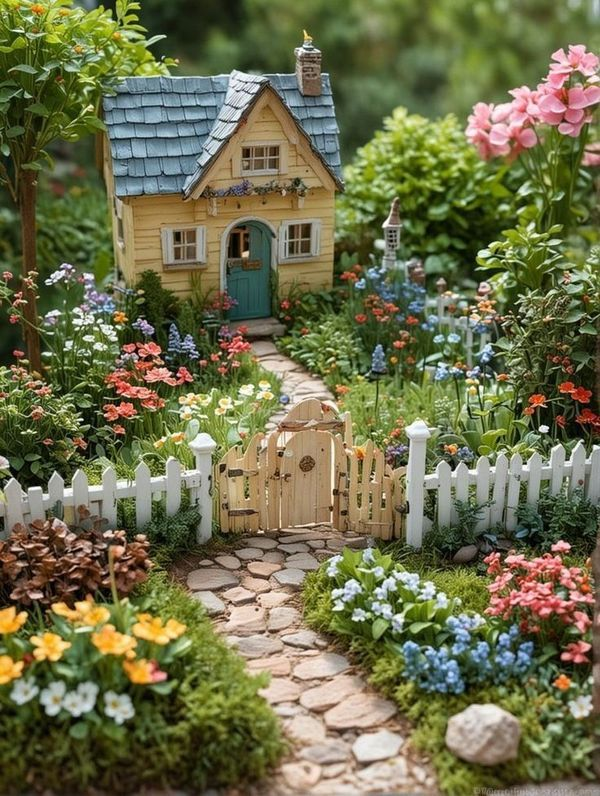
Whimsy and scale converge in a backyard vignette tailored for small flowers and magical detail. This niche is built around miniature blooming plants—such as alyssum, dwarf dianthus, baby’s tears, and miniature roses—arranged to form tiny pathways, archways, and secret clearings. Mosses, creeping thyme, and Irish moss blanket the ground, offering texture and softness underfoot. Decorative elements like tiny benches, pebble stone paths, acorn lanterns, and fairy doors complete the scene, often placed around tree trunks, rock piles, or under shrubs to create depth. Containers, half-barrels, or raised beds work well for controlling scale and soil type. Full sun to partial shade keeps most blooms thriving, though regular misting may be required for mosses in hotter climates. Good drainage is crucial to prevent sogginess in tight plantings. Children and adults alike are drawn to the interactive charm, making it an ideal family-friendly garden feature. Solar string lights or glow pebbles can enhance nighttime enchantment. This layout doesn’t demand much space but delivers high visual impact through layered detail and imaginative storytelling. It’s a playful yet refined expression of garden creativity, allowing for endless customization and surprise—whether hidden in a corner bed or showcased as a dedicated magical micro-garden.